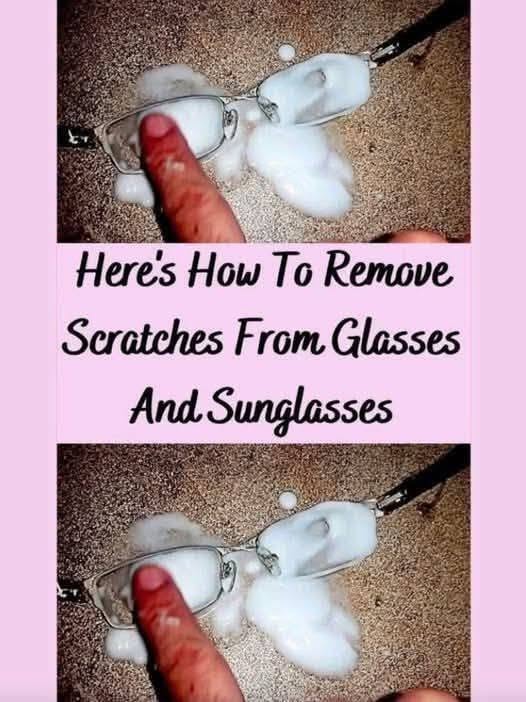
5 Ways to Repair Scratched Glasses sounds like exactly what you need when a thin white line suddenly appears across a favorite pair of lenses. Scratches can catch light, create glare, and become especially distracting when they sit directly in your line of sight. Naturally, many people start looking for something in the kitchen or bathroom that might polish the mark away.
However, modern eyeglass lenses require more caution than ordinary glass. Many prescription lenses use plastic materials plus anti-reflective, UV, scratch-resistant, blue-light, photochromic, or other specialized coatings. Once the lens surface or coating becomes physically scratched, household polishing usually cannot restore it to its original optical condition. Lens-care guidance from ZEISS states that scratches on plastic or glass spectacle lenses cannot simply be removed once they occur.
Fortunately, you still have useful options. Proper cleaning can reveal whether a mark is actually a scratch, professional inspection can identify coating damage, and good storage habits can prevent a minor problem from becoming much worse.
I once thought I had ruined a favorite pair of glasses after noticing several cloudy lines across one lens. My first instinct was to search the kitchen for something abrasive, because I had heard that toothpaste or baking soda could polish scratches away. Instead, I washed the lenses carefully with water and cleaned them with a fresh microfiber cloth. Most of the marks disappeared because they had actually come from dried residue, although one genuine scratch remained. That experience changed how I handle glasses. Now I clean first, inspect second, and never start polishing an expensive lens before I know exactly what I am looking at.
Before Trying 5 Ways to Repair Scratched Glasses
First Find Out Whether You Have a Scratch
The first step in 5 Ways to Repair Scratched Glasses does not involve polishing anything. Instead, clean the lenses correctly and inspect them under good light.
Fingerprints, skin oils, dried water spots, hairspray, makeup, cooking grease, and dust can leave marks that look surprisingly similar to fine scratches. Therefore, an aggressive treatment can create real damage while you attempt to remove something that only needed washing.
Start by rinsing the glasses with lukewarm water. This step helps remove loose dust and grit before you touch the lens surface. Next, use a small amount of mild, lotion-free dishwashing liquid if your lens manufacturer or eye-care provider recommends it. Gently wash the lenses and frame with clean fingertips. Then rinse them thoroughly.
Finally, dry the glasses gently with a clean microfiber lens cloth.
ZEISS recommends rinsing lenses to remove dust and rough debris before gently drying them with microfiber. It also advises against hard rubbing.
After cleaning, hold the glasses under a light and tilt them slowly.
If the mark disappears, you had residue rather than a scratch. However, if a fine line remains visible from multiple angles, physical surface damage becomes more likely.
Also check whether you see widespread crazing, cloudy patches, rainbow-like areas, or peeling. Those signs may indicate coating damage instead of one isolated scratch.
At that point, stop experimenting.
An optician can often tell whether the lens itself carries the damage or whether an outer coating has failed.
That distinction matters because different lenses respond differently to chemicals, heat, and abrasion.
Why Popular DIY Polishes Can Backfire
Many online versions of 5 Ways to Repair Scratched Glasses recommend toothpaste, baking soda, furniture polish, car wax, metal polish, glass-etching products, or household cleaners.
The problem is simple: polishing works by changing a surface.
An abrasive does not magically fill a scratch and rebuild the original lens. Instead, it removes or alters material surrounding the damaged area. On an optical lens, that approach can create haze, unevenness, additional micro-scratches, or coating damage.
Modern lenses make this problem even more important.
A prescription lens may carry several very thin engineered layers. Therefore, a paste strong enough to change a visible scratch may also damage an anti-reflective or protective coating.
Even “mild” abrasives deserve caution.
Baking soda and toothpaste may feel smooth between your fingers, yet they still contain particles designed to scrub or polish. Consequently, rubbing them across a coated prescription lens can create additional surface damage.
Harsh chemicals present another problem.
Window cleaner, ammonia-based products, acetone, household disinfectants, and other cleaners may react poorly with certain frames or coatings. Therefore, use products intended for eyeglasses or cleaning methods approved by your lens provider.
ZEISS specifically notes that technically advanced lenses and coatings can become scratched or damaged through improper handling.
The safest expectation is this: cleaning can remove substances sitting on the lens, but it cannot reliably restore material that has already been scratched out of the lens.
That difference can save an expensive pair of glasses.
5 Ways to Repair Scratched Glasses Without Making Things Worse
1. Clean the Lens Properly and 2. Use a Fresh Microfiber Cloth
The first of the 5 Ways to Repair Scratched Glasses is also the safest: perform a proper wet cleaning.
Begin with lukewarm running water. Avoid very hot water because excessive heat can affect some lens coatings and frames. Next, apply a tiny amount of suitable mild dish soap with clean fingers when appropriate for your lenses.
Do not scrub aggressively.
Instead, move your fingertips gently across both sides of each lens, the nose pads, bridge, and frame. Then rinse everything thoroughly so no soap remains.
A proper cleaning solves two problems at once.
First, it may remove the “scratch” completely if the mark actually consists of grime or residue. Second, it gives you a clean surface for accurately evaluating genuine damage.
The second method involves your microfiber cloth.
A clean microfiber cloth helps lift oils and moisture without relying on rough fibers. However, the word clean matters.
A microfiber cloth that has spent weeks inside a pocket, purse, glove box, or dusty case can collect particles that may scratch a lens. Therefore, regularly clean or replace your cloth according to its care instructions.
Do not substitute your shirt hem, paper towel, facial tissue, or napkin simply because it feels soft.
Fabric and paper can hold abrasive debris, while some paper products have fibers that make them less suitable for delicate optical surfaces. ZEISS warns that clothing and tissues can carry particles that cause micro-scratches when rubbed across lenses.
Furthermore, avoid dry rubbing when visible grit sits on the lens.
Rinse the grit away first.
These first two methods will not erase a genuine scratch. However, they can remove false scratches, prevent additional damage, and make existing scratches less visually distracting by eliminating smudges around them.
Sometimes that improvement makes the glasses much easier to tolerate.
3. Have the Coating Checked, 4. Replace One Lens, and 5. Protect the Next Pair
The third option in 5 Ways to Repair Scratched Glasses involves professional inspection.
Bring the glasses to an optician or eye-care office and ask whether the mark affects the lens material or one of its coatings.
This step becomes particularly valuable when the lens looks cloudy, crazed, rainbow-colored, or uneven rather than simply scratched.
An optician may also spot frame damage, loose screws, bent temples, or alignment problems that make vision feel worse.
The fourth option is lens replacement.
Although replacement may not sound like a “repair,” it often represents the only reliable way to restore clear optical quality after a significant scratch.
You may not need an entirely new pair of glasses. Depending on the prescription, lens type, frame condition, warranty, and provider, replacing one or both lenses may solve the problem while allowing you to keep your existing frame.
Ask whether your lenses came with a scratch or coating warranty.
Some manufacturers or optical shops offer limited protection against premature coating failure or scratches. Therefore, checking your paperwork before paying for replacement makes sense.
The fifth method focuses on preventing additional scratches.
Always place glasses in a protective case when you remove them for more than a moment. If you temporarily set them on a surface, place them with the lenses facing upward rather than downward.
Additionally, avoid leaving glasses loose inside a bag with keys, coins, tools, or other hard objects.
Do not place them on a car dashboard in extreme heat. Likewise, avoid resting prescription glasses on abrasive counters, sandy beach towels, or dusty work surfaces.
Preventing the next scratch may not erase the one you already have, but it protects the remaining optical surface.
That makes prevention one of the most effective long-term solutions available.
Which At-Home Scratched Glasses Remedies Should You Skip?
Toothpaste, Baking Soda, and Other Abrasive Pastes
Toothpaste probably ranks as the most famous DIY solution in 5 Ways to Repair Scratched Glasses discussions.
The idea sounds reasonable at first. Some toothpastes contain fine polishing particles, so people assume those particles can smooth a lens just as they polish tooth surfaces.
However, eyeglass lenses are precision optical products, not teeth.
Abrasive toothpaste may create tiny additional scratches or damage a surface coating. Whitening toothpastes can contain even more aggressive polishing ingredients, which makes them especially unsuitable.
Baking soda presents a similar concern.
When mixed with water, baking soda forms a paste that can act as a mild abrasive. Therefore, rubbing that paste onto a coated lens may alter the surface around the scratch.
Even when the scratch appears less visible afterward, the process may have changed the finish rather than genuinely restoring it.
That can create unwanted glare or haze.
Car polish and metal polish pose even greater concerns. Manufacturers formulate those products for completely different materials, and some contain abrasives, solvents, waxes, or chemicals that do not belong on prescription lenses.
Furniture polish can temporarily coat a surface, which might visually disguise a fine mark under certain lighting. However, a temporary film does not restore the optical lens.
Furthermore, residue can smear, collect dust, or interact with coatings.
Therefore, skip abrasive polishing experiments, especially if you rely on your glasses throughout the day.
A small scratch near the edge of the lens may remain mildly annoying. Yet a DIY experiment that creates widespread haze across the entire lens can turn a manageable problem into an expensive replacement.
That tradeoff rarely makes sense.
Glass Etching Cream, Household Cleaner, and Heat
Some internet advice becomes especially problematic because it confuses removing a coating with repairing a lens.
Glass-etching products contain chemicals designed to alter glass surfaces. They do not belong in a casual prescription-eyewear repair routine.
Likewise, household window cleaner may seem appropriate because people use it on windows and mirrors. However, prescription lenses often contain coatings that ordinary household glass does not.
Therefore, “safe for glass” does not automatically mean “safe for glasses.”
Avoid acetone and nail-polish remover as well. Strong solvents can damage certain plastic frames and lens treatments.
Heat also deserves caution.
People sometimes attempt to warm plastic lenses because they believe heat will soften a scratch. However, high temperatures can damage frames, distort plastic, or contribute to coating problems.
Instead, keep cleaning water lukewarm.
The best rule in 5 Ways to Repair Scratched Glasses is straightforward: if a method depends on grinding, dissolving, stripping, melting, or chemically altering the surface, do not experiment with it on prescription lenses.
Your eyeglasses have one important job: provide clear, predictable vision.
Cosmetic improvement should never come at the expense of optical clarity.
If you cannot identify your lens material or coatings, assume the lenses require gentle treatment.
Many modern prescriptions use polycarbonate, Trivex, high-index plastics, or other specialized materials. Additionally, anti-reflective and scratch-resistant treatments may sit on top of those lenses.
Therefore, a home method that someone successfully used on an old pair of uncoated lenses may damage your newer pair.
When in doubt, cleaning and professional inspection provide much safer choices.
How to Prevent Scratched Glasses in the Future
Build a Simple Daily Cleaning Routine
Once you understand 5 Ways to Repair Scratched Glasses, prevention becomes much easier.
Start by changing how you clean your lenses.
Never aggressively rub a visibly dusty lens. Instead, rinse loose particles away first whenever practical.
Then use a suitable lens-cleaning solution or gentle washing method recommended for your lenses. Finally, dry with a clean microfiber cloth.
ZEISS recommends microfiber for routine lens care and lukewarm water when lenses become more heavily soiled.
Also wash your hands before handling heavily smudged glasses. Greasy fingertips can transfer lotion, cooking oil, makeup, and other substances onto the lenses.
Keep several microfiber cloths available.
Store one in your glasses case, another at home, and perhaps one at work. That way, you will feel less tempted to reach for a shirt or tissue.
Clean the cloths correctly as well. Avoid fabric softener because it can leave residue on microfiber. ZEISS specifically advises against using fabric softener on microfiber lens cloths.
Additionally, hold the glasses by the frame when possible rather than repeatedly touching the lens surface.
When taking glasses off, use both hands.
That habit reduces stress on the hinges and helps keep the frame aligned.
Proper frame alignment matters because warped glasses may sit at an unusual angle, making existing scratches or optical imperfections more noticeable.
These habits require only seconds, yet they can substantially extend the useful life of your lenses.
More importantly, they protect the coatings you already paid for.
Know When Replacement Makes More Sense
Not every scratched lens requires immediate replacement.
A tiny scratch near the outer edge may barely affect daily vision. Therefore, you might reasonably keep wearing the glasses while taking extra care to prevent further damage.
However, a deep scratch directly in front of your pupil can become much more distracting.
Scratches can scatter light and interfere with optical clarity. ZEISS notes that micro-scratches can disperse light and reduce lens quality.
Therefore, consider replacement when scratches create persistent glare, blur, halos, distortion, or visual discomfort.
Likewise, replace lenses when large areas of coating begin peeling or crazing.
Do not simply adapt to a severely damaged pair for months if you struggle to see clearly through them.
If you depend on the glasses for driving, work, reading, or other visually demanding tasks, clear lenses become especially important.
Professional inspection also makes sense when you cannot determine whether your vision changed because of the scratch or because your prescription itself needs updating.
Sometimes the scratched glasses receive all the blame even though the wearer also needs a new eye exam.
Ultimately, 5 Ways to Repair Scratched Glasses works best when “repair” means protecting your vision rather than forcing a cosmetic home fix.
Clean carefully. Confirm what you actually see. Avoid abrasives. Ask about professional options. Then protect the replacement or remaining good lens surface.
Those steps may feel less dramatic than rubbing toothpaste across your glasses, but they give you a much better chance of keeping your vision clear.
Frequently Asked Questions
Can toothpaste really remove scratches from glasses?
Toothpaste may contain abrasive particles that alter a surface, but that does not make it a safe way to restore prescription lenses. It can damage coatings or create additional micro-scratches. Therefore, avoid toothpaste on modern prescription glasses, particularly coated plastic, polycarbonate, or high-index lenses.
Does baking soda fix scratched eyeglasses?
Baking soda acts as a mild abrasive when you turn it into a paste. Consequently, it may change the appearance of some surfaces, but it cannot reliably rebuild a damaged optical lens. On coated prescription lenses, abrasion may worsen the problem. A professional assessment offers a safer option.
Can scratches actually be removed from prescription lenses?
Generally, a true physical scratch cannot simply be cleaned or polished away while preserving the original optical surface. ZEISS states that scratches on both plastic and glass spectacle lenses cannot be removed once present. Replacement provides the most reliable solution for significant damage.
What is the safest way to clean scratched glasses?
Rinse away loose debris with lukewarm water, use an appropriate mild cleaning method, and dry gently with a clean microfiber lens cloth. Avoid excessive pressure. Proper cleaning will not erase a true scratch, but it may remove residue that makes the damage look worse.
When should I replace scratched lenses?
Consider replacement when scratches sit in your central field of vision, create distracting glare or distortion, interfere with driving or reading, or accompany widespread coating damage. An optician can inspect the lens and explain whether replacing one lens or both lenses makes the most sense.
Conclusion
5 Ways to Repair Scratched Glasses begins with an important reality: a genuine scratch usually represents physical damage, and household polishing cannot reliably restore a precision prescription lens to its original condition.
Fortunately, that does not leave you without options.
First, clean the lenses correctly because residue often masquerades as scratching. Second, use a clean microfiber cloth instead of shirts, napkins, or paper products. Third, ask an optician to determine whether the problem affects the coating or the lens itself. Fourth, consider replacing the damaged lens when the scratch interferes with clear vision. Finally, protect your glasses carefully so additional scratches never get the chance to develop.
Meanwhile, skip abrasive shortcuts.
Toothpaste, baking soda paste, metal polish, aggressive household cleaners, and chemical stripping methods can alter coatings and create more damage than they solve.
Modern eyeglasses contain sophisticated optical surfaces. Therefore, gentle care offers a better strategy than aggressive polishing.
Once a genuine scratch appears, your goal should remain clear vision rather than a risky cosmetic experiment.
Protect the lenses you have, replace badly damaged ones when necessary, and store your glasses in a protective case whenever you are not wearing them.
That simple routine can save your next pair from the same frustrating fate.
WP Recipe Maker JSON Import Block
{
  "title": "5 Ways to Repair Scratched Glasses — At-Home Fixes That Might Help",
  "summary": "Five practical ways to deal with scratched glasses safely, including proper cleaning, microfiber care, professional inspection, lens replacement, and scratch prevention.",
  "notes": "True scratches on prescription lenses generally cannot be safely polished away at home. Avoid toothpaste, baking soda, harsh abrasives, strong solvents, glass etching products, and excessive heat, especially on coated prescription lenses.",
  "ingredients_flat": [
    {
      "amount": "as needed",
      "unit": "",
      "name": "lukewarm water"
    },
    {
      "amount": "1",
      "unit": "drop",
      "name": "mild lotion-free dishwashing liquid suitable for lens cleaning"
    },
    {
      "amount": "1",
      "unit": "",
      "name": "clean microfiber lens cloth"
    },
    {
      "amount": "1",
      "unit": "",
      "name": "protective eyeglasses case"
    }
  ],
  "instructions_flat": [
    {
      "name": "Step 1",
      "text": "Rinse the lenses with lukewarm water to remove loose dust and abrasive debris before touching the surfaces.",
      "summary": "",
      "image_url": ""
    },
    {
      "name": "Step 2",
      "text": "Gently clean the lenses with a suitable mild lens-cleaning method and rinse thoroughly.",
      "summary": "",
      "image_url": ""
    },
    {
      "name": "Step 3",
      "text": "Dry the glasses gently with a clean microfiber lens cloth without applying excessive pressure.",
      "summary": "",
      "image_url": ""
    },
    {
      "name": "Step 4",
      "text": "Inspect the cleaned lenses under good light to determine whether the mark is residue, a true scratch, or possible coating damage.",
      "summary": "",
      "image_url": ""
    },
    {
      "name": "Step 5",
      "text": "Take persistent scratches or coating damage to an optician for professional inspection instead of polishing the lenses with household abrasives.",
      "summary": "",
      "image_url": ""
    },
    {
      "name": "Step 6",
      "text": "Replace a badly damaged lens when scratches create glare, blur, distortion, or interfere with comfortable vision.",
      "summary": "",
      "image_url": ""
    },
    {
      "name": "Step 7",
      "text": "Store glasses in a protective case and place them lens-side up whenever a case is temporarily unavailable.",
      "summary": "",
      "image_url": ""
    }
  ],
  "equipment": [
    {
      "name": "Microfiber lens cloth",
      "notes": ""
    },
    {
      "name": "Protective eyeglasses case",
      "notes": ""
    },
    {
      "name": "Sink with lukewarm running water",
      "notes": ""
    }
  ],
  "nutrition": {
    "calories": "0",
    "carbohydrates": "0 g",
    "protein": "0 g",
    "fat": "0 g",
    "saturated_fat": "0 g",
    "polyunsaturated_fat": "0 g",
    "monounsaturated_fat": "0 g",
    "trans_fat": "0 g",
    "cholesterol": "0 mg",
    "sodium": "0 mg",
    "potassium": "0 mg",
    "fiber": "0 g",
    "sugar": "0 g",
    "vitamin_a": "0 mcg",
    "vitamin_c": "0 mg",
    "calcium": "0 mg",
    "iron": "0 mg"
  },
  "tags": {
    "course": ["Home Care"],
    "cuisine": ["General"],
    "keyword": ["5 Ways to Repair Scratched Glasses", "scratched glasses", "scratched eyeglass lenses", "glasses care", "lens cleaning"]
  }
}
SEO Output
Focus Keyword
5 Ways to Repair Scratched Glasses
SEO Title
5 Ways to Repair Scratched Glasses Without Ruining Your Lenses
Meta Description
5 Ways to Repair Scratched Glasses safely, plus which popular DIY tricks can damage coatings and when replacement makes more sense.
Expert SEO Title
5 Ways to Repair Scratched Glasses: Powerful Safe Solutions
Midjourney Prompt
Ultra-realistic close-up photography of a pair of modern prescription eyeglasses with several fine visible scratches catching soft light on one lens, glasses resting on a clean neutral tabletop beside a folded microfiber lens cloth and protective eyeglass case, small water droplets suggesting gentle cleaning, no toothpaste or harsh chemicals, realistic transparent lens reflections, crisp frame details, professional home-care editorial aesthetic, clean background, soft natural window lighting, vertical composition, shallow depth of field, highly detailed realistic product photography, generous negative space above the glasses for Pinterest text overlay –v 6 –ar 2:3
More Blog
- Drinking Water on an Empty Stomach — What Science Actually Supports (No Hype, Just Facts)
- Waking Up Between 3 and 5 AM? It Might Be Your Soul Trying to Talk to You
- What a “Bleach” Patch on Your Underwear Really Means — And Why It’s Actually a Good Sign
- This Drink May Weaken Your Bones From The Inside — But Everyone Drinks It Anyway