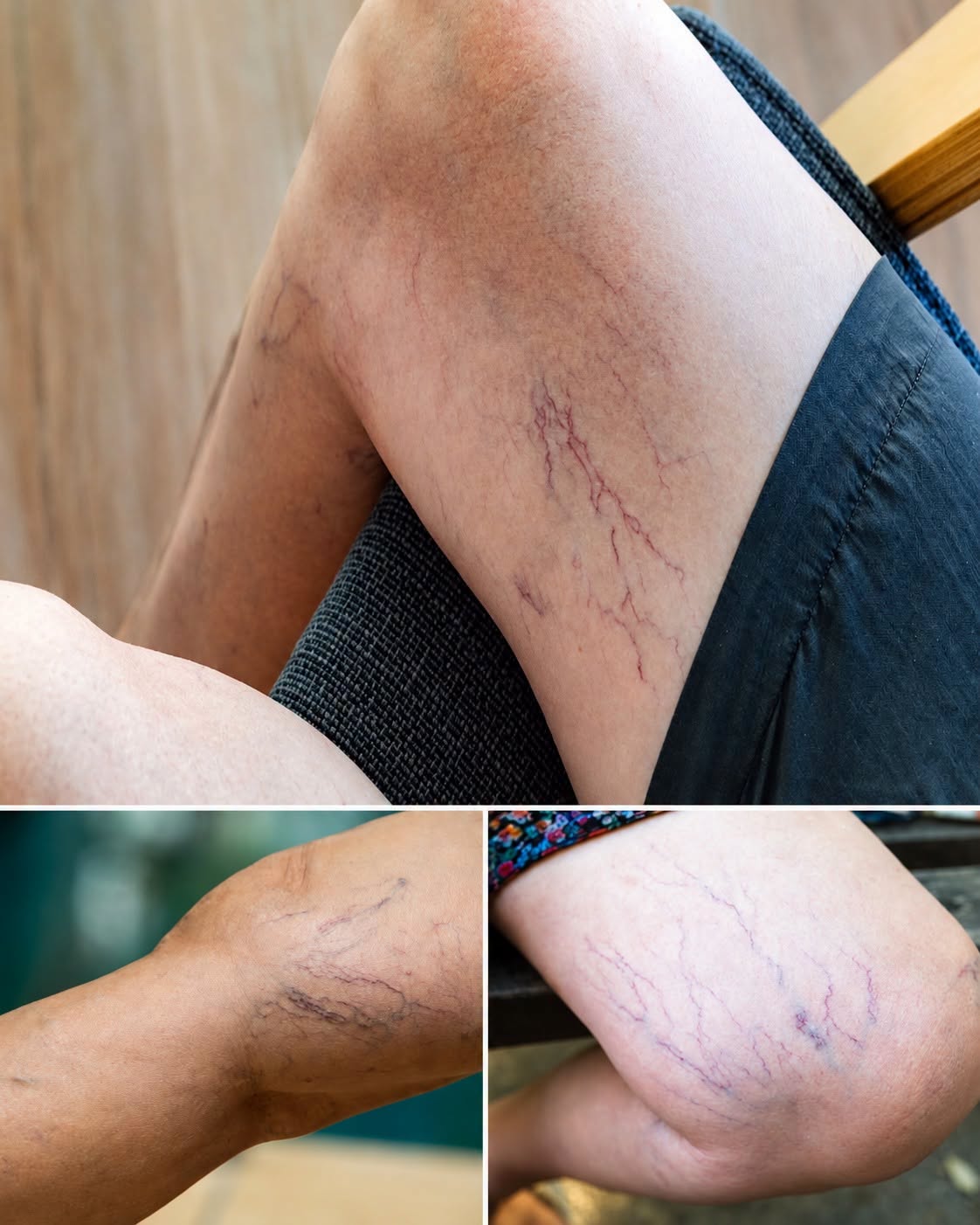
If you have purple veins on your legs, you may wonder whether they signal a circulation problem or simply a harmless change in appearance. In many cases, small purple, blue, or reddish vessels near the skin represent spider veins. These visible blood vessels often create thin lines, branches, or web-like patterns on the thighs, calves, ankles, or behind the knees.
Most spider veins do not cause serious health problems. However, larger or increasingly noticeable veins can sometimes appear alongside varicose veins or chronic venous insufficiency, a condition that affects how efficiently blood travels back toward the heart. Therefore, symptoms matter just as much as appearance.
Several factors can make purple veins more noticeable, including age, genetics, pregnancy, prolonged sitting or standing, and problems with valves inside the veins. Fortunately, simple habits may support healthy circulation, while medical treatments can address troublesome veins when necessary.
I first paid attention to visible leg veins after someone close to me noticed several fine purple lines spreading near the back of her knee. She initially assumed they meant something serious because they seemed to appear almost overnight. However, she had no swelling, pain, or skin changes. After discussing the veins during a routine medical visit, she learned that they looked like common spider veins. That conversation changed the way we viewed them. Instead of focusing only on color, we started paying attention to symptoms, daily movement, and circulation habits. Most importantly, we learned which warning signs actually deserved prompt medical evaluation.
Why Purple Veins Become Visible on Your Legs
How Spider Veins and Varicose Veins Develop
If you have purple veins on your legs, the first step involves understanding what you can actually see beneath the skin.
Spider veins are small damaged blood vessels that lie close to the skin’s surface. They can look red, blue, or purple and often appear as branching lines or web-like clusters. Although people commonly call them veins, these tiny visible vessels can include small capillaries, venules, and arterioles. On their own, spider veins generally do not cause harm.
Varicose veins differ in appearance. They usually look larger, swollen, twisted, or rope-like. They often develop when valves inside the veins weaken or stop closing efficiently. Normally, those valves help keep blood moving toward the heart. However, when they fail to work properly, blood can collect inside the vein. As pressure increases, the vein may enlarge and become more visible beneath the skin.
Gravity makes the legs particularly vulnerable because leg veins must move blood upward toward the heart. In addition, standing and walking create pressure in the lower body’s veins.
Purple coloring alone does not tell you how serious a vein problem may be. A tiny flat spider vein can look dark purple while causing no medical concern. Meanwhile, a larger vein may indicate impaired blood flow even when its color appears less dramatic.
Therefore, pay attention to the complete picture rather than focusing only on color.
Why Some People Develop Them More Easily
Several influences can increase the likelihood of visible veins.
First, age can affect vein walls and valves. As the years pass, these structures may lose some strength and elasticity. Consequently, blood may have a harder time moving efficiently through certain veins.
Genetics also plays an important role. If close relatives develop spider veins, varicose veins, or other vein problems, you may have a greater chance of developing them as well.
Hormonal changes can contribute too. Pregnancy, for example, increases blood volume and places additional pressure on leg veins. Hormonal shifts can also affect vein walls. As a result, pregnancy may make existing veins more noticeable or encourage new ones to appear.
Additionally, prolonged standing or sitting may worsen pressure in the legs. Your calf muscles normally help pump blood upward as you move. Therefore, long periods without movement can reduce this pumping action.
Body weight may also influence pressure on the veins. However, people of many different body sizes develop spider veins, so visible veins do not automatically indicate an unhealthy lifestyle.
Finally, previous blood clots, injuries, or underlying vein disease may affect circulation in some people.
Because several factors can overlap, you cannot diagnose the cause simply by looking at your legs.
Symptoms That May Appear With Purple Leg Veins
Common Signs That Usually Cause Concern
If you have purple veins on your legs but feel completely well, the veins may simply represent a cosmetic change.
Spider veins themselves often cause no symptoms. However, some people who have visible veins also have varicose veins or other circulation problems that produce discomfort.
Possible symptoms include aching, heaviness, burning, throbbing, itching, cramping, or tired legs. In addition, swelling may develop around the lower legs or ankles. Symptoms can sometimes become more noticeable after a long period of sitting or standing.
For example, someone who stands for most of the workday may notice that the legs feel heavier in the evening. Another person may experience mild ankle swelling that improves after resting with the legs elevated.
These symptoms do not automatically mean you have a dangerous condition. Nevertheless, they provide useful information for a healthcare professional.
Also notice whether the veins change over time. A few stable spider veins that have remained unchanged for years differ from veins that suddenly enlarge or appear alongside new swelling.
Skin changes also deserve attention. Chronic circulation problems can sometimes affect the tissue around the ankles and lower legs.
Therefore, monitor both how your legs look and how they feel.
Warning Signs You Should Not Ignore
Some symptoms justify medical evaluation because they may indicate a more significant vein or circulation problem.
Persistent swelling deserves attention, particularly when it worsens or affects one leg differently from the other. Likewise, increasing pain, tenderness, skin discoloration, or sores around the lower legs should prompt a conversation with a healthcare professional.
Cleveland Clinic advises contacting a healthcare provider if a visible vessel becomes swollen, discolored, warm, or tender, or if you notice sores, rashes, color changes, burning, or cramping.
Chronic venous insufficiency can cause blood to pool in the legs when damaged veins struggle to return it efficiently. Over time, this problem can contribute to swelling, skin changes, discomfort, and ulcers in more advanced cases.
Bleeding also requires serious attention. The National Heart, Lung, and Blood Institute advises emergency care for bleeding from varicose veins.
Sudden leg swelling, especially when accompanied by warmth, redness, significant pain, chest pain, shortness of breath, coughing blood, dizziness, or fainting, should never be dismissed as ordinary spider veins. Those symptoms can have causes that require urgent medical evaluation.
Therefore, do not diagnose sudden or severe symptoms from an online photo or appearance alone.
Visible purple veins often prove harmless. However, symptoms can provide essential clues that color cannot.
What You Can Do to Support Healthier Leg Circulation
Movement and Everyday Habits
If you have purple veins on your legs, regular movement offers one of the simplest ways to support normal circulation.
Walking activates the calf muscles. Those muscles act like pumps and help move blood upward through the veins. Therefore, regular walking can benefit people who spend much of the day sitting or standing.
If your work requires long periods at a desk, get up periodically and move around when possible. Similarly, if you stand for hours, shift positions and take opportunities to walk instead of remaining completely still.
Leg elevation may also help reduce pressure and swelling in certain vein conditions. Cleveland Clinic notes that clinicians commonly recommend leg elevation and exercise as lifestyle measures for chronic venous insufficiency.
In addition, maintaining a weight that supports your overall health may reduce unnecessary pressure on the legs.
Regular exercise supports circulation in broader ways as well. You do not need an elaborate workout program. Walking, swimming, cycling, and other activities that use the leg muscles can provide movement throughout the day.
However, lifestyle habits cannot guarantee that existing spider veins will disappear. Genetics, age, and other influences still matter.
Therefore, treat these habits as circulation-supporting measures rather than cures.
Most importantly, avoid blaming yourself for visible veins. They occur commonly and can appear even in people who exercise regularly.
Compression Stockings and Other Conservative Measures
Compression stockings can help certain people with vein-related symptoms, particularly when swelling or chronic venous insufficiency contributes to discomfort.
These garments apply controlled pressure to the legs. As a result, they can help support blood movement and reduce pooling in some situations.
However, compression does not suit every person or every circulation condition. Therefore, ask a healthcare professional whether compression stockings make sense for your particular symptoms, especially if you have known arterial disease, significant medical conditions, or unexplained leg symptoms.
The correct size and compression strength also matter.
In addition, avoid expecting creams, oils, supplements, or home remedies to repair damaged vein valves. Cosmetic products may moisturize the skin, but they cannot mechanically close a faulty valve inside a vein.
Likewise, diet supports overall cardiovascular health but cannot erase established spider veins by itself.
A balanced eating pattern that includes vegetables, fruits, whole grains, adequate protein, and fiber can support general health. Furthermore, staying adequately hydrated can support normal body function.
Still, visible veins require realistic expectations. Once spider veins form, medical cosmetic procedures usually produce more noticeable removal than lifestyle changes alone.
If your legs feel uncomfortable at the end of the day, keep track of what makes symptoms better or worse. That information can help a clinician understand the pattern.
Medical Evaluation and Treatment Options for Purple Veins
How Doctors Evaluate Visible Leg Veins
If you have purple veins on your legs and symptoms concern you, a medical evaluation can help determine whether you have harmless spider veins, varicose veins, or a deeper circulation problem.
A clinician usually begins by asking about your symptoms and medical history. For example, they may ask when the veins appeared, whether your legs swell, and whether symptoms worsen during prolonged standing.
They may also examine your legs while you sit or stand.
When doctors suspect problems with deeper veins or abnormal blood flow, they may use ultrasound testing. This painless imaging method can show how blood moves through veins and whether valves function properly.
Importantly, an evaluation does not automatically lead to a procedure.
Many people with small spider veins need no medical treatment. If the veins do not cause symptoms and appearance does not bother you, observation may provide all the management you need.
However, healthcare professionals may recommend additional treatment when symptoms, complications, or underlying chronic venous insufficiency require attention.
The treatment plan depends on which vessels cause the problem.
Therefore, a procedure that works well for tiny spider veins may not treat larger diseased veins.
This distinction explains why professional assessment matters before choosing treatment based on cosmetic advertisements or online advice.
Treatments That Can Reduce Visible Veins
Several procedures can treat unwanted spider veins and varicose veins.
Sclerotherapy remains a common option for spider veins. During the procedure, a healthcare professional injects a solution into selected vessels. The treated vessels close, and the body gradually redirects blood through healthier pathways. Cleveland Clinic notes that spider veins may fade over several weeks after treatment, although some people require multiple sessions.
Laser therapy offers another option, particularly for certain small superficial vessels.
Meanwhile, larger vein problems may require different treatments. Endovenous thermal ablation, for example, uses laser energy or radiofrequency energy to close certain unhealthy veins. Healthcare professionals may use other minimally invasive procedures depending on the underlying condition.
Treatment decisions depend on symptoms, vein size, location, circulation findings, medical history, and personal goals.
Importantly, treating an underlying venous condition takes priority over cosmetic treatment when both problems exist.
You should also understand that treatment cannot guarantee that new spider veins will never develop. Genetics, aging, hormones, and ongoing pressure can contribute to new visible vessels later.
Nevertheless, modern treatments can often improve appearance and reduce certain symptoms when appropriately selected.
Frequently Asked Questions
Are purple veins on the legs dangerous?
Usually, small spider veins are not dangerous. They commonly create red, blue, or purple lines near the skin without causing symptoms. However, visible veins can occasionally occur alongside chronic venous insufficiency or varicose veins. Therefore, seek medical advice when you also experience persistent swelling, aching, skin changes, sores, warmth, or tenderness.
Why are my leg veins suddenly more visible?
Several factors can make veins appear more prominent, including prolonged standing, hormonal changes, pregnancy, age-related changes, genetics, and increased pressure inside superficial veins. Lighting, skin tone, and changes in body composition can also affect visibility. However, sudden visibility accompanied by significant pain, warmth, or swelling deserves medical evaluation.
Can exercise make purple veins disappear?
Exercise can support circulation, particularly because calf-muscle movement helps push blood upward through the legs. However, exercise usually does not make established spider veins disappear completely. Medical procedures such as sclerotherapy or laser treatment can address appearance when desired.
Can sitting all day cause spider veins?
Long periods of sitting can contribute to poor circulation and increased pressure in the legs, especially when you rarely move. However, spider veins usually result from several influences rather than one behavior alone. Regular walking and movement breaks can support healthy blood flow.
When should I see a doctor about purple veins?
Arrange an evaluation when visible veins occur with persistent swelling, increasing pain, burning, cramping, skin discoloration, sores, tenderness, warmth, or other concerning changes. Seek urgent medical attention for sudden severe symptoms or significant bleeding.
Conclusion
If you have purple veins on your legs, you do not automatically have a serious circulation disorder. Small purple or blue spider veins commonly develop near the skin and often create only a cosmetic concern.
However, the appearance of the veins tells only part of the story.
Pay attention to swelling, aching, heaviness, burning, itching, warmth, tenderness, skin discoloration, or sores. These symptoms can provide stronger clues that an underlying vein problem needs evaluation.
Regular movement, walking, appropriate leg elevation, and other healthy habits can support circulation. Meanwhile, compression therapy may help certain people when a clinician recommends it. If appearance bothers you, treatments such as sclerotherapy or laser therapy may reduce spider veins. Larger or medically significant vein problems may require different procedures.
Most importantly, do not assume that every purple vein means something dangerous, but do not ignore meaningful changes either. Understanding the difference between common spider veins and symptoms of more significant circulation problems can help you make a calm, informed decision about when to seek professional care.
More Blog
- Drinking Water on an Empty Stomach — What Science Actually Supports (No Hype, Just Facts)
- Waking Up Between 3 and 5 AM? It Might Be Your Soul Trying to Talk to You
- What a “Bleach” Patch on Your Underwear Really Means — And Why It’s Actually a Good Sign
- This Drink May Weaken Your Bones From The Inside — But Everyone Drinks It Anyway