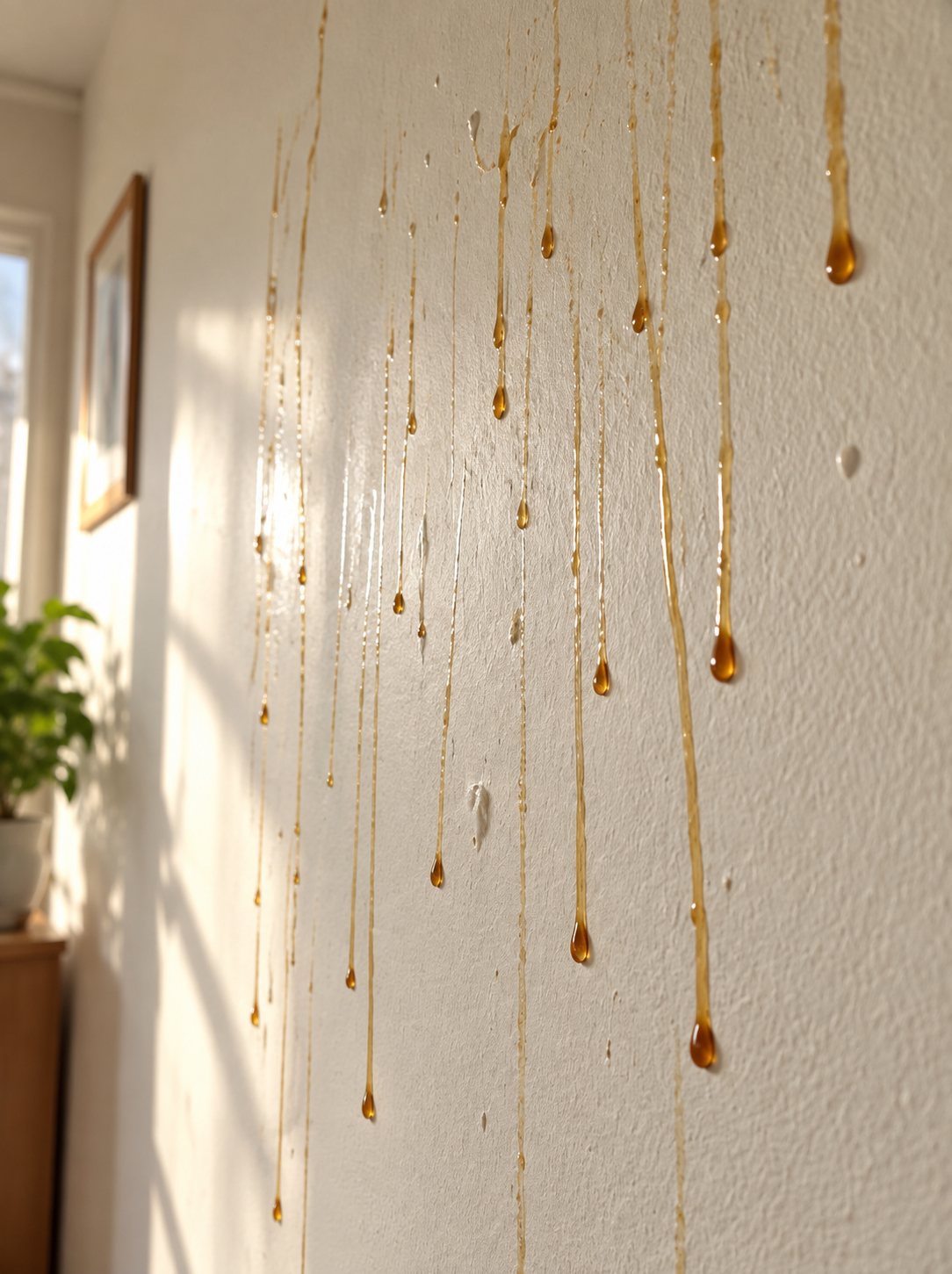
Yellow Stuff Starts Dripping Down Your Bathroom Walls can look alarming, especially when the marks seem to appear suddenly after a hot shower. The streaks may be pale yellow, orange, amber, or even brown, and they can show up on painted walls, ceilings, tile edges, or near vents.
The good news is that several common household issues can create this effect. Humidity can pull residue out of old paint, loosen tobacco film, reveal hard-water deposits, encourage microbial growth, or expose a leak that has been developing behind the surface.
The important step is identifying the pattern before reaching for a cleaner. A stain caused by condensation needs a different solution from one caused by rust or hidden water damage.
I have always found bathroom problems especially frustrating because moisture can make everything look worse than it is. A wall can appear perfectly normal when dry, then suddenly develop yellow streaks after a long shower. The first instinct is often to scrub immediately, but observation usually saves time. Where the streak begins, whether it feels oily or chalky, and whether the wall feels damp can tell you much more than the color alone.
Why Yellow Stuff Starts Dripping Down Your Bathroom Walls
Condensation Can Pull Residue to the Surface
One of the most common reasons Yellow Stuff Starts Dripping Down Your Bathroom Walls is condensation. Bathrooms regularly fill with warm, moist air, especially during long showers.
When steam reaches a cooler wall or ceiling, it condenses into tiny droplets. Those droplets can dissolve residue sitting on or inside the painted surface and carry it downward.
That residue may come from cooking oils in nearby spaces, old cleaning products, hairspray, body oils, smoke residue, or substances trapped in layers of paint.
In some homes, builders and painters call this type of problem surfactant leaching. Certain latex paints contain water-soluble ingredients that can migrate to the surface when the room stays humid.
Surfactant leaching can appear as sticky, glossy, yellowish, brownish, or clear streaks. It often becomes more noticeable in bathrooms because steam repeatedly wets the paint.
If the marks appear mainly after showers and the wall itself feels structurally sound, humidity-related residue becomes a strong possibility.
Improving ventilation usually matters more than repeatedly wiping the same streaks. An exhaust fan, shorter showers, and leaving the door open afterward can help the room dry faster.
Once the wall is fully dry, gentle cleaning with mild soap and water may remove surface residue. However, harsh scrubbing can damage painted finishes.
Old Smoke Residue Can Reappear in Humid Rooms
Nicotine and smoke residue can create some of the most dramatic yellow or brown drips on walls. This can happen even if nobody currently smokes inside the home.
Tobacco smoke leaves a sticky film on painted surfaces. Over time, the residue can become embedded in walls, ceilings, trim, and previous paint layers.
When bathroom humidity rises, condensation can loosen that film and cause it to run downward in yellow or brown streaks.
This explanation is especially worth considering in an older property, rental, or recently purchased home with an unknown history.
The residue may also carry a stale odor, particularly when the room becomes warm and humid.
Ordinary surface cleaning may reduce the staining, but severe smoke contamination often requires deeper cleaning and stain-blocking primer before repainting.
Simply painting over heavy nicotine residue can allow stains to bleed through again.
Therefore, if Yellow Stuff Starts Dripping Down Your Bathroom Walls despite repeated cleaning, older smoke contamination may be hiding beneath the current finish.
Mineral Deposits, Rust, and Microbial Growth
Hard Water and Rust Can Leave Yellow or Orange Marks
Water containing iron can leave yellow, orange, or reddish-brown stains. These marks frequently appear near faucets, showerheads, plumbing fixtures, and areas where water regularly splashes.
Iron in the water can oxidize after exposure to air, producing rust-colored deposits. Corroding metal components can create similar staining.
Hard water creates a different type of residue. Calcium and magnesium minerals can leave chalky white, gray, or yellowish buildup, especially when combined with soap.
In a shower area, soap scum, body oils, shampoo, and minerals can combine into a stubborn film. Moisture may then cause parts of that film to run down vertical surfaces.
Texture can offer a clue. Mineral buildup usually feels crusty, rough, or chalky rather than oily.
Rust staining often appears strongly orange-brown and may concentrate around metal hardware or specific water paths.
If your home uses well water or older plumbing, iron may deserve particular attention.
However, stains appearing high on a wall or ceiling far from splash zones may point more strongly toward condensation or a hidden leak.
The location of the mark often provides more useful information than its exact shade.
Pink, Orange, or Yellow Film May Involve Microbial Growth
Bathrooms provide ideal conditions for bacteria, mildew, and mold because they combine moisture, warmth, and organic residue.
A pink, orange, reddish, or yellowish film can sometimes involve Serratia marcescens, a bacterium that commonly grows in damp environments with soap or fatty residue.
It frequently appears around shower grout, drains, toilet bowls, sink edges, and other persistently wet surfaces.
It should not simply be described as harmless. Serratia marcescens can act as an opportunistic pathogen, particularly in healthcare settings and in people with certain vulnerabilities.
In an ordinary bathroom, the practical response is still straightforward: clean the affected area, reduce moisture, and improve ventilation.
Wear gloves when cleaning visible microbial growth, and avoid creating unnecessary aerosols by aggressive dry scrubbing.
Bleach-based or other appropriate bathroom disinfectants may work on compatible hard surfaces, but always follow the product label and never mix bleach with ammonia, acids, vinegar, or other cleaners.
Mold can also appear yellow in some situations, although black, green, gray, or white are more commonly noticed.
If growth keeps returning quickly, the underlying moisture problem matters more than surface cleaning alone.
When Yellow Drips May Signal a Water Leak
Look for Softness, Bubbling, or Expanding Stains
Yellow Stuff Starts Dripping Down Your Bathroom Walls deserves more attention when the surface itself changes.
A hidden plumbing or roof leak can produce yellow or brown staining as water moves through drywall, plaster, insulation, wood, or old building materials.
Unlike ordinary condensation streaks, leak stains often develop a defined patch or ring. The area may expand gradually rather than appearing only after showers.
Paint may bubble, peel, or blister. Drywall can feel soft, swollen, cool, or damp.
A ceiling stain below an upstairs bathroom, pipe, roofline, or attic deserves prompt investigation.
Do not assume that wiping away the visible stain solves the problem. If water continues entering the structure, hidden damage can worsen.
Moist materials can also support mold growth, while prolonged leaks may damage drywall, framing, flooring, and nearby finishes.
If you notice sagging, active dripping from the ceiling, electrical fixtures near moisture, or rapidly spreading water damage, avoid the area and arrange professional help promptly.
Water around electrical components creates an additional hazard, so do not touch wet switches, outlets, or fixtures.
Persistent Moisture Requires More Than Cosmetic Cleaning
A common mistake is treating every bathroom stain as a cleaning problem. Sometimes the yellow mark is only the visible symptom.
If moisture keeps returning from behind a wall, the surface may need to be opened, dried, and repaired after the source of the leak has been fixed.
Painting over damp material traps the problem rather than solving it.
Likewise, repeated mold or bacterial growth usually indicates that the room remains wet for too long.
A bathroom should gradually dry after use. If mirrors remain fogged, walls stay wet for hours, or towels never fully dry, ventilation may be inadequate.
Check whether the exhaust fan actually moves air outdoors rather than simply making noise. Dirty fan grilles and blocked ducts can significantly reduce airflow.
Running the fan during a shower and for a period afterward can help. Opening a window may also improve drying when outdoor conditions allow.
The goal is to reduce the amount of time surfaces remain wet.
When Yellow Stuff Starts Dripping Down Your Bathroom Walls because of chronic moisture, prevention usually works better than endless cleaning.
How to Identify and Clean Yellow Bathroom Streaks Safely
Start With Simple Observation Before Using Chemicals
Before cleaning, examine the stain closely.
Ask when it appears. Does it show up only after hot showers, remain visible all day, or slowly expand over several weeks?
Then consider location. Streaks near the ceiling may suggest condensation, while stains beneath plumbing or around fixtures can point toward leaks or rust.
Feel the surface only if it is safe and there is no electrical concern. Sticky residue may suggest surfactants or smoke film. Chalky residue may indicate minerals.
A musty odor can raise concern about persistent moisture or microbial growth.
Take a photograph before cleaning if the problem keeps returning. Comparing images over time can reveal whether the affected area is spreading.
For an ordinary washable painted wall, begin with warm water and a small amount of mild dish soap. Use a soft cloth or sponge and test a hidden area first.
Avoid soaking drywall or aggressively scrubbing flat paint because moisture and friction can damage the finish.
If mild cleaning does not work, choose a product designed for the specific surface and stain.
Never experiment by combining household cleaners. Dangerous gases can form when certain products mix.
Prevent the Streaks From Coming Back
Cleaning removes what you can see, but prevention addresses why Yellow Stuff Starts Dripping Down Your Bathroom Walls in the first place.
Improve ventilation first. Run the exhaust fan while bathing and continue using it afterward so steam leaves the room.
Wipe excess condensation from walls or tile if the bathroom remains very humid.
Keep shower curtains, bath mats, and towels clean and allow them to dry thoroughly.
Clean soap scum before it builds into a heavy film. Areas around shampoos and body products often accumulate more residue than they appear to.
If your water contains high levels of iron or minerals, consider having the water tested. Treatment options depend on the actual mineral content.
Inspect caulking, plumbing connections, and grout periodically for signs of moisture intrusion.
If stains repeatedly return from beneath fresh paint, identify the source before repainting. Smoke residue, water damage, or paint surfactants may require special preparation.
For persistent humidity problems, a stronger exhaust fan or dehumidifier may help, depending on the room and climate.
A dry bathroom is generally a cleaner and easier bathroom to maintain.
Frequently Asked Questions
Why does yellow stuff appear on my bathroom walls after a shower?
Condensation may dissolve residue on the painted surface and carry it downward. Possible sources include paint surfactants, smoke residue, soap film, body oils, or other contaminants that become visible when the walls get wet.
Can yellow bathroom streaks be mold?
Sometimes, but color alone cannot identify mold. Mold can appear in several colors, while bacteria, rust, nicotine residue, minerals, and paint additives can all create yellowish staining. Persistent growth or moisture deserves further investigation.
What is the pink or orange film in a bathroom?
A common cause is Serratia marcescens, a bacterium that thrives in moist environments and feeds on residue such as soap scum. Clean the surface according to appropriate disinfectant instructions and improve ventilation to reduce recurrence.
How can I tell whether the yellow stain comes from a leak?
Watch for an expanding patch, bubbling paint, soft drywall, persistent dampness, sagging, or staining that appears regardless of shower use. Those signs make hidden water intrusion more likely and may require professional inspection.
Can I simply paint over yellow bathroom stains?
Not until you know the cause. Paint may fail or stains may bleed through if the wall contains moisture, smoke residue, or contamination. Fix leaks and moisture problems first, clean and dry the surface, and use appropriate primer when necessary.
Conclusion
Yellow Stuff Starts Dripping Down Your Bathroom Walls for several possible reasons, and most become easier to manage once you identify the source.
Condensation may pull paint surfactants or old residue to the surface. Tobacco contamination can reappear as yellow-brown streaks when humidity rises. Iron and hard-water minerals can leave colored deposits, while soap and body products can create films that soften when wet.
Pink, orange, or yellow microbial growth can also develop in damp bathrooms. Cleaning helps, but keeping surfaces dry and improving ventilation reduces the conditions that allow it to return.
The situation deserves faster attention when yellow staining accompanies soft drywall, peeling paint, spreading water marks, active dripping, or a damp ceiling. Those signs may indicate a hidden plumbing or building leak.
Start with observation rather than aggressive cleaning. Look at the location, timing, texture, odor, and behavior of the stain.
Then deal with the underlying cause.
For humidity, improve airflow. For mineral deposits, address the water and buildup. For microbial growth, clean safely and reduce moisture. For hidden leaks, repair the water source before making cosmetic fixes.
Yellow Stuff Starts Dripping Down Your Bathroom Walls can certainly look strange, but it is usually your bathroom giving you a useful clue.
Pay attention to that clue early, and you may prevent a minor cleaning problem from turning into a much larger repair.
More Blog
- Drinking Water on an Empty Stomach — What Science Actually Supports (No Hype, Just Facts)
- Waking Up Between 3 and 5 AM? It Might Be Your Soul Trying to Talk to You
- What a “Bleach” Patch on Your Underwear Really Means — And Why It’s Actually a Good Sign
- This Drink May Weaken Your Bones From The Inside — But Everyone Drinks It Anyway