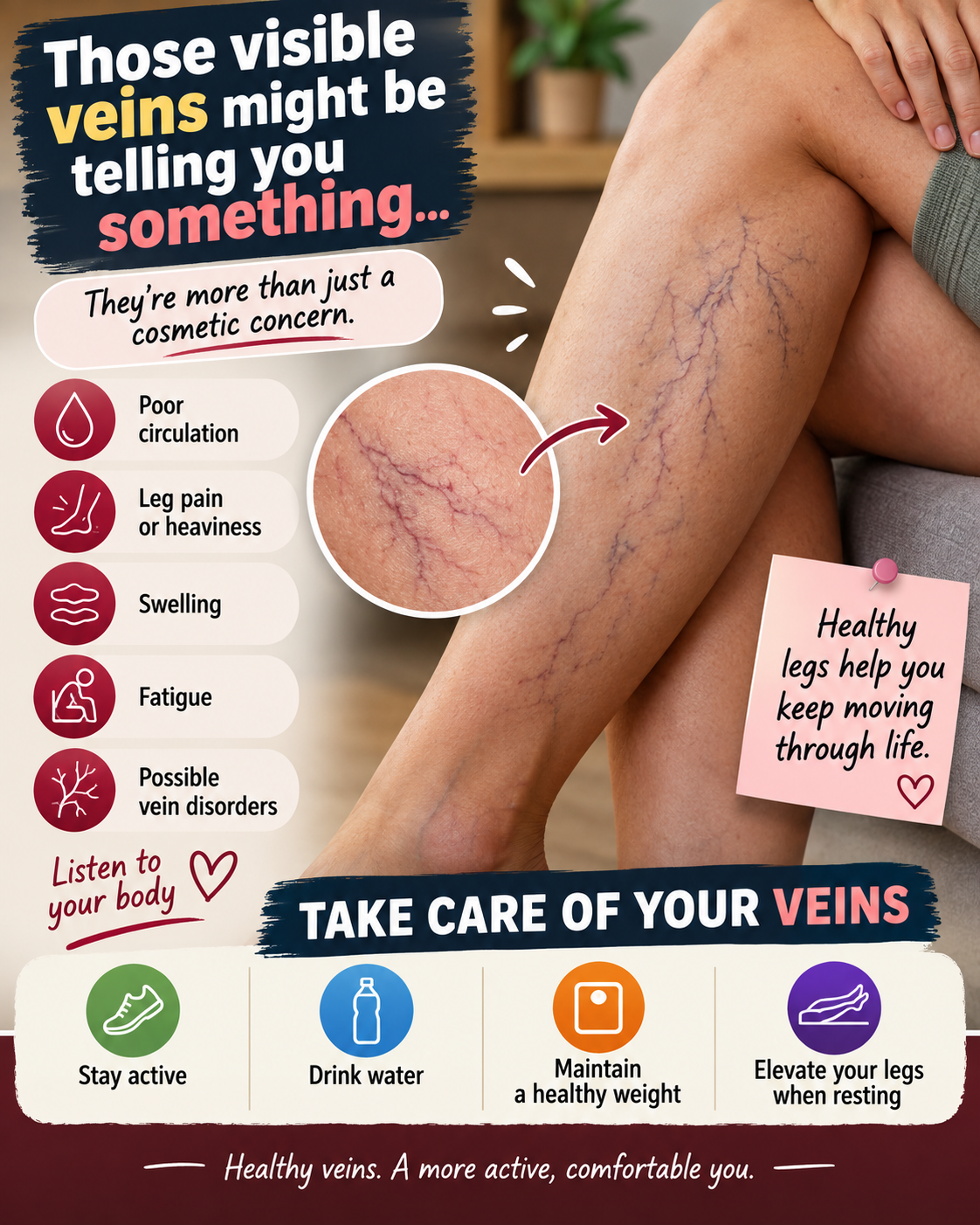
If you have purple veins on your legs, it means you may simply have visible spider veins or small superficial veins beneath the skin. These blue, red, or purple lines are extremely common, especially with age, pregnancy, genetics, or long periods of standing. In many people, they create only a cosmetic concern and never lead to serious health problems.
However, purple veins can sometimes appear alongside varicose veins or chronic venous insufficiency, a condition in which leg veins have trouble returning blood efficiently toward the heart. When visible veins come with swelling, aching, heaviness, skin discoloration, or slow-healing sores, the surrounding symptoms deserve more attention.
The key is not to panic when you notice a few purple lines. Instead, look at how the veins behave and whether anything else has changed. Flat, stable spider veins without discomfort differ significantly from suddenly worsening pain, swelling, redness, or skin breakdown.
I remember noticing a cluster of tiny bluish-purple lines on someone’s calf and realizing how easy it is to assume the worst after seeing unfamiliar veins. They looked dramatic under bright light, yet they caused no pain or swelling and had changed very little over time. That experience is a useful reminder that appearance alone does not tell the whole story. What matters more is whether the veins are new, painful, enlarged, accompanied by swelling, or associated with changes in the skin around them.
What Purple Veins on Your Legs Usually Mean
Spider Veins Are Often Small and Harmless
If you have purple veins on your legs, it means you may be seeing what doctors call telangiectasias, commonly known as spider veins. These are small visible blood vessels near the surface of the skin. They often form branching, web-like, or thin linear patterns.
Spider veins differ from classic varicose veins. Varicose veins usually look larger, swollen, twisted, or rope-like, while spider veins tend to stay flatter against the skin. Both can appear blue or purple, which sometimes makes them difficult to distinguish at first glance.
Many people develop spider veins without having significant circulation problems. Genetics can influence who gets them, and age can make superficial veins easier to see. Pregnancy and hormonal changes may also increase pressure within leg veins and make them more noticeable.
Standing or sitting for long periods can contribute as well. Blood has to travel against gravity from the legs toward the heart, so long periods without much movement can increase pressure in lower-leg veins.
For many people, spider veins remain primarily a cosmetic issue. However, visible veins sometimes coexist with symptoms such as aching, heaviness, itching, or swelling. When that happens, a healthcare professional can help determine whether deeper venous problems are contributing.
Why Veins Often Look Purple or Blue
Veins do not actually contain blue or purple blood. Blood inside veins remains dark red because it carries less oxygen than arterial blood. The skin and underlying tissues change how light reflects back to your eyes, which can make veins appear blue, green, or purple.
Skin tone, vein depth, vessel size, lighting, and surrounding tissue all influence the color you see. Therefore, color alone cannot determine whether a vein is healthy or unhealthy.
A small purple vein near the skin surface may simply be easier to see because of thin skin. Aging can make this more noticeable because skin gradually becomes thinner and changes in elasticity can reveal underlying vessels more clearly.
Weight changes can also affect visibility. When there is less tissue covering superficial blood vessels, veins can become easier to see even if their function has not changed.
This is why If You Have Purple Veins on Your Legs, It Means You Are… cannot end with one universal diagnosis. The same color can appear in harmless spider veins, larger varicose veins, or skin changes associated with venous disease.
The rest of the picture matters more. Pain, swelling, heaviness, warmth, skin changes, ulcers, and sudden progression provide far more useful medical information than color by itself.
Why Purple Veins Develop in the First Place
Genetics, Age, Pregnancy, and Daily Habits
Several factors increase the likelihood of visible leg veins. Family history plays a major role. If parents or siblings have spider veins or varicose veins, you may be more likely to develop them as well.
Age also contributes. Vein walls and valves can weaken over time, and the skin covering the vessels can become thinner. Consequently, visible veins often become more common as people get older.
Pregnancy can place extra pressure on veins in the legs because blood volume increases and the growing uterus changes circulation. Hormonal changes may also affect vein walls. Many pregnancy-related veins improve afterward, although some remain visible.
Body weight can influence venous pressure too. Carrying excess weight may place additional pressure on leg veins, while significant weight loss may simply make existing veins easier to see because less tissue covers them.
Prolonged standing and sitting represent another important factor. Jobs that keep people motionless for hours can make it harder for leg muscles to assist venous blood flow. The National Heart, Lung, and Blood Institute lists prolonged sitting or standing and inactivity among factors associated with varicose veins.
These risk factors do not guarantee that someone will develop problematic veins. They simply help explain why visible purple vessels occur more often in some people than others.
Weak Vein Valves Can Lead to Blood Pooling
Healthy leg veins contain one-way valves that help keep blood moving upward toward the heart. When those valves weaken or become damaged, some blood can flow backward and collect within the veins. Doctors call this reflux.
As pressure builds, veins may gradually enlarge and become twisted. This process creates the familiar appearance of varicose veins. The veins may also cause heaviness, aching, itching, burning, swelling, or nighttime cramps.
Chronic venous insufficiency develops when the veins consistently struggle to return blood from the legs toward the heart. Damaged valves are a common cause, although previous blood clots can also contribute.
Not every spider vein means chronic venous insufficiency. Plenty of people have small surface veins without significant deeper circulation problems. However, clusters of visible veins combined with persistent leg symptoms may justify a medical evaluation.
Symptoms often become worse after long periods of standing and may improve when the legs are elevated. That pattern reflects the effect of gravity on blood pooling in the lower extremities.
Understanding this mechanism makes the situation less mysterious. Purple veins may simply be visible vessels, or they may form part of a broader problem involving pressure and valve function.
When Purple Veins Could Signal a Circulation Problem
Pay Attention to Pain, Swelling, and Skin Changes
If you have purple veins on your legs, it means you should pay more attention when other symptoms appear. Persistent aching, heaviness, cramping, itching, tingling, or swelling can accompany chronic venous insufficiency.
Skin changes deserve particular attention. Venous disease can sometimes cause red, purple, brown, or darker discoloration around the lower legs and ankles. Skin may also become irritated, dry, thickened, hardened, or itchy.
In more advanced cases, open sores known as venous ulcers can develop, particularly around the ankles. These wounds may heal slowly because poor venous circulation keeps pressure high in the surrounding tissues.
A sore that will not heal deserves professional care. Likewise, rapidly worsening swelling or increasing pain should not simply be treated as a cosmetic vein problem.
The National Heart, Lung, and Blood Institute recommends contacting a healthcare provider when varicose veins suddenly worsen or when a sore appears. Bleeding from varicose veins can represent a medical emergency.
The goal is not to become alarmed by every visible vein. Rather, use accompanying symptoms to decide when routine observation is reasonable and when evaluation becomes more important.
Sudden One-Sided Changes Need Faster Attention
A long-standing cluster of spider veins usually behaves very differently from a sudden painful change in one leg. Sudden swelling, increasing pain, redness, or warmth can signal a problem that requires prompt medical assessment.
Deep vein thrombosis, or DVT, involves a blood clot in a deeper vein. Purple spider veins themselves do not diagnose DVT, but sudden one-sided symptoms should not be dismissed as ordinary surface veins.
MedlinePlus advises seeking medical attention for a sudden increase in leg pain or swelling, redness, fever, or leg sores in people with venous problems.
Likewise, a vein that becomes suddenly hard, tender, or inflamed may require evaluation for superficial thrombophlebitis or another vascular problem. A clinician can determine whether additional testing is needed.
If leg symptoms occur with sudden shortness of breath, chest pain, faintness, or coughing up blood, seek emergency medical care. Those symptoms can indicate a pulmonary embolism and require immediate assessment.
The important point is the speed and severity of change. Stable spider veins can usually wait for a routine appointment, while sudden pain, major swelling, breathing problems, or significant bleeding require much faster action.
How to Support Leg Vein Health and Treat Visible Veins
Movement and Simple Habits Can Reduce Venous Pressure
Regular movement helps the muscles in the calves push blood upward through the veins. Walking can therefore support circulation and reduce the amount of time blood spends pooling in the lower legs.
If your work requires prolonged sitting, stand up and move periodically when possible. If you spend hours standing, shift position, walk during breaks, and avoid remaining completely still for long stretches.
Maintaining a weight that supports your health can also reduce unnecessary pressure on the veins. For people with symptomatic varicose veins, weight management may form part of an overall treatment plan.
Elevating your legs can help some people with aching or swelling. Symptoms of venous insufficiency often improve when the legs are raised because gravity helps blood move away from the lower extremities.
Compression stockings may benefit certain people by applying controlled pressure to the legs. However, compression is not appropriate for everyone, particularly people with some types of arterial circulation problems, so medical guidance can help determine the correct type and strength.
These habits may relieve symptoms or reduce progression, but they do not always make existing spider veins disappear. Cosmetic treatment involves different techniques.
Medical and Cosmetic Treatments Can Help When Needed
People who dislike the appearance of spider veins or experience symptoms have several treatment options. The best method depends on the size and location of the veins, the presence of underlying venous reflux, and the person’s overall health.
Sclerotherapy remains a common treatment for spider and small varicose veins. A clinician injects a solution into the affected vessel, which causes it to close gradually. The body then redirects blood through healthier veins.
Laser and light-based treatments can also target smaller superficial vessels. These methods may be particularly useful for certain spider veins that are too small for other techniques.
Larger varicose veins may require procedures such as endovenous laser therapy, radiofrequency ablation, or other minimally invasive treatments. These techniques close malfunctioning veins so blood can travel through healthier pathways.
Before treating the appearance alone, a clinician may recommend duplex ultrasound if symptoms suggest deeper venous disease. Ultrasound can assess blood flow and valve function without surgery.
Treatment goals vary. Some people want cosmetic improvement, while others need relief from aching, swelling, heaviness, skin problems, or ulcers.
For that reason, treatment works best when it addresses the underlying vein problem rather than simply hiding its appearance.
Frequently Asked Questions
Are purple veins on the legs dangerous?
Usually, small purple spider veins are not dangerous and may cause no symptoms at all. However, visible veins accompanied by persistent swelling, aching, heaviness, skin discoloration, or sores can occur with chronic venous disease and deserve medical evaluation.
What causes purple spider veins?
Common contributors include genetics, aging, pregnancy, prolonged sitting or standing, inactivity, and increased pressure within leg veins. Sometimes spider veins occur without any significant underlying disease.
Can exercise make spider veins disappear?
Exercise may support circulation and help reduce symptoms, but it usually does not remove existing spider veins completely. Walking and other regular movement can help the calf muscles push blood back toward the heart.
When should I see a doctor about purple veins?
Schedule an evaluation if veins cause persistent pain, swelling, heaviness, itching, skin discoloration, or sores. Seek faster medical attention for sudden increases in pain or swelling, redness, fever, major bleeding, or rapidly worsening symptoms.
Can purple veins be treated for cosmetic reasons?
Yes. Depending on the type and size of the veins, treatment may include sclerotherapy, laser treatment, or procedures that close larger malfunctioning veins. A vein specialist can recommend the most appropriate option after assessing circulation.
Conclusion
If you have purple veins on your legs, it means you may simply have spider veins, one of the most common visible vein changes. Genetics, aging, pregnancy, prolonged standing, body composition, and normal differences in superficial blood vessels can all make veins easier to see.
In many cases, those veins remain harmless and require no treatment. However, their significance changes when they appear alongside persistent aching, swelling, heaviness, itching, or changes in the surrounding skin.
Chronic venous insufficiency can cause blood to pool in the legs when vein valves do not work efficiently. Over time, that problem can contribute to swelling, skin discoloration, thickened skin, and slow-healing ulcers.
Simple habits such as regular walking, avoiding long periods of complete inactivity, maintaining an appropriate weight, and elevating the legs can support venous circulation. People with persistent symptoms may also benefit from compression or medical treatment after professional evaluation.
Most importantly, do not judge leg health from vein color alone. A few stable purple lines often mean very little medically, while sudden swelling, pain, redness, bleeding, or major skin changes deserve much closer attention.
The best approach involves watching the complete pattern. Purple veins may simply be a visible part of normal circulation, but when your legs begin sending additional warning signs, responding early can help protect long-term comfort and vascular health.
More Blog
- Drinking Water on an Empty Stomach — What Science Actually Supports (No Hype, Just Facts)
- Waking Up Between 3 and 5 AM? It Might Be Your Soul Trying to Talk to You
- What a “Bleach” Patch on Your Underwear Really Means — And Why It’s Actually a Good Sign
- This Drink May Weaken Your Bones From The Inside — But Everyone Drinks It Anyway