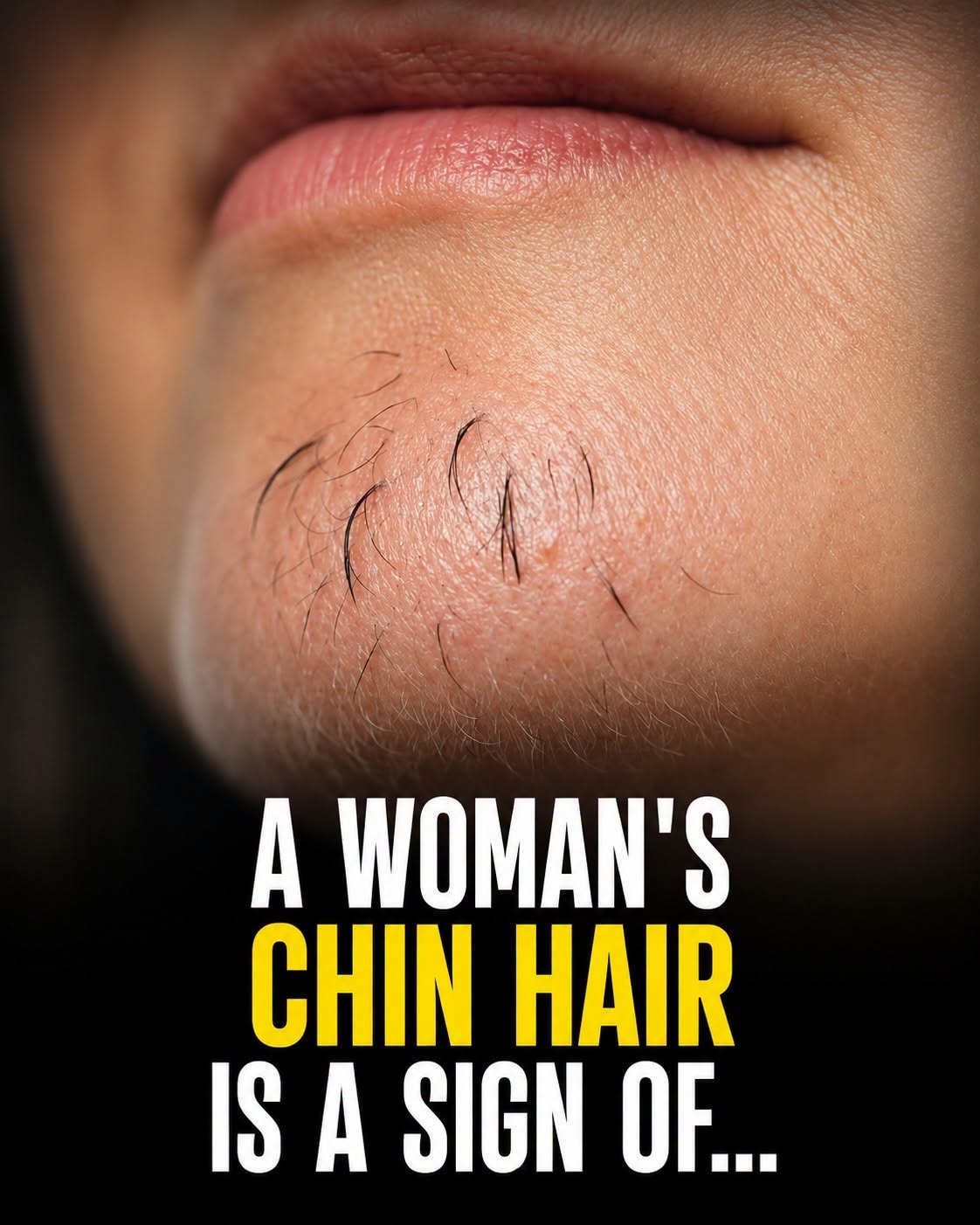
You look in the mirror and suddenly notice it: one dark, coarse hair growing from your chin.
Maybe you plucked the exact same hair a few weeks ago. Or perhaps this is the first time you’ve ever noticed one.
For many women, occasional facial hairs are completely normal. Genetics, natural hormonal variation, and changes that occur with age can all influence where and how hair grows.
But if facial hair suddenly becomes much thicker or more widespread, it can sometimes be worth discussing with a healthcare professional.
Here’s what you should know.
First: Is Chin Hair Normal in Women?
Yes.
Women naturally produce both estrogen and androgens, including testosterone, although androgen levels are generally lower than in men.
Hair follicles also vary in how sensitive they are to these hormones.
That’s why one woman may have virtually invisible facial hair while another naturally develops several coarse hairs around her chin or upper lip.
Having a few chin hairs by itself doesn’t necessarily indicate a medical problem.
Why Does Chin Hair Become More Noticeable With Age?
Hormonal balance changes throughout life.
As women approach and go through menopause, estrogen levels decline significantly. This can make the effects of androgens on certain hair follicles more noticeable.
Some previously fine facial hairs may gradually become darker or coarser.
At the same time, hair elsewhere—particularly on the scalp—may become thinner.
This seemingly contradictory combination can simply reflect how different hair follicles respond to hormones.
Genetics Matter Too
Look around your family and you may notice similar patterns.
The amount, thickness, color, and distribution of body and facial hair are strongly influenced by genetics.
Some people naturally have darker or coarser facial hair without having abnormal hormone levels.
Hair color also matters. A single dark hair against lighter skin can simply be much easier to notice than several fine, pale hairs.
When Facial Hair May Be Hormonal
Excessive growth of coarse, dark hair in areas where male-pattern hair commonly develops is called hirsutism.
It can occur when androgen levels are elevated or when hair follicles are particularly sensitive to androgens.
Possible underlying causes include hormonal conditions, certain medications, and other medical issues.
One of the better-known causes of hirsutism in reproductive-age women is polycystic ovary syndrome (PCOS).
However, facial hair alone isn’t enough to diagnose PCOS—or any other hormonal condition.
Signs Worth Discussing With a Doctor
The pattern and speed of change matter more than finding one occasional hair.
Consider seeking medical advice if new facial hair is sudden, rapidly increasing, or significantly coarser than before, particularly when accompanied by other changes such as:
- Irregular or absent menstrual periods
- Significant new acne
- Noticeable scalp hair thinning
- Rapidly increasing coarse body hair
- A deeper voice or other pronounced physical changes
A healthcare professional can review your symptoms, medications, menstrual history, and other factors and determine whether testing is appropriate.
Can Medications Cause Facial Hair Growth?
Certain medications can affect hair growth.
That’s another reason a sudden change shouldn’t automatically be blamed on aging.
If increased facial or body hair appeared after starting a medication, discuss it with your doctor or pharmacist rather than stopping prescribed medication on your own.
Does Plucking Make Hair Grow Back Thicker?
This is a persistent beauty myth.
Plucking a hair doesn’t create additional hair follicles.
Removing one chin hair won’t suddenly cause several more to grow in its place.
A regrowing hair can sometimes feel noticeable because you’re paying closer attention to the area, but plucking itself doesn’t transform surrounding follicles into coarse hairs.
Does Shaving Make Facial Hair Grow Back Thicker?
No.
Shaving cuts hair at the skin’s surface. It doesn’t alter the follicle underneath the skin or change the hair’s growth rate.
Newly emerging hair can temporarily feel thicker or stubbier because shaving leaves a blunt edge instead of the naturally tapered end of an untouched hair.
But the hair itself hasn’t become biologically thicker because you shaved it.
Safe Ways to Remove Occasional Chin Hair
If the hair bothers you, removal is a personal cosmetic choice—not a medical necessity.
Tweezing
Tweezers can be convenient for one or two isolated hairs.
Use clean tweezers and avoid repeatedly digging into the skin for hairs that haven’t emerged yet, as this can cause irritation.
Shaving or Facial Hair Trimmers
These are quick options for larger areas.
Use clean equipment and avoid repeatedly passing over irritated skin.
Waxing or Threading
Both can remove multiple hairs at once, although they may irritate sensitive skin.
Laser Hair Reduction
Laser treatments can provide longer-lasting reduction for suitable hair and skin types.
Results and effectiveness vary, and multiple treatments are generally required.
A qualified professional can determine whether you’re a good candidate.
Electrolysis
Electrolysis targets individual follicles and can be useful when permanent hair removal is desired.
Again, treatment should be performed by an appropriately trained professional.
What About DIY Remedies?
The internet is full of mixtures claiming to permanently eliminate facial hair using ingredients such as lemon juice, baking soda, turmeric, toothpaste, or other household products.
Be skeptical.
There’s no reliable household mixture that simply switches off a hair follicle permanently.
Some DIY preparations can instead irritate the skin, cause burns, or worsen discoloration.
How to Reduce Irritation After Hair Removal
Keep things simple.
Clean the area gently, avoid excessive rubbing, and use a mild fragrance-free moisturizer if your skin feels irritated.
Avoid repeatedly touching freshly treated skin with unwashed hands.
If you experience persistent redness, swelling, pain, or signs of infection, seek appropriate medical advice.
One Hair vs. A Sudden Pattern: That’s the Important Difference
Finding a random coarse chin hair occasionally is very different from developing substantial new facial hair over a short period.
One or several longstanding hairs: often a normal variation.
Gradually increasing hair with age: may reflect normal hormonal changes.
Sudden, rapid, extensive growth: worth discussing with a healthcare professional, especially if other symptoms appear.
That distinction is much more useful than assuming every chin hair signals a hormonal disorder.
The Bottom Line
A random chin hair is extremely common and, by itself, usually isn’t a reason for alarm.
Genetics, natural androgen activity, follicle sensitivity, and age-related hormonal changes can all contribute to facial hair.
If you don’t like the hair, tweezing, trimming, shaving, threading, or professional treatments are all possible options.
But pay attention to changes rather than individual hairs.
If facial or body hair suddenly becomes significantly thicker, darker, or more widespread—especially alongside menstrual or other noticeable physical changes—talk with a healthcare professional.
Sometimes a chin hair is simply a chin hair.
And occasionally, a changing pattern can provide useful information about what’s happening inside the body.
More Blog
- Drinking Water on an Empty Stomach — What Science Actually Supports (No Hype, Just Facts)
- Waking Up Between 3 and 5 AM? It Might Be Your Soul Trying to Talk to You
- What a “Bleach” Patch on Your Underwear Really Means — And Why It’s Actually a Good Sign
- This Drink May Weaken Your Bones From The Inside — But Everyone Drinks It Anyway