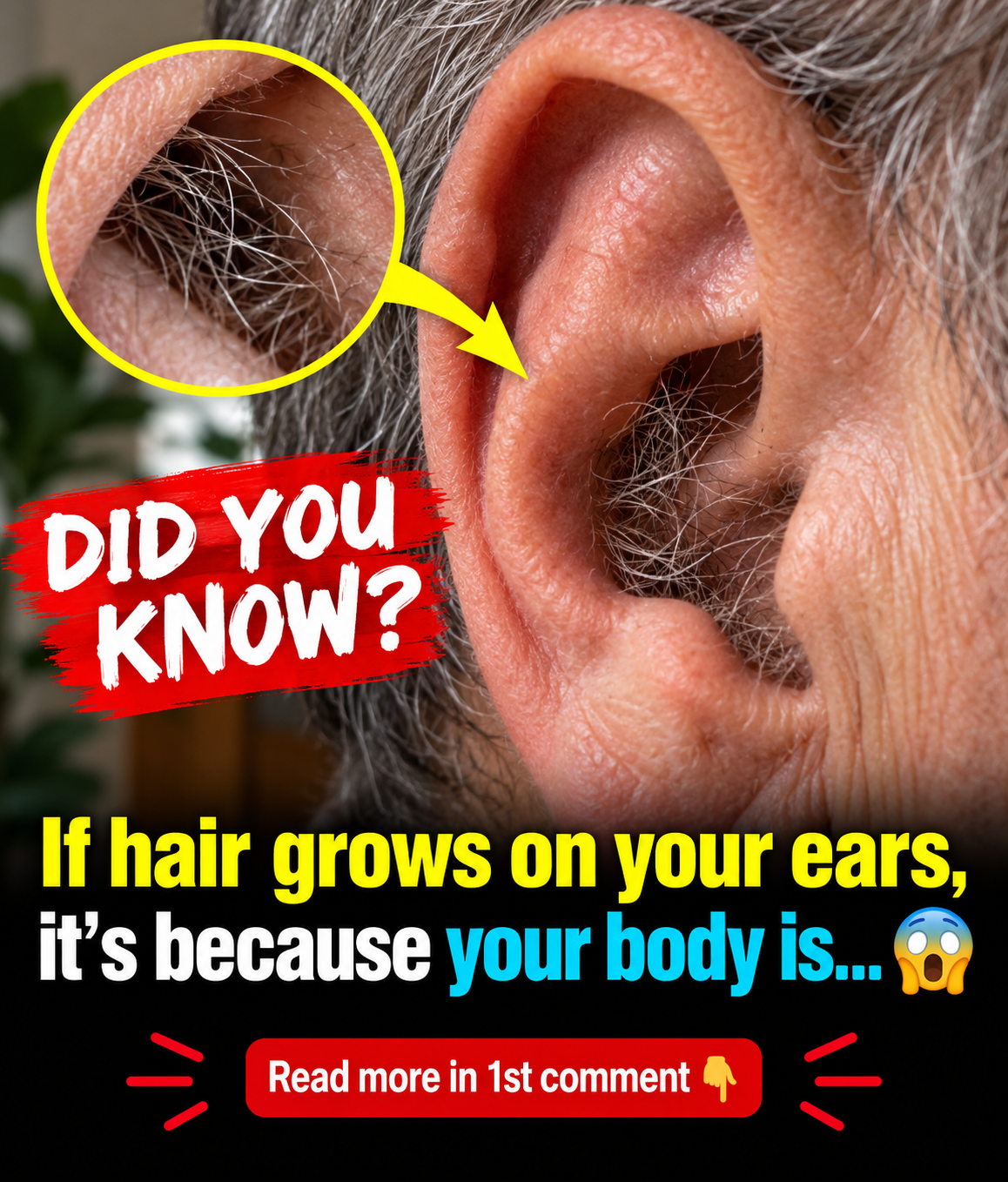
You are washing your face, looking in the mirror, and suddenly notice something you swear was not there before: a few long, wiry hairs growing around your ears. Maybe your barber pointed them out first. Either way, the discovery can make you wonder whether your body is trying to tell you something.
What Your Ear Hair Says About Your Health sounds like a simple question, but the answer involves aging, hormones, genetics, and the changing sensitivity of hair follicles.
For most people, visible ear hair is completely harmless. Men commonly develop thicker ear and nose hair as they get older, and medical experts consider it primarily a cosmetic issue. Researchers have also investigated possible connections between ear hair and cardiovascular disease. However, those associations need careful interpretation because ear hair itself does not diagnose heart disease.
I remember noticing this change in an older relative who joked that hair seemed to disappear from his head only to reappear around his eyebrows, nose, and ears. At first, it seemed like nothing more than one of aging’s strange little trades. However, it raised an interesting question: why does hair become thinner in some places while becoming more noticeable elsewhere? The answer isn’t simply “more testosterone.” Instead, individual hair follicles respond differently to hormones, genetics, and age. That distinction makes ear hair much easier to understand without turning an ordinary physical change into an unnecessary health scare.
Why Ear Hair Becomes More Noticeable With Age
Hormones and Hair Follicles Play a Major Role
The medical term often used for excessive hair on or around the outer ear is auricular hypertrichosis. Ear hair can include soft, fine vellus hairs as well as darker and stiffer terminal hairs. Terminal hairs are the ones most likely to become noticeable because they can protrude from the ear canal or grow prominently on the outer ear.
Androgens, including testosterone, influence hair development throughout the body. During puberty, these hormones help transform fine hairs into thicker terminal hairs in areas such as the face, chest, and underarms.
However, growing more ear hair as you age does not automatically mean your testosterone level has increased.
In fact, testosterone levels generally decline as men get older. Cleveland Clinic notes that experts do not completely understand why some men develop prominent ear hair. One proposed explanation involves ear and nose follicles becoming more sensitive to testosterone with age.
Therefore, the important factor may involve how a follicle responds to hormones rather than simply how much testosterone circulates in the bloodstream.
That also helps explain an apparent contradiction many men notice: scalp hair can become thinner while ear, eyebrow, or nose hair becomes more obvious.
Different follicles respond differently to hormonal signals.
Aging and Genetics Influence the Pattern
What Your Ear Hair Says About Your Health often says much more about normal aging than disease.
Hair follicles change throughout life. Consequently, the length, thickness, color, and texture of hair can change as well.
Cleveland Clinic lists thicker ear and nose hair among changes that some males experience as they age. Hair elsewhere may simultaneously become thinner or change texture.
Genetics also influence how your hair behaves.
You may notice similar patterns among male relatives. However, family resemblance does not mean every person will develop identical ear hair. Hormonal sensitivity, age, ancestry, and individual follicle characteristics all contribute.
Importantly, visible ear hair usually does not cause a medical problem by itself.
The hair inside and around your ears even serves a practical purpose. Along with earwax, small hairs can help prevent dust and debris from traveling deeper into the ear.
Still, unusually dense hair can occasionally contribute to problems. Cleveland Clinic notes that having substantial ear hair may increase the risk of otitis externa, commonly called swimmer’s ear.
Nevertheless, a few newly visible strands in middle or older age usually provide no reason for alarm.
Instead of treating ear hair as a warning sign on its own, consider it alongside your age, family tendencies, medications, other physical changes, and overall health.
What Your Ear Hair Says About Your Health and Hormones
Ear Hair Does Not Automatically Mean High Testosterone
A persistent myth claims that hairy ears prove a man has exceptionally high testosterone.
The biology isn’t that simple.
Testosterone certainly contributes to body-hair development. However, the effects depend partly on how individual follicles respond to androgens. Therefore, two men with similar hormone levels can have dramatically different amounts and patterns of body hair.
Furthermore, testosterone normally decreases with age rather than steadily increasing. Cleveland Clinic reports that levels can decline gradually beginning in the late 30s.
Yet ear hair may become more prominent during those same decades.
That combination supports the theory that changes in follicle sensitivity contribute to the phenomenon.
Consequently, you cannot determine your testosterone level by examining your ears.
Likewise, ear hair cannot tell you whether you have low testosterone.
Healthcare professionals diagnose hormonal problems using symptoms, medical history, physical examination, and, when appropriate, blood testing. They do not use ear-hair length as a testosterone test.
Other symptoms provide much more meaningful information.
For example, clinically low testosterone can involve changes in sexual function, muscle mass, energy, body composition, and other features. However, those symptoms can also have other causes.
Therefore, don’t interpret a few thick ear hairs as evidence that your hormones are unusually high or low.
For most adults, they simply reflect the complicated interaction between aging, genetics, hormones, and follicle sensitivity.
Sudden Hair Changes Deserve More Attention
Gradual ear-hair growth over many years differs from a sudden and dramatic change in body-hair growth.
That distinction matters.
If you have always had relatively little body hair and suddenly notice substantial new growth in several areas, consider discussing the change with a healthcare professional. This becomes particularly relevant when other new symptoms appear at the same time.
Women should also pay attention to sudden coarse hair growth in a typically male-pattern distribution, especially when it accompanies other hormonal changes.
However, one or two hairs appearing around an ear do not provide enough information to diagnose a hormonal disorder.
Medication can sometimes influence hair growth as well. Therefore, mention unexpected hair changes to your healthcare professional if they began after starting or changing medication.
Location matters, too.
Hair growing harmlessly from the outer ear differs from irritation, pain, drainage, hearing changes, or inflammation within the ear canal. Those symptoms can point toward an ear problem rather than a hair-growth problem.
Similarly, an irritated follicle can occasionally become inflamed.
Therefore, focus on the complete picture rather than the hair itself.
Gradual development without other symptoms usually supports a normal age-related explanation. In contrast, rapid widespread changes or additional unexplained symptoms provide a stronger reason to seek medical advice.
Is There Really a Connection Between Ear Hair and Heart Health?
Some Studies Have Found an Association
This is where What Your Ear Hair Says About Your Health becomes particularly interesting—and where sensational claims can easily go too far.
Researchers have studied whether certain visible physical characteristics correlate with coronary artery disease. Ear-canal hair has appeared in some of that research.
For example, a 1989 study involving 215 patients reported a significant difference in ear-canal hair between age-matched men with and without documented coronary artery disease. The researchers also examined diagonal earlobe creases.
More recently, a small 2020 cross-sectional study examined 105 patients undergoing coronary angiography because doctors already suspected coronary artery disease. Researchers reported an association between ear hair and coronary artery disease in that particular population.
Those findings are interesting.
However, an association does not establish that ear hair causes cardiovascular disease. Nor does it mean that someone with hairy ears has heart disease.
Age presents an obvious complication because both cardiovascular disease and visible ear hair become more common as people grow older.
Researchers studying other physical signs associated with cardiovascular disease have encountered similar challenges. For example, studies of diagonal earlobe creases have produced varying results, and some researchers have concluded that age could explain at least part of the apparent relationship.
Therefore, ear hair should not replace established cardiovascular risk assessment.
Focus on Proven Cardiovascular Risk Factors
Finding three hairs sticking out of your ear is not a reason to assume something is wrong with your heart.
Instead, use proven health information to understand cardiovascular risk.
A healthcare professional can evaluate factors such as blood pressure, cholesterol, blood sugar, smoking history, physical activity, body composition, family history, age, and existing medical conditions.
Those measurements provide substantially more useful information than ear hair.
In other words, don’t ignore your cardiovascular health because your ears look smooth, and don’t panic because they look hairy.
You can, however, use an unexpected physical change as a reminder to review your general health.
For example, if you haven’t checked your blood pressure or cholesterol for years, scheduling an appropriate routine health assessment may make sense regardless of your ear hair.
Additionally, seek prompt medical attention for actual cardiovascular warning symptoms rather than relying on cosmetic signs.
Chest discomfort, unexplained shortness of breath, fainting, or other concerning symptoms require proper medical evaluation.
Ultimately, the scientific literature makes an intriguing observation: some studies have reported associations between ear hair and coronary artery disease in selected populations.
However, current evidence does not turn ear hair into a standalone diagnostic test.
That distinction prevents an interesting research finding from becoming misleading health advice.
How to Manage Ear Hair Safely
Trimming Is Usually the Simplest Option
Once you understand What Your Ear Hair Says About Your Health, you may decide that it says nothing concerning—and you simply want the hair gone.
Fortunately, you have several options.
Trimming visible hair is usually straightforward. Small electric trimmers designed for nose and ear hair can shorten protruding hairs without requiring you to remove them from the root.
However, avoid pushing cutting devices deep into the ear canal.
The ear canal contains delicate skin, while the eardrum sits deeper inside. Therefore, concentrate only on easily accessible, visible hair.
Some people shave hair on the outer ear. Others consider professional waxing, threading, laser treatment, or similar approaches. Cleveland Clinic lists several temporary and longer-lasting hair-removal methods.
Still, technique matters.
Pulling individual hairs from sensitive areas can irritate follicles and skin. Additionally, aggressive hair removal can create tiny injuries.
Never insert scissors deeply into your ear.
Likewise, avoid pouring hair-removal chemicals into the ear canal. Products designed for ordinary skin may irritate the delicate ear area and shouldn’t contact internal ear structures unless their directions specifically permit such use.
When in doubt, ask a dermatologist or another qualified healthcare professional about safe removal.
Know When the Ear Needs Medical Attention
Ear hair itself usually doesn’t require treatment.
However, symptoms occurring around the hair may deserve attention.
Contact a healthcare professional if you develop persistent ear pain, swelling, significant redness, discharge, bleeding, or hearing changes.
Likewise, seek advice if the skin around the ear becomes increasingly tender after plucking or trimming. An irritated or infected hair follicle may need different care from ordinary unwanted hair.
Sudden widespread changes in body-hair growth can also justify medical evaluation, particularly when they accompany other unexplained symptoms.
Otherwise, managing ear hair remains primarily a personal grooming decision.
You don’t have to remove it for health reasons.
If you prefer a cleaner appearance, trim it carefully. If it doesn’t bother you, leaving it alone is generally reasonable.
Cleveland Clinic describes hairy ears primarily as a cosmetic concern and notes that ear hair itself doesn’t affect hearing.
Furthermore, remember that hair grows back. Therefore, trimming or other temporary removal methods require maintenance.
The safest goal isn’t to eliminate every microscopic hair inside the ear. Instead, manage the visible strands that bother you while protecting the sensitive skin and structures of the ear.
Frequently Asked Questions
Does ear hair mean I have high testosterone?
Not necessarily. Testosterone and other androgens influence body-hair development, but follicle sensitivity also matters. Ear hair can actually become more noticeable as men age even though testosterone levels generally decline over time.
Does ear hair mean I have heart disease?
No. Some studies have reported associations between ear hair and coronary artery disease in selected groups, but ear hair does not diagnose cardiovascular disease. Age and other factors can complicate these associations. Established cardiovascular risk factors provide much more useful information.
Why does ear hair grow while scalp hair disappears?
Different hair follicles respond differently to hormones. Dihydrotestosterone, or DHT, plays an important role in male-pattern scalp hair loss in genetically susceptible follicles, while aging may make ear and nose follicles more responsive to androgen effects.
Is it safe to pluck ear hair?
Plucking removes hair from the root, but it can irritate sensitive skin. Trimming visible hair often provides a simpler approach. Whatever method you choose, avoid inserting sharp tools or chemical hair removers deep inside the ear canal.
When should I worry about ear hair?
Gradually increasing ear hair with age usually isn’t concerning. However, consider medical advice if hair growth changes suddenly and dramatically throughout your body or occurs alongside other unexplained symptoms. Ear pain, discharge, significant swelling, bleeding, or hearing changes also deserve separate medical attention.
Conclusion
What Your Ear Hair Says About Your Health is usually less dramatic than social media headlines suggest.
For many men, thicker and more noticeable ear hair simply accompanies aging. Genetics and changing follicle sensitivity to hormones probably contribute as well. Therefore, ear hair alone doesn’t prove that testosterone is unusually high or that something is wrong with your health.
Research into ear hair and cardiovascular disease does exist. Some studies have found associations, but those findings do not make hairy ears a reliable heart-disease test.
Instead, pay attention to established cardiovascular risk factors and routine preventive care.
Meanwhile, if the hair itself bothers you, careful trimming offers a simple solution. Avoid aggressive techniques inside the ear canal, and seek professional advice if you develop pain, discharge, swelling, hearing changes, or unusual widespread hair growth.
Sometimes an ear hair really is just an ear hair.
More Blog
- Drinking Water on an Empty Stomach — What Science Actually Supports (No Hype, Just Facts)
- Waking Up Between 3 and 5 AM? It Might Be Your Soul Trying to Talk to You
- What a “Bleach” Patch on Your Underwear Really Means — And Why It’s Actually a Good Sign
- This Drink May Weaken Your Bones From The Inside — But Everyone Drinks It Anyway