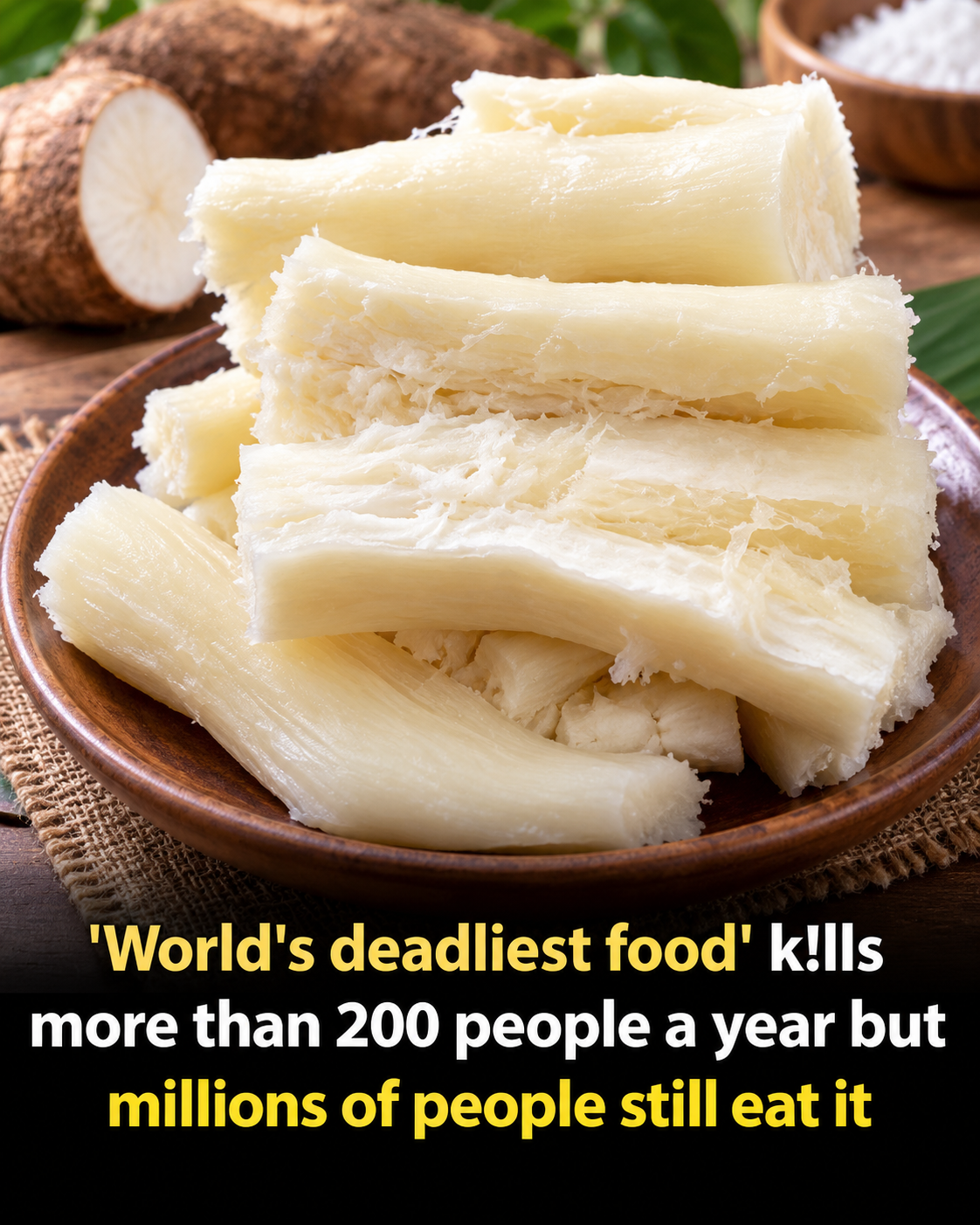
Over 200 People Are Killed By the World’s Deadliest Food Every Year, But Almost 500 Million People Still Eat It. That dramatic description refers to cassava, one of the world’s most important staple foods.
Cassava feeds huge populations across Africa, Asia, Latin America, and other regions. People use its starchy roots to make countless everyday foods, while farmers grow hundreds of millions of tons each year.
However, cassava has one unusual feature that separates it from many familiar staples.
Parts of the plant naturally contain compounds that can release cyanide.
That sounds alarming, especially when cassava is described as one of the world’s deadliest foods. Yet millions of people eat properly processed cassava regularly without becoming ill.
The real issue is not that cassava must always be avoided.
The issue is preparation.
I remember first hearing that cassava could release cyanide and wondering how a food eaten by so many people could possibly remain on dinner tables. The answer made the story far less mysterious. Communities that depend on cassava have developed processing traditions specifically because raw or poorly prepared cassava can be dangerous. Peeling, soaking, fermenting, drying, grating, and cooking all play roles in different traditional methods. That changed how I viewed the food. Cassava is not simply a dangerous root that people strangely continue eating. It is a valuable staple that requires knowledge, preparation, and respect for how the plant naturally works.
Understanding why cassava can become toxic also explains why safe preparation matters so much.
Why Cassava Can Be Dangerous When Prepared Incorrectly
Cassava Naturally Contains Cyanogenic Compounds
Cassava comes from a plant native to South America, although people now grow and eat it widely around the world.
Its starchy root provides a major source of calories.
However, cassava also contains naturally occurring compounds known as cyanogenic glucosides.
The source explains that these compounds act as part of the plant’s natural defense against insects and animals.
When cassava tissue becomes damaged or processed, chemical reactions can allow cyanide to form.
That creates the main safety concern.
The amount of cyanogenic material can vary between types of cassava.
Some varieties contain relatively lower levels, while so-called bitter cassava can contain considerably more.
That difference explains why preparation methods may vary by region and variety.
The root often gets the most attention because people commonly eat it.
However, other parts of the plant, including the peel, stems, and leaves, can also contain potentially harmful compounds.
Therefore, cassava should not be treated like a vegetable that can simply be picked, casually sampled, and eaten raw.
Traditional knowledge surrounding cassava exists for a reason.
Communities that have relied on the crop for generations developed methods to reduce harmful compounds before eating it.
The danger rises when that processing becomes incomplete, rushed, or unavailable.
This is especially important during emergencies.
The source notes that severe food insecurity, war, and famine can create situations in which people have fewer food choices and may not process cassava as thoroughly as usual.
Under those conditions, the same staple that normally provides valuable calories can become a significant health risk.
Improper Processing Can Lead to Cyanide Exposure
The dramatic reputation surrounding cassava comes from what can happen when people consume inadequately processed forms.
If enough cyanogenic compounds remain in the food, cyanide exposure can occur.
The source associates improperly prepared cassava with serious illness and, in some cases, death.
That possibility explains why cassava cannot be evaluated only by looking at its nutritional value.
Preparation determines whether the food becomes suitable for consumption.
The source cites an estimate of roughly 200 deaths per year from improperly prepared cassava.
It also describes cassava as a food eaten by around 500 million people.
Those two ideas may appear contradictory at first.
However, they actually show why preparation knowledge matters.
Hundreds of millions of people can eat cassava safely because established processing methods greatly reduce the danger.
Problems arise when those methods fail or when difficult circumstances prevent people from using them properly.
Cassava therefore provides a clear example of how the safety of a food can depend heavily on processing.
Some foods can be eaten almost immediately after harvest.
Cassava generally requires much more care.
This does not make the crop useless or inherently unsuitable for human consumption.
Instead, it means people should respect the preparation methods associated with the particular cassava product or variety they use.
In places where commercially prepared cassava products are sold, much of that processing may already occur before the food reaches the consumer.
Still, raw cassava should never be treated casually.
How Improper Cassava Consumption Can Affect Health
Severe Cyanide Exposure Can Become Dangerous Quickly
Cyanide interferes with the body’s ability to use oxygen effectively at the cellular level.
That explains why substantial exposure can become dangerous.
The supplied source focuses mainly on cassava-related dietary exposure rather than detailing every symptom of acute cyanide poisoning.
Its central message remains clear: improperly processed cassava can release enough cyanide to create serious health consequences.
The risk becomes greater when people rely heavily on inadequately prepared cassava over time.
Food shortages can intensify that problem.
During famine, war, or extreme poverty, families may depend on cassava because it grows in difficult conditions and provides a reliable source of calories.
However, people may also have less time, water, fuel, equipment, or access to complementary foods.
Under those circumstances, safe preparation can become more difficult.
The source mentions Venezuela as one example where food scarcity reportedly contributed to dangerous cassava consumption.
This broader context matters because cassava poisoning is not simply the result of someone making a careless kitchen mistake.
In many affected communities, the problem connects closely with poverty, food insecurity, and limited access to diverse diets.
That means prevention involves more than warning people that cassava can be toxic.
It also involves ensuring people have enough information, resources, and food options to prepare it safely.
For households with access to properly processed commercial cassava products, the situation may look very different.
The greatest risks arise when raw or bitter cassava receives inadequate treatment before consumption.
Konzo Is One of the Most Serious Long-Term Concerns
The source also discusses a condition called konzo.
Konzo is an irreversible neurological disorder associated with high dietary cyanide exposure from insufficiently processed cassava, particularly in populations experiencing severe food insecurity and poor nutrition.
The condition can cause sudden weakness or paralysis in the legs.
It is especially associated with heavy reliance on bitter cassava alongside a diet that lacks enough protein.
That nutritional combination matters.
The body uses certain nutrients involved in detoxification pathways, so a severely limited diet may reduce the body’s ability to handle cyanide exposure efficiently.
The source describes konzo as most common in regions affected by extreme poverty.
It may appear sporadically or in outbreaks.
Again, that context changes the way the cassava story should be understood.
Cassava itself supports food security for millions.
However, dependence on improperly processed cassava during periods of crisis can create serious harm.
This is why calling cassava simply the “world’s deadliest food” can attract attention but does not tell the whole story.
The more important lesson involves safe processing and nutrition.
People who have eaten properly prepared cassava for years are not automatically putting themselves in immediate danger.
Likewise, someone should not assume every cassava-based food contains a dangerous amount of cyanide.
The concern centers on inadequate processing, certain higher-cyanide varieties, and conditions where people consume large amounts without enough dietary diversity.
Why So Many People Continue to Depend on Cassava
Cassava Provides Valuable Calories in Difficult Conditions
If cassava carries these risks, why do hundreds of millions of people still eat it?
Because it is an extremely useful crop.
Cassava can grow in environments where other staple crops may struggle.
Its roots provide a substantial source of carbohydrates and energy.
For communities facing difficult growing conditions, that reliability can make cassava enormously important.
The crop also appears in many forms.
Depending on the region, people may turn cassava into flour, fermented products, breads, porridges, starches, chips, and other foods.
Tapioca also comes from cassava starch.
This versatility helps explain the crop’s global importance.
For many families, cassava is not an exotic novelty.
It is an everyday staple that forms part of long-established food traditions.
The large number of people who eat cassava safely also proves an important point.
The presence of naturally toxic compounds does not automatically make a food unusable.
Instead, humans often develop methods to transform raw ingredients into safer foods.
Cassava demonstrates that process particularly clearly.
Traditional preparation techniques evolved alongside the crop.
Communities learned which varieties required more processing and which methods worked best.
That knowledge can include peeling, soaking, grating, fermenting, drying, pressing, roasting, or cooking.
Different products require different techniques.
Therefore, there is no single universal preparation rule that covers every cassava variety and every traditional food.
The key principle remains consistent.
Cassava must undergo appropriate processing before people eat it.
The “Deadliest Food” Label Can Hide Important Context
Calling cassava the world’s deadliest food makes a compelling headline.
However, the label can also create the wrong impression.
It may suggest that eating cassava itself is extraordinarily reckless.
That is not what the source ultimately argues.
Instead, the article explains that improper preparation creates the danger.
This distinction matters because cassava supports the diets of enormous populations.
A food that routinely killed people despite correct preparation could not function as a staple for hundreds of millions.
The reason cassava remains widely consumed is that people know how to make it safer.
The risk rises when that knowledge cannot be followed.
Food crises illustrate this difference particularly well.
When families lack food, they may harvest cassava earlier than usual.
They may shorten soaking or processing times.
They may consume more bitter varieties because few alternatives exist.
They may also have inadequate protein intake.
Those conditions can create a much more dangerous situation than normal cassava consumption.
Therefore, understanding cassava requires separating ordinary traditional use from crisis-related exposure.
The label can attract attention, but preparation explains the actual risk.
This more balanced view respects both sides of the issue.
Cassava can become toxic.
Cassava can also be an essential and safely consumed staple.
Both statements can be true at the same time.
How Proper Preparation Helps Make Cassava Safer
Processing Helps Reduce Harmful Compounds
The source emphasizes soaking as one important method and mentions soaking cassava for extended periods, including up to 24 hours in some preparation contexts.
However, cassava processing varies depending on the variety and final food.
Therefore, people should follow established preparation instructions rather than assuming one soaking time makes every form of cassava safe.
Peeling often forms an important early step because the outer portions can contain higher concentrations of unwanted compounds.
Other methods may involve grating, fermenting, pressing, drying, soaking, or thorough cooking.
Traditional techniques sometimes combine several of these steps.
The point of those processes is to reduce cyanogenic compounds before the food reaches the plate.
This is particularly important for bitter cassava.
People unfamiliar with raw cassava should avoid experimenting with abbreviated preparation methods.
Likewise, tasting raw cassava to determine whether it seems safe is not a reliable approach.
Commercially processed cassava products generally remove much of the consumer’s preparation burden.
However, anyone preparing raw cassava should follow trustworthy, product-appropriate guidance.
That is more useful than relying on a viral claim such as “just boil it” or “just soak it overnight.”
Safe preparation depends on the specific product.
Awareness Protects the Value of an Important Staple
Cassava does not need to disappear from the global diet.
Instead, people need accurate information.
That is especially important because dramatic descriptions can push readers toward unnecessary fear.
Someone may hear the phrase “world’s deadliest food” and decide all cassava products are unsafe.
Meanwhile, another person may see millions eating it and conclude that raw cassava cannot really be dangerous.
Both conclusions miss the important middle ground.
Cassava can be nutritious and useful after proper processing.
However, raw or insufficiently processed cassava can expose people to cyanide.
That message deserves to remain simple.
Do not eat raw cassava casually.
Do not ignore established processing instructions.
Do not shorten traditional preparation methods when using varieties that require them.
And when commercial products provide preparation directions, follow them carefully.
For communities that rely heavily on cassava, improving food security and dietary diversity also matters.
The source links the worst outcomes with poverty, famine, and low-protein diets.
Therefore, preventing cassava-related illness requires both food-safety knowledge and broader nutrition support.
With those safeguards, cassava can continue doing what it has done for generations: provide an affordable and valuable source of energy for millions of families.
Frequently Asked Questions
Why is cassava sometimes called the world’s deadliest food?
Cassava naturally contains cyanogenic compounds that can release cyanide when the plant is processed or consumed improperly. The danger comes mainly from raw or inadequately processed cassava rather than properly prepared cassava foods.
Can properly prepared cassava still be eaten safely?
Yes. Hundreds of millions of people eat cassava as a normal staple. The source emphasizes that established processing methods greatly reduce the danger associated with its naturally occurring cyanogenic compounds.
Is raw cassava safe to eat?
Raw cassava should not be treated as a food that can be casually eaten directly from the plant. Proper processing is important because raw cassava can contain compounds capable of releasing cyanide.
What is konzo?
Konzo is an irreversible neurological condition associated with high dietary cyanide exposure from inadequately processed cassava, particularly during food shortages and in populations consuming low-protein diets. It can cause sudden weakness or paralysis in the legs.
Is soaking cassava enough to make it safe?
The source mentions soaking as one important preparation step, but processing needs can vary with cassava type and the food being prepared. Appropriate methods may also include peeling, fermenting, grating, drying, pressing, and cooking. Established preparation guidance should always be followed.
Conclusion
Over 200 People Are Killed By the World’s Deadliest Food Every Year, But Almost 500 Million People Still Eat It because cassava represents a striking combination of nutritional importance and natural toxicity.
Cassava feeds enormous populations.
It grows in challenging environments and provides a reliable source of carbohydrates.
However, the plant naturally contains cyanogenic compounds that can release cyanide.
That makes preparation essential.
The danger rises when people eat raw or inadequately processed cassava, particularly higher-cyanide varieties.
Food insecurity can increase that risk because families may shorten traditional processing methods or depend heavily on cassava without enough dietary variety.
The neurological condition konzo demonstrates how serious prolonged dietary cyanide exposure can become under those conditions.
Still, the huge number of people who eat cassava safely every day provides important perspective.
Cassava is not a food that randomly poisons anyone who consumes it.
People have relied on appropriate processing techniques for generations.
Peeling, soaking, fermenting, grating, drying, pressing, and cooking may all form part of traditional preparation depending on the product.
The safest approach is therefore not fear.
It is respect for the ingredient.
Use properly processed cassava products.
Follow established preparation directions.
Avoid eating raw cassava.
And never assume that an abbreviated preparation method is enough for every variety.
Cassava’s story shows how powerful food knowledge can be.
The same plant can become dangerous when handled incorrectly and nourishing when people prepare it properly.
For hundreds of millions of people, that knowledge turns cassava from a potentially toxic plant into an essential part of everyday life.
More Blog
- Drinking Water on an Empty Stomach — What Science Actually Supports (No Hype, Just Facts)
- Waking Up Between 3 and 5 AM? It Might Be Your Soul Trying to Talk to You
- What a “Bleach” Patch on Your Underwear Really Means — And Why It’s Actually a Good Sign
- This Drink May Weaken Your Bones From The Inside — But Everyone Drinks It Anyway