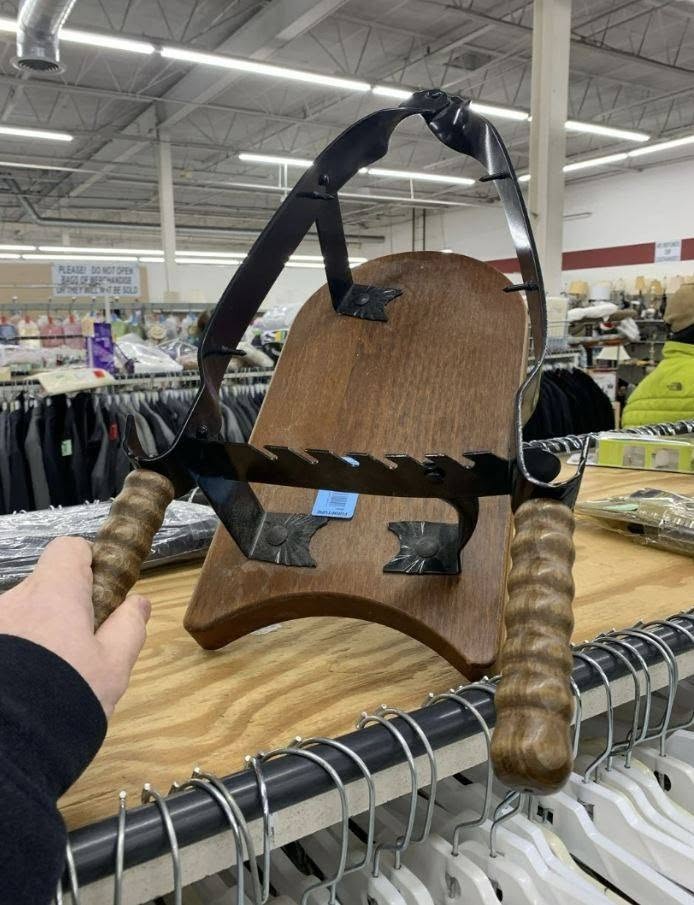
The Prosciutto Stand may look like a simple kitchen tool, yet it represents much more than a practical way to hold a cured ham. In homes, restaurants, delicatessens, and traditional food shops across Italy and beyond, this sturdy holder helps transform an entire cured leg into delicate slices meant to be shared slowly.
Its purpose looks straightforward. The base supports the ham, while a clamp holds it securely enough for controlled slicing. However, the experience surrounding The Prosciutto Stand reaches far beyond mechanics. It connects preservation, craftsmanship, hospitality, and the tradition of serving food directly at the table.
Long before refrigeration, European communities relied on salt, air, time, and careful handling to preserve pork. Parma’s cured-ham tradition reaches back to antiquity, and historical sources describe salted and air-dried pork legs in the region during Roman times.
That long history helps explain why a whole cured leg still carries a sense of occasion. Placing it on a stand allows the food to remain visible, accessible, and connected to the person slicing it.
I remember seeing an old wooden prosciutto stand in a family kitchen where it seemed almost too ordinary to deserve attention. A whole cured leg rested securely in it while thin slices disappeared onto plates almost as quickly as they were cut. Nobody treated the stand like a decorative antique. Instead, it simply did its job while conversation moved around the table. Yet that ordinary scene made the tool memorable. The stand turned slicing into a small ritual. One person cut, another arranged the slices, and everyone waited for the next piece. It showed how a practical kitchen object can quietly carry tradition from one generation to another.
Why The Prosciutto Stand Matters
A Tool Designed for Stability and Control
The Prosciutto Stand solves one very practical problem: a whole cured ham leg is large, heavy, irregularly shaped, and difficult to slice safely without firm support.
A typical stand uses a broad base and an adjustable upper clamp. The base supports part of the ham, while the clamp secures the leg near the hoof or shank. Together, these points hold the ham at an angle that gives the slicer access to the cutting surface.
That stability matters because traditional prosciutto slicing uses long, controlled strokes.
Paper-thin slices require consistency. Therefore, the ham should stay still while the blade moves smoothly across its surface. If the leg shifts, the slicer loses both accuracy and control.
The stand also improves ergonomics.
Instead of holding the ham with one hand while cutting with the other, the slicer can use proper posture and focus on the blade. The ham sits at a comfortable working height, and the slicer can adjust position as the shape changes.
Different stands use different materials.
Wooden versions create a warm, traditional appearance and often use hardwood bases. Meanwhile, stainless-steel models emphasize durability, cleaning, and commercial practicality.
Some stands rotate. Others tilt. Basic versions stay fixed.
However, every design follows the same principle: secure the ham firmly enough that controlled slicing becomes possible.
That simple function explains why The Prosciutto Stand remains useful even in modern kitchens filled with electric slicers and advanced equipment.
For people who serve whole cured ham, the stand provides precision without removing the traditional hand-cutting experience.
More Than Kitchen Hardware
Although function comes first, The Prosciutto Stand also changes how people experience the food.
A whole prosciutto leg creates a visual centerpiece.
Instead of opening a package of sliced meat, someone approaches the stand, removes the protective covering, checks the cutting surface, and slices each portion as needed.
Consequently, serving becomes an activity rather than a simple transfer from refrigerator to plate.
This process encourages attention.
The slicer watches the thickness.
Guests watch the slices form.
The aroma becomes noticeable as fresh surfaces appear.
Then the slices reach the plate immediately.
That sequence helps explain why the stand often feels connected to hospitality.
In many traditional food cultures, the act of cutting and serving holds social meaning. Someone prepares the food in front of others, and the meal develops around that shared process.
The Prosciutto Stand fits naturally into that pattern.
It also supports portion control.
Instead of cutting more ham than needed, the slicer can prepare several slices at a time. As a result, the remaining leg stays intact longer.
Furthermore, hand slicing allows small adjustments based on the part of the ham. Some sections contain more fat, while others taste leaner or firmer.
The slicer can respond accordingly.
Therefore, the stand becomes both a support tool and part of the serving technique.
That combination of practical design and social ritual gives it far more significance than its simple appearance suggests.
The History Behind The Prosciutto Stand
Cured Ham Traditions Reach Back to Antiquity
To understand The Prosciutto Stand, it helps to understand why whole cured ham became so important.
Before modern refrigeration, preserving meat required reliable methods.
Salt reduced available moisture, while controlled drying extended storage life. Over generations, communities refined these basic methods into regional traditions.
The history of Parma ham provides one well-documented example.
The Consorzio del Prosciutto di Parma traces local air-cured ham traditions back to Roman times. Historical references associated with Cato describe salting and drying pork legs so they could mature without spoiling. Other ancient writers also described pork and ham production in the Po Valley.
Modern Prosciutto di Parma still relies on a tightly controlled curing process.
Salt remains central, while the ham passes through resting, washing, drying, greasing, and long maturation stages. Official production rules now require at least 14 months of aging before certification.
The protected production area also remains geographically specific. Genuine Prosciutto di Parma must come from an authorized area around Parma and follow established production rules.
These details show how deeply regional identity connects to the finished ham.
However, The Prosciutto Stand itself does not belong exclusively to Parma.
Similar ham stands appear wherever whole cured legs are traditionally carved, including Spain and other parts of Europe.
The underlying need remains universal.
Once people cure a whole leg and serve it gradually, they need a safe and stable way to hold it during slicing.
Therefore, the stand likely evolved from ordinary practical supports rather than from one dramatic invention.
Its importance grew naturally alongside the tradition of serving whole cured ham.
Tradition Survived Because It Remained Useful
Many historical kitchen tools disappeared when modern technology offered easier alternatives.
The Prosciutto Stand survived because its original job still matters.
A whole ham still needs support.
A long slicing knife still works beautifully.
Freshly cut slices still offer a different experience from prepackaged portions.
Therefore, modernization never completely removed the need for the stand.
Instead, manufacturers adapted the design.
Traditional wooden models remain popular, particularly in homes and decorative serving settings.
Meanwhile, professional kitchens may use stainless steel or other washable materials.
Some modern stands include rotating systems so the slicer can reposition the ham without removing it.
Others use stronger clamps or adjustable angles.
Despite these improvements, the basic concept stays remarkably simple.
That continuity mirrors the ham itself.
Modern Prosciutto di Parma production operates under detailed specifications and inspections, yet the broader craft still reflects methods developed through centuries of salting and air curing. Official specifications describe a production identity shaped by environmental conditions, human skill, and historical continuity.
Likewise, The Prosciutto Stand has changed in materials and engineering without losing its original purpose.
This helps explain its cultural appeal.
The tool does not imitate history for decoration.
It remains connected to history because it still performs the same essential function.
That difference matters.
A purely decorative antique belongs to the past.
A working prosciutto stand brings an old practice into the present every time someone secures a ham and begins slicing.
How The Prosciutto Stand Is Used
Positioning and Slicing the Ham
Using The Prosciutto Stand correctly begins with secure positioning.
First, place the stand on a stable, level work surface.
Avoid narrow tables or slippery counters because cutting applies sideways pressure to the ham.
Next, secure the leg firmly according to the stand’s design.
Most stands use a clamp near the hoof or shank while the broader portion rests on the base.
Tighten the clamp enough to stop movement without forcing the hardware unnecessarily.
The position of the ham depends partly on how you intend to consume it.
People who expect to finish the ham relatively quickly may begin from one side, while slower household use may influence how the leg is oriented and protected between cutting sessions.
Before slicing, remove only enough exterior rind and fat to expose the immediate cutting area.
Do not strip the entire ham at once.
The outer fat helps protect the remaining meat from excessive drying.
Next, use a proper ham-slicing knife.
A long, narrow, flexible blade allows smooth horizontal strokes. Keep the free hand away from the blade’s path, and cut slowly.
Slices should generally stay thin enough to appear almost translucent.
However, perfect uniformity matters less than control.
As you work through the ham, the surface changes shape.
Therefore, adjust your angle rather than forcing the same stroke everywhere.
Eventually, you will approach bones that require different cuts.
At that stage, a shorter knife may help free meat around difficult areas.
The Prosciutto Stand keeps the ham stable throughout these changes.
Caring for the Ham and the Stand
Good care extends both the quality of the ham and the life of The Prosciutto Stand.
After each slicing session, protect the exposed surface of the meat.
Traditionally, people may use pieces of reserved fat from the ham to cover the cut area. Food-safe covering can also help reduce drying, depending on storage conditions and the producer’s recommendations.
Keep the ham in an appropriate cool, dry environment rather than exposing it to heat or direct sunlight.
A whole cured ham does not behave like fresh meat, but it still needs sensible handling.
The stand needs attention too.
Remove crumbs, fat, and meat residue after use.
If the base is wooden, avoid soaking it for long periods because water can damage the material. Instead, clean according to the manufacturer’s directions and allow it to dry thoroughly.
Metal components should also stay clean and dry.
Check clamps and screws occasionally.
Repeated use can loosen hardware, and a wobbly stand creates unnecessary risk.
For that reason, inspect stability before every slicing session.
Also, keep the knife sharp.
A dull knife requires more pressure and reduces control.
Meanwhile, a sharp blade allows smooth strokes with less force.
Safe technique always matters more than speed.
The Prosciutto Stand works best when the slicer treats cutting as deliberate preparation rather than a race.
That slower rhythm also fits the food itself.
Cured ham takes months or even years to reach the table. Therefore, spending an extra minute slicing it carefully feels appropriate.
Choosing and Appreciating The Prosciutto Stand Today
What Makes a Good Stand
A useful The Prosciutto Stand should prioritize stability above appearance.
A beautiful base means little if the ham shifts during slicing.
Therefore, start by examining the footprint.
A broad, heavy base generally provides better support than a narrow lightweight one.
Next, inspect the clamp.
It should hold firmly and adjust easily enough to accommodate different leg sizes.
Metal hardware should feel solid rather than flimsy.
If you plan to use the stand frequently, consider an adjustable or rotating design.
These features make it easier to reposition the ham as you move around the bone.
However, occasional home users may prefer a simpler fixed model.
Material also matters.
Wood brings warmth and traditional style to a table or kitchen.
Meanwhile, stainless steel usually offers easier sanitation and a more professional appearance.
Some stands combine both materials.
There is no single correct choice.
Instead, select based on how often you will use the stand, where you will store it, and how much cleaning and maintenance you want to perform.
Size matters too.
A stand designed for small boneless pieces will not necessarily support a full bone-in leg securely.
Therefore, match the holder to the type of ham you expect to serve.
Finally, consider storage.
Some stands fold or disassemble, while others require permanent counter or cabinet space.
The best The Prosciutto Stand is not automatically the most elaborate one.
It is the model that keeps the ham secure, allows comfortable slicing, cleans easily, and fits your kitchen.
Why the Ritual Still Feels Special
The modern food world emphasizes convenience.
Sliced cured meats arrive in sealed packages.
Prepared platters save time.
Electric slicers create uniform portions quickly.
Yet The Prosciutto Stand offers something different.
It slows the process down.
That slowing has value.
A person slicing a whole cured ham sees the layers of fat and lean meat change throughout the leg.
They adjust the knife.
They learn where the bone sits.
They recognize when the texture shifts.
As a result, the food becomes something to understand rather than simply consume.
The stand also makes serving communal.
Guests gather nearby.
Someone asks for another slice.
A plate gradually fills.
Bread, fruit, cheese, or olives may appear beside it.
The ham becomes part of conversation.
This ritual does not require an elaborate celebration.
It can happen during a quiet family lunch.
That ordinary setting may actually explain why The Prosciutto Stand endures.
Traditions survive most effectively when people can use them naturally.
Prosciutto itself remains connected to a long history of skilled preservation in Italy. The modern Parma consortium, founded in 1963, still describes its mission in terms of protecting traditional production and passing that craft forward.
The stand contributes to that continuity at the serving end.
It holds the finished ham securely while someone performs the final act before eating: slicing.
That modest job gives the tool its lasting place at the table.
Frequently Asked Questions
What is The Prosciutto Stand used for?
The Prosciutto Stand holds a whole cured ham leg securely while someone slices it by hand. Its base and clamp prevent movement, which allows safer, thinner, and more controlled cuts.
What is a prosciutto stand called in Italy?
Italian sellers may describe a ham holder with terms such as a porta prosciutto, while cutting boards and related serving equipment may use other regional or commercial descriptions. Terminology varies by manufacturer and style, so the function usually provides the clearest identification.
Why not simply hold the prosciutto while slicing it?
A whole ham leg is heavy and irregular. Holding it manually while using a long slicing knife would reduce control and increase risk. The Prosciutto Stand secures the meat so the slicer can concentrate on smooth knife movement.
Is a wooden or metal prosciutto stand better?
Both can work well. Wooden stands offer traditional appearance and warmth, while stainless-steel models often simplify cleaning and suit frequent professional use. Stability and clamp quality matter more than material alone.
Does a prosciutto stand work with other cured hams?
Many adjustable stands can hold other whole cured ham legs if the shape and dimensions fit securely. Similar holders are used for different European cured-ham traditions. Always make sure the stand can support the specific leg safely before slicing.
Conclusion
The Prosciutto Stand earns its place in the kitchen through a combination of simplicity, usefulness, and tradition.
At its most basic, the tool holds a cured ham leg still.
Yet that function makes something much richer possible.
It allows a person to slice carefully, serve immediately, and experience a whole cured ham gradually rather than as a prepackaged product.
The stand also connects modern kitchens with a preservation tradition that reaches deep into European history. Written accounts of salted and air-dried pork in the Parma region go back to antiquity, while modern protected production still relies on carefully controlled salting, drying, and aging.
Although the exact stands used today may feature polished wood, stainless steel, rotating clamps, or modern hardware, the purpose remains remarkably unchanged.
Secure the ham.
Guide the knife.
Cut thin slices.
Share them.
That simplicity gives The Prosciutto Stand its charm.
It does not need electricity, complicated controls, or advanced technology.
Instead, it supports human skill.
Perhaps that is why the tool still feels special.
A whole prosciutto can take many months to produce. When it finally reaches the table, the stand helps preserve some of that sense of patience.
Every slice becomes a small connection between preservation, craftsmanship, hospitality, and the people gathered nearby.
WP Recipe Maker JSON Import
{
  "title": "The Prosciutto Stand — A Hidden Gem That Holds Centuries of Tradition",
  "summary": "A cultural and practical guide to the traditional prosciutto stand, explaining its history, construction, use, care, and role in hand-slicing whole cured ham.",
  "notes": "This is a culinary history and kitchen-tool guide rather than a conventional recipe. Always place the stand on a stable surface, secure the ham firmly, and keep hands away from the path of the slicing knife.",
  "ingredients_flat": [
    { "amount": "1", "unit": "whole", "name": "bone-in cured prosciutto or compatible whole cured ham" },
    { "amount": "1", "unit": "", "name": "stable prosciutto stand" },
    { "amount": "1", "unit": "", "name": "long flexible ham slicing knife" }
  ],
  "instructions_flat": [
    {
      "name": "Step 1",
      "text": "Place the prosciutto stand on a broad, stable, level work surface before positioning the ham.",
      "summary": "",
      "image_url": ""
    },
    {
      "name": "Step 2",
      "text": "Position the cured ham on the stand and secure the shank or hoof firmly with the adjustable clamp.",
      "summary": "",
      "image_url": ""
    },
    {
      "name": "Step 3",
      "text": "Remove only enough rind and outer fat to expose the section of meat you plan to slice.",
      "summary": "",
      "image_url": ""
    },
    {
      "name": "Step 4",
      "text": "Use a long, sharp, flexible ham knife to make smooth, controlled strokes parallel to the cutting surface.",
      "summary": "",
      "image_url": ""
    },
    {
      "name": "Step 5",
      "text": "Cut thin slices and adjust the position or angle of the ham as the cutting surface changes.",
      "summary": "",
      "image_url": ""
    },
    {
      "name": "Step 6",
      "text": "Protect the exposed meat between slicing sessions according to the ham producer's storage recommendations.",
      "summary": "",
      "image_url": ""
    },
    {
      "name": "Step 7",
      "text": "Clean the stand after use, dry all components thoroughly, and check the clamp and hardware before the next slicing session.",
      "summary": "",
      "image_url": ""
    }
  ],
  "equipment": [
    { "name": "Prosciutto stand", "notes": "" },
    { "name": "Long flexible ham slicing knife", "notes": "" },
    { "name": "Short utility or boning knife", "notes": "" },
    { "name": "Serving platter", "notes": "" }
  ],
  "nutrition": {
    "calories": "120 kcal",
    "carbohydrates": "0 g",
    "protein": "13 g",
    "fat": "7 g",
    "saturated_fat": "2.5 g",
    "polyunsaturated_fat": "1 g",
    "monounsaturated_fat": "3.5 g",
    "trans_fat": "0 g",
    "cholesterol": "35 mg",
    "sodium": "820 mg",
    "potassium": "160 mg",
    "fiber": "0 g",
    "sugar": "0 g",
    "vitamin_a": "0 IU",
    "vitamin_c": "0 mg",
    "calcium": "10 mg",
    "iron": "1 mg"
  },
  "tags": {
    "course": ["Culinary Guide"],
    "cuisine": ["Italian"],
    "keyword": ["The Prosciutto Stand", "prosciutto stand", "ham holder", "Italian cured ham", "prosciutto slicing"]
  }
}
SEO Output
Focus Keyword: The Prosciutto Stand
SEO Title: The Prosciutto Stand — History, Tradition, and How It Works
Meta Description: The Prosciutto Stand reveals centuries of cured-ham tradition, from its practical design to the ritual of slicing and serving prosciutto.
Expert SEO Title: The Prosciutto Stand: 7 Fascinating Secrets Behind This Timeless Tool
Midjourney Prompt: traditional Italian prosciutto stand holding a whole cured prosciutto leg on a rustic wooden kitchen table, elegant hand-sliced translucent prosciutto curls arranged on a ceramic plate beside it, long traditional slicing knife resting safely nearby, aged olive wood stand with sturdy metal clamp, warm Mediterranean kitchen atmosphere, subtle bread olives and cheese in background, realistic professional food photography, natural window light, visible wood grain and cured ham texture, heritage culinary mood, vertical composition, clean uncluttered background, generous negative space near the upper portion for Pinterest text overlay –v 6 –ar 2:3
More Blog
- Drinking Water on an Empty Stomach — What Science Actually Supports (No Hype, Just Facts)
- Waking Up Between 3 and 5 AM? It Might Be Your Soul Trying to Talk to You
- What a “Bleach” Patch on Your Underwear Really Means — And Why It’s Actually a Good Sign
- This Drink May Weaken Your Bones From The Inside — But Everyone Drinks It Anyway