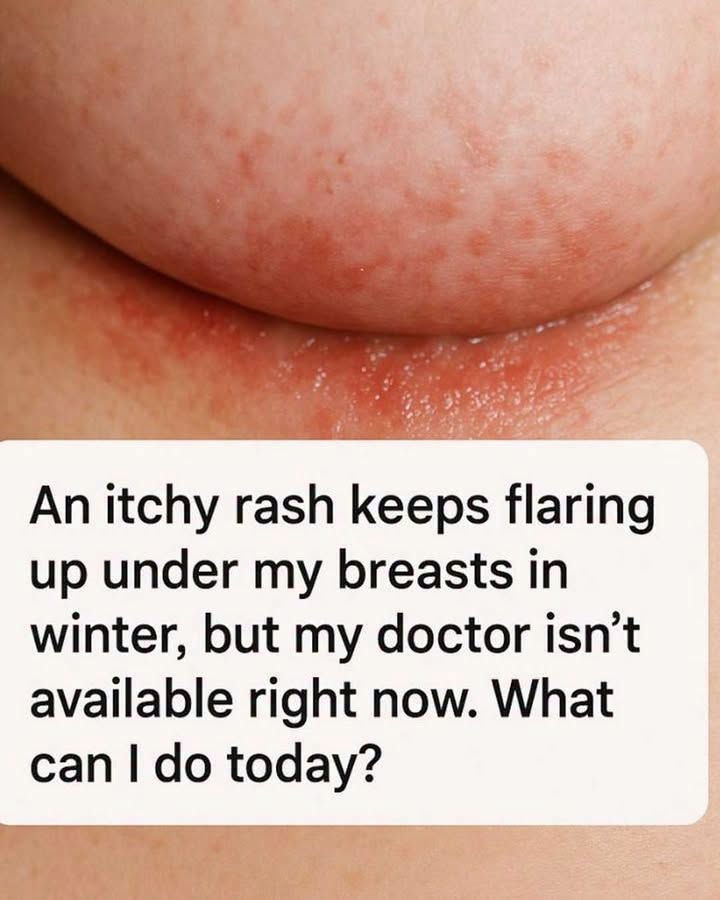
A Gentle, Science-Backed Guide to Soothing Winter Skin Rashes can help you understand why cold weather sometimes leaves skin feeling itchy, irritated, dry, or uncomfortable. Winter air often contains less moisture, while indoor heating can dry the skin even further. Meanwhile, layers of clothing may trap sweat and create friction in areas where skin touches skin.
Rashes beneath the breasts and in other skin folds deserve particular attention because several different conditions can cause similar symptoms. Simple irritation may improve with gentle care and moisture control. However, fungal or bacterial infections can also develop in warm, damp skin folds. For that reason, home care works best when you combine soothing measures with careful observation.
Over the years, I have found that winter skin problems become easier to handle when I respond early instead of waiting for irritation to worsen. One particularly cold season, I noticed persistent redness beneath a skin fold after spending several days bundled in heavy layers indoors. Rather than trying several harsh products at once, I simplified everything. I washed the area gently, dried it thoroughly, changed into breathable clothing, and avoided fragranced products. Within a short time, the irritation felt calmer. That experience taught me something useful: gentle care often starts with removing sources of friction, moisture, and irritation while watching carefully for signs that professional care is needed.
Understanding Why Winter Skin Rashes Develop
Cold Air, Indoor Heat, and the Skin Barrier
Your skin forms a protective barrier that helps keep moisture inside while blocking irritants from the outside. However, winter conditions can challenge that barrier. Cold outdoor air often carries relatively little moisture, and heated indoor environments can feel exceptionally dry. Consequently, skin may lose moisture faster than usual.
Dryness can cause tightness, scaling, itching, and small cracks. Furthermore, scratching irritated skin can damage the surface and create even more inflammation. Therefore, breaking the itch-and-scratch cycle becomes an important part of winter skin care.
Hot showers may feel wonderful during cold weather, yet prolonged exposure to hot water can strip protective oils from the skin. Instead, choose comfortably warm water and keep showers relatively brief. Afterward, gently pat the skin rather than rubbing it aggressively.
For dry areas that do not sit inside moist skin folds, applying a fragrance-free moisturizer shortly after bathing can help retain moisture. Thick creams and ointments generally hold moisture more effectively than thin lotions.
However, skin folds require a somewhat different approach. Under the breasts, for example, excessive moisture can increase irritation. Therefore, keeping the fold clean and thoroughly dry may matter more than applying a heavy moisturizer directly to an already damp or inflamed area.
Why Skin Folds Need Extra Attention
Areas where skin touches skin create their own miniature environment. Heat builds up easily, sweat evaporates more slowly, and movement creates friction. As a result, redness and soreness can develop even during winter.
Intertrigo describes inflammation that occurs within skin folds. It commonly affects areas beneath the breasts, between abdominal folds, around the groin, and in other places where skin surfaces rub together.
Initially, the area may look red and feel itchy, tender, or irritated. However, prolonged moisture can weaken the skin barrier. Yeast, fungi, or bacteria may then contribute to the problem.
Clothing can also influence symptoms. Tight synthetic fabrics may hold warmth and moisture against the body. Conversely, clean, breathable fabrics may improve airflow and reduce rubbing.
Because several conditions can resemble one another, appearance alone does not always identify the cause. Therefore, persistent, spreading, painful, or unusual rashes deserve medical evaluation rather than repeated experimentation with home remedies.
Gentle Home Care for Irritated Skin
Clean the Area Without Overwashing
When skin already feels irritated, aggressive cleaning rarely helps. Instead, treat the affected area gently.
Start with lukewarm water. If you use a cleanser, choose a mild, fragrance-free product and use only a small amount. Avoid vigorous scrubbing because friction can worsen already inflamed skin. Likewise, skip heavily scented soaps, perfumes, deodorizing sprays, and other products that may introduce additional irritants.
After washing, rinse away cleanser thoroughly. Then pat the area dry with a clean, soft towel. Do not rub.
For a skin fold, make sure the area becomes completely dry before putting clothing back on. If necessary, allow the skin to air-dry briefly. A hair dryer on a cool setting may also help when used from a comfortable distance. However, avoid hot air because excessive heat can irritate sensitive skin.
Clean clothing matters as well. Change bras, undershirts, or other garments if they become damp with perspiration. Additionally, wash items regularly with a detergent that your skin tolerates.
A Gentle, Science-Backed Guide to Soothing Winter Skin Rashes should always emphasize simplicity. Introducing several new creams, powders, oils, or homemade mixtures at the same time can make it difficult to determine what helps and what causes additional irritation.
Control Moisture and Friction
Moisture management can make a major difference when irritation develops beneath the breasts or within another skin fold. First, keep the area dry without repeatedly rubbing it. Next, choose clothing that allows airflow.
A properly fitting bra can also help because excessive movement may increase friction. However, an overly tight band can create pressure and trap sweat. Therefore, comfort and fit both matter.
Avoid placing rough fabric directly against irritated skin. Instead, select smooth, breathable materials whenever possible. Also, change damp clothing promptly after exercise or sweating.
If two skin surfaces continually rub together, separating them with a clean, dry, soft fabric may temporarily reduce friction. Replace the fabric whenever it becomes damp.
For ordinary winter dryness outside skin folds, fragrance-free moisturizers can support the skin barrier. Apply them after bathing while the skin remains slightly damp.
However, do not automatically coat an inflamed, moist fold with thick homemade oils or greasy mixtures. Occlusive products can sometimes trap moisture. Therefore, the appropriate treatment depends on whether dryness, friction, intertrigo, infection, or another condition causes the rash.
Knowing When a Rash Needs More Than Home Care
Watch for Signs of Infection or Worsening Inflammation
Many mild skin irritations improve after you remove the triggering source and protect the skin. Nevertheless, some rashes require professional treatment.
Pay attention to changes rather than focusing only on how the rash looked when it started. For example, increasing pain, swelling, warmth, drainage, pus, open sores, foul odor, blistering, or rapidly spreading redness can signal a more significant problem.
Likewise, fever or feeling generally unwell alongside a worsening rash warrants prompt medical attention. Red streaks extending away from an affected area also require urgent evaluation.
A rash beneath the breast may sometimes involve yeast or another fungal organism. Certain fungal rashes can look intensely red and may develop smaller spots near the main area. However, visual features overlap between conditions. Therefore, avoid assuming that every rash in a skin fold represents a fungal infection.
Using the wrong medication may delay proper treatment. For instance, some steroid products can change the appearance of infections or make certain fungal problems harder to recognize. Consequently, ask a pharmacist or healthcare professional for guidance when you remain uncertain about the cause.
Know When to Contact a Healthcare Professional
Consider professional evaluation when a rash persists despite gentle care, repeatedly returns, spreads, becomes painful, or develops broken skin. You should also seek advice when you cannot determine what triggered it.
Certain people should act sooner. For example, conditions that affect immune function or wound healing can make skin infections more concerning. Likewise, older adults may have thinner, more delicate skin that requires additional care.
A clinician can examine the pattern and location of the rash. Additionally, they can distinguish among possibilities such as contact dermatitis, eczema, psoriasis, fungal infection, bacterial infection, or intertrigo.
That distinction matters because treatment varies. A fungal infection may require an antifungal treatment, while bacterial infection may need a completely different approach. Meanwhile, irritation caused by a fragrance or fabric may improve primarily through avoidance.
Home care should support healing rather than replace diagnosis when symptoms continue. Therefore, if the rash fails to improve, professional assessment offers the safest next step.
Building a Winter Routine That Protects Your Skin
Prevent Dryness Before Irritation Starts
Prevention often feels easier than calming a rash after inflammation develops. Fortunately, small adjustments can protect your skin throughout winter.
First, shorten very hot showers. Instead, bathe with comfortably warm water and use gentle cleansers only where needed. Then apply a fragrance-free moisturizer to dry areas soon after bathing.
Next, consider your indoor environment. Heated rooms can become extremely dry, so moderate humidity may improve comfort. However, humidifiers require regular cleaning because poorly maintained units can harbor microorganisms.
Hydration supports general health, although drinking excessive water does not directly cure dry skin. Therefore, focus on a balanced approach that includes normal fluid intake and direct protection of the skin barrier.
Clothing also matters. Soft layers may cause less irritation than coarse materials worn directly against sensitive skin. If wool feels itchy, for example, wear a soft base layer underneath it.
Additionally, wash new clothing before wearing it when possible. Fabric treatments, dyes, or finishing agents can sometimes irritate sensitive skin.
Finally, notice patterns. If the same product, garment, detergent, or activity repeatedly precedes irritation, removing that trigger may prevent future episodes.
Give Skin Folds Their Own Daily Routine
Skin folds benefit from consistency. During bathing, clean them gently and rinse them thoroughly. Afterward, dry them carefully before dressing.
If you perspire during the day, change damp clothing rather than leaving moisture trapped against your skin. Furthermore, check whether seams, elastic, or tight bands repeatedly rub the same area.
A Gentle, Science-Backed Guide to Soothing Winter Skin Rashes also requires patience. Inflamed skin may not return to normal immediately after you correct the cause. Instead, improvement may happen gradually.
Resist the temptation to scratch. Although scratching provides temporary relief, it can further damage the skin barrier. A cool compress placed gently against itchy skin may provide temporary comfort. Keep the compress clean, and avoid leaving the area damp afterward if the irritation sits within a skin fold.
Most importantly, reassess your symptoms regularly. Mild irritation should generally move in the right direction once you remove moisture, friction, or irritating products. If it worsens instead, stop experimenting and seek appropriate medical guidance.
Frequently Asked Questions
What commonly causes a winter rash beneath the breasts?
Moisture, heat, and friction can irritate skin folds and contribute to intertrigo. Additionally, yeast, fungi, bacteria, contact dermatitis, or other skin conditions can produce similar symptoms. Winter clothing may worsen the problem by trapping sweat despite cold outdoor temperatures.
Should I keep a rash beneath the breasts dry?
Keeping irritated skin folds clean and dry generally helps reduce moisture-related irritation. After washing, pat the area carefully and allow it to dry completely before dressing. However, extremely dry or cracked skin elsewhere may benefit from fragrance-free moisturizer.
Can I put antifungal cream on any red rash?
No. Different conditions can look surprisingly similar. Although fungal infections often occur in skin folds, redness alone does not confirm one. Therefore, ask a healthcare professional or pharmacist when you remain unsure, especially if symptoms persist or worsen.
What products should I avoid on irritated skin?
Avoid fragranced soaps, perfumes, harsh exfoliants, strongly scented lotions, and products that sting or burn. Additionally, avoid repeatedly testing different homemade mixtures on inflamed skin. Gentle, fragrance-free care usually reduces unnecessary irritation.
When should I worry about a skin rash?
Seek medical attention for rapidly spreading redness, significant pain, fever, pus, drainage, open wounds, blistering, red streaks, or worsening swelling. Also arrange an evaluation if a rash persists, repeatedly returns, or does not improve with reasonable gentle care.
Conclusion
A Gentle, Science-Backed Guide to Soothing Winter Skin Rashes starts with understanding what irritated skin needs: gentle cleansing, careful drying, reduced friction, appropriate moisture management, and protection from unnecessary irritants.
For ordinary winter dryness, shorter warm showers and fragrance-free moisturizers can help support the skin barrier. Meanwhile, irritated skin folds often need special attention to airflow, dryness, and friction.
Most importantly, watch how your skin responds. A mild irritation that steadily improves may respond well to simple supportive care. However, persistent, spreading, painful, draining, or otherwise concerning rashes need professional assessment.
Simple habits can make winter much more comfortable. Treat irritated skin gently, avoid aggressive remedies, keep skin folds clean and dry, and seek medical guidance when symptoms tell you that home care is no longer enough.
More Blog
- Drinking Water on an Empty Stomach — What Science Actually Supports (No Hype, Just Facts)
- Waking Up Between 3 and 5 AM? It Might Be Your Soul Trying to Talk to You
- What a “Bleach” Patch on Your Underwear Really Means — And Why It’s Actually a Good Sign
- This Drink May Weaken Your Bones From The Inside — But Everyone Drinks It Anyway