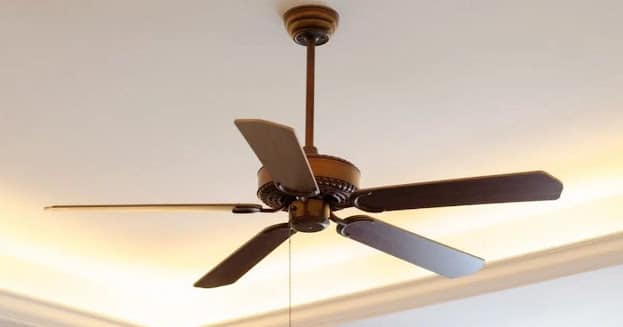
The Direction Your Ceiling Fan Should Spin Depending On The Season can make a noticeable difference in how comfortable a room feels. Although changing the fan direction does not actually heat or cool the air, it changes how that air moves around the room. As a result, the right setting can help you feel cooler in summer and distribute warm air more effectively in winter.
The basic rule is simple. During warm weather, most ceiling fans should rotate counterclockwise when viewed from below. That direction pushes air downward and creates a cooling breeze. During cold weather, many fans work best when they rotate clockwise at a low speed. That setting gently pulls cooler air upward and helps redistribute warm air that collects near the ceiling.
This adjustment costs nothing, takes only a few seconds on many models, and can complement your heating and cooling system. However, fan designs vary, so airflow matters more than relying on direction alone.
For years, I used ceiling fans without thinking about direction at all. I switched them on whenever a bedroom felt warm and assumed that was the entire purpose. Then, while cleaning one fan before winter, I noticed the small reversing switch on the motor housing. After changing it and running the fan slowly, the room felt more evenly comfortable instead of noticeably warmer near the ceiling. That tiny discovery changed my seasonal routine. Now I check every fan when the weather changes. It takes only a few minutes, requires no special tools, and helps me use the fans more intentionally throughout the year.
Why The Direction Your Ceiling Fan Should Spin Depending On The Season Matters
How Ceiling Fans Actually Make You Feel Cooler
The Direction Your Ceiling Fan Should Spin Depending On The Season starts with understanding what a ceiling fan actually does.
A ceiling fan does not function like an air conditioner. It does not remove heat from the room, lower indoor humidity in the same way an air conditioner can, or refrigerate the air.
Instead, a ceiling fan moves air.
During warm weather, that moving air passes across your skin. As a result, perspiration can evaporate more readily, and your body can release heat more efficiently. This effect makes you feel cooler even if the room temperature itself remains nearly unchanged.
That distinction explains an important energy-saving habit: turn off a ceiling fan when nobody occupies the room during hot weather.
Because the summer benefit comes primarily from air moving across people, leaving the fan running in an empty room usually does not provide meaningful cooling for whoever returns later. Instead, it consumes electricity without creating the personal cooling effect anyone can feel.
The summer setting generally uses counterclockwise rotation when you look up at the fan from directly below.
However, do not depend entirely on the word “counterclockwise.” Fan blade designs differ. Some manufacturers use unusual blade orientations or controls.
Instead, stand beneath the fan while it runs.
If you feel a strong downward breeze, you have the appropriate warm-weather setting.
This simple airflow test provides the most reliable answer.
Why Warm Air Collects Near the Ceiling
Winter requires a different approach because warm air tends to accumulate toward the upper part of a room.
Heating systems warm indoor air, and temperature differences can create layers. In rooms with high ceilings, the temperature near the ceiling can become noticeably warmer than the temperature where people sit or stand.
That means some of the heat you paid for may remain above the occupied portion of the room.
The Direction Your Ceiling Fan Should Spin Depending On The Season helps address this problem through gentle circulation.
When many conventional ceiling fans rotate clockwise at a low speed, they draw cooler room air upward toward the center of the fan. That movement pushes warmer ceiling-level air outward and down along the walls.
The goal is not to create a strong breeze.
In fact, a noticeable draft can make you feel colder during winter. Therefore, low speed works best in most situations.
The air should circulate gradually enough that you benefit from more even temperature distribution without feeling wind directly on your skin.
This technique can work particularly well in rooms with vaulted ceilings, tall stairwells, open floor plans, or other spaces where warm air tends to collect well above head level.
However, fan placement and room layout matter. A low ceiling in a small room may show less noticeable improvement.
Ultimately, winter fan use helps redistribute existing warmth rather than generate new heat.
That difference makes the fan a supporting tool for your heating system rather than a replacement for it.
Summer Ceiling Fan Direction for Better Comfort
Set the Fan for a Downward Breeze
During warm months, The Direction Your Ceiling Fan Should Spin Depending On The Season usually means counterclockwise rotation.
Stand beneath the ceiling fan and look upward. If the blades move counterclockwise and you feel a clear breeze moving toward you, the fan is generally set correctly for summer.
This downward airflow produces the cooling sensation people associate with ceiling fans.
The effect can feel particularly helpful in bedrooms, living rooms, home offices, dining areas, and covered outdoor spaces.
You can also adjust the fan speed according to comfort.
On a mildly warm day, low or medium speed may provide enough airflow. During hotter conditions, a higher setting can create a stronger breeze.
However, running the fan at maximum speed does not necessarily provide the best balance between comfort and electricity use. Choose the lowest speed that makes you comfortable.
Then consider your thermostat.
Because moving air can make occupants feel cooler, some households can raise the air-conditioning thermostat slightly while maintaining similar comfort. Even a modest thermostat adjustment may reduce cooling demand.
However, avoid assuming that every household can raise the thermostat by the same number of degrees. Humidity, home insulation, fan placement, personal comfort, outdoor temperature, and air-conditioning efficiency all influence the result.
The best strategy involves experimentation.
Raise the thermostat gradually while using the fan. If the room still feels comfortable, you have reduced the amount of mechanical cooling needed.
If you become uncomfortable, lower the thermostat again.
The fan should improve comfort, not turn summer into an endurance test.
Avoid the Most Common Summer Mistake
One of the most common mistakes involves leaving ceiling fans running continuously in empty rooms.
This habit feels logical because people often think the fan is lowering the room temperature.
Usually, however, the primary summer benefit comes from the breeze touching your skin.
Therefore, once everyone leaves the room, the personal cooling effect disappears.
Turning the fan off saves the electricity the motor would otherwise consume.
This rule becomes particularly useful in homes with several ceiling fans. Leaving five or six fans running all day can add unnecessary electricity use even if each individual fan consumes relatively little power.
Another mistake involves confusing fan speed with fan direction.
A fan running clockwise at high speed may still produce some noticeable air movement, but that does not mean it provides the intended seasonal airflow pattern efficiently.
Use the direction switch or remote control first. Then adjust speed.
Dust also matters.
Ceiling fan blades gradually collect debris, especially on the leading edges. Therefore, seasonal direction changes provide a convenient reminder to clean the blades.
Turn the fan completely off before cleaning. Then wait until the blades stop moving.
Use a microfiber cloth or another suitable cleaning method, and support the blade gently instead of applying excessive pressure.
Clean blades improve appearance and prevent accumulated dust from circulating around the room.
Finally, check for unusual wobbling, scraping sounds, loose hardware, or damaged blades before running a fan at higher speeds.
A well-maintained fan provides smoother airflow and a more comfortable room.
Winter Ceiling Fan Direction for More Even Warmth
Reverse the Fan and Use a Low Speed
When colder weather arrives, The Direction Your Ceiling Fan Should Spin Depending On The Season usually changes.
For many conventional models, set the blades to rotate clockwise when viewed from below.
Then select a low speed.
The purpose of this winter setting is gentle circulation rather than a cooling breeze. Ideally, you should not feel strong air blowing directly downward while standing beneath the fan.
Instead, the fan draws cooler air upward through the center. Meanwhile, warmer air near the ceiling moves outward and gradually travels down around the perimeter of the room.
This circulation can help reduce temperature differences between the floor and ceiling.
The effect becomes particularly useful in rooms with high ceilings.
Imagine a living room with a vaulted ceiling. Warm air from the heating system may rise and remain several feet above the occupied zone. Without circulation, the thermostat area may stay cooler while a significant amount of warmth remains near the roofline.
A slowly operating ceiling fan can help mix those layers.
However, avoid high fan speeds during winter unless a specific fan design calls for them.
Fast-moving air against your skin can increase the sensation of cooling, which defeats the purpose.
Again, airflow provides the best test.
If you stand beneath the fan and feel a strong cold draft in winter mode, reduce the speed or check the rotation direction.
You want subtle movement, not a summer breeze.
When Winter Fan Use Helps Most
Winter ceiling fan circulation does not produce identical results in every room.
The greatest benefit often appears in spaces where heat stratification becomes noticeable.
High ceilings provide the clearest example. Warm air has more vertical space in which to accumulate, so redistributing it can improve comfort at occupied level.
Rooms with fireplaces may also benefit.
A fireplace can produce substantial warmth near one part of a room while leaving other areas cooler. Gentle ceiling fan circulation can help distribute that heat more evenly.
However, always follow the fan manufacturer’s placement and safety recommendations, especially around high heat sources.
Open-concept rooms represent another useful situation. Warm air can move unpredictably through connected spaces, stairwells, and lofts. Consequently, slow fan circulation may help reduce large temperature differences.
On the other hand, a small bedroom with a standard-height ceiling may experience a subtler effect.
The Direction Your Ceiling Fan Should Spin Depending On The Season should therefore function as a practical guideline rather than a guarantee of dramatic savings.
Your heating system, insulation quality, window efficiency, ceiling height, thermostat location, fan size, and climate all influence results.
Still, the adjustment costs nothing.
Therefore, it makes sense to test it.
Run the fan clockwise at low speed for a while and compare how the room feels. Pay attention particularly to areas near exterior walls and lower parts of the room.
If comfort improves, you can continue using that setting during heating season.
If the fan creates an unwanted draft, adjust the speed or turn it off.
Comfort remains the ultimate measurement.
How to Change Ceiling Fan Direction Safely and Correctly
Find the Reverse Switch or Remote Setting
Changing The Direction Your Ceiling Fan Should Spin Depending On The Season usually takes less than a minute.
First, turn the fan off completely.
Then wait until the blades stop moving before touching any controls on the fan body.
Many traditional ceiling fans include a small sliding switch on the motor housing. You may find it just above or below the blades. Moving that switch reverses the motor direction.
Newer ceiling fans may work differently.
Some use a handheld remote control. Others include a wall-mounted electronic control. Smart ceiling fans may let you reverse direction through an app or automated setting.
Therefore, inspect your controls or consult the manufacturer’s instructions if you cannot find a physical switch.
Never attempt to force a switch while the fan remains in motion.
Once you change the direction, step away and restart the fan.
Then confirm the airflow.
During summer, you generally want to feel air moving downward.
During winter, you generally want gentle circulation with little direct downward breeze.
For homes with several fans, make the seasonal check part of a routine.
For example, change the fans when you begin regularly using air conditioning in spring or summer. Then reverse them again when heating season begins.
This approach prevents you from forgetting which direction each fan currently uses.
Additionally, some smart fans can remember seasonal preferences or automate them.
Regardless of the control method, the airflow test remains useful because it confirms that the fan actually produces the intended effect.
Check Blade Angle, Height, and Fan Condition
Direction alone does not determine performance.
The blade pitch, fan diameter, installation height, motor design, room size, and ceiling shape all influence airflow.
Therefore, two fans spinning in the same direction may move different amounts of air.
A properly sized ceiling fan generally performs better than a fan that is too small for a large room. Likewise, installation height affects how effectively air reaches the occupied portion of the space.
You should also inspect the fan before each seasonal change.
Look for loose blades, damaged brackets, excessive wobbling, unusual sounds, or electrical problems.
If a fan shakes significantly, turn it off and address the issue before continued use. Loose hardware or installation problems can create safety risks.
Cleaning provides another important step.
Dust buildup can make blades look dull and can spread debris when the fan runs. Therefore, wipe the blades while the fan is off.
If you use a ladder, position it securely on a level surface and avoid overreaching.
For very high ceilings, consider appropriate professional assistance rather than attempting an unsafe climb.
Also, inspect light fixtures connected to the fan. Make sure shades, bulbs, and covers remain secure.
Seasonal maintenance takes only a little time, yet it can improve both appearance and operation.
Most importantly, remember that The Direction Your Ceiling Fan Should Spin Depending On The Season only works properly when the fan itself remains in good condition.
The reversing switch provides a useful adjustment, but safe installation and maintenance always come first.
Using Ceiling Fans to Reduce Heating and Cooling Demand
Pair the Fan With Your Thermostat
A ceiling fan produces the greatest potential energy benefit when it changes how you use your heating or cooling system.
Simply turning on a fan while leaving every other setting unchanged may add a small amount of electricity consumption without reducing HVAC demand.
The more useful strategy involves pairing fan airflow with thermostat adjustments.
During summer, use downward airflow to improve personal comfort. Then, if you remain comfortable, raise the thermostat slightly.
The air conditioner may run less often as a result.
During winter, use low-speed circulation where warm air collects near the ceiling. If the occupied part of the room becomes more comfortable, you may be able to avoid increasing the thermostat.
However, savings vary widely.
A claim that ceiling fans always reduce cooling costs by a specific large percentage oversimplifies the situation. Electricity rates, climate, thermostat habits, HVAC efficiency, fan wattage, insulation, and occupancy all influence actual results.
Therefore, focus on the principle rather than a guaranteed number.
Fans use electricity, but typically far less than central air-conditioning equipment. Consequently, using a fan to remain comfortable at a slightly less aggressive thermostat setting can sometimes reduce total energy consumption.
Measure your own results whenever possible.
Compare utility use under similar weather conditions, or use a home energy monitor if available.
Small adjustments can add up over a long cooling or heating season.
Combine Fan Direction With Other Simple Energy Habits
The Direction Your Ceiling Fan Should Spin Depending On The Season becomes even more useful when you combine it with other practical habits.
During summer, close blinds or curtains where intense sunlight enters the home. Solar heat through windows can increase indoor temperatures considerably.
At night, take advantage of cooler outdoor air when local conditions, humidity, air quality, and home security make open windows appropriate.
Also, replace or clean HVAC filters according to your system’s requirements. Restricted airflow can reduce heating and cooling performance.
During winter, open curtains on sunny windows when beneficial, then close them after sunset to reduce heat loss through the glass.
Check weatherstripping around doors and windows as well. Even small gaps can create drafts.
Ceiling fans cannot compensate for major insulation problems, poorly sealed windows, or inefficient HVAC equipment. However, they can complement a home that already uses sensible energy practices.
Lighting and electronics matter too.
Many electronic devices release heat while operating. During hot weather, turning off unnecessary equipment reduces both direct electricity consumption and some indoor heat generation.
Most importantly, focus on comfort in occupied spaces.
Do not cool, heat, or circulate air more aggressively than necessary in rooms nobody uses.
A ceiling fan gives you local control over comfort. That makes it especially valuable in bedrooms and living areas where people spend significant time.
Used thoughtfully, this small appliance can become part of a broader strategy for keeping a home comfortable without wasting energy.
Frequently Asked Questions
Which direction should a ceiling fan turn in summer?
Most conventional ceiling fans should rotate counterclockwise when viewed from below during summer. That direction generally pushes air downward and creates a cooling breeze. However, confirm the setting by standing beneath the fan. If you feel strong downward airflow, you have the correct warm-weather setting.
Which direction should a ceiling fan turn in winter?
Most conventional fans should rotate clockwise at a low speed during winter. This setting can help draw cooler air upward and circulate warmer air that collects near the ceiling. You should generally avoid a strong downward draft during cold weather.
Does a ceiling fan actually lower room temperature?
Usually, no. A ceiling fan primarily makes people feel cooler by moving air across the skin. Therefore, during summer, turn the fan off when nobody occupies the room unless you have another specific reason to circulate air.
Can changing ceiling fan direction really save money?
It can contribute to lower heating or cooling demand when the improved airflow allows you to use less air conditioning or avoid increasing the heat. However, exact savings depend on your home, climate, electricity rates, HVAC equipment, thermostat settings, fan efficiency, and usage habits.
What if my ceiling fan has no reverse switch?
Check the remote control, wall control, smart-home app, or manufacturer’s instructions. Some newer fans reverse electronically instead of using a physical switch. Additionally, certain fan models may not offer reversible operation.
Conclusion
The Direction Your Ceiling Fan Should Spin Depending On The Season represents one of the easiest home-comfort adjustments you can make.
During summer, most traditional ceiling fans should rotate counterclockwise to push air downward and create a noticeable breeze. That airflow can help you feel cooler without actually reducing the room temperature.
During winter, reversing many fans to clockwise rotation at a low speed can gently circulate warm air that collects near the ceiling. This approach becomes especially useful in rooms with high or vaulted ceilings.
Still, remember the most important test: airflow.
Fan designs vary, so stand beneath the fan and observe what you feel. For summer, look for strong downward air movement. For winter, aim for subtle circulation without an uncomfortable draft.
Then pair your ceiling fan with smart thermostat habits.
Turn fans off in empty rooms during warm weather. Use the lowest comfortable fan speed. Maintain clean blades and secure hardware. Additionally, combine fan use with curtains, weatherstripping, HVAC maintenance, and other simple energy-saving habits.
You do not need new equipment or an expensive home upgrade to make this change.
Often, a small reversing switch on the motor housing or a button on the remote provides everything you need.
The Direction Your Ceiling Fan Should Spin Depending On The Season may seem like a tiny detail, but using your fan according to the weather can help make your home feel more comfortable while supporting more efficient heating and cooling habits.
More Blog
- Drinking Water on an Empty Stomach — What Science Actually Supports (No Hype, Just Facts)
- Waking Up Between 3 and 5 AM? It Might Be Your Soul Trying to Talk to You
- What a “Bleach” Patch on Your Underwear Really Means — And Why It’s Actually a Good Sign
- This Drink May Weaken Your Bones From The Inside — But Everyone Drinks It Anyway