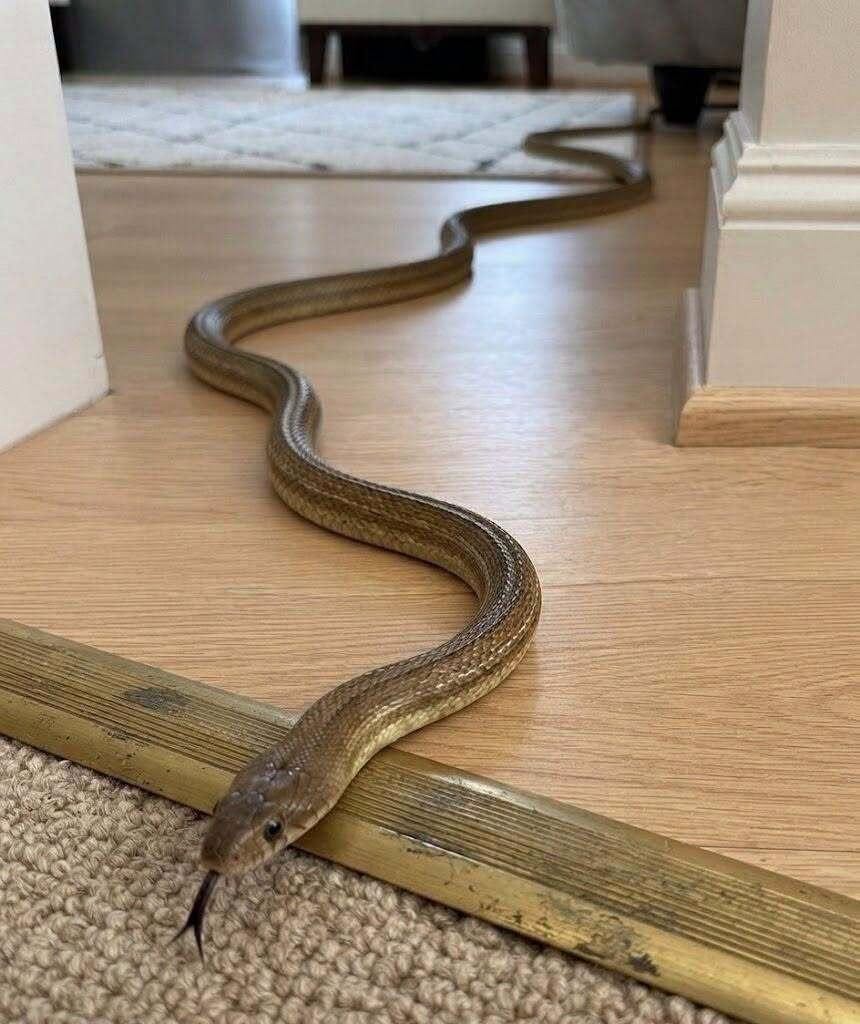
Found a Snake in Your House is a situation that can turn an ordinary moment into instant panic. You might spot one beside a cabinet, near the garage door, behind the toilet, or stretched across a quiet corner of a room. Your first reaction may be to grab a broom, move closer for a better look, or try to force the snake outside. However, those reactions can increase the chance of an accidental bite.
The safest response usually starts with distance. Move away from the snake, keep children and pets out of the area, and avoid attempting to touch or capture it. Most snakes would rather escape than confront a person, but any snake can defend itself when it feels threatened or trapped.
You also do not need to identify the animal before taking basic precautions. Instead, treat any unfamiliar snake cautiously until a qualified person can identify or remove it safely.
I learned how important calm reactions can be after a snake unexpectedly appeared near a storage area during a warm afternoon. The first impulse was to grab something and push it toward the door. However, everyone moved away instead, closed off the surrounding area, and kept the pets inside another room. From a safe distance, the snake looked far less threatening than it had during those first few seconds. Eventually, appropriate help handled the situation without anyone getting close. That experience made one lesson very clear: distance and patience often provide much more protection than trying to act quickly.
What to Do First When You Find a Snake Indoors
Stay Calm and Create Distance
When you Found a Snake in Your House, your first priority should be creating space between yourself and the animal. Fear often pushes people toward fast decisions, yet sudden movements can make the situation harder to control.
Step backward instead of moving toward the snake. Then, make sure everyone else in the home knows to avoid the area.
Children should leave immediately because curiosity may encourage them to approach. Likewise, dogs and cats need to stay away because many pets instinctively investigate, bark at, paw at, or chase unfamiliar animals.
Do not assume that a small snake cannot bite. Similarly, do not assume that a motionless snake feels relaxed. Snakes often freeze when they detect a threat, and they can move quickly when they decide to escape or defend themselves.
Therefore, avoid placing your feet, hands, or household objects close to the animal.
If the snake remains in one room and you can safely leave without passing near it, exit the room. Then, close the door from a safe position when possible. This approach may help contain the snake while you arrange appropriate assistance.
However, never move toward the snake simply to close a door.
Distance matters more than containment.
Most importantly, resist the urge to prove that you can handle the situation yourself. Snake handling requires skill, experience, and proper equipment. A person who misjudges the species or the snake’s movement can quickly turn a manageable encounter into a medical emergency.
Never Try to Grab, Hit, or Corner the Snake
Once you Found a Snake in Your House, avoid physical confrontation. Do not pick up the snake, pin it down, poke it, hit it, or attempt to trap it against a wall.
A frightened snake may become defensive when someone blocks its escape. Therefore, cornering the animal can increase the likelihood of defensive behavior.
Avoid common improvised methods as well. Do not chase the snake with a broom. Do not throw objects toward it. Do not attempt to catch it under a bucket unless a trained professional specifically directs you to do so from a safe position.
Additionally, never use knives, sticks, garden tools, chemicals, or other weapons to attack the snake. These methods can bring you much closer than necessary, and they can also cause serious injury to people nearby.
If an exterior door already stands open near the snake, the animal may leave without assistance. However, only provide an escape route when you can do so without approaching the snake.
For example, if you can open a nearby exterior door while remaining several steps away from the animal, you may be able to give it a clear path outside. Still, do not attempt to herd it in that direction.
Instead, reduce noise and movement. Then, allow the snake to decide where to go.
If opening the exit requires stepping close to the animal, skip that approach.
Your goal should never involve forcing the snake to move. Instead, your goal should focus on maintaining a safe distance until the situation resolves naturally or a trained wildlife professional arrives.
Why Snakes Enter Homes and Where They Hide
Food, Shelter, Temperature, and Water
If you Found a Snake in Your House, the animal likely did not enter because it wanted to attack someone. Snakes generally enter buildings because the environment offers something useful.
Food often plays an important role. If mice, rats, lizards, frogs, insects, or other small animals live around the property, snakes may follow those food sources.
Shelter also attracts wildlife. Garages, storage rooms, crawl spaces, basements, sheds, wood piles, and cluttered corners can provide dark and protected hiding places.
Temperature matters too. During extremely hot weather, a snake may search for a cooler environment. Meanwhile, during cooler conditions, some snakes may seek warmth or protected spaces.
Water can also contribute. Damp areas, leaking pipes, standing water, or nearby water sources can support prey animals and create conditions that attract wildlife.
Therefore, one indoor snake encounter may signal something about the property environment.
After professionals remove the snake or after it safely leaves, inspect the home for conditions that could encourage future visits.
Look for rodent activity. Check pet-food storage. Remove spilled birdseed or animal feed. Keep trash containers sealed.
Additionally, examine gaps under exterior doors, garage doors, vents, utility openings, pipes, and foundation edges.
Small animals can squeeze through openings that seem surprisingly narrow.
However, do not immediately seal a suspected entry hole while a snake may still remain inside. Doing so can accidentally trap the animal in the building.
Instead, resolve the immediate encounter first. Then, inspect and secure possible access points.
Common Indoor Hiding Places
After you Found a Snake in Your House, the animal may quickly disappear from sight. This moment often creates another dangerous temptation: searching for it.
Avoid reaching into spaces that you cannot clearly see.
Snakes can hide beneath appliances, behind cabinets, inside storage areas, beneath furniture, behind boxes, under shelving, or near plumbing openings.
Garages create especially attractive hiding places because they often contain stacked materials, tools, boxes, garden supplies, and gaps around large doors.
Bathrooms can also provide sheltered spaces around cabinets, pipes, and fixtures. Therefore, if a snake disappears behind the toilet or beneath a cabinet, do not place your hands into those areas.
Bedrooms require the same caution. If a snake disappears beneath a bed, dresser, or closet shelving, do not crawl underneath furniture to search for it.
Instead, isolate the room whenever possible.
Close the door from outside, prevent children and pets from entering, and contact an appropriate wildlife-removal service or local authority.
Likewise, never assume the snake left simply because you can no longer see it.
A hidden snake may remain still for an extended period.
If you can safely observe the snake from a distance, note its approximate size, color, pattern, and location. A photograph can sometimes help professionals identify it.
However, never move closer simply to capture a sharper picture.
A distant image provides more value than a close photograph that puts you within striking range.
How to Handle Specific Snake Situations Safely
Children, Pets, Bedrooms, Bathrooms, and Garages
When you Found a Snake in Your House, the exact location changes how you manage the area, but the basic safety principles remain the same.
If children are nearby, move them away first. Keep instructions simple and clear: do not approach the snake, do not touch it, and tell an adult immediately.
Pets also require fast separation. Place dogs, cats, and other animals in a closed room well away from the snake. Pets often react unpredictably, and even a normally obedient dog may chase an unfamiliar animal.
If the snake appears in a bedroom, leave the room if you can do so safely. Then, close the door from outside when possible.
Do not jump around furniture or step over the snake.
In bathrooms, avoid reaching behind toilets, under sinks, or around plumbing. Instead, leave the room and isolate it.
In garages, keep away from boxes, wood piles, tools, and stored equipment until you know where the snake went. Do not begin moving items randomly in an attempt to expose it.
The same rule applies to sheds, basements, and crawl spaces.
If the snake already sits near an open exterior exit, reduce activity and give it time. Sometimes the animal will leave without intervention.
However, if it remains inside, disappears, or blocks your ability to safely use the room, professional wildlife assistance offers the safest option.
The exact service may vary by location. Depending on your area, wildlife control, animal control, fire services, licensed snake handlers, or other local authorities may handle these calls.
What to Do If the Snake Disappears
A disappearing snake can feel more stressful than a visible one. However, avoid turning the room upside down.
If you Found a Snake in Your House and then lost sight of it, assume that it may still remain nearby.
Do not place your hands under furniture, inside boxes, behind appliances, or into holes.
Likewise, avoid walking barefoot through the area.
If possible, close doors that connect the room to the rest of the house without approaching likely hiding spots.
Place towels along the bottom of a closed door only if you can do so safely from outside and without entering the room.
Then, wait for appropriate help.
Do not rely on internet tricks that promise to lure the snake out with milk, eggs, meat, or other foods. Leaving food around the home can attract rodents, insects, or other wildlife, making the original problem worse.
Also, avoid strong chemicals, repellents, smoke, or homemade treatments. These methods may create health risks for people and pets while doing little to safely remove the snake.
Instead, focus on controlling access to the area.
Once professionals confirm that the snake has left or been removed, carefully inspect the room for possible entry points.
Pay special attention to pipe openings, door gaps, ventilation openings, wall damage, and spaces behind permanent fixtures.
Then, repair or seal suitable openings with materials designed for the specific location.
Snake Bites, Professional Help, and Prevention
What to Do After a Possible Snake Bite
If you Found a Snake in Your House and someone suffers a bite, treat the situation seriously, particularly when you cannot confidently identify the species.
Move away from the snake first.
Then, seek emergency medical care promptly.
Do not attempt to capture or kill the snake for identification. Instead, remember its color, pattern, size, and general appearance if you can do so without approaching it.
A safe photograph can sometimes help, but never delay medical care for a picture.
Keep the person as calm and still as practical while arranging emergency assistance.
Avoid traditional snake-bite remedies. Do not cut the bite, suck the wound, apply household chemicals, or attempt to remove venom.
Do not place ice directly over the bite.
Likewise, do not apply a tight tourniquet unless emergency medical professionals specifically instruct you to do so.
Do not give alcohol.
Symptoms after a snake bite can vary widely. Some bites cause pain and swelling quickly, while others may cause different neurological or systemic effects.
Possible concerning symptoms can include increasing swelling, bruising, severe pain, weakness, dizziness, nausea, numbness, vision changes, or difficulty breathing.
However, do not wait for severe symptoms before seeking care when a venomous or unidentified snake may have caused the bite.
Pets also need urgent veterinary evaluation after a suspected snake bite.
Do not wait for obvious swelling before contacting a veterinarian, especially if venomous species occur in your region.
Preventing Another Snake From Entering
After you Found a Snake in Your House, prevention becomes the next priority.
Start around the exterior of the home.
Inspect doors for gaps beneath them. Replace damaged weather stripping and repair loose thresholds.
Check screens, vents, crawl-space openings, and utility penetrations.
Seal suitable gaps around pipes, cables, and exterior fixtures once you know no animal remains trapped inside.
Next, reduce clutter near the foundation.
Move stacked lumber, unused equipment, debris, cardboard, and dense piles away from exterior walls when possible.
Keep grass maintained and remove excessive leaf buildup.
Store firewood away from the house rather than against it.
Rodent control also matters. Because snakes may follow prey, reducing mice and rats can make the property less attractive.
Store pet food in secure containers. Clean spilled seed or feed. Keep garbage bins closed and address areas where rodents may nest.
Additionally, repair water leaks and remove unnecessary standing water around the property.
Still, no home can become completely snake-proof, especially in regions where snakes naturally live.
The realistic goal involves reducing entry opportunities and making the immediate surroundings less attractive.
Regular maintenance works better than panic after every sighting.
Frequently Asked Questions
What should I do immediately after finding a snake indoors?
If you Found a Snake in Your House, move away from it, keep children and pets out of the area, and avoid touching or cornering the animal. If you can safely leave the room, do so and close the door from outside when practical. Contact appropriate wildlife assistance if the snake remains inside.
Should I try to identify the snake?
You can observe its color, pattern, size, and shape from a safe distance. However, do not move closer for identification. Treat an unfamiliar snake cautiously because visual identification can be difficult.
Can I chase the snake outside with a broom?
Avoid chasing it. A broom may bring you within biting distance and can make the snake feel trapped. Instead, maintain distance and allow the animal to leave naturally if a safe exterior route already exists.
What should I do if my dog or cat approaches the snake?
Move your pet away immediately without approaching the snake yourself. Place the pet inside a separate room. If you suspect the animal suffered a bite, contact a veterinarian promptly.
Why do snakes keep appearing near my house?
Repeated sightings can relate to rodent activity, available shelter, dense vegetation, water sources, clutter, or easy access through gaps around doors and foundations. Therefore, addressing food sources, hiding areas, and entry points can reduce future encounters.
Conclusion
If you Found a Snake in Your House, calm decisions can protect everyone much more effectively than aggressive action.
Create distance first. Then, move children and pets away, avoid touching the snake, and never attempt to grab or corner it.
If the animal already has an easy escape route that you can provide without approaching it, give it space and allow it to leave. Otherwise, isolate the area and contact someone trained to handle wildlife.
Avoid placing your hands into dark spaces after a snake disappears. Likewise, avoid unproven remedies, chemicals, weapons, or attempts to kill the animal.
If a bite occurs, seek prompt medical evaluation rather than trying traditional home remedies.
Once the immediate situation ends, turn your attention to prevention. Seal suitable gaps, reduce clutter, manage rodents, store food securely, maintain the yard, and repair openings around doors, vents, pipes, and foundations.
Most importantly, remember that a snake inside the home usually wants shelter, food, water, or an escape route rather than a confrontation.
Respecting that distance can make the encounter safer for both you and the animal.
{
  "title": "Found a Snake in Your House? Here’s What to Do Without Panicking",
  "summary": "A practical safety guide explaining what to do after finding a snake indoors, how to protect children and pets, when to contact professionals, how to respond to a possible bite, and how to reduce future snake encounters.",
  "notes": "Keep a safe distance from unfamiliar snakes. Do not grab, hit, corner, chase, or attempt to identify one at close range. Keep children and pets away and contact appropriate wildlife professionals when necessary. Seek prompt medical care after a suspected bite from an unidentified or potentially venomous snake.",
  "ingredients_flat": [
    {
      "amount": "1",
      "unit": "safe distance",
      "name": "space between people and the snake"
    },
    {
      "amount": "1",
      "unit": "closed area",
      "name": "separate room for children and pets"
    },
    {
      "amount": "1",
      "unit": "contact",
      "name": "local wildlife or animal-control professional"
    },
    {
      "amount": "as needed",
      "unit": "",
      "name": "door and gap-sealing materials after removal"
    },
    {
      "amount": "as needed",
      "unit": "",
      "name": "secure food and rodent-control measures"
    }
  ],
  "instructions_flat": [
    {
      "name": "Step 1",
      "text": "Move away from the snake calmly and avoid making sudden movements toward it.",
      "summary": "",
      "image_url": ""
    },
    {
      "name": "Step 2",
      "text": "Keep children, dogs, cats, and other pets away from the area.",
      "summary": "",
      "image_url": ""
    },
    {
      "name": "Step 3",
      "text": "Do not grab, hit, corner, chase, or attempt to trap the snake with household objects.",
      "summary": "",
      "image_url": ""
    },
    {
      "name": "Step 4",
      "text": "Leave and isolate the room if you can do so without moving close to the snake.",
      "summary": "",
      "image_url": ""
    },
    {
      "name": "Step 5",
      "text": "Observe the snake only from a safe distance and contact an appropriate wildlife professional if removal is necessary.",
      "summary": "",
      "image_url": ""
    },
    {
      "name": "Step 6",
      "text": "Seek prompt medical or veterinary care after any suspected bite involving an unidentified or potentially venomous snake.",
      "summary": "",
      "image_url": ""
    },
    {
      "name": "Step 7",
      "text": "After the snake has left or been removed, inspect the home for entry gaps, clutter, rodent activity, and other conditions that may attract snakes.",
      "summary": "",
      "image_url": ""
    }
  ],
  "equipment": [
    {
      "name": "Phone for contacting wildlife assistance",
      "notes": ""
    },
    {
      "name": "Secure pet carrier or separate room",
      "notes": ""
    },
    {
      "name": "Weather stripping and appropriate gap-sealing materials",
      "notes": ""
    }
  ],
  "nutrition": {
    "calories": "N/A",
    "carbohydrates": "N/A",
    "protein": "N/A",
    "fat": "N/A",
    "saturated_fat": "N/A",
    "polyunsaturated_fat": "N/A",
    "monounsaturated_fat": "N/A",
    "trans_fat": "N/A",
    "cholesterol": "N/A",
    "sodium": "N/A",
    "potassium": "N/A",
    "fiber": "N/A",
    "sugar": "N/A",
    "vitamin_a": "N/A",
    "vitamin_c": "N/A",
    "calcium": "N/A",
    "iron": "N/A"
  },
  "tags": {
    "course": ["Home Safety"],
    "cuisine": ["General Safety"],
    "keyword": ["found a snake in your house", "snake in house", "snake safety", "indoor snake", "snake removal safety"]
  }
}
SEO Output
Focus Keyword
Found a Snake in Your House
SEO Title
Found a Snake in Your House? Safe Steps to Take Immediately
Meta Description
Found a Snake in Your House? Learn safe steps to protect people and pets, avoid risky mistakes, handle bites, and prevent another visit.
Expert SEO Title
Found a Snake in Your House: 7 Essential Steps
Midjourney Prompt
Realistic editorial wildlife safety photograph of a snake resting on a clean indoor floor near the edge of a doorway inside a modern home, visible from a respectful safe distance, no person touching or approaching the animal, subtle domestic setting with natural daylight, realistic scales and anatomy, calm non-aggressive snake posture, clean uncluttered background, educational home safety concept, vertical composition, generous negative space above and around the subject for text overlay, high-detail professional photography suitable for Pinterest pins –v 6 –ar 2:3
More Blog
- Drinking Water on an Empty Stomach — What Science Actually Supports (No Hype, Just Facts)
- Waking Up Between 3 and 5 AM? It Might Be Your Soul Trying to Talk to You
- What a “Bleach” Patch on Your Underwear Really Means — And Why It’s Actually a Good Sign
- This Drink May Weaken Your Bones From The Inside — But Everyone Drinks It Anyway