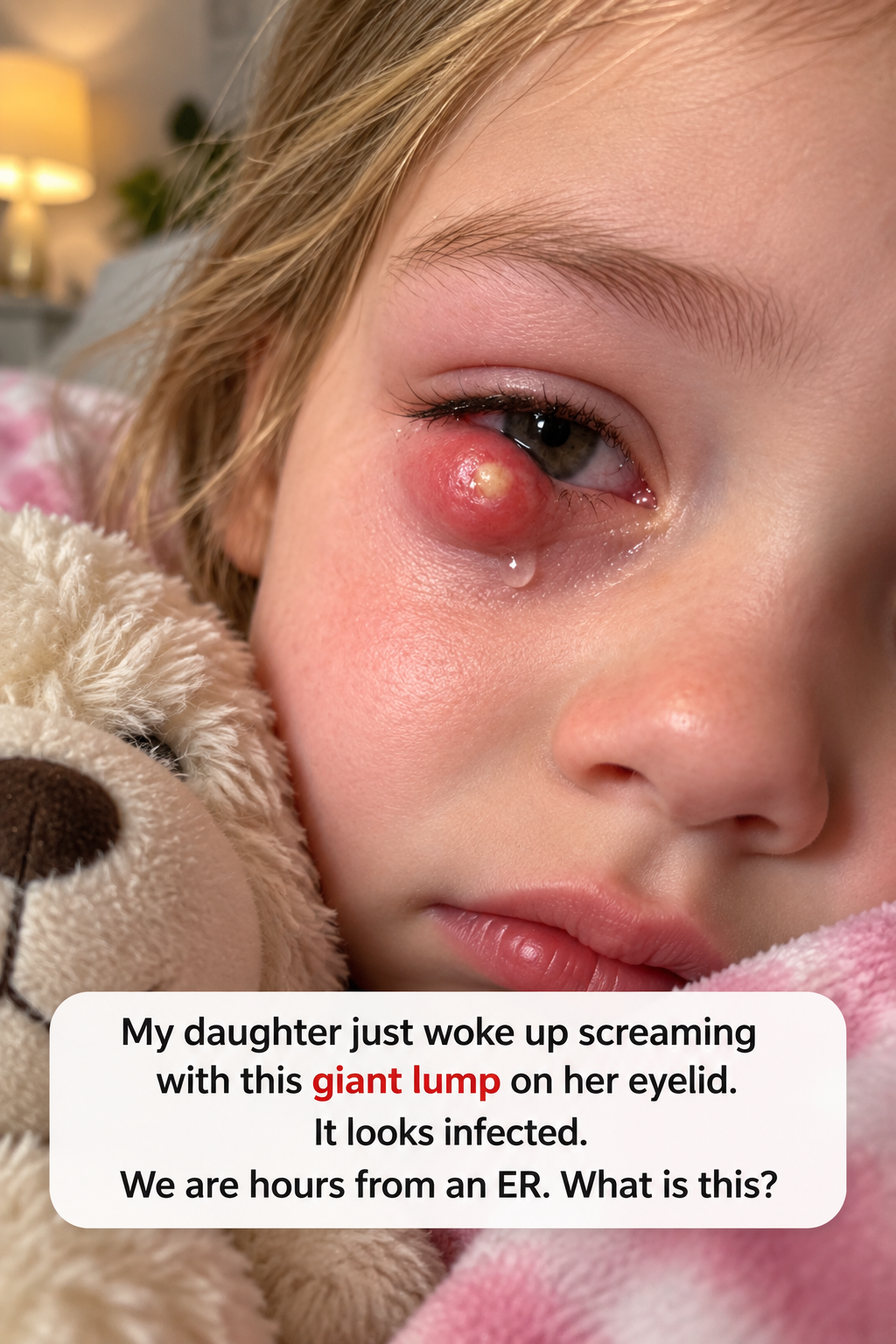
Few things can make a parent panic faster than discovering a giant eyelid lump on a child who woke up crying in pain. The eyelid may look red, swollen, tender, or dramatically different from how it looked just hours earlier. Because the eye sits so close to the sinuses and other important structures, it makes sense to take sudden swelling seriously.
Fortunately, many painful eyelid bumps in children come from relatively minor problems such as a stye. A stye, also called a hordeolum, typically causes a localized red and tender bump on the eyelid. However, infections around or behind the eyelid can sometimes produce similar-looking swelling and require medical treatment. (EyeWiki)
I remember how unsettling it felt the first time I saw a child’s eyelid become dramatically swollen overnight. The change seemed enormous compared with the tiny area involved, and the child’s crying made everything feel even more urgent. What helped most was checking the child rather than focusing only on how frightening the eyelid looked. Could the child see normally? Could the eye move normally? Was there a fever or rapidly spreading redness? Those simple observations helped turn a frightening situation into a more organized decision about what to do next.
This guide explains how to recognize a likely stye, what parents can safely do at home, and which symptoms deserve prompt medical attention. It provides general educational information rather than a diagnosis for an individual child.
What a Giant Eyelid Lump Could Mean
Recognizing a Typical Stye
A stye develops when an eyelid gland becomes blocked and inflamed, often with bacterial involvement. It usually appears as a localized, tender, red bump that can resemble a pimple. External styes form near the eyelashes, while internal styes develop from glands deeper inside the eyelid. (EyeWiki)
Although the actual bump may remain small, surrounding inflammation can make the entire eyelid look surprisingly swollen. Therefore, the size of the visible swelling does not always tell you how large the underlying stye is. Children may also complain that the eyelid hurts when touched, feels heavy, or makes blinking uncomfortable.
A simple stye usually does not cause significant systemic illness. Fever or other systemic symptoms are unusual with an uncomplicated hordeolum, according to the American Academy of Ophthalmology’s EyeWiki. When those symptoms appear, clinicians consider whether another condition, including cellulitis, could explain the swelling. (EyeWiki)
Stye, Chalazion, or Something Else?
Parents sometimes use “stye” for any eyelid lump, but several conditions can cause bumps. A chalazion develops when an oil gland becomes blocked and inflamed. Unlike an acute stye, a chalazion tends to cause a less painful or painless lump, although it can sometimes become red or swollen. (Magasin de l’Académie)
Allergic reactions can also produce dramatic eyelid swelling. However, allergy-related swelling often affects both eyes and may cause itching rather than a single intensely tender bump. The Royal Children’s Hospital notes that bilateral, painless swelling in an otherwise well child points more toward an allergic reaction than cellulitis. (Royal Children’s Hospital)
Meanwhile, infections involving the eyelid tissues can cause more widespread redness, warmth, tenderness, and swelling. Because several conditions can look similar in photographs or at home, parents should avoid trying to make a definite diagnosis when symptoms appear severe or unusual.
How to Care for a Likely Stye at Home
Use Warm Compresses Safely
For a small, localized giant eyelid lump that otherwise behaves like an uncomplicated stye, warm compresses provide a standard first step. The American Academy of Pediatrics recommends placing a warm cloth on the eyelid several times daily. The American Academy of Ophthalmology similarly recommends warm compresses for styes and chalazia. (HealthyChildren.org)
Use a clean washcloth soaked in comfortably warm water. Wring it out, then gently place it over the closed eyelid for about 10 minutes. Test the temperature carefully before placing the cloth near a child’s eye because children’s skin can burn easily. Rewarm the cloth as necessary instead of making it excessively hot.
Warmth may encourage a blocked gland to open and drain naturally. However, parents should never force that process. If the child refuses the compress because touching the eyelid causes severe pain, stop rather than struggling with them and consider contacting a healthcare professional for advice.
Keep Hands Away From the Lump
A child may instinctively rub an uncomfortable eye. However, rubbing can irritate the area and introduce additional germs. Wash the child’s hands regularly, especially after they touch their face, and wash your own hands before and after providing eyelid care.
Most importantly, never squeeze, puncture, lance, or pop a giant eyelid lump yourself. The American Academy of Ophthalmology specifically advises against squeezing styes because doing so may spread infection into the eyelid. (Magasin de l’Académie)
Parents should also avoid using leftover antibiotic eye drops, steroid drops, or another person’s medication unless a clinician specifically recommends them for the child. A doctor may prescribe medication when appropriate, but treatment depends on the actual diagnosis. Meanwhile, keep anything that contacts the eye area clean and avoid unnecessary touching.
When Eyelid Swelling Could Be More Serious
Watch for Cellulitis Warning Signs
A stye affects an eyelid gland, but cellulitis involves infection of surrounding tissues. Preseptal, or periorbital, cellulitis affects tissues in front of the orbital septum. Orbital cellulitis involves tissues deeper in the eye socket and represents a medical emergency because complications can threaten vision and spread beyond the orbit. (EyeWiki)
Parents should pay particular attention to what happens when the child moves the affected eye. Painful or restricted eye movement is a recognized red flag for orbital cellulitis. Other concerning findings include decreased vision, double vision, an eye that appears pushed forward, or severe headache. (EyeWiki)
Therefore, do not assume every giant eyelid lump is simply a stye because you can see swelling near the eyelashes. Widespread redness, increasing warmth, rapidly progressing swelling, significant illness, or fever deserves greater caution. A healthcare professional can examine the eye and decide whether the problem involves only the eyelid or deeper tissues.
Know When to Seek Urgent Medical Care
Seek urgent medical evaluation when a child has eyelid swelling accompanied by pain or difficulty moving the eye, reduced or altered vision, double vision, an eye that appears to protrude, severe headache, or rapidly worsening illness. Suspected orbital cellulitis requires urgent assessment because it can lead to serious complications, including vision loss and intracranial infection. (EyeWiki)
Fever with extensive redness or swelling also deserves medical attention, particularly when the child looks unusually tired, weak, confused, or seriously unwell. Likewise, get professional guidance when swelling spreads noticeably beyond a localized bump or the child cannot comfortably open the affected eye enough for you to assess it.
Distance from medical care should not lead parents to ignore these warning signs. If reaching a clinic or emergency department takes several hours, calling an available medical service, pediatric provider, emergency service, or telehealth provider can help determine how urgently the child needs in-person evaluation.
What to Expect During Recovery and Follow-Up
How Long a Stye May Last
A typical stye does not necessarily disappear overnight. The American Academy of Pediatrics’ symptom guidance notes that a stye often forms a visible head over roughly three to five days and then drains and heals over the following days. (HealthyChildren.org)
During that period, continue gentle warm compresses as tolerated and monitor the giant eyelid lump for changes. Improvement should generally mean less tenderness, reduced swelling, or eventual drainage rather than progressively worsening redness and pain. Do not force drainage even when the bump develops a visible white or yellow point.
Contact the child’s healthcare provider when the problem fails to improve as expected, becomes larger, or repeatedly returns. The AAP also recommends contacting a doctor for recurrent styes or a stye that lasts longer than about 10 days. (HealthyChildren.org)
Preventing Future Eyelid Problems
Good hand and eyelid hygiene may help reduce repeated problems. Encourage children to wash their hands regularly and avoid rubbing their eyes, particularly with dirty hands. Keeping towels and washcloths clean also makes sense when someone has an active eye-area infection.
Children who experience repeated eyelid lumps may have underlying eyelid inflammation or gland problems. EyeWiki notes that styes occur more frequently in people with chronic blepharitis and other conditions affecting the eyelid margins. Therefore, recurrent episodes deserve discussion with a pediatrician, optometrist, or ophthalmologist rather than endless home treatment. (EyeWiki)
Finally, pay attention to patterns. Repeatedly developing a giant eyelid lump in the same location, experiencing persistent swelling, or developing unusual eye symptoms gives a healthcare professional useful information. Photos taken at the beginning and during recovery may also help show how quickly swelling changed.
Frequently Asked Questions
Can a stye make my child’s whole eyelid swell?
Yes. A stye may begin as a localized tender bump but can cause surrounding eyelid swelling. However, extensive or rapidly spreading swelling, particularly with fever, vision problems, or painful eye movements, should receive medical evaluation. (EyeWiki)
Should I pop a giant eyelid lump if I can see pus?
No. Do not squeeze, puncture, or intentionally pop a suspected stye. The American Academy of Ophthalmology warns that squeezing can spread infection within the eyelid. Instead, use gentle warm compresses and allow the area to drain naturally unless a healthcare professional recommends another treatment. (Magasin de l’Académie)
How often should I use a warm compress?
A practical approach is a warm, wet washcloth for around 10 minutes several times a day. The American Academy of Pediatrics recommends warm compresses three to four times daily, while AAO guidance describes 10–15 minute applications three to five times daily. Always keep the temperature comfortably warm rather than hot. (HealthyChildren.org)
How can I tell a stye from orbital cellulitis?
A stye generally causes a localized, painful eyelid bump. Orbital cellulitis can cause substantial eyelid swelling along with warning signs such as painful or restricted eye movement, impaired vision, double vision, protrusion of the eye, severe headache, and sometimes fever or lethargy. Suspected orbital cellulitis requires urgent medical assessment. (EyeWiki)
When should I call my child’s doctor about a stye?
Contact a healthcare professional when symptoms worsen instead of improving, swelling becomes extensive, the stye repeatedly returns, or it lasts longer than expected. Seek more urgent care when the child develops vision changes, painful or restricted eye movement, eye protrusion, severe headache, or significant systemic illness. (HealthyChildren.org)
Conclusion
Discovering a giant eyelid lump on your child can look frightening, particularly when the swelling appears suddenly. Fortunately, a localized red and tender bump often comes from a stye, and many styes improve with gentle warm compresses, clean hands, and time. Never squeeze or puncture the lump, and avoid using medications that a healthcare professional has not recommended for that child.
At the same time, pay attention to the whole child rather than only the appearance of the eyelid. Vision changes, painful or restricted eye movements, eye protrusion, severe headache, rapidly worsening swelling, or significant illness can point toward a more serious problem that needs prompt evaluation. Orbital cellulitis, in particular, requires urgent medical care because it can threaten vision and cause serious complications. (EyeWiki)
More Blog
- Drinking Water on an Empty Stomach — What Science Actually Supports (No Hype, Just Facts)
- Waking Up Between 3 and 5 AM? It Might Be Your Soul Trying to Talk to You
- What a “Bleach” Patch on Your Underwear Really Means — And Why It’s Actually a Good Sign
- This Drink May Weaken Your Bones From The Inside — But Everyone Drinks It Anyway