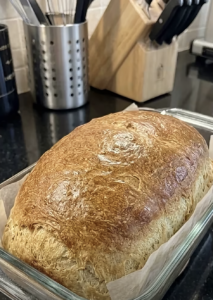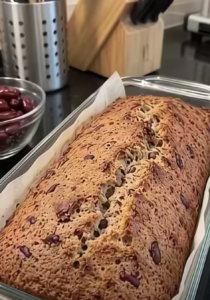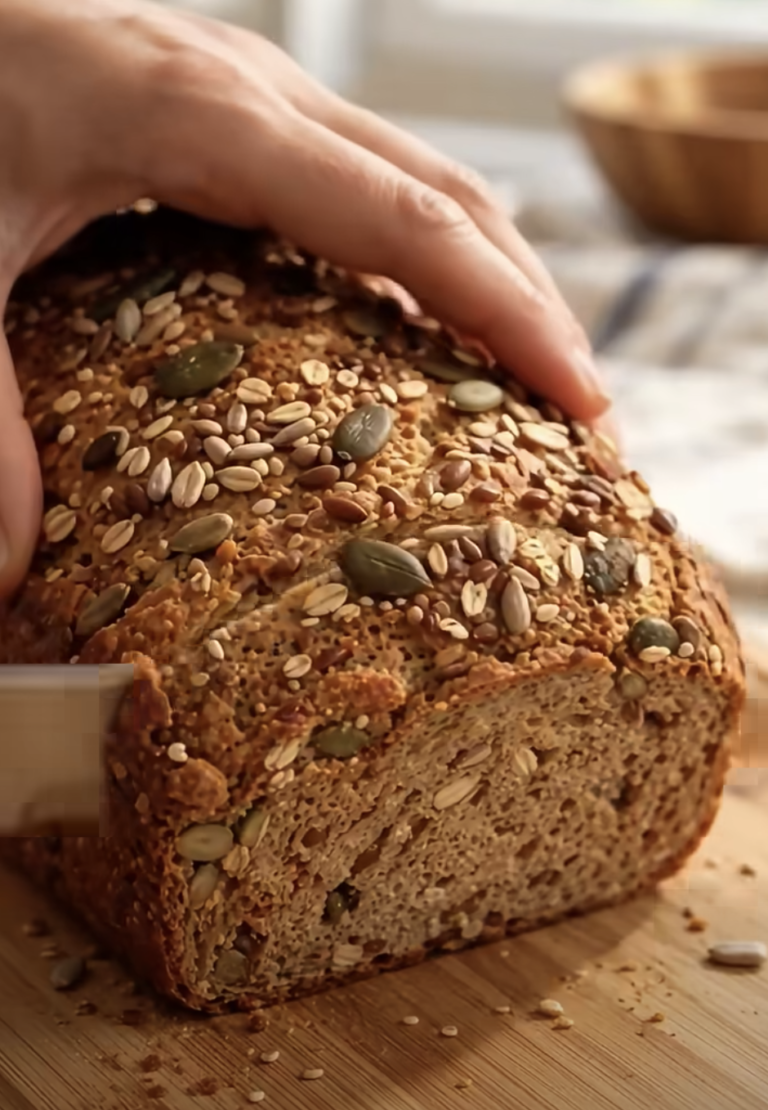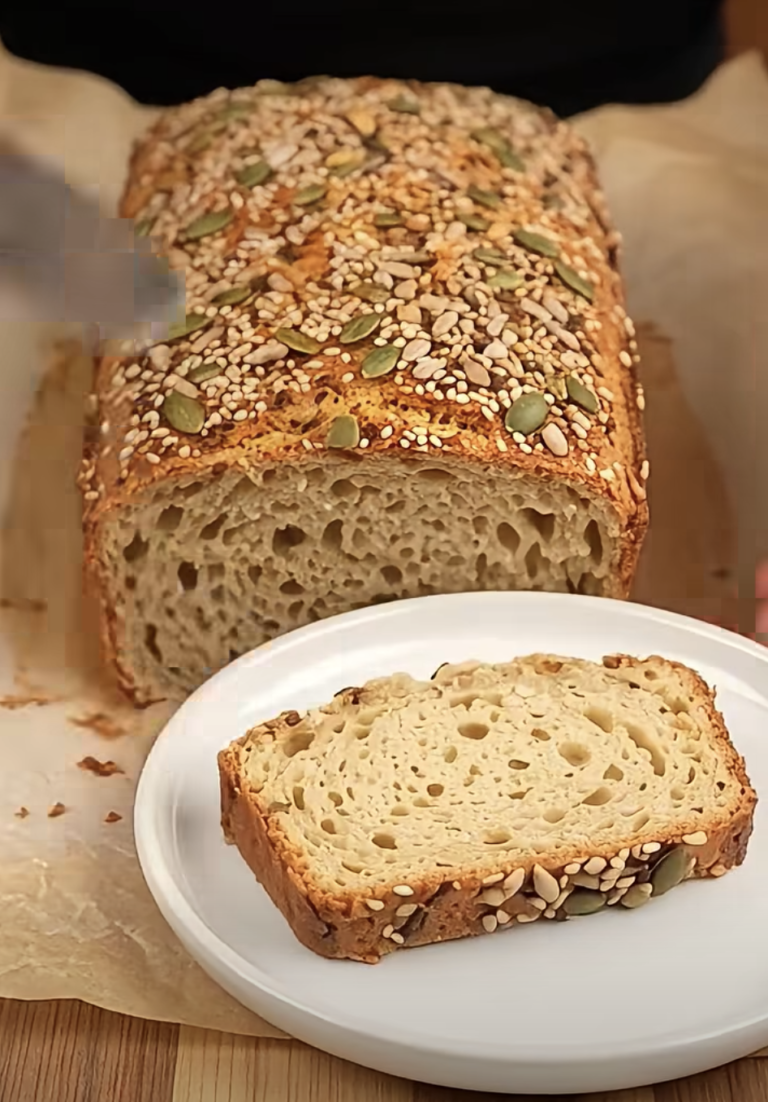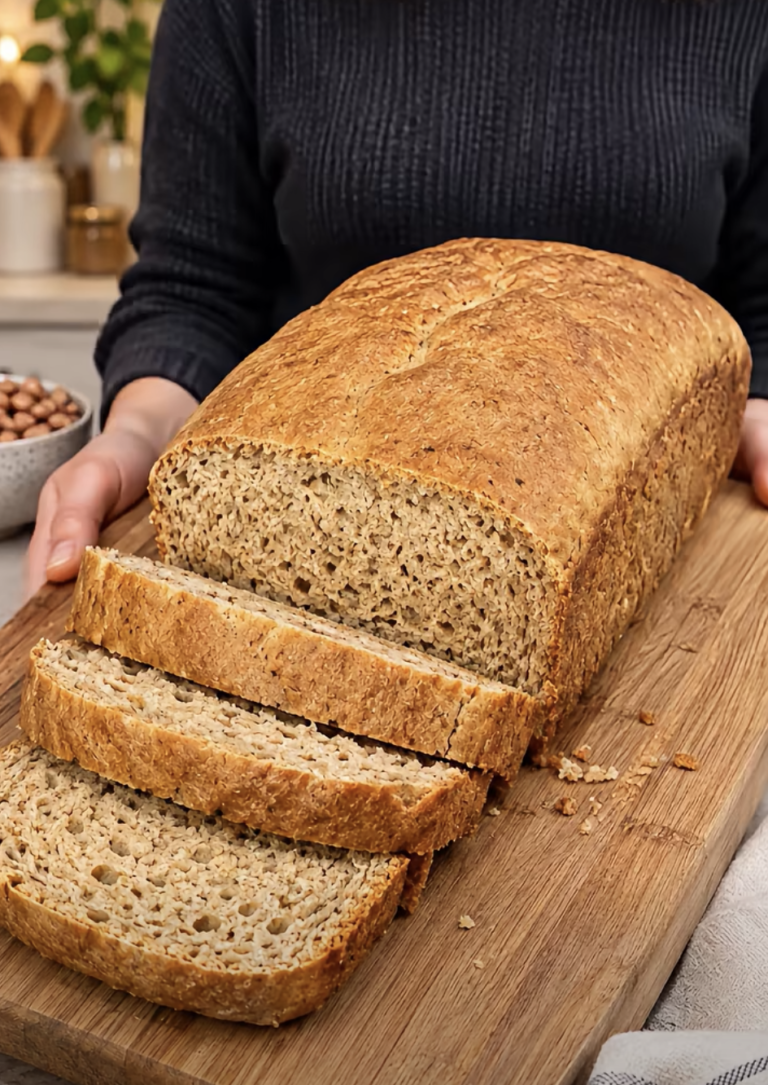
High-Protein Cottage Cheese Oatmeal Bread is a soft, hearty homemade bread that combines rolled oats, creamy cottage cheese, and eggs into a satisfying loaf. With no wheat flour, yeast, or kneading, this easy recipe makes homemade bread simple enough for busy mornings and everyday meal preparation.
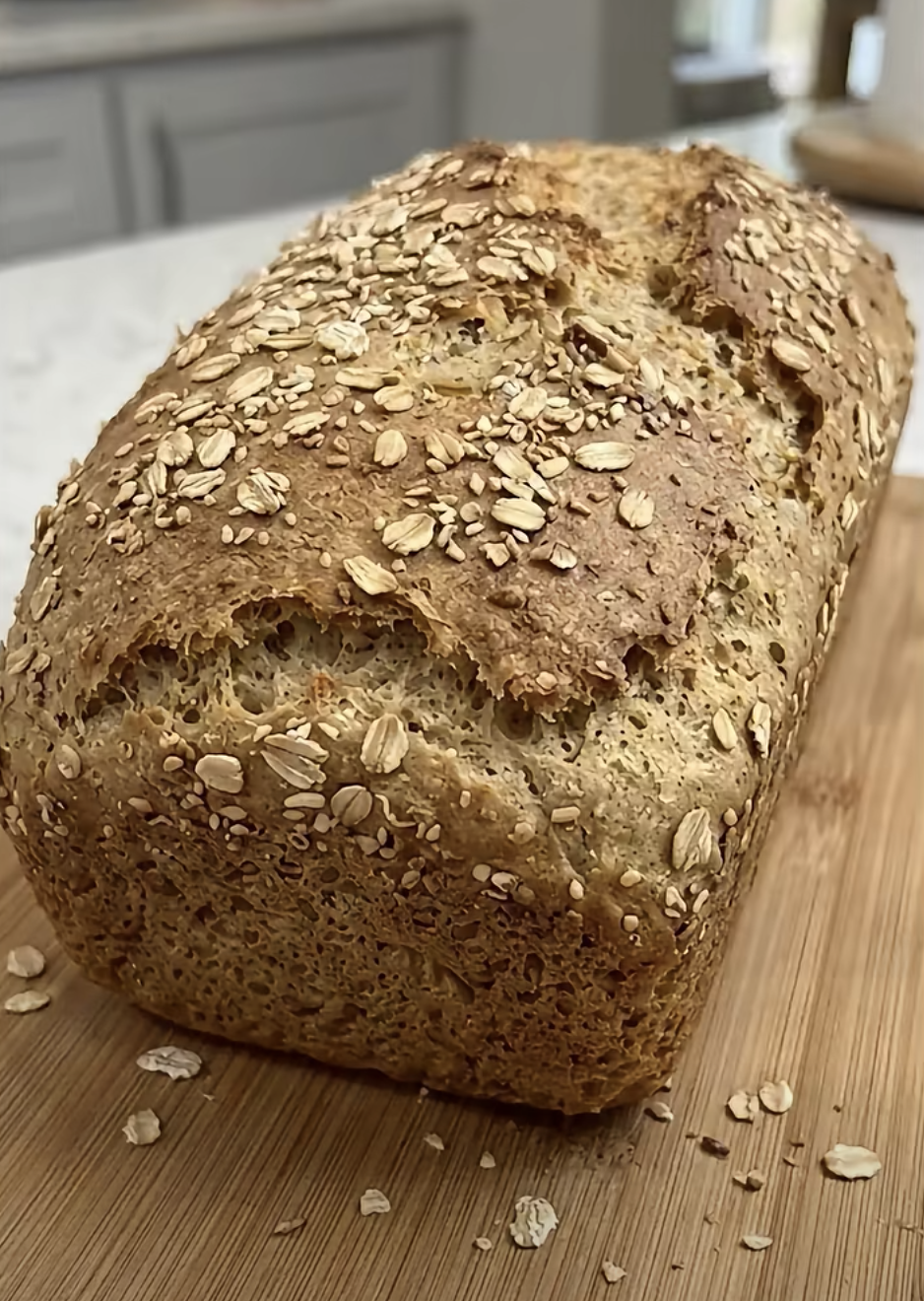
High-Protein Cottage Cheese Oatmeal Bread – Easy Flourless Homemade Loaf
Ingredients
Equipment
Method
- Preheat the oven to 350°F (175°C). Lightly grease an 8-by-4-inch loaf pan with cooking spray or butter, or line it with parchment paper.
- Place 1 1/2 cups old-fashioned rolled oats in a blender or food processor. Blend until they form a fine, flour-like consistency.
- Add cottage cheese, eggs, olive oil, and optional honey to the oat flour. Blend until smooth and creamy.
- Transfer the mixture to a mixing bowl. Add baking powder, salt, and optional chia seeds or ground flaxseed. Stir until evenly combined.
- Allow the batter to rest for approximately 5 minutes so the oats can absorb some moisture.
- Pour the thick batter into the prepared loaf pan. Spread evenly with a spatula and smooth the top.
- Sprinkle 1 tablespoon rolled oats evenly over the surface for a rustic finish.
- Bake on the middle oven rack at 350°F (175°C) for approximately 35–45 minutes, until the top becomes golden and the center sets completely.
- Insert a toothpick into the center. It should come out clean or with a few moist crumbs, but without wet batter. For an additional doneness check, confirm that the center reaches at least 160°F (71°C).
- Remove the bread from the oven and allow it to rest in the pan for approximately 10 minutes.
- Carefully transfer the loaf to a wire cooling rack and allow it to cool completely before slicing.
- Use a serrated bread knife to cut the cooled loaf into approximately 8–10 slices. Enjoy as is or lightly toast for a firmer texture.
Notes
The oats provide a wholesome, slightly nutty flavor, while cottage cheese adds moisture and protein. Meanwhile, eggs help the loaf hold together, and baking powder gives it a gentle rise.
Unlike traditional yeast bread, this oatmeal bread has a tender, compact crumb. However, its satisfying texture makes it perfect for slicing, toasting, and enjoying with your favorite toppings.
You can serve it with avocado, eggs, nut butter, cream cheese, or a drizzle of honey. Additionally, it works well as a quick breakfast, afternoon snack, or simple sandwich alternative.
I first became interested in cottage cheese oatmeal bread when I wanted a homemade loaf that didn’t require yeast or a long rising time. I already had oats in the pantry and cottage cheese in the refrigerator, so the recipe seemed like an easy experiment. What surprised me most was how quickly the batter came together in the blender. The oats turned into a fine flour, while the cottage cheese created a smooth, creamy mixture. After baking, I discovered that cooling the loaf completely made slicing much easier. Lightly toasting the bread also gave it a wonderful texture, especially with avocado or a little honey.
Whether you’re looking for a protein-containing breakfast bread or simply want to try a wholesome homemade loaf, this recipe offers a convenient and delicious option.
Why You’ll Love High-Protein Cottage Cheese Oatmeal Bread
A Simple Bread Recipe Without Yeast or Kneading
One of the biggest advantages of High-Protein Cottage Cheese Oatmeal Bread is its easy preparation.
Traditional homemade bread often requires yeast, kneading, and several hours of rising.
However, this recipe skips those steps completely.
Instead, you blend rolled oats into a fine flour and combine them with cottage cheese, eggs, and a few basic ingredients.
The batter comes together in minutes.
Then, you pour it into a loaf pan and bake until golden.
You don’t need a stand mixer, bread machine, or specialized baking equipment.
A blender or food processor handles most of the preparation.
As a result, beginners can prepare this recipe with confidence.
Another benefit is its short ingredient list.
Rolled oats, cottage cheese, eggs, baking powder, salt, and olive oil create the foundation.
Optional honey adds a touch of sweetness.
Meanwhile, chia seeds or ground flaxseed can contribute extra fiber and texture.
Because the recipe uses oats instead of wheat flour, it offers an alternative to conventional bread.
However, if you need to avoid gluten, choose certified gluten-free oats and check the labels of your other ingredients.
The finished loaf has a soft, moist interior and a lightly golden crust.
Although it doesn’t have the airy texture of yeast bread, it slices nicely after cooling.
You can enjoy it fresh or lightly toasted.
With only about 10 minutes of active preparation, this recipe fits easily into a busy schedule.
A Hearty Breakfast Bread With Protein and Fiber
Another reason to enjoy cottage cheese oatmeal bread is its combination of protein and fiber.
Rolled oats provide complex carbohydrates and dietary fiber.
They also contribute a naturally mild, nutty flavor.
Cottage cheese adds protein and moisture.
Eggs contribute additional protein and help create the loaf’s structure.
Together, these ingredients make a satisfying bread alternative.
However, the exact protein content depends on the cottage cheese brand, egg size, and number of slices.
A loaf divided into eight portions may provide approximately 7–9 grams of protein per slice.
If you cut the bread into ten slices, each serving will contain slightly less.
For an even more substantial breakfast, pair a slice with eggs, cottage cheese, or another protein-rich topping.
The oats also provide fiber, which contributes to the bread’s hearty texture.
Additionally, the recipe contains no refined wheat flour.
You can make it without added honey if you prefer a more savory loaf.
For a slightly sweeter flavor, include the optional tablespoon of honey.
Because the bread tastes mild, it works with both sweet and savory toppings.
For example, spread almond butter over a toasted slice.
Alternatively, add mashed avocado and sliced tomatoes.
You can also serve it alongside scrambled eggs or a bowl of fruit.
This versatility makes the bread useful for breakfast, lunch, and snacks.
Essential Ingredients for the Best Cottage Cheese Oatmeal Bread
Choosing the Right Oats, Cottage Cheese, and Eggs
Great High-Protein Cottage Cheese Oatmeal Bread starts with the right ingredients.
For this recipe, use one and one-half cups of old-fashioned rolled oats.
Rolled oats work especially well because they blend into a fine, flour-like consistency.
Quick oats can sometimes work, but they may absorb moisture differently.
Steel-cut oats are not a direct substitute because they have a much firmer texture.
First, place the rolled oats in a blender or food processor.
Blend until they resemble fine oat flour.
This step helps create a smoother batter and more uniform crumb.
Next, use one cup of cottage cheese.
Small-curd or large-curd cottage cheese both work because the blender breaks down the curds.
However, the moisture content can vary between brands.
For consistent results, choose a thick cottage cheese rather than one with excessive liquid.
Full-fat cottage cheese produces a richer texture.
Meanwhile, low-fat cottage cheese can create a slightly lighter loaf.
The recipe also requires three large eggs.
Eggs help bind the oat mixture and create structure during baking.
As the eggs cook, their proteins firm up and help the bread hold together.
For the best results, use large eggs rather than extra-large eggs.
Changing the egg size can affect the batter’s moisture balance.
Together, oats, cottage cheese, and eggs form the foundation of this simple homemade bread.
How Baking Powder, Olive Oil, and Optional Additions Help
The remaining ingredients improve the loaf’s texture and flavor.
First, use two teaspoons of baking powder.
Baking powder helps the batter rise slightly as it heats.
Although it cannot create the same airy structure as yeast, it makes the loaf less dense.
For the best results, use fresh baking powder.
Next, add half a teaspoon of salt.
Salt balances the mild flavor of the oats and cottage cheese.
One tablespoon of olive oil contributes tenderness and helps prevent the bread from feeling dry.
For a touch of sweetness, add one tablespoon of honey.
However, the honey is optional.
If you prefer a savory bread, simply omit it.
You can also add one tablespoon of chia seeds or ground flaxseed.
These ingredients contribute fiber and a slightly nutty flavor.
Chia seeds absorb moisture, while ground flaxseed helps thicken the batter.
Therefore, avoid adding large amounts beyond the recipe’s suggested quantity without adjusting the liquid.
For finishing, sprinkle one tablespoon of rolled oats over the batter before baking.
This creates a rustic appearance and adds a little texture to the crust.
Finally, lightly grease the loaf pan with cooking spray or butter.
Alternatively, use parchment paper for easier removal.
These simple ingredients work together to create a moist, tender loaf with a hearty oat flavor.
How to Make High-Protein Cottage Cheese Oatmeal Bread
Blending the Batter and Preparing the Loaf Pan
Making High-Protein Cottage Cheese Oatmeal Bread begins with a few simple preparation steps.
First, preheat your oven to 350°F.
Next, prepare an 8-by-4-inch loaf pan.
Lightly grease the inside with cooking spray or butter.
Alternatively, line the pan with parchment paper.
Leave a little parchment hanging over the sides to make removal easier.
Then, measure one and one-half cups of old-fashioned rolled oats.
Place them in a blender or food processor.
Blend until they form a fine, flour-like consistency.
The finer the oat flour, the more uniform the finished bread will become.
Next, add the cottage cheese, eggs, olive oil, and optional honey.
Blend until the mixture becomes smooth and creamy.
Depending on your appliance, this may take one to two minutes.
Stop occasionally to scrape down the sides.
Once the mixture looks smooth, transfer it to a mixing bowl.
Add the baking powder and salt.
If desired, stir in the optional chia seeds or ground flaxseed.
Mix until the ingredients form a thick, evenly combined batter.
Avoid leaving pockets of dry baking powder.
Next, allow the batter to rest for approximately five minutes.
This gives the oat flour time to absorb moisture.
As a result, the batter thickens slightly and becomes easier to spread.
Pour the mixture into the prepared loaf pan.
Use a spatula to smooth the surface.
Finally, sprinkle the remaining tablespoon of rolled oats over the top.
Now, the bread is ready for baking.
Baking, Cooling, and Slicing for the Best Texture
Once you prepare the batter, place the loaf pan on the middle oven rack.
Bake at 350°F for approximately 35–45 minutes.
However, baking times vary depending on the oven, pan material, and moisture content of the cottage cheese.
Begin checking near the earlier end of the range.
The top should develop a light golden-brown color.
The center should also feel firm rather than wet or jiggly.
Insert a toothpick into the middle.
It should come out clean or with a few moist crumbs, but without wet batter.
For an additional doneness check, the center should reach at least 160°F.
If the loaf needs more time, continue baking in short increments.
Once the bread finishes baking, remove it from the oven.
Place the pan on a heat-safe surface.
Allow the loaf to rest for approximately 10 minutes.
Then, carefully transfer it to a wire cooling rack.
Let it cool completely before slicing.
This step matters because oatmeal bread contains substantial moisture.
If you cut the loaf while hot, the center may appear gummy or crumble.
However, cooling helps the crumb firm up.
Depending on the room temperature, complete cooling may take another 30–60 minutes.
Once the loaf reaches room temperature, use a serrated bread knife to cut it into eight to ten slices.
You can enjoy the bread as is.
However, lightly toasting the slices creates a firmer surface and enhances the oat flavor.
Serve with your favorite sweet or savory toppings.
Serving Ideas, Variations, and Storage Tips
Delicious Toppings and Easy Flavor Variations
One of the best features of High-Protein Cottage Cheese Oatmeal Bread is its versatility.
The loaf has a mild flavor that works well with both sweet and savory toppings.
For breakfast, lightly toast a slice and spread it with almond butter.
Add sliced banana and a sprinkle of cinnamon.
Alternatively, drizzle a little honey over warm bread.
For a savory option, spread mashed avocado over a toasted slice.
Add sliced tomatoes and freshly ground black pepper.
You can also serve the bread with scrambled eggs.
This creates a satisfying breakfast with additional protein.
For lunch, use two slices to make a small sandwich.
Try turkey, cheese, lettuce, and mustard.
Alternatively, prepare an open-faced sandwich with cottage cheese and cucumber.
Because the bread has a tender, compact crumb, lightly toasting it can help it support heavier toppings.
You can also customize the batter.
For a sweeter loaf, add a small amount of cinnamon.
For a savory version, try dried oregano or Italian seasoning.
However, remember that adding ingredients changes the original recipe.
If you want to keep the bread simple, prepare the basic loaf and customize the toppings instead.
Another option is to sprinkle sesame seeds or pumpkin seeds over the surface.
These additions create extra texture and a rustic appearance.
Whether you prefer sweet breakfasts or savory sandwiches, this bread offers plenty of possibilities.
Storage, Freezing, and Common Baking Mistakes
Proper storage helps maintain the quality of homemade cottage cheese oatmeal bread.
Because the loaf contains eggs and dairy, refrigerate it rather than leaving it at room temperature for extended periods.
First, allow the bread to cool completely.
Then, wrap it tightly or place it in an airtight container.
Store it in the refrigerator at 40°F or below.
For the best quality, enjoy the bread within three to four days.
You can also freeze individual slices.
Place parchment paper between the slices to prevent sticking.
Then, transfer them to a freezer-safe bag or container.
Use frozen slices within two months for the best texture.
When you’re ready to eat, thaw a slice in the refrigerator or warm it directly in a toaster oven.
Light toasting helps restore a firmer exterior.
Several common mistakes can affect the finished loaf.
First, avoid using steel-cut oats without adjusting the recipe.
Their firm texture makes them unsuitable as a direct substitute for rolled oats.
Second, blend the oats thoroughly.
Coarse oat pieces can create an uneven crumb.
Third, avoid adding too much extra liquid.
Cottage cheese already provides substantial moisture.
Fourth, use fresh baking powder.
Old baking powder may produce a dense loaf.
Finally, let the bread cool completely before slicing.
By following these simple techniques, you can create a tender, sliceable oatmeal bread that works well for everyday meals.
Ingredients
Yield: 1 small loaf, approximately 8–10 slices
Prep Time: 10 minutes
Batter Resting Time: 5 minutes
Bake Time: 35–45 minutes
Cooling Time: Approximately 40–70 minutes
Total Time: Approximately 1 hour 30 minutes to 2 hours 10 minutes
- 1 1/2 cups old-fashioned rolled oats
- 1 cup cottage cheese
- 3 large eggs
- 2 tsp baking powder
- 1/2 tsp salt
- 1 tbsp olive oil
- 1 tbsp honey, optional
- 1 tbsp chia seeds or ground flaxseed, optional
- 1 tbsp rolled oats, for topping
- Cooking spray or butter, for greasing the loaf pan
Instructions
1. Preheat the oven. Preheat your oven to 350°F (175°C). Lightly grease an 8-by-4-inch loaf pan with cooking spray or butter, or line it with parchment paper.
2. Blend the oats. Place 1 1/2 cups of old-fashioned rolled oats in a blender or food processor. Blend until they form a fine, flour-like consistency.
3. Add the wet ingredients. Add the cottage cheese, eggs, olive oil, and optional honey to the oat flour. Blend until smooth and creamy.
4. Combine the batter. Transfer the mixture to a mixing bowl. Add the baking powder, salt, and optional chia seeds or ground flaxseed. Stir until evenly combined.
5. Rest the batter. Allow the batter to rest for approximately five minutes so the oats can absorb some moisture.
6. Fill the loaf pan. Pour the thick batter into the prepared pan. Spread evenly with a spatula and smooth the top.
7. Add the topping. Sprinkle one tablespoon of rolled oats over the surface for a rustic finish.
8. Bake until golden. Place the pan on the middle oven rack and bake for approximately 35–45 minutes, until the top becomes golden and the center sets completely.
9. Check for doneness. Insert a toothpick into the center. It should come out clean or with a few moist crumbs, but without wet batter. For an additional check, confirm that the center reaches at least 160°F (71°C).
10. Cool in the pan. Remove the bread from the oven and allow it to rest in the pan for approximately 10 minutes.
11. Cool completely. Carefully transfer the loaf to a wire rack and allow it to cool completely before slicing.
12. Slice and enjoy. Use a serrated bread knife to cut the loaf into approximately 8–10 slices. Serve as is or lightly toast for a firmer texture.
Frequently Asked Questions
1. Is High-Protein Cottage Cheese Oatmeal Bread gluten-free?
The recipe contains no wheat flour, but oats may come into contact with gluten-containing grains during processing. If you need to follow a strict gluten-free diet, choose certified gluten-free oats and check the labels of the baking powder and other ingredients.
2. Can I use quick oats instead of old-fashioned rolled oats?
Yes, quick oats can work because the recipe blends the oats into flour. However, quick oats may absorb moisture slightly differently. The finished texture may also vary. Old-fashioned rolled oats provide the most predictable results.
3. Can I make this bread without honey?
Absolutely. Honey is optional and mainly adds a little sweetness. If you prefer a savory loaf, simply omit it. The cottage cheese, eggs, and olive oil provide enough moisture for the recipe without the honey.
4. How much protein does cottage cheese oatmeal bread contain?
The exact amount depends on the cottage cheese brand, egg size, and serving size. A loaf made with one cup of cottage cheese, three eggs, and rolled oats may provide approximately 55–65 grams of protein in total. When divided into eight slices, each slice contains roughly 7–8 grams. These values are estimates rather than laboratory-tested measurements.
5. Can I freeze High-Protein Cottage Cheese Oatmeal Bread?
Yes. Allow the loaf to cool completely, then slice it. Place parchment paper between the slices and store them in a freezer-safe bag or container. For the best quality, use the frozen bread within two months. Thaw in the refrigerator or toast individual slices directly from frozen.
Conclusion
High-Protein Cottage Cheese Oatmeal Bread offers a simple way to make a hearty homemade loaf without wheat flour, yeast, or kneading.
With rolled oats, cottage cheese, eggs, and a few basic ingredients, you can create a soft, tender bread that works well for breakfast, lunch, and snacks.
The oats provide a mild, nutty flavor and dietary fiber.
Meanwhile, cottage cheese and eggs contribute protein and help create a satisfying texture.
Baking powder gives the loaf a gentle rise, while olive oil helps keep the crumb tender.
You can enjoy the bread with avocado, eggs, nut butter, honey, or your favorite sandwich fillings.
For the best results, blend the oats into a fine flour, mix the batter thoroughly, allow it to rest briefly, and bake until the center sets completely.
Most importantly, let the loaf cool before slicing.
Whether you’re looking for a protein-containing breakfast option or simply want an easy homemade bread alternative, this cottage cheese oatmeal bread makes a practical addition to your recipe collection.