Great! Thank You, Grandma! may sound like the perfect name for an old-fashioned home remedy, especially when thick toenails become difficult to trim. Warm water, careful drying, and gentle nail care can indeed make hard toenails easier to manage. However, vinegar and baking soda deserve a closer look before you rely on them as treatments.
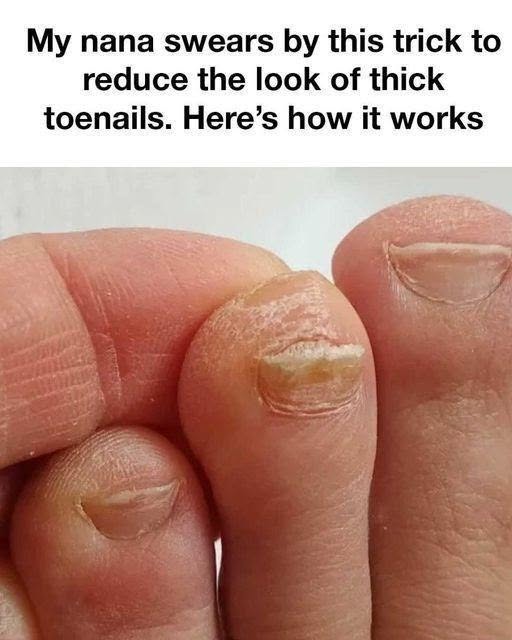
Thick, yellow, brittle, or misshapen toenails can develop for several reasons. Aging commonly thickens toenails because nail growth slows over time. Repeated pressure from shoes, previous injuries, psoriasis, and fungal infections can also change nail thickness and appearance.
Although a warm soak can temporarily soften a thick nail before trimming, home ingredients cannot reliably identify or cure the underlying cause. In particular, vinegar and baking soda do not have strong clinical evidence showing that a homemade soak cures toenail fungus. Therefore, the safest approach combines gentle home care with professional evaluation when nails remain painful, discolored, crumbling, lifted, or increasingly thick.
I remember watching an older relative prepare a small basin of warm water whenever her toenails became difficult to trim. She never rushed the process. She soaked her feet, dried them carefully, trimmed only what came away easily, and stopped if anything hurt. Years later, that simple routine still makes sense to me, although I understand it differently now. The helpful part was not a magical kitchen ingredient. Warm water softened the nails temporarily, while patience prevented aggressive cutting. Today, I would keep that gentle approach while adding one important rule: persistent thick or discolored nails deserve proper evaluation instead of repeated experimenting with home remedies.
Why Toenails Become Thick, Hard, or Discolored
A thick toenail does not automatically mean fungus. In fact, several common conditions can produce remarkably similar changes. Therefore, understanding the possible causes helps you choose safer care.
Aging, Pressure, and Injury Can Change Nail Thickness
Aging ranks among the most common reasons toenails become thicker. Mayo Clinic explains that toenails often thicken as people age because the nail plate grows more slowly. Other causes include psoriasis, trauma, tight shoes, and fungal infection.
Repeated pressure matters more than many people realize.
Shoes that squeeze the toes can repeatedly traumatize the nail plate and surrounding tissue. Likewise, years of walking, running, or working in restrictive footwear can gradually change the nail’s shape.
An old injury can also produce permanent changes. You may not even remember the original trauma, especially when it happened years earlier.
Therefore, thick toenails do not always require an antifungal treatment.
The first practical step involves looking at the whole picture.
A nail that has gradually thickened with age but otherwise looks stable may need careful trimming and routine foot care. On the other hand, a nail that suddenly changes color, lifts from the nail bed, crumbles, becomes painful, or develops debris beneath it deserves closer attention.
You should also check your footwear.
Choose shoes with enough space around the toes so the nail does not repeatedly strike the front or sides.
Additionally, keep toenails at a manageable length. Long thick nails can press against shoes and create even more discomfort.
Warm water before trimming can temporarily soften hard nail material. As a result, trimming may feel easier and require less pressure.
That simple idea forms the useful foundation behind Great! Thank You, Grandma! without assuming that every thick nail needs a homemade chemical treatment.
Fungal Nail Infections Need Proper Diagnosis
Toenail fungus, medically called onychomycosis, can cause thickening, discoloration, brittleness, crumbling, lifting, buildup under the nail, and sometimes pain. However, other nail disorders can look similar.
That similarity matters because treating the wrong condition wastes time.
Dermatologists can examine the nail and, when necessary, collect a clipping or scraping to determine whether fungus actually causes the problem.
A fungal infection also rarely disappears simply because you trim the nail.
The American Academy of Dermatology notes that fungus can live within the nail and the tissue underneath it. Therefore, filing away the visible thick portion cannot eliminate the entire infection.
Prescription treatment may involve medication applied directly to the nail or oral antifungal medicine, depending on the severity, health history, and amount of nail involved.
Treatment takes patience because toenails grow slowly.
Even after successful treatment removes the infection, the damaged portion of a big toenail may take a year or longer to grow out completely.
Therefore, judge progress over months rather than days.
Great! Thank You, Grandma! works best as a gentle nail-softening and hygiene routine, not as a promise to cure fungal disease.
If several nails become thick and yellow, if one nail crumbles or separates from the skin, or if the problem keeps worsening, professional evaluation can save months of guesswork.
A Safer Way to Soften Thick Toenails at Home
The simplest home routine often works better than an aggressive one. You do not need to scrub, scrape, or force a thick nail into shape.
Use Warm Water Before Gentle Trimming
Start with comfortably warm water.
Place enough water in a clean basin to cover the toes. Then soak the feet for about 10 to 15 minutes.
The goal involves softening the nail temporarily, not soaking the skin for an hour.
Afterward, dry the feet thoroughly.
Pay special attention to the spaces between the toes because fungus thrives more easily in persistently warm, damp environments.
Once the nail feels slightly softer, use clean, sturdy nail clippers designed for toenails.
Trim small sections rather than trying to cut through the entire thick nail in one squeeze.
Cut the nail mostly straight across.
Avoid digging deeply into the corners because aggressive corner trimming can contribute to ingrown nails.
If a thick area resists the clipper, do not force it.
Instead, use a clean nail file to gently smooth rough edges.
The American Academy of Dermatology notes that professional thinning or debridement can make thick nails easier to trim and may improve treatment penetration when nail fungus exists. However, clinicians perform more aggressive thinning procedures with appropriate tools and technique.
Therefore, avoid using blades, drills, knives, or sharp household tools to thin a toenail yourself.
You can repeat the warm-water routine whenever you need to trim your nails.
For many people, that approach provides all the softening necessary.
Great! Thank You, Grandma! does not need complicated ingredients to make the routine useful. Warm water, clean tools, proper drying, and patience offer the most important practical benefits.
Be Careful With Vinegar and Baking Soda
Many home-care articles recommend white vinegar, baking soda, or both for thick toenails.
However, you should separate tradition from evidence.
Researchers have not established a standard vinegar-and-baking-soda soak as a proven treatment for onychomycosis. Therefore, you should not rely on it instead of proper diagnosis or effective antifungal treatment.
Vinegar contains acetic acid, which gives it an acidic pH. Baking soda, by contrast, is alkaline.
When you combine an acid with an alkaline ingredient, they react and partially neutralize one another. The familiar bubbling does not automatically make the mixture more medicinal.
In addition, acidic or alkaline solutions can irritate cracked, inflamed, or sensitive skin.
Therefore, plain warm water offers the safest simple starting point when your only goal involves temporarily softening a hard nail before trimming.
If you still choose to use diluted vinegar occasionally, stop immediately if the skin burns, stings, reddens, cracks, or becomes uncomfortable.
Never apply concentrated vinegar to broken skin.
Likewise, avoid abrasive scrubbing with dry baking soda because aggressive friction can injure the skin around the nail.
People sometimes assume that stronger concentrations work faster. However, stronger home mixtures can simply create more irritation without improving the underlying nail problem.
That principle matters especially with Great! Thank You, Grandma! because gentle care should remain genuinely gentle.
If a clinician confirms fungal infection, follow the treatment plan rather than repeatedly switching between home mixtures.
The American Academy of Dermatology lists prescription topical and oral antifungal options and also notes that clinicians sometimes use high-strength urea preparations to soften very thick nails.
Those approaches have a much clearer medical role than an improvised kitchen mixture.
How to Trim Thick Toenails Without Causing Injury
Thick toenails often require more patience than ordinary nails. Trying to finish the job quickly can lead to painful cuts, cracked nails, and damaged surrounding skin.
Choose the Right Tools and Technique
Use toenail clippers with a strong, clean cutting edge.
Small fingernail clippers may not open widely enough for a thick toenail. Consequently, people sometimes twist or force the tool, which increases the risk of slipping.
Before trimming, wash the clippers.
Then soften the nail with a brief warm-water soak and dry the foot thoroughly.
Take several small cuts across the nail instead of one large cut.
This method places less pressure on both the nail and the clipper.
Keep the nail reasonably straight across.
You can gently round sharp points with a file afterward, but avoid cutting deeply down the sides.
If the nail has become extremely thick, curled, painful, or difficult to reach safely, stop.
A podiatrist or dermatologist can reduce excessive thickness with professional instruments. The American Academy of Dermatology describes nail debridement as a procedure that reduces nail thickness and can make walking, shoe wear, and trimming easier.
Do not try to imitate professional debridement with a knife or rotary household tool.
Also, never pull away loose portions of nail.
A lifted nail may remain attached deeper than it appears. Pulling can tear healthy tissue and create an entry point for infection.
Instead, trim only material that you can reach safely and comfortably.
Great! Thank You, Grandma! should leave your feet more comfortable, not sore.
If trimming causes bleeding, significant pain, or repeated splitting, professional nail care offers a safer option.
Know When Home Trimming Is Not the Right Choice
Some people should take extra care before trimming thick nails themselves.
If you have diabetes, reduced sensation in your feet, known circulation problems, a history of foot ulcers, or difficulty seeing or reaching your toes, seek individualized medical advice before aggressive home nail care.
Even a small cut can become more serious when healing or sensation is impaired.
Likewise, contact a healthcare professional if the skin around the nail becomes red, hot, swollen, draining, or increasingly painful.
These signs can indicate infection.
A dark or black area under a nail also deserves attention when you cannot clearly connect it with a recent injury.
Similarly, seek evaluation when a nail changes rapidly or the surrounding skin changes unexpectedly.
Do not assume every unusual nail represents fungus.
Dermatologists sometimes test nail material specifically because psoriasis, trauma, and other nail disorders can resemble fungal infection.
Professional assessment becomes especially useful when multiple attempts at self-care produce no improvement.
Remember that a toenail grows slowly.
Therefore, even effective care does not transform its appearance within a week.
Great! Thank You, Grandma! should focus on comfort, hygiene, and safer trimming while you give the nail time to grow.
A gradual approach protects the surrounding skin and reduces the temptation to over-file or over-cut.
Everyday Habits That Support Healthier Toenails
Managing thick nails involves more than what you do on trimming day. Daily footwear and hygiene habits can reduce repeated trauma and help discourage conditions that thrive in damp environments.
Keep Feet Clean, Dry, and Comfortable
Wash your feet regularly with mild soap and water.
Then dry them carefully, particularly between the toes.
Change damp socks promptly.
If your feet sweat heavily, breathable socks and shoes may help keep the environment drier.
Rotate footwear when practical so shoes have time to dry between uses.
Also, choose shoes with a roomy toe box.
Your toes should not repeatedly hit the front of the shoe when you walk.
Pressure can worsen discomfort and contribute to nail trauma.
If you use public locker rooms, showers, pools, or similar damp communal areas, wear sandals or shower shoes rather than walking barefoot.
The American Academy of Dermatology notes that nail fungus can spread through contact and in warm, moist shared environments such as locker rooms and public showers.
Do not share toenail clippers, files, towels, or footwear.
Additionally, disinfect or properly clean reusable nail tools after use.
These habits may sound basic, but consistency matters more than complicated home remedies.
A clean, dry environment supports normal foot hygiene while reducing repeated irritation.
Great! Thank You, Grandma! becomes much more useful when you treat the soak as one small part of an overall foot-care routine.
Warm water may soften the nail today, while good footwear and careful hygiene help protect it every day.
Set Realistic Expectations for Improvement
Toenails grow slowly.
Therefore, visible improvement takes time even after you address the underlying cause.
A thick section will not simply disappear after soaking.
Instead, the damaged or altered nail must gradually grow forward so you can trim it away.
When a fungal infection causes the changes, successful treatment may remove the fungus long before the nail looks completely normal again. A big toenail can take a year or longer to grow out.
That timeline explains why quick-fix promises deserve skepticism.
If a home remedy claims to make a severely thick, fungal toenail completely healthy in days, the claim does not match the normal biology of nail growth.
Instead, look for gradual signs.
The new nail near the base may appear clearer or smoother. Pressure discomfort may improve. Trimming may become easier.
Taking a photograph every month can help you notice changes that become difficult to see from day to day.
However, stop self-treatment and seek evaluation if the nail worsens.
Pain, spreading discoloration, separation, drainage, redness, or increasing thickness deserve attention.
The real value of Great! Thank You, Grandma! lies in making nail care gentler and more manageable.
It should never encourage you to ignore persistent symptoms.
Frequently Asked Questions
Does soaking thick toenails in warm water really help?
Yes, warm water can temporarily soften hard toenails and make careful trimming easier. However, soaking does not correct the underlying cause of chronic thickening. Aging, trauma, psoriasis, and fungal infection can all cause thick toenails.
Does vinegar cure toenail fungus?
Current evidence does not establish a homemade vinegar soak as a reliable cure for fungal nail infection. Nail fungus often requires prescription treatment, and dermatologists may confirm the diagnosis by examining or testing the nail before recommending therapy.
Should I mix baking soda and vinegar for my toenails?
You do not need to. Vinegar is acidic, while baking soda is alkaline, so combining them causes a chemical reaction that partly neutralizes their properties. No strong clinical evidence shows that the resulting homemade mixture cures toenail fungus. Plain warm water offers a simpler option when you only need to soften a nail before trimming.
Can I file down a fungal toenail myself?
You can gently smooth rough edges, but avoid aggressive filing, scraping, drilling, or cutting. Filing alone cannot remove all nail fungus because the organism can live inside the nail and underlying tissue. Dermatologists can professionally thin very thick nails when necessary.
When should I see a doctor about a thick toenail?
Seek medical evaluation when a nail becomes painful, increasingly thick, crumbly, lifted, severely discolored, or surrounded by red or swollen skin. You should also get individualized guidance before aggressive self-care if you have diabetes, reduced foot sensation, circulation problems, or a history of foot wounds.
Conclusion
Great! Thank You, Grandma! can still represent a useful old-fashioned principle: soften first, work gently, and never force a difficult toenail.
However, the safest modern version does not need bold claims about vinegar or baking soda curing fungus.
Start with comfortably warm water for about 10 to 15 minutes. Then dry your feet thoroughly, use clean toenail clippers, take small cuts, and file only rough edges.
Do not dig deeply into nail corners or aggressively thin the nail yourself.
Most importantly, pay attention to what the nail tells you.
A thick toenail may simply reflect aging or repeated shoe pressure. However, fungal infection, psoriasis, and trauma can create similar changes.
That is why persistent discoloration, crumbling, lifting, pain, or worsening thickness deserves proper evaluation.
When fungus causes the problem, evidence-based treatment works slowly because a healthy-looking nail must grow out over many months.
No kitchen soak can bypass that biological process.
Therefore, use Great! Thank You, Grandma! as a comfort-focused routine rather than a cure.
Keep your feet clean and dry, wear shoes with enough room for your toes, avoid sharing nail tools, and protect your feet in communal wet areas.
Then give your nails time.
Gentle, consistent care may make thick nails easier to manage while protecting the surrounding skin from unnecessary injury.
Sometimes the best lesson passed down through generations is not a particular ingredient at all. It is the patience to soften, trim carefully, stop when something hurts, and recognize when a problem needs more than home care.
WP Recipe Maker JSON Import
{
  "title": "Great! Thank You, Grandma! — The Gentle, Natural Way to Soften Thick Toenails at Home",
  "summary": "A gentle foot-care routine that uses comfortably warm water to temporarily soften thick toenails before careful trimming, while emphasizing proper drying, clean tools, and professional evaluation for persistent nail changes.",
  "notes": "This routine helps soften thick toenails for easier trimming but does not diagnose or cure fungal infection. Avoid aggressive cutting, scraping, or drilling. Seek professional care for painful, severely discolored, crumbling, lifted, infected, or rapidly changing nails. People with diabetes, reduced foot sensation, circulation problems, or a history of foot ulcers should get individualized medical guidance before trimming difficult nails.",
  "ingredients_flat": [
    {
      "amount": "1",
      "unit": "basin",
      "name": "comfortably warm water"
    },
    {
      "amount": "1",
      "unit": "",
      "name": "clean towel"
    },
    {
      "amount": "1",
      "unit": "",
      "name": "clean heavy-duty toenail clipper"
    },
    {
      "amount": "1",
      "unit": "",
      "name": "clean nail file"
    }
  ],
  "instructions_flat": [
    {
      "name": "Step 1",
      "text": "Fill a clean basin with comfortably warm water and soak the feet for about 10 to 15 minutes to temporarily soften thick toenails.",
      "summary": "",
      "image_url": ""
    },
    {
      "name": "Step 2",
      "text": "Remove the feet from the water and dry them thoroughly, including the spaces between the toes.",
      "summary": "",
      "image_url": ""
    },
    {
      "name": "Step 3",
      "text": "Use a clean toenail clipper to make small cuts across the softened nail. Keep the cut mostly straight and never force a clipper through a nail that remains too thick.",
      "summary": "",
      "image_url": ""
    },
    {
      "name": "Step 4",
      "text": "Gently smooth sharp or rough edges with a clean nail file without aggressively thinning or scraping the nail.",
      "summary": "",
      "image_url": ""
    },
    {
      "name": "Step 5",
      "text": "Clean the nail tools after use and keep the feet dry and comfortable. Wear roomy footwear that does not repeatedly press against the toenails.",
      "summary": "",
      "image_url": ""
    },
    {
      "name": "Step 6",
      "text": "Seek professional evaluation if a nail becomes painful, increasingly discolored, crumbly, lifted, swollen, draining, or progressively thicker.",
      "summary": "",
      "image_url": ""
    }
  ],
  "equipment": [
    {
      "name": "Foot basin",
      "notes": ""
    },
    {
      "name": "Clean towel",
      "notes": ""
    },
    {
      "name": "Heavy-duty toenail clippers",
      "notes": ""
    },
    {
      "name": "Nail file",
      "notes": ""
    }
  ],
  "nutrition": {
    "calories": "0",
    "carbohydrates": "0g",
    "protein": "0g",
    "fat": "0g",
    "saturated_fat": "0g",
    "polyunsaturated_fat": "0g",
    "monounsaturated_fat": "0g",
    "trans_fat": "0g",
    "cholesterol": "0mg",
    "sodium": "0mg",
    "potassium": "0mg",
    "fiber": "0g",
    "sugar": "0g",
    "vitamin_a": "0IU",
    "vitamin_c": "0mg",
    "calcium": "0mg",
    "iron": "0mg"
  },
  "tags": {
    "course": ["Home Care Guide"],
    "cuisine": ["Personal Care"],
    "keyword": ["Great! Thank You, Grandma!", "thick toenail care", "soften thick toenails", "toenail trimming", "foot care"]
  }
}
SEO Output
Focus Keyword
Great! Thank You, Grandma!
SEO Title
Great! Thank You, Grandma! Gentle Care for Thick Toenails at Home
Meta Description
Great! Thank You, Grandma! Learn a gentle way to soften thick toenails, trim them safely, and know when nail changes need medical care.
Expert SEO Title
Great! Thank You, Grandma! 5 Essential Toenail Care Tips
Midjourney Prompt
Realistic wellness photography of an older adult gently soaking clean feet in a small ceramic basin of comfortably warm water, neatly arranged clean towel, sturdy toenail clippers and simple nail file nearby, healthy home foot-care setting, no graphic disease, no wounds, no medical gore, soft natural bathroom light, calm reassuring atmosphere, clean neutral background, detailed realistic photography, vertical composition, generous negative space at the top for text overlay suitable for Pinterest pins –v 6 –ar 2:3
More Blog
- Drinking Water on an Empty Stomach — What Science Actually Supports (No Hype, Just Facts)
- Waking Up Between 3 and 5 AM? It Might Be Your Soul Trying to Talk to You
- What a “Bleach” Patch on Your Underwear Really Means — And Why It’s Actually a Good Sign
- This Drink May Weaken Your Bones From The Inside — But Everyone Drinks It Anyway