Picture this: You’ve just pulled into your driveway after a long day. You walk up to your front door, keys in hand, ready to kick off your shoes and unwind.
Then you stop.
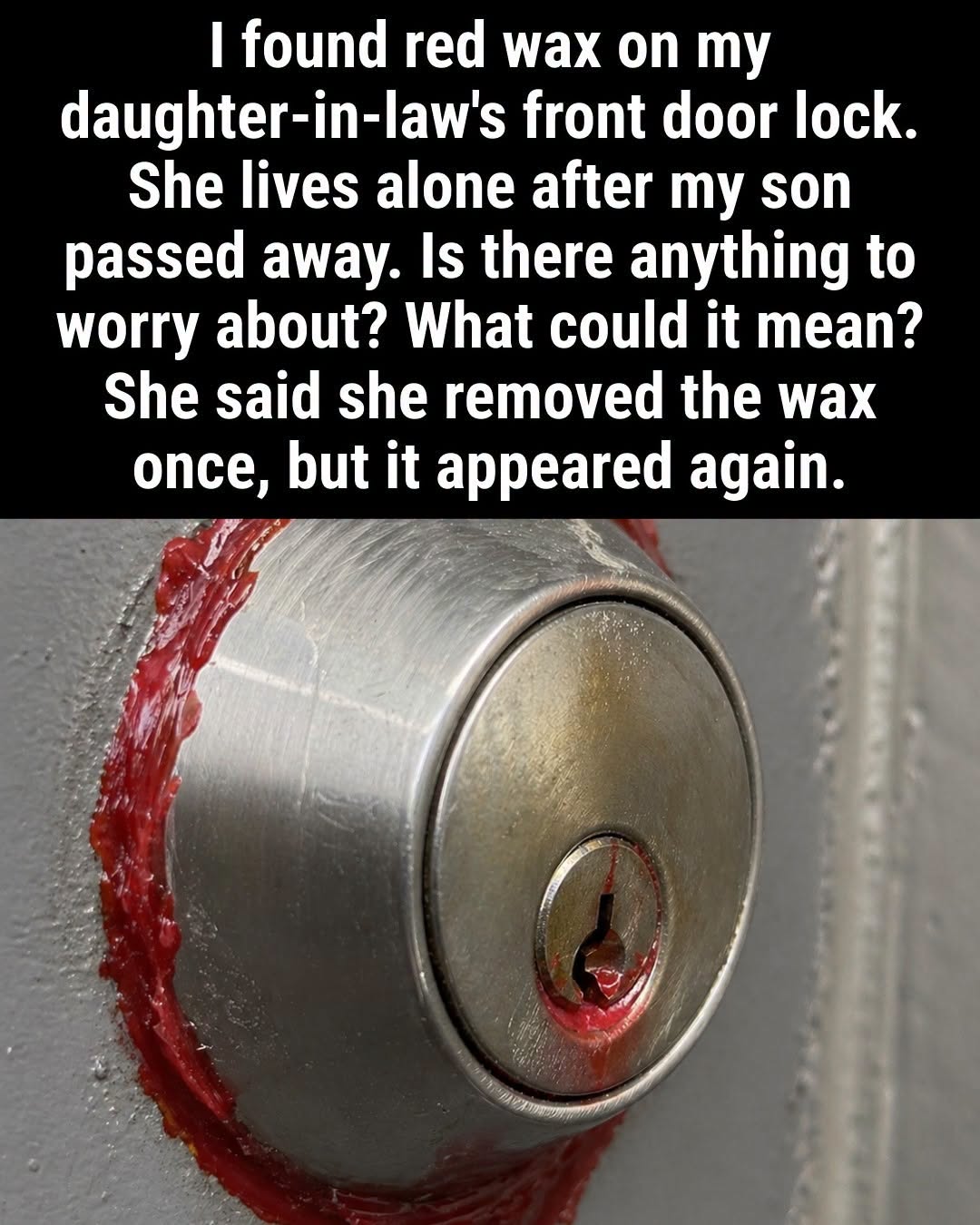
Right there on your deadbolt, doorframe, or around the keyhole is a strange little smear of red wax.
Your first thought might be, “What is that?”
And then, almost immediately, your imagination starts filling in the blanks.
Could someone have marked the house? Was it left there accidentally? Is it some kind of old-fashioned seal? Or is there a more innocent explanation?
It is completely understandable to feel uneasy when you discover something unfamiliar around an entry point to your home.
But here’s the most important thing to remember: red wax on a door lock does not, by itself, prove that someone is targeting your home or planning a burglary.
There are many possible explanations, ranging from ordinary household materials to accidental transfer from another object.
The smartest response isn’t panic.
It’s observation.
Let’s take a calm look at what you should do if you discover something unusual around your door lock and how a few simple security habits can give you greater peace of mind.
First, Don’t Assume You Know What It Means
A mysterious substance on a lock can look suspicious because it is unexpected.
But appearance alone doesn’t tell you where it came from.
Red wax could potentially come from a candle, sealing wax, a craft project, decorative material, packaging, paint-like residue, or another everyday source.
It could also have been transferred accidentally by someone handling the door.
In other words, there isn’t a universal meaning attached to a red wax mark on a residential door.
So before removing it, take a moment to document what you found.
Your Peace-of-Mind Home Security Toolkit
You don’t need anything complicated.
A few ordinary items are enough to investigate the situation sensibly.
- Your smartphone: Take clear photographs before touching the mark.
- A flashlight: Helpful for examining the lock, frame, hinges, and surrounding area.
- Disposable gloves: Useful if you don’t know what the substance is.
- A clean cloth: For gentle cleaning after you’ve documented everything.
- Warm water and mild soap: Appropriate for many washable surfaces.
- Your door keys: Check that the lock still operates normally.
- A notebook or phone notes app: Record the date and anything unusual you notice.
If you have a home security camera, review the footage around the time you believe the mark appeared.
Step 1: Photograph Everything Before Cleaning
This is the easiest step to skip and one of the most useful.
Take several photographs.
Capture the mark from close up, then take wider photographs showing its location on the door.
Photograph the lock, handle, doorframe, nearby surfaces, and anything else that seems unusual.
Don’t immediately scrape, wipe, or touch the material.
If the mark turns out to be completely harmless, you’ve lost nothing by documenting it.
If something genuinely concerning happened, however, those photographs may be useful when explaining the situation to a landlord, property manager, security company, or police.
Step 2: Look for Other Signs of Disturbance
The red material itself may tell you very little.
The surrounding area may tell you much more.
Look for obvious signs such as:
- Scratches around the keyhole
- Damage to the lock
- A door that no longer closes correctly
- Bent hardware
- Marks around the frame
- Missing packages
- Unexpected damage
- Signs that someone attempted to force the door
Don’t become obsessed with tiny marks that could have ordinary explanations.
You’re simply looking for clear evidence that something has changed.
Step 3: Check Your Security Camera
If you have a doorbell camera or another exterior security camera, check recent footage.
You may discover something wonderfully ordinary.
Perhaps a child touched the door while playing.
Maybe a contractor, delivery worker, visitor, or neighbor accidentally brushed against the lock.
Perhaps the mark was already there and you simply hadn’t noticed it.
Video evidence is much more useful than trying to interpret the appearance of a mysterious substance.
If you don’t have a camera, that doesn’t mean your home is unsafe.
Good locks, secure doors, outdoor lighting, and sensible habits are all important layers of home security.
Step 4: Consider Everyday Explanations
Before assuming the worst, think about what has happened around your home recently.
Have you:
- Used candles or sealing wax?
- Completed a craft project?
- Had maintenance work done?
- Received a package with colored wax or adhesive material?
- Had children or pets playing near the door?
- Painted or repaired the doorway?
- Had visitors recently?
- Moved furniture or outdoor decorations?
Sometimes the explanation is hiding in plain sight.
A mystery becomes much less frightening when you identify its source.
Step 5: Clean the Mark Carefully
Once you’ve documented the area and determined that there doesn’t appear to be a security issue, you can clean the residue.
If it really is wax, allow it to cool and harden if necessary.
For a small amount on a durable surface, gently lift away the excess using a plastic scraper or another non-abrasive tool.
Avoid aggressively scraping the lock because you don’t want to damage the finish.
A soft cloth with warm, soapy water may remove remaining residue from suitable surfaces.
Be particularly careful with painted doors, delicate finishes, electronic locks, and weatherproof seals.
Don’t Reach for a Heat Gun Immediately
You may see advice online recommending a hairdryer or heat gun to melt wax.
This can work in some circumstances, but it isn’t automatically the best choice.
Excessive heat can damage paint, plastic, weather stripping, electronic components, or certain finishes.
If the wax is on or immediately around a lock, avoid directing high heat into the mechanism.
When in doubt, use the least aggressive cleaning method possible or consult the lock or door manufacturer’s care instructions.
Step 6: Check That Your Lock Still Works
After cleaning, test your door.
Insert your key and turn the lock normally.
Make sure the deadbolt extends and retracts smoothly.
If you have a smart lock, test the keypad, app, or other access method according to the manufacturer’s instructions.
If the lock suddenly feels stiff, catches, or behaves differently from normal, don’t force it.
A locksmith can inspect the mechanism and determine whether there is an actual problem.
When Should You Take It More Seriously?
A mysterious mark alone isn’t enough to conclude that someone has targeted your house.
However, a combination of unusual signs deserves more attention.
For example, if you discover unexplained damage to your lock, evidence of attempted entry, repeated suspicious activity, or security-camera footage showing someone tampering with your door, treat the situation seriously.
If you believe someone has attempted to enter your home, avoid disturbing potential evidence unnecessarily and contact the appropriate local authorities.
If you are in immediate danger, prioritize getting yourself and others to a safe location.
Strengthen Your Home Security Anyway
Even if the red wax turns out to be completely innocent, the discovery can serve as a useful reminder to review your home’s security.
Check that:
- Exterior doors have sturdy locks.
- Door frames and strike plates are securely attached.
- Windows are properly secured.
- Outdoor lighting covers important entry areas.
- Your cameras, if you have them, are functioning correctly.
- Smart locks and alarms have current batteries.
- Spare keys are stored somewhere sensible.
- You know who has access to your home.
Security works best as a collection of small protective habits rather than one dramatic precaution.
What About the Claims You See Online?
Every so often, social media posts claim that criminals use particular objects, markings, stickers, pieces of tape, chalk, or wax to secretly identify homes.
Some of these stories are based on anecdotes, while others become exaggerated as they spread online.
The problem is that a mysterious object can have dozens of ordinary explanations.
That doesn’t mean you should ignore genuine security concerns.
It means you should distinguish something unusual from evidence of criminal intent.
That distinction is important.
Good home security comes from evidence, awareness, and sensible precautions—not fear.
A Calm Response Is a Smart Response
Finding something strange on your front door can certainly make your heart beat faster.
But you don’t have to let that first moment of fear determine what you do next.
Take photographs.
Look around.
Check your cameras.
Think about ordinary explanations.
Inspect the lock.
Then decide whether anything actually requires further action.
And if you find genuine evidence of attempted entry or suspicious activity, take it seriously and contact the appropriate people.
The goal isn’t to convince yourself that every strange mark is harmless.
The goal is to avoid turning uncertainty into unnecessary fear.
Your front door is one of the most important boundaries in your home.
A few minutes of calm observation and sensible security habits can go a long way toward keeping that boundary exactly where it belongs.
More Blog
- Drinking Water on an Empty Stomach — What Science Actually Supports (No Hype, Just Facts)
- Waking Up Between 3 and 5 AM? It Might Be Your Soul Trying to Talk to You
- What a “Bleach” Patch on Your Underwear Really Means — And Why It’s Actually a Good Sign
- This Drink May Weaken Your Bones From The Inside — But Everyone Drinks It Anyway