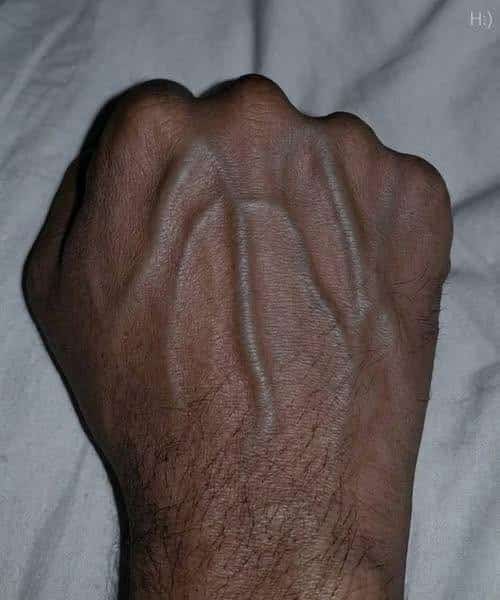
You glance down at your hands while typing, carrying groceries, or simply relaxing at home and suddenly notice something you may not have paid attention to before: prominent blue, green, or purple veins running beneath your skin.
For many people, this discovery sparks immediate curiosity. Others feel concerned, wondering whether visible veins are a sign of aging, poor circulation, or an underlying medical problem.
The truth is far less alarming than many people assume.
In most cases, visible veins are completely normal and often reflect healthy physiological processes rather than disease. They are a natural part of human anatomy, influenced by factors such as age, genetics, body composition, skin thickness, exercise habits, and environmental conditions.
Despite countless myths circulating online, visible veins do not automatically indicate a health issue. Instead, they often tell a story about how your body is built, how it functions, and how it changes throughout life.
Understanding why veins become more noticeable can help eliminate unnecessary worry and encourage a healthier perspective about the body’s natural evolution.
What Are Veins and Why Can We See Them?
Veins play a critical role in the circulatory system.
While arteries carry oxygen-rich blood away from the heart, veins return oxygen-depleted blood back to the heart and lungs, where it can be replenished with oxygen.
Your body contains thousands of veins of various sizes. Some run deep beneath muscles and tissues, while others lie close to the skin’s surface.
The veins visible on your hands, arms, feet, and legs are known as superficial veins. Because they sit near the surface, they can often be seen through the skin under certain conditions.
The color of these veins may appear blue, green, or purple, even though blood itself is dark red. This optical effect occurs because light interacts with skin and tissue in a way that changes how blood vessels appear to the human eye.
The visibility of veins depends on multiple factors, including:
- Skin thickness
- Skin pigmentation
- Body fat percentage
- Blood flow
- Genetics
- Age
- Temperature
- Physical activity
For many individuals, visible veins are simply a normal variation of human anatomy.
Aging and the Appearance of Veins
One of the most common reasons veins become more noticeable is aging.
As people grow older, several natural changes occur beneath the skin.
First, collagen production gradually decreases. Collagen is a protein responsible for maintaining skin structure and elasticity.
Second, the layer of fat beneath the skin slowly becomes thinner.
Third, skin itself loses some of its thickness and firmness.
These combined changes make underlying structures more visible, including tendons, bones, and veins.
This is especially noticeable on the hands because the skin in this area is naturally thin and exposed to decades of environmental wear.
Many people first notice prominent hand veins in their forties, fifties, or sixties. However, the process is completely normal and often reflects healthy aging rather than illness.
In fact, dermatologists frequently reassure patients that visible veins are one of the most common cosmetic concerns associated with age-related skin changes.
Body Fat and Vein Visibility
Another major factor affecting vein visibility is body composition.
A layer of subcutaneous fat exists between the skin and underlying blood vessels.
When this layer becomes thinner, veins become easier to see.
This is why lean individuals often have more visible veins than people with higher body fat percentages.
Athletes provide an excellent example.
Bodybuilders, runners, cyclists, swimmers, and other physically active individuals frequently display prominent veins on their arms, hands, and legs.
In these cases, visible veins often indicate:
- Low body fat
- Strong circulation
- High fitness levels
- Increased muscle definition
Many athletes even view vascularity as a sign of conditioning and physical fitness.
The appearance of veins in these individuals is usually a normal physiological response rather than a medical concern.
Exercise and Temporary Vein Enlargement
Have you ever noticed that your veins seem more prominent immediately after exercise?
This happens because physical activity increases blood flow throughout the body.
During exercise, muscles require more oxygen and nutrients.
To meet these demands, the cardiovascular system works harder, increasing circulation.
As blood flow rises, veins expand slightly to accommodate the increased volume.
This temporary enlargement makes veins more visible beneath the skin.
Weightlifting is particularly known for producing this effect.
Many gym-goers observe pronounced veins during or after resistance training sessions.
The effect generally subsides once the body returns to its resting state.
This type of vascularity is considered a normal response to exercise and often reflects efficient cardiovascular function.
Genetics Play a Bigger Role Than You Think
Sometimes visible veins simply run in the family.
Genetics significantly influence many aspects of appearance, including:
- Skin thickness
- Skin tone
- Vein structure
- Body fat distribution
- Circulation patterns
If your parents or grandparents had prominent veins, there is a good chance you may develop them as well.
Certain people naturally have thinner skin or veins positioned closer to the surface.
These inherited characteristics often explain why one sibling may have highly visible veins while another does not.
In these situations, vein visibility represents a normal genetic variation rather than a sign of disease.
Skin Tone and Vein Appearance
Skin tone also affects how visible veins appear.
Individuals with lighter skin often notice veins more easily because there is greater contrast between blood vessels and surrounding tissue.
However, people with darker skin tones can also have prominent veins.
The difference lies primarily in visibility rather than actual vein size.
Regardless of skin color, vein prominence is usually influenced by the same factors:
- Age
- Genetics
- Body composition
- Physical activity
- Environmental conditions
Visible veins occur across all ethnicities and skin types.
Temperature Can Change Your Veins
One surprising factor that affects vein visibility is temperature.
When the body becomes warm, blood vessels naturally expand through a process called vasodilation.
This helps release heat and regulate body temperature.
As veins enlarge, they become more noticeable beneath the skin.
You may observe this phenomenon:
- During hot weather
- After a warm shower
- While sitting in a sauna
- During exercise
- After spending time outdoors in summer
Conversely, cold temperatures cause blood vessels to constrict.
This process, known as vasoconstriction, often makes veins appear less prominent.
These changes are temporary and represent normal physiological responses.
Hydration and Vein Visibility
Hydration status can also influence the appearance of veins.
When properly hydrated, the body maintains optimal blood volume and circulation.
Mild dehydration may sometimes cause veins to appear more pronounced because surrounding tissues temporarily contain less fluid.
Similarly, dehydration can affect skin elasticity and fullness, making underlying structures easier to see.
Drinking adequate water supports healthy circulation and overall vascular function.
However, visible veins alone do not necessarily indicate dehydration.
Many people with prominent veins are perfectly hydrated and healthy.
When Visible Veins May Indicate a Medical Condition
Although visible veins are usually harmless, there are situations where medical evaluation is appropriate.
The key distinction is whether the veins are accompanied by additional symptoms.
You should consult a healthcare professional if you experience:
Sudden Swelling
Rapid or unexplained swelling of a limb can indicate a vascular issue that requires attention.
Pain or Tenderness
Veins should not typically be painful.
Persistent discomfort may warrant medical evaluation.
Redness or Warmth
Inflammation surrounding a vein could indicate irritation or infection.
Significant Changes in Appearance
Sudden enlargement, hardening, or distortion of veins should be assessed by a healthcare provider.
Skin Changes
Discoloration, ulcers, or chronic swelling may signal circulatory problems.
These symptoms do not automatically indicate a serious condition, but they deserve professional evaluation.
Understanding Varicose Veins and Spider Veins
Many people confuse visible veins with varicose veins.
The two are not necessarily the same.
Visible Veins
Normal visible veins are:
- Soft
- Non-painful
- Uniform in appearance
- Not associated with symptoms
Varicose Veins
Varicose veins are:
- Enlarged
- Twisted
- Bulging
- Sometimes painful
They most commonly occur in the legs and result from weakened vein valves.
Spider Veins
Spider veins are smaller, web-like vessels visible near the skin’s surface.
They are usually harmless but may cause cosmetic concerns.
Understanding these differences can help people determine when medical consultation may be useful.
Why Visible Veins Are Often a Sign of Good Circulation
Many people assume prominent veins indicate poor circulation.
Ironically, the opposite is often true.
Visible veins frequently reflect a healthy circulatory system efficiently returning blood to the heart.
Athletes, physically active individuals, and people with strong cardiovascular fitness commonly display increased vascularity.
The appearance of veins alone does not mean blood flow is impaired.
Instead, it often demonstrates that blood vessels are functioning exactly as they should.
Of course, circulation health depends on many factors beyond appearance.
But in most cases, visible veins are not a warning sign.
The Emotional Side of Body Changes
Modern culture often encourages people to view every physical change as a problem requiring correction.
Visible veins frequently become a cosmetic concern rather than a medical one.
Some individuals feel self-conscious about aging hands or prominent arm veins.
Yet these features often tell a story of life experience.
They reflect:
- Years of movement
- Physical activity
- Healthy aging
- Genetic inheritance
- Personal resilience
Rather than viewing visible veins as flaws, many experts encourage a more balanced perspective.
The body naturally changes throughout life.
These changes do not diminish health, beauty, or vitality.
Embracing What Your Body Is Telling You
Your veins are part of a remarkably complex system that operates continuously to keep you alive.
Every second of every day, blood travels through thousands of miles of vessels delivering oxygen and nutrients to tissues throughout your body.
Visible veins are often evidence of this extraordinary process working efficiently.
Rather than signaling weakness, they frequently reflect strength, adaptation, and normal biological function.
Pay attention to meaningful changes, especially when accompanied by symptoms such as pain, swelling, or redness.
However, ordinary vein visibility—particularly on the hands, arms, and feet—is typically nothing more than a natural feature of human anatomy.
Final Thoughts
If you have visible veins, it usually means you are completely normal.
Whether caused by genetics, fitness, aging, thin skin, warm temperatures, or low body fat, prominent veins are most often a harmless characteristic rather than a medical problem.
The human body evolves throughout life. Skin changes. Muscles change. Veins become more noticeable. These transformations are part of the natural journey of living.
Instead of viewing visible veins as something to fear, consider them a reminder of the incredible circulatory system working beneath your skin every moment of every day.
They are not usually signs of vulnerability.
More often, they are signs of life itself—evidence of a body that continues to adapt, move, heal, and thrive.
As always, if you notice sudden changes, pain, swelling, or other concerning symptoms, consult a qualified healthcare professional. But for the vast majority of people, visible veins are simply another beautiful example of how the human body tells its story over time.
More Blog
- Drinking Water on an Empty Stomach — What Science Actually Supports (No Hype, Just Facts)
- Waking Up Between 3 and 5 AM? It Might Be Your Soul Trying to Talk to You
- What a “Bleach” Patch on Your Underwear Really Means — And Why It’s Actually a Good Sign
- This Drink May Weaken Your Bones From The Inside — But Everyone Drinks It Anyway