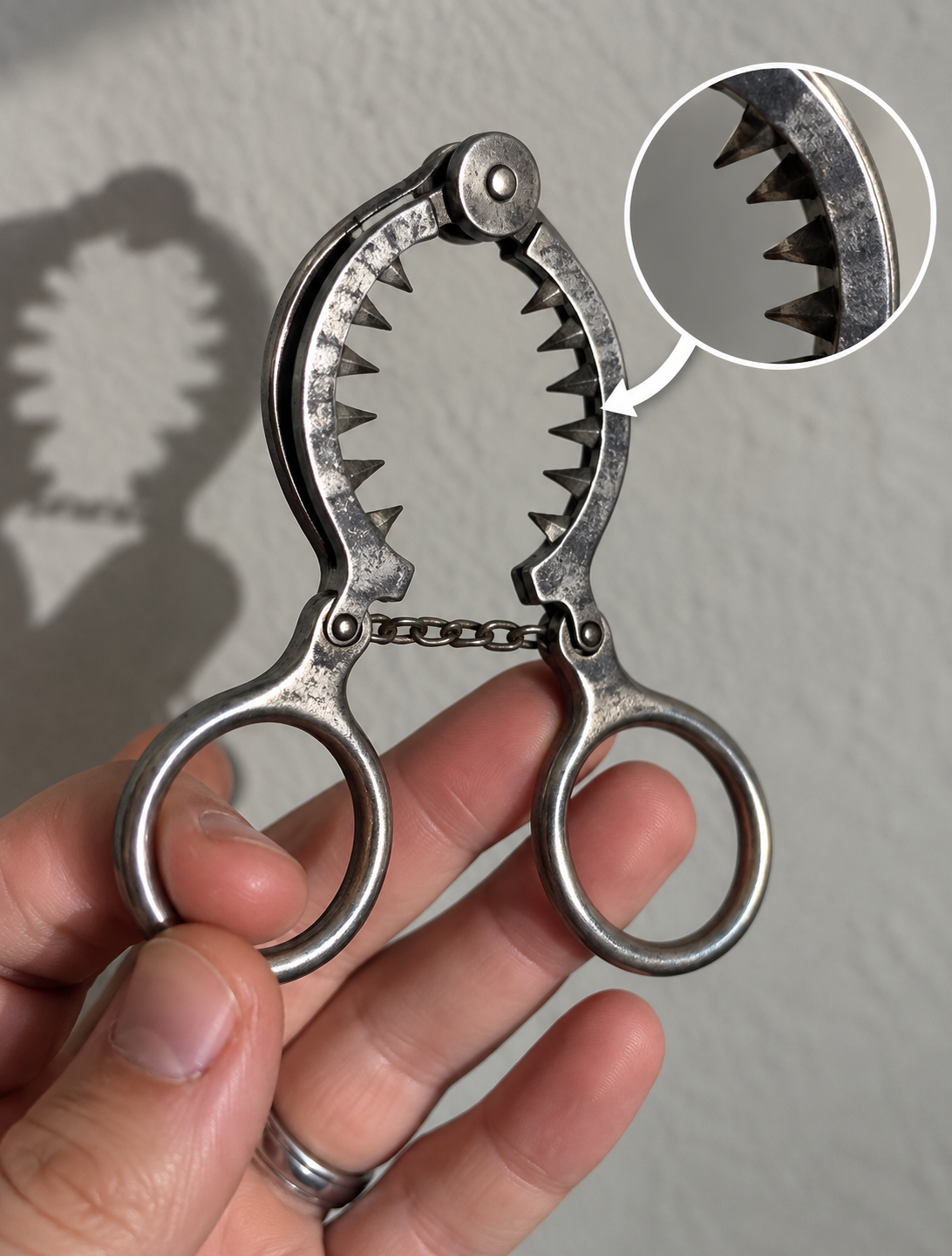
An egg topper cutter can look completely mysterious the first time you find one. Some versions resemble tiny scissors with a metal ring at the end. Others look like a stainless-steel bell with a long handle and a sliding metal ball. Either way, the strange little gadget has one wonderfully specific job: removing the top of an eggshell neatly.
You will most often see an egg topper cutter used with soft-boiled eggs served upright in egg cups. Instead of tapping the shell repeatedly with a spoon and peeling away jagged pieces, the tool creates a controlled break around the upper portion of the shell. You can then lift away the top and reach the warm egg inside with a spoon.
I once picked up one of these tools and spent several minutes trying to figure out whether it belonged with bottle openers, seafood tools, or sewing supplies. The mechanism looked far too elaborate for something as ordinary as breakfast. Once I discovered what it actually did, though, the design suddenly made perfect sense. There is something oddly satisfying about placing it over an egg, making one quick movement, and lifting off a nearly perfect shell cap instead of chasing tiny shell fragments around the plate.
The surprising part is that several versions of the tool exist, and they do not all work the same way. Understanding which egg topper cutter you have makes using it much easier.
Understanding What an Egg Topper Cutter Actually Does
The Basic Purpose of an Egg Topper
An egg topper cutter removes a small section from the top of an eggshell while leaving most of the shell intact. That makes it particularly useful for soft-boiled eggs, which people often serve vertically in small egg cups and eat directly from the shell.
Traditional opening methods work, of course. You can tap around an egg with a teaspoon and peel away the cracked portion. However, that approach can create irregular shell fragments, and opening a very soft egg can become messy if the shell collapses. The topper gives you a more controlled opening.
One common design resembles scissors. A circular cutting section fits around the narrow end of the egg, and squeezing the handles forces a series of small teeth through the shell. A cooking reference describes this type as an egg shell cutter or egg snipper and explains that squeezing the handles closes cutting teeth around the shell so the upper section can be removed.
After cutting, you simply lift the loosened shell cap away. Depending on how softly you cooked the egg, the topper may cut through a small amount of cooked white along with the shell. You can then season the egg and eat it directly from the shell with a teaspoon.
Why Some Egg Toppers Look Completely Different
Not every egg topper cutter uses a scissor mechanism. Another popular version looks like a narrow metal bell or cup attached to a long rod. A weighted ball slides along the rod above it.
This style works through impact rather than through scissor-like teeth. You place the metal cup over the narrow end of the egg, lift the weighted ball, and release it. The ball strikes the mechanism and creates a circular fracture around the shell. Commercial versions describe this as a spring or impact mechanism that produces a controlled break around the egg.
The two designs ultimately perform the same task, but the technique differs. With the scissor version, you squeeze. With the impact version, you position the cup and release the weight. Therefore, forcing a spring-loaded topper as though it were scissors—or repeatedly squeezing a tool designed for impact—will only create frustration.
Other modern gadgets use rings, stainless-steel blades, or compact clamp mechanisms. Consequently, if your egg topper cutter looks unusual, inspect how its moving parts operate before applying pressure. The basic goal never changes: create an even break near the top of the shell without crushing the entire egg.
How to Use an Egg Topper Cutter Correctly
Using a Scissor-Style Egg Topper Cutter
Start with a cooked egg that is still in its shell. Soft-boiled eggs work especially well because you can place them upright in an egg cup and use the newly opened shell as a natural serving container. You can also use some toppers on firmer eggs, although the classic purpose centers on soft-boiled eggs.
Place the egg securely in an egg cup or hold it gently but steadily. Position the circular section of the egg topper cutter over the narrow end of the egg. You usually want the cutting ring slightly below the very tip because removing only a tiny point will not create enough room for a spoon.
Once the tool sits evenly around the egg, squeeze the handles firmly and smoothly. The cutting teeth should pierce the shell around its circumference. RecipeTips describes this exact mechanism: the ring goes over the tapered end and the handles close a ring of teeth through the shell.
Release the handles and remove the tool. Then gently lift the newly cut shell cap. If a tiny section remains attached, use the edge of a teaspoon to separate it rather than twisting aggressively. Finally, check the exposed egg for loose shell pieces before eating.
Using a Spring-Loaded or Impact Egg Topper
The spring-loaded egg topper cutter looks more dramatic, but many people find it easier once they understand the motion. Place the cooked egg upright and steady it in an egg cup. Then position the bell-shaped cutting end directly over the narrow top.
Hold the tool vertically. Slide or pull the weighted ball upward along the shaft and release it according to the tool’s design. The impact travels downward and causes the cutting edge to create a ring-shaped fracture in the shell. Some manufacturers describe their mechanisms as using a sharp vibrating cutter activated when the weighted grip is lifted and released.
You may need a second strike depending on the shell and the particular topper. However, avoid repeatedly slamming the mechanism with unnecessary force. Too much impact can crush the top rather than producing the neat break you want.
Once you see a circular crack, remove the egg topper cutter and gently lift the shell cap. A teaspoon works well if you need to separate a small section of egg white. The result should leave an opening large enough to season and spoon out the egg comfortably.
Getting Better Results With Your Egg Topper Cutter
Preventing Crushed Shells and Messy Cuts
The most common mistake involves using too much force. An egg topper cutter works by concentrating force along a narrow line. You do not need to crush the egg itself.
Keep the egg stable while you operate the tool. If it tilts inside the egg cup, the cutter can sit at an angle and create an uneven break. Likewise, center the cutting ring before squeezing or striking. A slightly crooked tool can produce a diagonal cut rather than a clean horizontal opening.
Shell thickness also varies naturally from egg to egg. Therefore, one egg may open beautifully on the first attempt while another needs a little additional pressure. Learning the feel of your particular tool usually takes only a few tries.
Temperature can affect handling as well. A very hot egg may be uncomfortable to hold and can release hot steam or liquid when opened. Let the surface become safe enough to handle while keeping the egg warm enough to enjoy. Then wipe away any visible shell fragments before putting a spoon inside.
Cleaning and Storing the Tool Properly
Clean your egg topper cutter after use because small pieces of egg white or shell can lodge in the cutting mechanism. Rinse away visible residue promptly so it does not dry around tiny teeth, blades, springs, or joints.
Many traditional versions use stainless steel, which makes routine cleaning straightforward. RecipeTips notes that stainless-steel egg toppers may be cleaned by hand and that some designs are dishwasher-safe. However, always follow the instructions for your specific model because handles, springs, coatings, or decorative components can change cleaning requirements.
Dry the tool thoroughly before storing it. Moisture trapped around joints and cutting edges can encourage discoloration or corrosion on lower-quality metal. A quick wipe with a dry kitchen towel helps keep the mechanism moving smoothly.
Also treat an egg topper cutter as a cutting utensil rather than a toy. Even though the blades or teeth may look small, they need enough sharpness to fracture eggshell. Store it where children cannot accidentally squeeze, strike, or grab the cutting mechanism.
Why an Egg Topper Cutter Is Surprisingly Useful
Soft-Boiled Eggs Become Much Easier to Serve
The clearest reason to own an egg topper cutter is presentation. A neatly opened soft-boiled egg looks far more inviting than one surrounded by broken shell fragments. You can place the egg in a cup, remove the top, season the center, and serve it immediately.
The classic pairing is toast cut into narrow strips, often called toast soldiers. The strips fit directly into the opening so you can dip them into a soft yolk. You can also simply use a small spoon and eat the egg directly from its shell.
An egg topper cutter works particularly well when serving several eggs at breakfast because the openings look consistent. Instead of spending time carefully tapping and peeling every shell, you can open each egg quickly once you become comfortable with the tool.
Still, the gadget remains a convenience rather than a necessity. A teaspoon can open a soft-boiled egg perfectly well. The topper simply turns an improvised task into a repeatable one, which explains why people who regularly enjoy soft-boiled eggs tend to appreciate it more than occasional egg eaters.
The Tool Has Uses Beyond Breakfast
Although manufacturers primarily market the egg topper cutter for eggs, creative cooks also use neatly opened shells as miniature serving vessels. A cleaned shell can create an unusual presentation for small desserts, custards, savory bites, or decorative dishes.
Some toppers are also marketed for opening raw eggs while preserving most of the shell. Current kitchen-tool listings describe stainless-steel versions designed for raw as well as cooked eggs. However, raw eggs require extra food-safety attention because both the shell exterior and raw contents can carry harmful bacteria.
If you want to reuse an emptied shell for food presentation, clean and handle it appropriately rather than assuming an intact-looking shell is sanitary. Also wash the egg topper cutter thoroughly after contact with raw egg.
For most kitchens, though, the best use remains wonderfully uncomplicated. Cook a soft-boiled egg, place it in an egg cup, open the top, and enjoy breakfast. Sometimes a single-purpose kitchen gadget earns its drawer space simply because it performs that one small task unusually well.
Frequently Asked Questions
What is an egg topper cutter used for?
An egg topper cutter creates a controlled break around the upper portion of an eggshell. People commonly use it to open soft-boiled eggs served in egg cups, although some models can also open raw or hard-cooked eggs.
Which end of the egg should I cut?
Most people place the egg topper cutter over the narrower or tapered end of the egg. This creates an opening at the top while the broader end sits securely in an egg cup. Some tools can work from either end, so follow the manufacturer’s instructions when available.
Why does my egg topper crush the shell instead of cutting it?
The tool may be sitting at an angle, the egg may be moving, or you may be applying too much force. Center the cutter carefully and keep the egg stable. With an impact-style topper, start with the normal release motion rather than repeatedly striking the shell aggressively.
Can I use an egg topper cutter on raw eggs?
Some models are specifically marketed for both raw and cooked eggs. However, opening a raw egg can contaminate the cutter with raw egg residue. Wash the tool and surrounding surfaces carefully afterward, and follow normal food-safety practices.
Do I really need an egg topper cutter?
No. You can open a soft-boiled egg with a spoon and your fingers. However, an egg topper cutter can create a neater, more predictable opening and may save time if you regularly serve soft-boiled eggs.
Conclusion
An egg topper cutter is one of those kitchen gadgets that looks baffling until you see it perform the job it was designed to do. Then its peculiar ring, teeth, handles, spring, or sliding weight suddenly make perfect sense.
Scissor-style toppers work by closing small cutting teeth around the shell. Impact-style versions use a controlled strike to create a circular fracture. In both cases, the goal is the same: remove the top of an egg neatly while leaving the rest of the shell intact.
For the best results, place the egg securely in an egg cup, center your egg topper cutter near the narrow end, and use controlled pressure rather than brute force. Lift away the cracked cap carefully, check for loose shell pieces, and enjoy the egg directly from its shell.
The tool certainly does not qualify as an essential piece of kitchen equipment. A spoon can accomplish the same basic task. However, if soft-boiled eggs regularly appear on your breakfast table, the topper makes opening them cleaner, faster, and considerably more satisfying.
It also explains why that mysterious metal gadget sometimes turns up in vintage utensil drawers, garage-sale boxes, and kitchen shops. What initially looks like a miniature cigar cutter or some forgotten mechanical device is actually something far simpler.
It is an egg topper cutter, and once you know how to use it, breakfast suddenly makes a lot more sense.
More Blog
- Drinking Water on an Empty Stomach — What Science Actually Supports (No Hype, Just Facts)
- Waking Up Between 3 and 5 AM? It Might Be Your Soul Trying to Talk to You
- What a “Bleach” Patch on Your Underwear Really Means — And Why It’s Actually a Good Sign
- This Drink May Weaken Your Bones From The Inside — But Everyone Drinks It Anyway