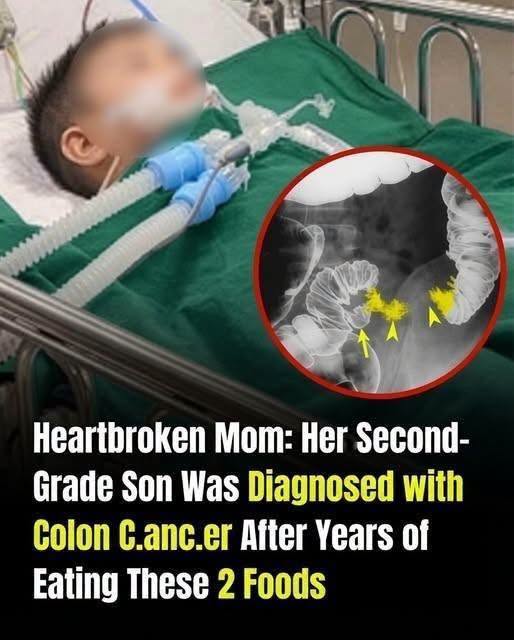
A child diagnosed with colon cancer can leave an entire family searching desperately for an explanation. Parents may replay meals, snacks, illnesses, and everyday choices while wondering whether something they did caused the disease. Social media can make that fear worse by suggesting that a particular food or eating habit directly caused a child’s cancer.
However, colorectal cancer develops through complex biological changes. Doctors may identify inherited conditions or other risk factors in some young patients, while the cause remains unclear in others. Childhood colorectal cancer is rare, and the National Cancer Institute notes that inherited cancer syndromes and inflammatory bowel diseases can increase risk in some children.
Diet matters for lifelong health, but blaming one food oversimplifies a complicated disease. Instead, families benefit more from understanding warning signs, family history, genetics, and the importance of timely medical evaluation.
Imagine a family whose young son had always seemed energetic and healthy. He attended school, played outside, and rarely complained. Then small changes began. He mentioned stomach aches more often, started feeling tired, and occasionally struggled with bowel problems. His family initially assumed constipation, a stomach bug, or something he had eaten caused the symptoms. However, the problems continued rather than disappearing. Eventually, his parents sought additional medical care. Tests revealed colorectal cancer. Shock quickly turned into questions about what could have caused it. His doctors explained that cancer rarely comes from one meal or one particular food and that many factors can influence its development.
Understanding Colon Cancer in Children
Why Childhood Colorectal Cancer Is So Unusual
Colorectal cancer primarily affects adults. In fact, current CDC data show that about 93% of colorectal cancers occur in people aged 45 or older. Therefore, a diagnosis in a child represents an unusual medical situation.
The colon forms part of the large intestine, while the rectum sits at the end of the digestive tract. Cancer develops when abnormal cells grow uncontrollably in these tissues.
Normally, cells follow biological instructions that regulate when they grow, divide, and die. However, genetic changes can disrupt these controls. As abnormal cells continue multiplying, they may eventually form a tumor.
In childhood colorectal cancer, doctors do not always know why those cellular changes happened. The National Cancer Institute specifically notes that the exact cause often remains unknown.
That uncertainty matters because families naturally want a simple explanation. They may focus on foods a child loved, environmental exposures, or habits that suddenly seem suspicious after a diagnosis.
However, cancer biology rarely provides such a straightforward answer.
A risk factor also differs from a direct cause. Something that raises statistical risk does not guarantee that someone will develop cancer. Likewise, a person can develop cancer without having any obvious risk factors.
Therefore, statements claiming that one snack, meat, beverage, or processed food “gave a child cancer” generally go far beyond what medical evidence can prove.
Instead, doctors examine the complete picture, including symptoms, family history, genetic factors, underlying medical conditions, and test results.
What Happens When Cancer Develops
Cancer begins when changes accumulate inside cells and interfere with normal growth regulation.
Some genetic changes develop during a person’s lifetime. Others can be inherited from a parent. Several genetic changes may need to occur before a colorectal cell becomes cancerous.
That process helps explain why assigning cancer to a single recent meal makes little biological sense.
Researchers have identified specific genes associated with inherited colorectal cancer syndromes. However, even genetics does not provide a simple explanation for every patient.
Some children have recognizable inherited conditions. Others do not.
The National Cancer Institute lists several inherited syndromes associated with an increased risk of childhood colorectal cancer, including familial adenomatous polyposis, juvenile polyposis syndrome, Peutz-Jeghers syndrome, and constitutional mismatch repair deficiency.
Children with Crohn disease or ulcerative colitis may also face an increased risk.
Nevertheless, these conditions remain uncommon.
For most parents, therefore, occasional stomach discomfort or constipation should not immediately create fear of cancer. Children develop digestive symptoms for many ordinary reasons.
The important question involves persistence.
A stomach ache that disappears quickly after a minor illness creates a very different situation from recurring abdominal pain that continues for weeks alongside unexplained weight loss, bleeding, or fatigue.
Recognizing that difference can help families respond appropriately without either panicking over every symptom or ignoring meaningful changes.
Why Diet Cannot Tell the Whole Story
Food Can Affect Risk Without Being a Single Cause
Nutrition plays an important role in overall health. However, statements such as “this food causes colon cancer” often confuse association with direct causation.
Cancer usually develops through many interacting factors.
In adults, researchers have associated several lifestyle patterns with colorectal cancer risk. The CDC identifies physical inactivity, excess body weight, alcohol use, and tobacco use among modifiable factors associated with higher colorectal cancer risk.
Other research has examined dietary patterns as well.
Yet those population-level findings do not mean that eating one particular food causes cancer in an individual person. They certainly cannot prove that a child’s occasional snack caused an extremely rare cancer.
Frequency, quantity, duration, genetics, metabolism, other behaviors, and numerous biological differences can all influence risk.
Additionally, childhood cancer requires special caution when people attempt to draw conclusions from adult studies. Children differ significantly from adults in age, exposure history, biology, and disease patterns.
Therefore, parents should avoid interpreting adult dietary statistics as a direct explanation for a child’s diagnosis.
Healthy food choices still matter.
Fruits, vegetables, legumes, whole grains, and other nutrient-rich foods support normal growth and overall health. Meanwhile, families can reasonably limit foods that provide large amounts of added sugar, sodium, or heavily processed ingredients while offering little nutritional value.
However, healthy eating should support health rather than become a source of guilt.
A parent should not look back at a child’s lunchbox and conclude that a particular food caused cancer unless medical specialists have evidence supporting a specific exposure—and such situations are very different from ordinary eating habits.
Why Blaming Parents or Food Creates Problems
Cancer creates an intense desire for certainty.
When something frightening happens, people naturally ask, “Why?”
A simple explanation can feel emotionally satisfying. Therefore, dramatic online posts that identify one supposed culprit can spread rapidly.
Unfortunately, oversimplified explanations can cause harm.
First, they can create unnecessary guilt. Parents may believe they caused a child’s illness by allowing certain snacks, fast food, meat, sugar, or packaged meals.
Second, food blame can distract from meaningful medical information.
Families may spend valuable energy eliminating supposed “cancer-causing foods” while overlooking persistent symptoms, inherited conditions, or a family history that deserves discussion with a physician.
Third, extreme dietary restrictions can create other problems, particularly in growing children.
Children need adequate calories, protein, fats, vitamins, minerals, and carbohydrates. Therefore, major dietary restrictions should involve appropriate professional guidance when medical circumstances require them.
Finally, simplistic claims can encourage families to think that eating perfectly guarantees protection against cancer.
Unfortunately, no diet can promise that outcome.
Healthy habits can influence risk and improve overall well-being. However, risk reduction never equals absolute prevention.
That distinction allows families to pursue healthy choices without believing they can completely control every future illness.
Genetics, Family History, and Other Risk Factors
Inherited Conditions Can Matter
For a child diagnosed with colon cancer, doctors may consider whether an inherited condition contributed to the disease.
Familial adenomatous polyposis, commonly called FAP, provides an important example.
FAP results from changes in the APC gene and can cause many polyps to develop throughout the colon and rectum. These polyps can begin developing at young ages. The American Cancer Society notes that colorectal cancer can develop unusually early in people with FAP if the condition goes untreated.
Because of that risk, families affected by FAP may require genetic counseling, testing, and specialized surveillance.
Lynch syndrome represents another important hereditary colorectal cancer condition. It results from inherited changes affecting genes that normally repair DNA damage. People with Lynch syndrome have an increased colorectal cancer risk and often develop colorectal cancer younger than the general population.
However, hereditary colorectal cancer involves more than these two conditions.
The National Cancer Institute also identifies MUTYH-associated polyposis, juvenile polyposis syndrome, Peutz-Jeghers syndrome, Cowden syndrome, constitutional mismatch repair deficiency, and several other conditions among those that can increase childhood colorectal cancer risk.
These syndromes demonstrate why family history deserves attention.
If several relatives developed colorectal cancer, especially at unusually young ages, physicians may recommend genetic counseling.
Likewise, a known inherited mutation in a family can change screening recommendations for relatives.
Genetic information does not guarantee that disease will develop. However, it can help medical professionals identify people who need earlier or more frequent monitoring.
What Families Should Know About Their History
Many people know surprisingly little about illnesses that affected grandparents, aunts, uncles, or cousins.
Yet family history can provide useful clues.
Parents can start by learning whether close relatives have experienced colorectal cancer, numerous colon polyps, or cancers that appeared unusually early.
The American Cancer Society reports that people with a first-degree relative who had colorectal cancer face increased risk, especially when the relative received a diagnosis before age 50 or when several close relatives have been affected.
However, a family history of cancer does not automatically prove the presence of an inherited syndrome.
Families share more than genes. They may also share environments, behaviors, and other exposures.
Therefore, doctors evaluate patterns rather than relying on one piece of information.
If a family contains multiple early cancer diagnoses, genetic counseling may help determine whether testing makes sense.
A genetic counselor can explain what a test can reveal, what it cannot reveal, and what different results might mean for relatives.
This information can sometimes lead to earlier monitoring.
For example, people with confirmed FAP need screening much earlier than the general population because polyps can begin developing during childhood or adolescence.
However, families without known hereditary risks should not independently arrange invasive testing for children simply because they read a frightening story online.
Medical screening decisions should reflect the child’s symptoms, family history, risk profile, and professional guidance.
Warning Signs Parents Should Not Ignore
Persistent Digestive Changes Matter More Than One Stomach Ache
Children commonly experience stomach aches.
Constipation, viral infections, dietary changes, anxiety, food intolerance, and many other conditions can cause abdominal discomfort. Therefore, an isolated stomach ache rarely suggests cancer.
Persistent or unexplained symptoms deserve a different response.
According to the National Cancer Institute, symptoms associated with childhood colorectal cancer can include abdominal pain, constipation, diarrhea, blood in the stool, nausea and vomiting, unexplained weight loss, loss of appetite, an abdominal mass, and anemia.
Importantly, these symptoms can result from many conditions other than cancer.
For example, constipation can cause abdominal pain and occasionally bleeding from an anal fissure. Gastrointestinal infections can cause diarrhea. Food intolerances can alter bowel habits. Iron deficiency can contribute to fatigue.
Consequently, parents should not attempt to diagnose cancer from symptoms alone.
Instead, pay attention to patterns.
Does abdominal pain keep returning?
Has a change in bowel habits lasted much longer than expected?
Has blood appeared repeatedly?
Has the child lost weight without trying?
Has energy dropped noticeably?
Has a previously enthusiastic eater lost interest in food?
When several unexplained changes occur together or continue despite routine treatment, another medical evaluation may make sense.
Parents can also keep simple notes about symptom frequency, bowel changes, appetite, weight, medications, and relevant foods.
That information can help a healthcare professional understand the pattern more clearly.
Blood in Stool, Weight Loss, and Unusual Fatigue
Some symptoms deserve especially careful attention.
Visible blood in a child’s stool should be discussed with a medical professional when it persists, recurs, appears significant, or comes with other concerning symptoms.
Blood does not automatically mean cancer.
Hemorrhoids, anal fissures, infections, inflammatory bowel disease, and other conditions can cause bleeding. Nevertheless, unexplained recurrent bleeding warrants evaluation.
Unintentional weight loss also deserves attention.
Children normally change weight as they grow, and appetite can fluctuate. However, noticeable weight loss without an obvious reason should not simply be dismissed.
Fatigue provides another example.
Children can become tired from insufficient sleep, busy schedules, infections, stress, or many other ordinary causes. Yet persistent fatigue accompanied by paleness, dizziness, shortness of breath, or other symptoms can indicate anemia.
The National Cancer Institute includes anemia among possible findings in children with colorectal cancer because ongoing gastrointestinal bleeding can reduce red blood cell levels.
Again, anemia itself has many possible causes.
The message remains consistent: persistent symptoms need diagnosis, not assumptions.
Neither parents nor internet articles can determine the cause simply from a symptom list.
A healthcare professional can decide whether the child needs blood tests, imaging, gastrointestinal evaluation, or another type of assessment.
Timely evaluation matters because identifying the real cause allows appropriate treatment, whether the problem turns out to be something common or something rare.
Frequently Asked Questions
Can a particular food cause colon cancer in a child?
Medical evidence does not support blaming an ordinary single food or meal for a child’s colorectal cancer. Cancer develops through genetic and biological changes, and the exact cause may remain unknown. Inherited syndromes and certain medical conditions can increase risk in some children.
How common is colon cancer in children?
Colorectal cancer in children is rare. Colorectal cancer overwhelmingly occurs in adults; CDC data indicate that roughly 93% of colorectal cancers occur in people aged 45 or older.
What symptoms should parents watch for?
Persistent abdominal pain, prolonged constipation or diarrhea, blood in the stool, unexplained weight loss, loss of appetite, nausea or vomiting, unusual fatigue, anemia, or an abdominal lump can warrant medical evaluation. However, many common childhood conditions can cause these symptoms.
Does family history increase colorectal cancer risk?
It can. Certain hereditary cancer syndromes strongly increase risk, while having close relatives with colorectal cancer can also indicate increased susceptibility. Families with several cases of colorectal cancer, numerous polyps, or cancers diagnosed unusually young should discuss their history with a healthcare professional.
Should children routinely get colonoscopies?
Routine colorectal cancer screening recommendations for average-risk adults do not apply to healthy children. However, children with certain hereditary conditions, strong family histories, or concerning symptoms may need specialized evaluation and sometimes early surveillance under medical guidance.
Conclusion
A child diagnosed with colon cancer faces an extraordinarily difficult medical challenge, and families understandably want to know why it happened.
However, reducing that diagnosis to one food or dietary habit creates a misleading picture.
Colorectal cancer develops when abnormal cellular changes disrupt normal growth. In some young patients, inherited conditions such as familial adenomatous polyposis or other genetic syndromes contribute significantly to risk. In others, inflammatory bowel disease may play a role. Sometimes, doctors cannot identify a clear cause at all.
Healthy nutrition still matters.
Families can encourage children to enjoy varied, nutrient-rich foods, stay physically active, drink adequate water, and develop sustainable habits that support lifelong health. However, those choices should come from a desire to support well-being rather than fear that one imperfect meal could cause cancer.
Family history deserves attention as well. When colorectal cancer, numerous polyps, or related cancers repeatedly occur at unusually young ages within a family, medical professionals may recommend genetic counseling or specialized screening.
Most importantly, persistent symptoms should receive appropriate medical evaluation.
An occasional stomach ache is common. So is temporary constipation. However, recurring abdominal pain, unexplained weight loss, repeated blood in the stool, prolonged bowel changes, or persistent fatigue should not simply be ignored.
At the same time, those symptoms should not automatically create panic. Many treatable and far more common conditions can produce the same signs.
The safest approach balances awareness with perspective. Families do not need to fear individual foods or blame themselves for a child’s diagnosis. Instead, they can focus on healthy everyday habits, accurate family medical information, attentive observation, and timely professional care when symptoms persist.
More Blog
- Drinking Water on an Empty Stomach — What Science Actually Supports (No Hype, Just Facts)
- Waking Up Between 3 and 5 AM? It Might Be Your Soul Trying to Talk to You
- What a “Bleach” Patch on Your Underwear Really Means — And Why It’s Actually a Good Sign
- This Drink May Weaken Your Bones From The Inside — But Everyone Drinks It Anyway