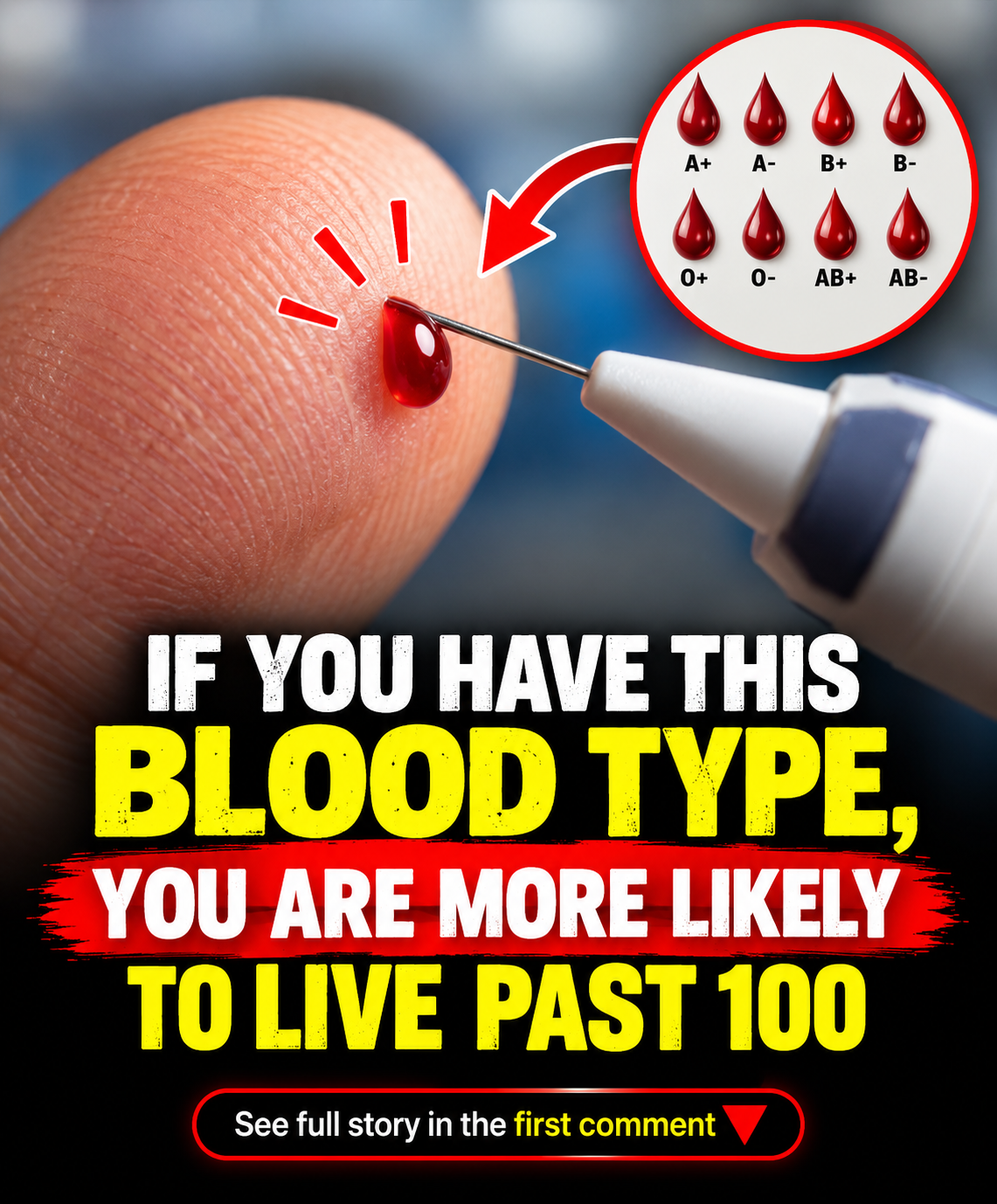
Blood Type and Longevity make an irresistible combination for anyone interested in healthy aging. Your blood type stays with you for life, so it feels reasonable to wonder whether type O, A, B, or AB quietly influences how long you might live. Some studies have even found differences between blood groups in cardiovascular disease, blood clotting, and other conditions linked with lifespan.
However, science does not support the idea that one blood type gives you a reliable ticket to age 100. Researchers have reported intriguing associations, but studies of centenarians have produced conflicting results. A large Chinese study involving more than 2,200 centenarians, for example, found no significant relationship between ABO blood group and exceptional longevity.
I became interested in Blood Type and Longevity after seeing claims that one particular blood group supposedly represented the “centenarian blood type.” The idea sounded wonderfully simple. Yet the more research I read, the more complicated the picture became. One small Japanese study pointed toward type B, another population found no advantage at all, and research from other countries produced different patterns. Meanwhile, everyday indicators such as glucose, kidney function, smoking, physical activity, blood pressure, and overall health consistently offered far more useful information.
That does not make blood type irrelevant. ABO biology influences clotting proteins and appears to affect the risk of certain diseases. However, longevity emerges from genetics, environment, medical care, lifestyle, chance, and decades of interactions between them.
What Blood Type and Longevity Research Actually Shows
Centenarian Studies Have Produced Conflicting Results
Scientists have explored Blood Type and Longevity for decades by comparing the ABO distributions of very old adults with those of younger control groups. If one blood group consistently appeared far more often among centenarians in many populations, researchers might have reason to investigate a meaningful longevity advantage.
One well-known Japanese study examined 269 centenarians in Tokyo and compared them with 7,153 regional controls. Researchers found blood type B in 29.4% of the centenarians compared with 21.9% of the controls. They concluded that type B might have an association with exceptional longevity, while emphasizing that researchers still needed to investigate the mechanism.
That result attracted attention, but later studies did not reproduce it consistently. Researchers studying centenarians in Western Sicily found no significant differences in ABO blood-group distribution. A separate U.S. hospital study actually found poorer survival among people with type B within that specific patient population, showing how dramatically results can differ between samples.
More importantly, a much larger Chinese study compared 2,201 centenarians with 2,330 middle-aged controls. The frequencies of types A, B, O, and AB did not differ significantly between the groups. The researchers concluded that their large cohort did not support an association between ABO blood type and longevity.
These conflicting results show why one study cannot settle the Blood Type and Longevity question. Population genetics, ancestry, environment, sample size, healthcare access, and simple statistical variation can influence the pattern that appears in any individual study.
Newer Evidence Still Does Not Identify a “Best” Blood Type
Research continues to examine whether ABO groups contribute to healthy aging. A 2025 retrospective study compared 2,247 adults age 85 or older with 2,968 adults ages 20 to 22. Researchers found no significant difference in ABO blood-group distribution or Rh positivity between the older and younger groups.
A recent review of ABO groups and aging-related outcomes reached a similarly cautious conclusion. The authors noted that different blood groups show associations with several age-related diseases, especially thrombotic and cardiovascular conditions. However, they described the evidence connecting ABO type directly with longevity as inconsistent across populations.
That distinction matters. Researchers can find that a blood group slightly changes the average risk of one disease without proving that the same blood group significantly extends overall lifespan. People die from many different causes, and a factor that lowers one risk might have little influence on another.
Blood type also represents only one genetic characteristic among thousands. Your cardiovascular system, immune function, metabolism, cancer susceptibility, and aging processes reflect enormous numbers of genes interacting with your environment throughout life.
Therefore, Blood Type and Longevity research remains scientifically interesting, but it does not justify telling people with type O, A, B, or AB that they have a predetermined lifespan advantage.
Why Blood Type Can Still Influence Certain Health Risks
ABO Type Affects Blood Clotting Biology
Blood type does much more than determine which blood you can safely receive during a transfusion. ABO antigens also occur on other cells and interact with biological systems involved in inflammation, blood vessels, and clotting.
Researchers have established one particularly clear relationship between ABO blood group and clotting. People with non-O blood types generally have higher levels of von Willebrand factor and factor VIII, two proteins involved in normal coagulation. Those differences help explain why researchers repeatedly find a higher average risk of venous thromboembolism among people with non-O blood groups.
A systematic review reported substantially stronger evidence for an ABO relationship with venous blood clots than with many arterial conditions. Another review estimated that non-O blood groups carry roughly a 1.75-fold higher relative risk of venous thrombosis than type O, although individual risk still depends heavily on many other factors.
That does not mean someone with type A, B, or AB should expect a blood clot. Likewise, type O does not protect someone from thrombosis. Age, surgery, prolonged immobility, pregnancy, cancer, inherited clotting disorders, medications, smoking, and many additional factors often matter much more for an individual.
Still, this biological relationship helps explain why Blood Type and Longevity continues to interest researchers. If blood group changes the risk of diseases that affect mortality, it could theoretically influence lifespan indirectly. Yet that indirect possibility differs substantially from saying one type guarantees a longer life.
Cardiovascular Associations Exist, but the Effects Are Modest
Researchers have also investigated ABO groups and coronary heart disease. Some meta-analyses have found slightly higher rates of myocardial infarction or coronary artery disease among non-O groups and somewhat lower rates among people with type O.
For example, one meta-analysis reported a pooled odds ratio of 1.28 for myocardial infarction among people with non-O blood types compared with type O. When investigators restricted the analysis to higher-quality studies, the association became smaller. Another large analysis found modestly higher coronary artery disease risk with type A and lower risk with type O.
These results involve relative risk across populations, not destiny for individuals. A person with type A who maintains healthy blood pressure, avoids smoking, stays active, manages diabetes, and follows appropriate medical care may have substantially lower cardiovascular risk than a sedentary smoker with type O.
A study of more than 400,000 people also found ABO associations with several health outcomes, particularly thromboembolic disease. However, the findings again support the idea that blood group functions as one modest biological factor rather than a powerful standalone predictor of aging.
So Blood Type and Longevity may intersect through disease susceptibility, but your blood group provides nowhere near enough information to estimate how long you will live.
What the Swedish Centenarian Study Really Found
Routine Blood Markers Predicted Exceptional Longevity Better
One of the most fascinating recent longevity studies had little to do with ABO blood group at all. Researchers analyzed the Swedish AMORIS cohort and followed 44,636 people born between 1893 and 1920. Participants had blood measurements taken between ages 64 and 99, and researchers followed them for as long as 35 years. Ultimately, 1,224 participants reached age 100, and 84.6% of those centenarians were women.
The study examined 12 biomarkers related to metabolism, liver function, kidney function, inflammation, anemia, and nutrition. Future centenarians tended to show more favorable patterns in several routine measures years before they reached 100.
Lower glucose, creatinine, uric acid, AST, GGT, alkaline phosphatase, LDH, and total iron-binding capacity showed associations with a greater likelihood of reaching 100. Higher total cholesterol and iron also showed associations in the study. Importantly, the researchers did not conclude that people should deliberately raise cholesterol or iron, because observational associations cannot tell us that changing a marker will make someone live longer.
The cholesterol result deserves particular care. The study found that very low total cholesterol did not characterize future centenarians, but this does not mean high cholesterol protects against death. Age, illness, nutrition, medication use, and other factors can alter cholesterol in older adults.
The broader lesson matters more: Blood Type and Longevity provides a much weaker practical health signal than the overall condition of your metabolic, kidney, liver, and cardiovascular systems.
Association Does Not Mean a Blood Test Can Predict Your 100th Birthday
The Swedish study generated headlines suggesting that ordinary blood tests might reveal who will live to 100. That interpretation goes beyond what the researchers actually demonstrated.
The study found statistical differences between groups. It did not create a clinical test that can tell an individual whether they will reach 100. Many people with excellent biomarkers still died before 100, while some people with less favorable values nevertheless became centenarians.
The researchers also acknowledged limitations. They lacked detailed information about important lifestyle factors such as smoking, alcohol consumption, diet, and physical activity. These behaviors could influence both the biomarkers and longevity.
Furthermore, the study examined older Swedish adults from particular birth cohorts. Results from people born between 1893 and 1920 in Stockholm may not perfectly predict outcomes in today’s younger adults or in populations with different genetics, environments, diets, and healthcare systems.
That limitation applies equally strongly to Blood Type and Longevity research. A blood-type pattern found among Japanese centenarians cannot automatically apply to Americans, Europeans, Africans, or other Asian populations.
Research can reveal patterns. It cannot transform one blood test, one gene, or one ABO group into a personal expiration date.
What Matters More for Reaching a Healthy Old Age
Focus on Modifiable Risks Instead of Your ABO Group
You cannot change your blood type, and current evidence gives you no reason to try. Fortunately, many factors that strongly influence healthy aging remain at least partly within your control.
Blood pressure deserves attention because hypertension increases cardiovascular and stroke risk. Smoking remains another major preventable health risk. Physical activity supports cardiovascular fitness, muscle strength, mobility, metabolic health, and independence as people age.
Diet also matters as an overall pattern rather than through one miracle ingredient. Meals built around vegetables, fruits, whole grains, legumes, nuts, appropriate protein sources, and mostly unsaturated fats provide a stronger foundation than any diet designed around ABO type.
You may encounter so-called “blood type diets” that claim people with A, B, AB, or O should eat completely different foods. Blood Type and Longevity research does not provide scientific justification for using ABO group as the main basis for diet decisions.
Instead, individualize nutrition around actual health needs, allergies, metabolic conditions, cultural preferences, affordability, and professional medical guidance.
Sleep, preventive healthcare, vaccinations, appropriate cancer screening, diabetes management, social connection, mental health, and avoidance of excessive alcohol also contribute to the larger picture. Longevity rarely comes down to one biological variable.
Think in Terms of Healthspan, Not Just Lifespan
Reaching 100 captures the imagination, but the number itself does not tell the entire story. Most people also want healthspan: the years during which they can move, think, socialize, and live independently with reasonable comfort.
That shifts the Blood Type and Longevity conversation in a more useful direction. Instead of asking, “Does my blood type mean I’ll live longer?” ask, “Which risks can I identify and manage now?”
Know your blood pressure. Follow recommended screening. Discuss glucose and cholesterol testing with your healthcare professional when appropriate. Stay physically active in ways that fit your abilities. Maintain muscle as you age through appropriate resistance activity and adequate nutrition.
Just as importantly, do not panic if your blood type carries a statistical association with a certain disease. Population-level risk does not dictate an individual’s outcome.
A type O person can develop cardiovascular disease. A type AB person can live into extreme old age. Someone with a genetically favorable profile can still experience preventable illness, while another person may manage elevated genetic risk remarkably well through medical treatment and healthy habits.
The science of Blood Type and Longevity ultimately reinforces a familiar lesson: genes matter, but they operate inside a much larger system.
Frequently Asked Questions
Which blood type lives the longest?
Researchers have not identified a single ABO blood type that reliably lives longest across populations. A small Japanese study found more type B individuals among centenarians, but larger and later studies have failed to reproduce a consistent type B advantage. A study of 2,201 Chinese centenarians found no significant association between ABO type and longevity.
Is blood type O better for longevity?
Type O has a lower average risk of venous thrombosis than non-O blood groups and may show modest cardiovascular advantages in some studies. However, researchers have not demonstrated that type O independently guarantees longer life. Many other health and lifestyle factors have far greater practical importance.
Does blood type B help you reach 100?
One 2004 Tokyo study suggested a possible relationship between type B and exceptional longevity. However, studies from other populations found no benefit, and some produced contradictory results. Researchers therefore do not consider type B a proven longevity marker.
Can routine blood tests predict whether I will become a centenarian?
No routine blood test can reliably predict that an individual will reach 100. The Swedish AMORIS study found associations between future centenarian status and markers such as glucose, creatinine, uric acid, and several liver-related measurements, but those patterns cannot provide a personal lifespan prediction.
What matters more than blood type for longevity?
Overall cardiovascular and metabolic health, smoking status, physical activity, nutrition, blood pressure, diabetes management, medical care, genetics, social and environmental conditions, and chance all contribute to lifespan. Blood type represents only one small biological characteristic within that much larger picture.
Conclusion
Blood Type and Longevity remains a fascinating area of research because ABO groups influence real biological processes. Blood group affects levels of von Willebrand factor and factor VIII, and researchers consistently find a higher average risk of venous thrombosis among non-O groups. Scientists have also reported smaller associations with cardiovascular disease and several other conditions.
However, none of this means scientists have discovered a “centenarian blood type.”
A Japanese study once suggested that type B might appear more often among centenarians, but research from Sicily, China, the United States, and newer older-adult populations has produced conflicting or negative findings. The large Chinese centenarian study found no meaningful difference in ABO distributions between centenarians and controls.
Meanwhile, the Swedish AMORIS study offers a more useful lesson. People who eventually reached 100 tended to show favorable patterns in several routine metabolic, kidney, and liver biomarkers long before their 100th birthdays. Even those findings cannot predict an individual’s lifespan, but they highlight the importance of whole-body health rather than one inherited characteristic.
So if you have type O, there is no reason to assume you have won a longevity lottery. If you have type A, B, or AB, there is equally no reason to worry that your blood type has shortened your future.
You cannot choose your ABO group.
You can, however, pay attention to your blood pressure, metabolic health, physical activity, nutrition, tobacco exposure, preventive care, and other factors that offer much more actionable information.
That may sound less mysterious than discovering a secret blood type that lives to 100, but it reflects the evidence far better.
When researchers study Blood Type and Longevity, the clearest conclusion remains surprisingly reassuring: your blood type contributes a small piece to a very large biological puzzle, not a predetermined lifespan.
More Blog
- Drinking Water on an Empty Stomach — What Science Actually Supports (No Hype, Just Facts)
- Waking Up Between 3 and 5 AM? It Might Be Your Soul Trying to Talk to You
- What a “Bleach” Patch on Your Underwear Really Means — And Why It’s Actually a Good Sign
- This Drink May Weaken Your Bones From The Inside — But Everyone Drinks It Anyway