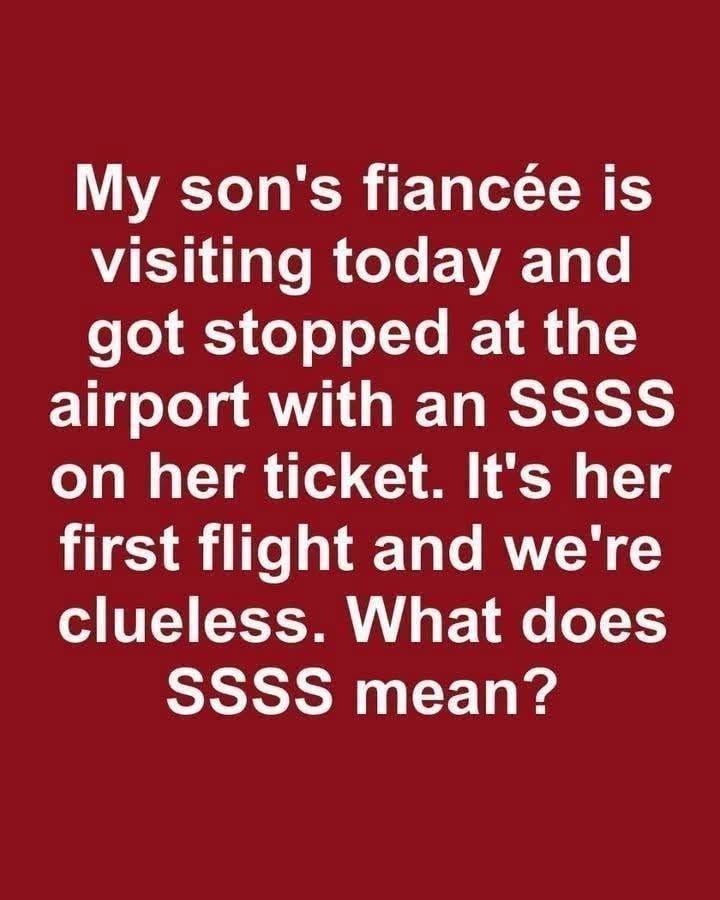
A Gentle, Science-Backed Guide to the SSSS Designation can make an unfamiliar airport security code much easier to understand. Seeing “SSSS” printed on a boarding pass can feel unsettling, especially when you do not know what it means or what will happen next. However, the designation generally means that you have been selected for additional security screening before your flight.
SSSS stands for Secondary Security Screening Selection. U.S. government materials use that term for travelers who receive enhanced screening during the aviation security process. The designation does not automatically mean that a traveler has done something wrong, and DHS notes that many travel-screening complaints result from misidentification, random screening, or other factors unrelated to a terrorist watchlist.
I remember a trip when four unexpected letters appeared on my boarding pass just before a busy flight. At first, I wondered whether I had made a mistake with my reservation. Instead of rushing or arguing, I arrived at the security area with my documents ready and followed the instructions I received. The extra screening took more time than my usual airport routine, yet the process became much easier once I understood what was happening. That experience changed how I approach unfamiliar travel procedures. Now, I allow extra time, keep important documents accessible, and focus on practical steps rather than assumptions whenever something unusual appears on a boarding pass.
Understanding What the SSSS Designation Means
What SSSS Actually Stands For
SSSS means Secondary Security Screening Selection. In practical terms, the designation indicates that a traveler has been selected for additional screening beyond the ordinary security process. DHS documentation specifically lists receiving SSSS on a boarding pass as one of the travel experiences covered by its traveler redress system.
Additional screening does not represent the same thing as being denied permission to fly. Instead, airport security personnel may conduct extra checks before allowing the passenger to proceed.
The exact process can vary depending on the airport, itinerary, security circumstances, and instructions in effect at the time. Therefore, one traveler’s experience may not look exactly like another traveler’s.
Most importantly, avoid treating the four letters as proof of an accusation. DHS explains that fewer than two percent of people who submit complaints through its Traveler Redress Inquiry Program have a connection to the Terrorist Watchlist. According to DHS, many complaints instead involve travelers whose identifying information resembles someone else’s or travelers who experience delays for unrelated reasons, including random screening.
Consequently, the most useful response involves preparation rather than speculation. Keep your identification available, follow security personnel’s directions, and give yourself additional time before departure.
A Gentle, Science-Backed Guide to the SSSS Designation becomes much less intimidating once you separate what the code actually means from assumptions about why it appeared.
Why Someone May Receive Additional Screening
Travelers often want a simple explanation for why SSSS appeared on their boarding pass. However, the government does not publicly disclose every factor used in security-screening decisions.
Security systems may select passengers for enhanced screening through several processes. In some situations, travelers can also experience repeated screening because their identity resembles another person’s information in government records. DHS specifically identifies misidentification as a common reason people seek redress.
Furthermore, current DHS materials confirm that certain aviation security programs can designate passengers for enhanced screening and that DHS TRIP provides a redress mechanism for passengers who believe repeated screening results from inaccurate or problematic records.
Therefore, avoid relying on online lists that claim one particular booking behavior automatically causes SSSS. Factors discussed on social media, such as buying a one-way ticket or booking at the last minute, may appear in anecdotal explanations, but they do not provide a reliable formula for predicting selection.
Likewise, travelers should not attempt to manipulate their itinerary simply to avoid security screening. Instead, make reservations normally and provide accurate information.
If the designation appears once, it may never happen again. However, repeated additional screening can justify another step. DHS specifically says travelers who repeatedly experience secondary screening can use the Traveler Redress Inquiry Program to seek resolution.
Preparing for an Airport Visit When You See SSSS
Give Yourself Additional Time
When SSSS appears on your boarding pass, one of the simplest practical adjustments involves arriving earlier than you normally would. Additional screening can add extra steps, so a tight connection between arrival and boarding creates unnecessary pressure.
Keep your government-issued identification or passport easily accessible. Additionally, organize your carry-on baggage so officers can inspect it without forcing you to unpack a chaotic bag at the checkpoint.
You do not need to arrive with a complicated explanation. Instead, follow the instructions given by airline and security personnel.
Sometimes a traveler with SSSS may have difficulty obtaining a boarding pass through ordinary online or kiosk methods. DHS includes inability to print a boarding pass and being directed to an airline ticket counter among situations travelers may report through its redress program.
Therefore, if online check-in does not provide a usable boarding pass, go to the airline counter rather than assuming your reservation has disappeared.
Keep essential medications, identification, travel documents, and boarding information in accessible locations. Furthermore, avoid packing prohibited items that could complicate routine screening.
A Gentle, Science-Backed Guide to the SSSS Designation does not require complicated airport tactics. Good preparation mainly means allowing enough time, organizing your belongings, and cooperating with lawful security procedures.
What Additional Screening May Involve
Secondary screening can involve additional inspection beyond the standard checkpoint process. The precise sequence can vary, so travelers should follow the directions they receive at the airport rather than expect one universal procedure.
Security personnel may conduct closer examination of carry-on items or additional screening of the traveler. Because security methods can change, avoid assuming that a description from an old blog post or another passenger will perfectly match your experience.
Instead, pay attention to instructions as they occur. If you do not understand a direction, ask the officer to clarify what they need you to do.
Remain respectful while also paying attention to your belongings. After screening ends, check that you have your passport, wallet, phone, boarding pass, medication, and other essential items before leaving the screening area.
If you have a disability, medical device, or other circumstance that affects screening, communicate that information appropriately to security personnel.
Furthermore, do not joke about weapons, threats, explosives, or other security matters. Airport security professionals must treat such statements seriously.
Most secondary screening ends with the traveler continuing toward the departure gate. Therefore, the practical goal involves completing the required process efficiently while protecting your schedule by arriving with enough time.
Handling Repeated SSSS Screening
When DHS TRIP May Help
One isolated experience with SSSS does not necessarily require formal action. However, repeated secondary screening may justify using the Department of Homeland Security Traveler Redress Inquiry Program, commonly called DHS TRIP.
DHS specifically states that its redress program can help travelers who are repeatedly referred for secondary screening, experience delays or denied boarding, cannot print a boarding pass, or encounter certain other travel-related problems.
The application process asks travelers to describe their experience and provide identification documentation. DHS recommends submitting a legible copy of the biographical page of an unexpired passport when available. Otherwise, applicants can provide another accepted government-issued photo identification document.
After DHS processes a redress case, the traveler may receive a Redress Control Number. Travelers who receive one can provide it when making future airline reservations.
DHS explains that supplying a Redress Control Number can help prevent misidentification during security checks against government records. However, DHS also states that having one cannot guarantee delay-free travel because additional screening may still occur for reasons outside the redress process.
Therefore, think of redress as a mechanism for reviewing and correcting appropriate records, not as a permanent exemption from security screening.
Redress Control Number Versus Known Traveler Number
Travelers sometimes confuse a Redress Control Number with a Known Traveler Number, but they serve different purposes.
A Redress Control Number relates to the DHS traveler redress process. Travelers may receive one after submitting a DHS TRIP inquiry involving problems such as repeated screening or misidentification.
A Known Traveler Number, by contrast, relates to trusted traveler programs. DHS describes the Known Traveler Number as a nine-digit number associated with programs such as TSA PreCheck or Global Entry.
Therefore, the two numbers should not be treated interchangeably when you make a reservation.
If you receive a Redress Control Number, enter it in the airline reservation field specifically intended for redress information. DHS encourages travelers who have one to provide it when making airline reservations because doing so can help reduce misidentification.
Meanwhile, travelers with a Known Traveler Number can enter that number in the appropriate trusted traveler field when booking.
Not everyone needs a Redress Control Number. In fact, DHS states that most travelers can leave the field blank and continue making reservations normally.
Traveling With More Confidence After an SSSS Experience
Separate Facts From Airport Myths
SSSS generates plenty of speculation online. Consequently, travelers may encounter dramatic explanations that portray the designation as proof that the government suspects them of wrongdoing.
The available government information does not support such a simple conclusion.
DHS specifically explains that most people who seek traveler redress do not have a connection to the Terrorist Watchlist. Instead, complaints commonly arise from identity similarities or delays unrelated to watchlisting.
That distinction matters because assumptions can create unnecessary anxiety.
Similarly, do not assume that receiving SSSS once means every future trip will include additional screening. On the other hand, repeated occurrences deserve documentation.
Keep a simple record of relevant travel details if a pattern develops. Note your travel date, airline, flight number, airport, and the screening issue you experienced. DHS collects similar information when processing traveler redress inquiries, including flight details and whether the passenger received SSSS.
Accurate records can make a future redress request easier to complete.
A Gentle, Science-Backed Guide to the SSSS Designation works best when it replaces dramatic theories with verifiable information and practical preparation.
Create a Simple Travel Routine
You cannot control every aspect of airport screening. However, you can control how well prepared you arrive.
Start by confirming that the name on your airline reservation matches your travel identification accurately. Then review your flight details before leaving for the airport.
Keep passports and other identification secure but accessible. Likewise, organize liquids, electronics, and other carry-on items according to current security requirements.
If you have previously experienced prolonged screening, build additional time into your departure schedule.
Furthermore, keep your Redress Control Number with your travel information if DHS issued one to you. Enter it correctly during future reservations.
If repeated problems continue despite redress, DHS says travelers who already have a Redress Control Number can contact the program about continuing delays without applying for a brand-new number.
Finally, remember that airport security procedures can change. Therefore, official government and airline guidance should take priority over old travel posts or viral claims.
Preparation will not eliminate every delay, yet it can make an unexpected screening process easier to manage.
Frequently Asked Questions
What does SSSS mean on a boarding pass?
SSSS stands for Secondary Security Screening Selection. It indicates that the traveler has been selected for additional security screening. DHS documentation specifically recognizes receiving SSSS on a boarding pass as a travel-screening event.
Does SSSS mean I am on a terrorist watchlist?
Not necessarily. DHS states that fewer than two percent of DHS TRIP applicants have a connection to the Terrorist Watchlist. Many complaints instead involve misidentification or screening unrelated to a watchlist.
Can I still fly if my boarding pass shows SSSS?
SSSS represents additional screening rather than an automatic denial of boarding. Complete the required security process and follow instructions from airport personnel.
What should I do if I receive SSSS repeatedly?
Consider submitting an inquiry through DHS TRIP. DHS identifies repeated referral for secondary screening as one of the situations its traveler redress program can address.
Does a Redress Control Number guarantee I will never receive SSSS again?
No. DHS says a Redress Control Number can help prevent misidentification, but it cannot guarantee delay-free travel or prevent every instance of additional screening.
Conclusion
A Gentle, Science-Backed Guide to the SSSS Designation begins with one straightforward fact: SSSS means Secondary Security Screening Selection, and it indicates additional security screening.
Although the designation can disrupt your normal airport routine, it does not automatically mean wrongdoing or confirm that you appear on a watchlist. DHS reports that most traveler redress applicants have no connection to the Terrorist Watchlist, while misidentification and unrelated screening can also cause travel difficulties.
Therefore, focus on practical preparation. Arrive early, keep identification accessible, organize your carry-on baggage, and follow airport security instructions.
If SSSS or other screening difficulties happen repeatedly, document your experiences and consider DHS TRIP. The redress process can review travel-related concerns and may provide a Redress Control Number that helps prevent future misidentification.
Ultimately, understanding the process makes an unexpected airport experience easier to navigate. Clear information, organized documents, extra time, and an appropriate redress request when needed can turn four unfamiliar letters into a manageable travel issue.
More Blog
- Drinking Water on an Empty Stomach — What Science Actually Supports (No Hype, Just Facts)
- Waking Up Between 3 and 5 AM? It Might Be Your Soul Trying to Talk to You
- What a “Bleach” Patch on Your Underwear Really Means — And Why It’s Actually a Good Sign
- This Drink May Weaken Your Bones From The Inside — But Everyone Drinks It Anyway