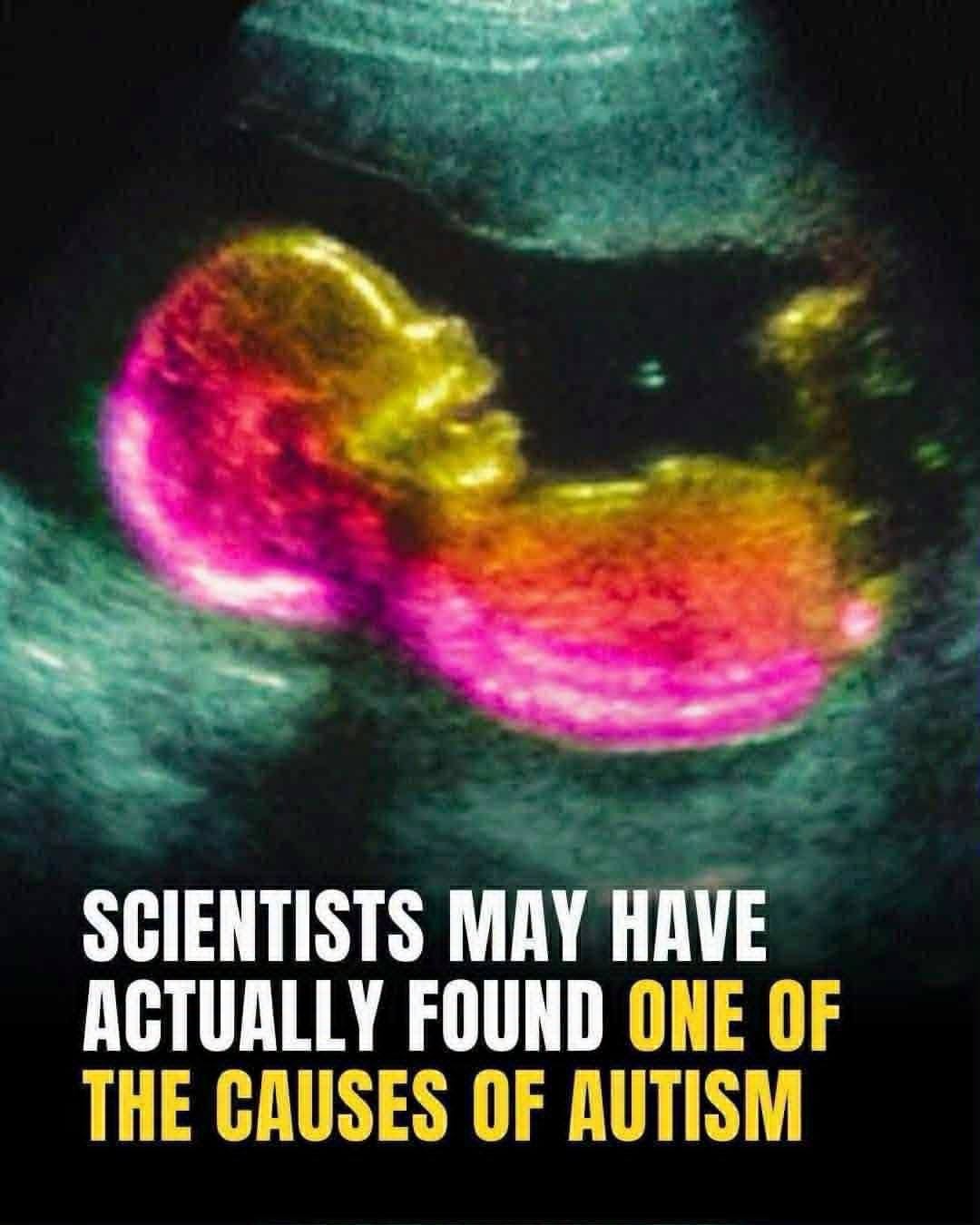
Headlines about autism can be powerful.
One day you may see a story announcing that scientists have “found the cause of autism.” The next, another headline may claim that a particular gene, food, chemical, or pregnancy factor is responsible.
For parents, caregivers, autistic people, and families trying to understand autism, those headlines can be confusing and sometimes frightening.
The scientific reality is more complicated — but also more interesting.
Researchers have learned that autism is a neurodevelopmental condition with many contributing factors, particularly genetic factors. There isn’t one universal cause that explains every autistic person. Scientists are continuing to investigate how genes, early brain development, and certain biological and environmental influences interact.
Most importantly, autism isn’t something that can be reduced to one mistake made by a parent, one environmental exposure, or one event during pregnancy.
Let’s take a calmer look at what researchers actually know.
The Big Picture: There Is No Single “Cause”
Autism spectrum disorder (ASD) affects how people communicate and interact, and it can involve restricted interests, repetitive behaviors, sensory differences, and a wide range of strengths and challenges.
It is called a “spectrum” because autistic people can have very different experiences and support needs.
Researchers do not believe there is one single pathway that leads to autism.
Instead, many different genetic and biological pathways appear to be involved.
Think of brain development as an extraordinarily complicated construction project.
Thousands of biological instructions have to work together at the right time and in the right places.
A small change in one pathway may have little effect in one person but a larger effect in another.
That complexity is one reason scientists continue to study autism rather than searching for a single explanation.
1. Genetics Play a Major Role
One of the strongest findings in autism research is the importance of genetics.
Researchers have identified many genes and genetic variations associated with autism. Some are inherited from parents, while others can arise spontaneously rather than being inherited.
Large genetic studies have identified numerous genes involved in processes such as regulating gene activity and developing connections between neurons.
Importantly, having a particular genetic variation does not automatically mean that someone will be autistic.
Genes usually influence probability rather than acting like a simple on-and-off switch.
And autism’s genetic architecture is extraordinarily complex.
Researchers continue to identify additional genetic factors and investigate how different combinations influence early brain development.
2. Autism Involves Early Brain Development
The word “developmental” is important.
Autism generally becomes apparent during early development, although it can be diagnosed at any age.
Scientists are studying how differences in the development and organization of brain cells and neural networks may contribute to autistic characteristics.
Some autism-associated genes are particularly active during periods when neurons are developing and forming connections.
This doesn’t mean there is one specific “autistic brain” that looks identical in every person.
Instead, researchers are finding patterns of biological differences that may help explain why autism can affect communication, sensory processing, learning, behavior, and social interaction in different ways.
3. Genes and Biology Can Interact
Genetics don’t operate in isolation.
Researchers are also investigating how genetic susceptibility may interact with biological and environmental influences during development.
Some factors have been associated with a higher likelihood of autism, including having a sibling with autism, certain genetic conditions, older parental age, and very low birth weight.
Other research is examining prenatal conditions, maternal health, air pollution, pesticides, and other environmental exposures.
But there is an important distinction:
An association does not automatically prove that something causes autism.
Researchers have to consider many possible explanations, including genetics, socioeconomic factors, medical conditions, timing of exposure, and other variables.
That is why a headline saying that researchers have “linked” something to autism shouldn’t automatically be interpreted as “this thing causes autism.”
4. Autism Is Not Caused by Bad Parenting
This is an especially important point.
Parents do not cause autism by being too strict, too relaxed, too affectionate, insufficiently affectionate, or by making some ordinary parenting mistake.
The evidence points toward complex biological and developmental factors rather than parenting style as the cause of autism.
Families deserve information and support, not blame.
5. Vaccines Do Not Cause Autism
The claim that vaccines cause autism has been extensively studied and is not supported by reliable scientific evidence.
This remains one of the most persistent myths surrounding autism.
The continued repetition of the claim can create unnecessary fear while distracting families from the information that actually matters: understanding a child’s development and obtaining appropriate evaluation and support when needed.
6. Autism Is Not Something a Child “Catches”
Autism isn’t an infection.
It isn’t caused by being around an autistic person, and it isn’t something that can be passed from one child to another like a cold.
Autism reflects differences in neurodevelopment.
The characteristics may become noticeable at different ages, which can sometimes make it seem as though autism suddenly appeared.
In reality, developmental differences can become more apparent as a child’s social, communication, and behavioral demands increase.
7. Autism Looks Different From Person to Person
One of the most important things to understand about autism is its diversity.
One autistic person may communicate verbally and live independently.
Another may use few or no spoken words and need substantial daily support.
Some people may have significant sensory sensitivities.
Others may seek particular sounds, textures, movements, or routines.
Some may struggle with social communication while having exceptional abilities in particular areas.
Others may have intellectual disabilities or additional medical or developmental conditions.
There is no single personality, appearance, ability level, or life path that defines autism.
8. Why Researchers Are Still Studying the Brain
If scientists already know that genetics are important, why hasn’t research identified one definitive cause?
Because autism isn’t one simple biological condition with one genetic switch.
Large-scale studies have revealed many genetic pathways associated with autism. Some appear to affect how neurons develop, communicate, and form connections.
Researchers are now trying to understand how these different pathways interact.
They are also investigating when during development particular biological changes occur and how those changes relate to the wide variety of characteristics seen in autistic people.
This is a much more complicated question than simply asking:
“What causes autism?”
The better questions are:
Which biological pathways are involved?
When do they influence development?
How do different genetic factors interact?
Why do autistic people have such different strengths and support needs?
Those questions are helping researchers move beyond simplistic explanations.
What About Environmental Factors?
This is an area of active research.
Scientists are investigating whether certain prenatal and early-life conditions influence autism likelihood, particularly in people who may already have genetic susceptibility.
Research has examined factors involving maternal health, inflammation, air pollution, pesticides, nutrition, and other exposures.
But these findings should be interpreted carefully.
A factor associated with autism isn’t necessarily a direct cause.
For example, researchers may discover that two conditions frequently occur together without knowing whether one causes the other, whether both result from another factor, or whether the relationship differs among groups of people.
That’s why responsible scientific reporting uses words such as “associated with,” “linked to,” and “may influence risk” rather than automatically saying “causes.”
What Should Parents and Caregivers Focus On?
If you’re concerned about a child’s development, don’t spend months trying to identify a hypothetical cause.
Focus on the child in front of you.
Pay attention to developmental milestones, communication, behavior, learning, sensory responses, and social interaction.
If something concerns you, discuss it with a pediatrician or another qualified healthcare professional.
Early evaluation can help identify whether a child may benefit from developmental services, educational support, speech and language therapy, occupational therapy, behavioral support, or other resources.
An evaluation isn’t about putting a child into a box.
It’s about understanding their needs and helping them thrive.
Autism Is More Than a Medical Headline
It’s easy for scientific discussions about autism to become focused entirely on risk factors, genes, and brain scans.
But behind every research paper is a human being.
An autistic person isn’t simply a collection of symptoms or genetic variants.
Autistic people have personalities, preferences, relationships, talents, challenges, goals, and individual ways of experiencing the world.
Research can help us understand autism better.
But understanding should ultimately lead to better support, greater accessibility, and greater respect for autistic people and their families.
The Bottom Line
There is no single “cause” of autism that explains every person.
Current evidence points to a complex combination of genetic and developmental influences, with researchers continuing to investigate how biological and environmental factors interact.
Genetics appear to play a major role, but having an associated genetic variant doesn’t guarantee that someone will be autistic.
Environmental and prenatal factors are also being studied, but many reported associations do not establish direct causation.
So when you see a headline claiming that scientists have finally “found the cause of autism,” take a breath.
Science rarely moves forward with one magical discovery.
It moves forward piece by piece — through genetics, developmental neuroscience, careful observation, and years of research.
And perhaps the most important lesson is this:
Autism doesn’t need a single simple explanation to deserve understanding, respect, and support.
More Blog
- Drinking Water on an Empty Stomach — What Science Actually Supports (No Hype, Just Facts)
- Waking Up Between 3 and 5 AM? It Might Be Your Soul Trying to Talk to You
- What a “Bleach” Patch on Your Underwear Really Means — And Why It’s Actually a Good Sign
- This Drink May Weaken Your Bones From The Inside — But Everyone Drinks It Anyway