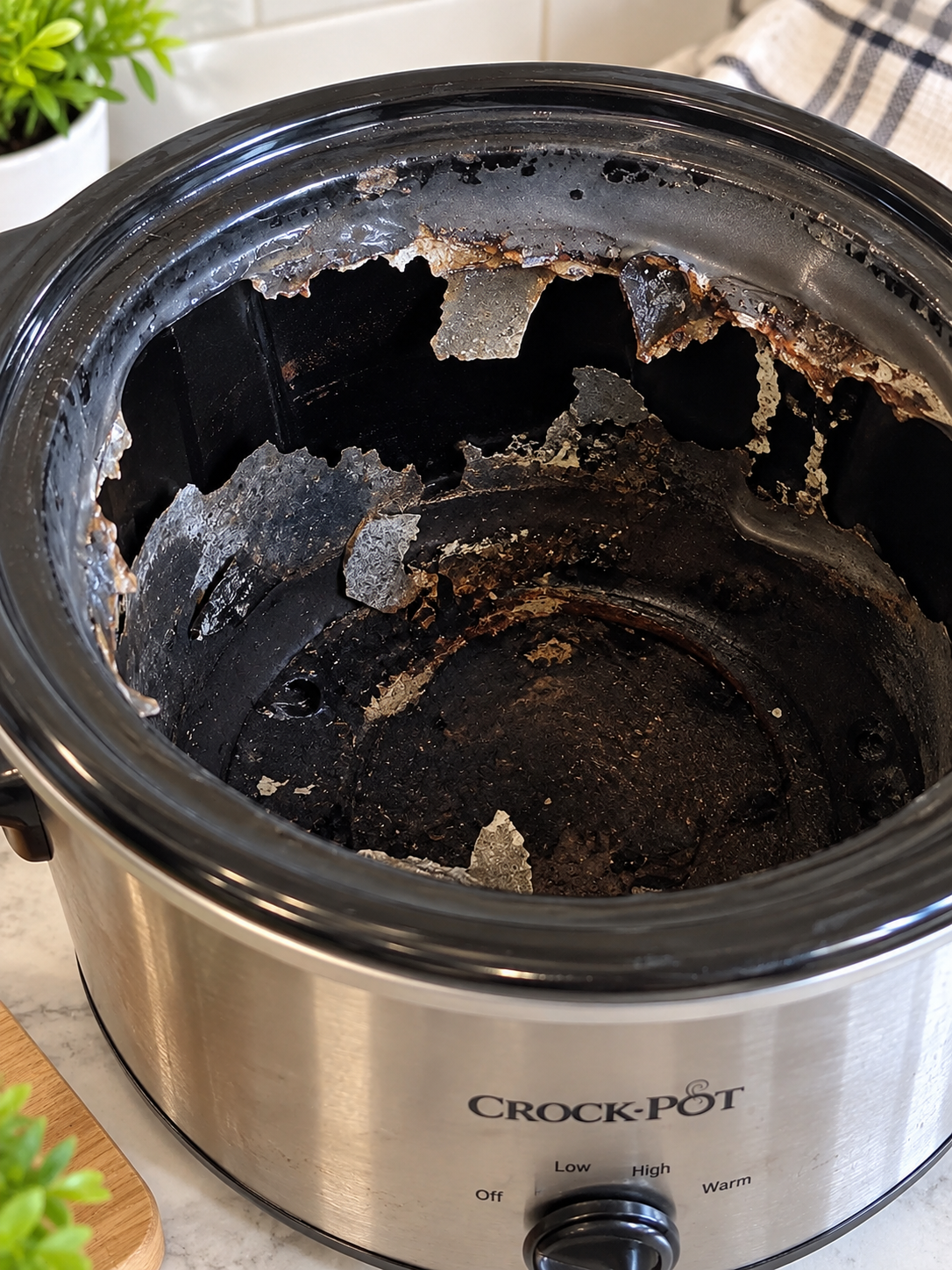
The 11 Foods You Should Never Put in a Slow Cooker are not all dangerous, but many of them simply do not respond well to hours of gentle, moist heat. Some turn rubbery, others become mushy, dairy can separate, and a few ingredients require special food-safety precautions before they ever reach the crock.
Slow cookers are excellent for soups, stews, braised meats, beans that have been properly prepared, and sturdy vegetables. They work because the appliance cooks food slowly in a covered environment at relatively low temperatures. USDA guidance notes that slow cookers generally operate between about 170°F and 280°F, using direct heat, long cooking time, and trapped steam to cook food safely when used correctly.
I have learned that the biggest slow-cooker mistakes usually come from treating every ingredient the same way. A chuck roast can improve after hours of gentle cooking, while shrimp can go from tender to rubbery in minutes. Pasta may absorb so much liquid that it loses all structure, while fresh herbs can lose their color and aroma before dinner even begins. Once you understand which foods need a shorter cooking window, a quick pre-cook, or a last-minute addition, slow cooking becomes much more reliable.
The important distinction is that “never” does not always mean an ingredient can never appear in a slow-cooker recipe. In many cases, the ingredient simply should not cook for the full six to eight hours. Timing, preparation, and food safety make all the difference.
Foods That Lose Their Best Texture in a Slow Cooker
1. Lean Chicken Breasts, Seafood, and Delicate Proteins
Lean, boneless chicken breasts can become dry and stringy when cooked for too long. Unlike fatty cuts such as chicken thighs or pork shoulder, chicken breast contains relatively little fat and connective tissue to protect it during prolonged cooking. Therefore, a recipe that keeps it in the slow cooker all day can produce disappointing results even when the meat remains technically safe to eat.
That does not mean chicken breast can never go into a slow cooker. It works much better in recipes with a shorter cooking time and enough liquid to protect the meat. Checking doneness rather than automatically leaving it for the maximum recipe time also helps preserve moisture.
Seafood needs even more care. Shrimp, scallops, and flaky white fish cook very quickly, so several hours in a slow cooker can make them rubbery, dry, or prone to falling apart. Add them near the end of cooking instead. Depending on the seafood and recipe, the final 10 to 30 minutes may provide enough time.
Firm fish and shellfish can still work beautifully in chowders, curries, and stews when you treat them as finishing ingredients. Let the broth, vegetables, and seasonings develop first, then add the seafood only long enough to cook through.
The principle is simple: slow cookers reward tough ingredients that benefit from time. Delicate proteins usually need the opposite approach.
2. Pasta, Rice, and Delicate Leafy Greens
Pasta and rice can be tricky because they continue absorbing liquid as they cook. If they stay in a slow cooker for several hours, they may become swollen, mushy, or gluey. They can also dramatically thicken the surrounding sauce or soup by pulling in more liquid than expected.
For many dishes, cooking pasta or rice separately produces the best texture. Stir it into individual portions when serving, or add it to the slow cooker only near the end if the recipe has been specifically developed for that method.
Different types of rice also behave differently. Long-grain rice, brown rice, wild rice blends, and quick-cooking rice do not share identical cooking times. Therefore, a recipe that works for one may fail badly with another.
Spinach and other tender leafy greens face a similar problem. Hours of moist heat can leave them dull, limp, and nearly indistinguishable from the rest of the dish. Add spinach during the final few minutes, just until it wilts.
Kale is sturdier and can tolerate more cooking, but even kale may become overly soft if it spends all day in the pot. If you want the greens to retain color and texture, add them closer to serving time.
Ingredients That Can Separate, Fade, or Lose Flavor
3. Milk, Cream, and Soft Dairy Products
Milk, cream, sour cream, cream cheese, and some other dairy products can separate when exposed to prolonged heat. The finished sauce may look grainy or curdled even though the ingredients tasted perfectly fine before cooking.
Acidic ingredients such as tomatoes, wine, and citrus can make this problem more noticeable because acidity encourages milk proteins to coagulate. That is why a creamy tomato soup may look smooth early on but split after several hours.
A simple solution is to add delicate dairy near the end of cooking. Stir in milk, cream, sour cream, or cream cheese after the main ingredients have finished cooking, then allow enough time for everything to heat through.
Harder cheeses may also behave unpredictably. Some melt well, while others separate into oil and solids when exposed to long heat. Adding grated cheese close to serving generally gives you better flavor and texture.
Coconut milk behaves differently from dairy, and full-fat versions often tolerate prolonged cooking better. However, even coconut milk can separate visually, so timing still depends on the dish and the desired consistency.
4. Fresh Herbs, Crispy Toppings, and Strong Alcohol
Fresh basil, parsley, cilantro, chives, and other delicate herbs owe much of their flavor to volatile aromatic compounds. Hours of slow cooking can drive away those fresh aromas and turn bright green herbs dark and dull.
Add delicate herbs during the final few minutes or sprinkle them over the finished dish. This preserves their color and gives the meal a fresher flavor. Woody herbs such as rosemary and thyme can tolerate longer cooking much better, especially when used as whole sprigs.
Crispy toppings also belong outside the slow cooker until serving. Bacon, toasted breadcrumbs, fried onions, croutons, tortilla strips, and nuts absorb steam and lose their crunch quickly inside a covered crock.
Cook or toast those components separately and add them at the table. The contrast between a soft stew and a crisp topping often improves the final dish considerably.
Alcohol also needs some thought. Wine and beer can absolutely appear in slow-cooker recipes, but the idea that all of the alcohol simply “cooks off” is too simplistic. A covered slow cooker allows less evaporation than an uncovered skillet. If you want a deeper, less raw alcohol flavor, reduce wine or beer briefly on the stovetop before adding it.
Foods That Need Special Safety Precautions
5. Frozen Meat and Poultry
Frozen meat deserves special attention because this issue involves food safety rather than texture alone. USDA guidance recommends thawing meat or poultry before putting it into a slow cooker. Frozen pieces can take longer to reach a safe internal temperature and can also lower the temperature of the other ingredients in the crock.
The safest routine is to thaw meat in the refrigerator before slow cooking. Depending on the product, other safe thawing methods may also be appropriate, but placing a large frozen roast directly into a slow cooker is not the recommended approach.
Commercially packaged frozen slow-cooker meals represent an exception when the manufacturer specifically instructs you to cook the product from frozen. In that situation, follow the package directions because the product has been designed and tested for that preparation method.
Do not repeatedly remove the lid to break apart frozen meat while it cooks. Every time you lift the lid, heat escapes and the appliance needs time to return to temperature.
A slow cooker itself is a safe cooking appliance when used correctly. The concern is not that slow cooking is inherently unsafe, but that frozen food can delay the heating process enough to create unnecessary risk.
6. Raw or Improperly Prepared Kidney Beans
Dry red kidney beans require one of the most important slow-cooker precautions. Raw or undercooked kidney beans contain high levels of phytohaemagglutinin, or PHA, a lectin that can cause nausea, vomiting, and diarrhea.
The FDA advises soaking kidney beans for at least five hours, discarding the soaking water, and then boiling the beans in fresh water for at least 30 minutes to destroy the toxin. Simply placing raw kidney beans into a slow cooker does not provide the same safety assurance.
This point often gets oversimplified online as “soak overnight and boil for ten minutes.” FDA’s current natural-toxins guidance is more conservative: soak for a minimum of five hours and boil in fresh water for at least 30 minutes.
Canned kidney beans are much easier because manufacturers have already cooked them properly. Drain and rinse them, then add them to the slow cooker as directed by the recipe.
Other dry beans do not all contain identical levels of PHA, but safe preparation still matters. When a specific bean requires pre-boiling, follow reliable cooking guidance rather than assuming low slow-cooker heat will handle every natural toxin.
7. Cold Leftovers That Need Reheating
A slow cooker is designed primarily for cooking raw ingredients slowly or holding already-hot food at a safe temperature. It is not the best appliance for reheating refrigerated leftovers from cold.
USDA guidance says cold cooked foods and leftovers should not be reheated in a slow cooker. Instead, reheat them quickly using a stove, oven, or microwave, then transfer the hot food to a preheated slow cooker if you need to keep it warm.
Once food has been properly reheated, a slow cooker can be useful for hot holding. USDA recommends keeping hot foods at or above 140°F.
This distinction matters at parties and holiday gatherings. It can be tempting to place a large container of refrigerated soup, chili, or casserole straight into a crock and expect it to warm gradually. However, slow reheating can leave food at unsafe temperatures longer than necessary.
Use the slow cooker as the holding tool after proper reheating rather than as the reheating tool itself.
Common Slow-Cooker Mistakes Beyond Individual Foods
8. Too Much Liquid and Too Many Lid Checks
A slow cooker loses far less moisture than an uncovered saucepan or Dutch oven. Steam rises, hits the lid, condenses, and falls back into the food. Therefore, recipes adapted from stovetop cooking often need less liquid.
Adding the same amount of broth or water used in a stovetop recipe can leave you with a thin, diluted dish. Instead of automatically reducing every recipe by an exact fraction, judge the amount according to the ingredients and the specific slow cooker.
Vegetables and meat also release their own moisture as they cook. Tomatoes, onions, mushrooms, and many cuts of meat can contribute more liquid than expected, so it often makes sense to start conservatively.
Opening the lid repeatedly creates another problem. Each lid check releases heat and steam, which can lengthen cooking. Resist the urge to stir unless the recipe specifically requires it.
If the finished sauce is still too thin, you can thicken it near the end with a cornstarch slurry, reduce it separately on the stovetop, or use another recipe-appropriate thickening method.
9. Ingredients That Need Browning First
Some ingredients are technically fine in a slow cooker but taste better if you brown them first. Ground beef, sausage, beef cubes, chicken skin, onions, and tomato paste can develop deeper flavors when exposed to high heat before slow cooking.
Browning triggers reactions that slow-cooker temperatures cannot reproduce as effectively. Those toasted flavors add complexity to stews, chili, braises, and sauces.
Ground meat should also be broken apart and browned when the recipe benefits from a crumbly texture. Otherwise, it may cook into large clumps and release excess fat directly into the dish.
Onions can go straight into the slow cooker, but sautéing them first creates sweeter, deeper flavor. Likewise, briefly cooking garlic and spices in fat can help release aromatic compounds before everything enters the crock.
These extra steps are optional in many recipes, but they explain why two slow-cooker meals using the same ingredients can taste dramatically different.
10. Vegetables Cut to the Wrong Size
Slow cookers do not cook every vegetable at the same rate. Dense root vegetables such as potatoes, carrots, parsnips, and turnips need much more time than zucchini, peas, or spinach.
If you cut potatoes into very large chunks while chopping delicate vegetables into tiny pieces, the delicate ingredients may disappear before the potatoes become tender. Uniform, recipe-appropriate cuts help ingredients finish at similar times.
Place dense vegetables where they receive enough heat and add quick-cooking vegetables later. Mushrooms, peppers, zucchini, and peas often taste better when they do not spend the entire day cooking.
Potatoes can also stay surprisingly firm in highly acidic dishes. Tomatoes, vinegar, and other acidic ingredients can slow the softening of some vegetables. When necessary, give the potatoes a head start before adding strongly acidic ingredients.
Thinking about cooking time rather than simply dumping everything into the crock produces a much better result.
11. Anything You Want to Stay Crisp
The final item among the 11 Foods You Should Never Put in a Slow Cooker for hours is really an entire category: foods you expect to remain crisp.
The slow cooker creates a humid environment. That makes it excellent for tenderizing meat and keeping stews moist, but terrible for preserving crisp crusts.
Fried chicken, breaded cutlets, crisp pastry, toasted nuts, fried onions, chips, and crunchy breadcrumbs soften quickly in trapped steam. Even beautifully crisp bacon eventually loses much of its texture when submerged in sauce.
Add these foods after cooking whenever possible. If a recipe needs a crisp surface, transfer it briefly to the oven or broiler after slow cooking, provided the cookware and recipe allow it.
Understanding this limitation makes meal planning easier. Let the slow cooker do what it does best, then use a skillet, oven, toaster, or fresh garnish to create the texture it cannot provide.
Frequently Asked Questions
Can you really never put chicken breast in a slow cooker?
You can cook chicken breast in a slow cooker, but long cooking can dry it out. Use an appropriate recipe, enough moisture, and a shorter cooking window rather than automatically leaving lean chicken in the crock all day.
Is it safe to put frozen meat directly into a slow cooker?
USDA recommends thawing meat and poultry before slow cooking because frozen pieces take longer to reach safe temperatures. Commercial frozen slow-cooker meals can be prepared according to their manufacturer’s specific instructions.
Why are dry kidney beans dangerous in a slow cooker?
Raw and undercooked kidney beans can contain high levels of the lectin phytohaemagglutinin. FDA recommends soaking them for at least five hours and boiling them in fresh water for at least 30 minutes before eating or continuing with another cooking method.
When should I add dairy to a slow cooker?
For the smoothest texture, add milk, cream, sour cream, cream cheese, and many cheeses near the end of cooking. This reduces the chance of curdling or separation.
Can I reheat leftovers in my slow cooker?
USDA advises against reheating cold leftovers in a slow cooker. Reheat them rapidly using another method first, then use the slow cooker to keep the food hot at 140°F or above.
Conclusion
The 11 Foods You Should Never Put in a Slow Cooker are better understood as foods that need different timing, preparation, or safety precautions. Lean chicken, seafood, pasta, dairy, herbs, greens, and crispy toppings can all appear in slow-cooker meals when you add them at the right stage.
Other ingredients require more serious attention. USDA recommends thawing meat and poultry before slow cooking, while FDA guidance specifically warns that raw kidney beans need proper soaking and vigorous boiling to reduce their natural lectin toxin before they are eaten.
The best slow-cooker meals come from working with the appliance rather than asking it to do everything. Tough cuts of meat, sturdy vegetables, soups, braises, and long-simmered sauces usually thrive under gentle heat. Delicate foods often belong near the end.
Once you understand those differences, the slow cooker becomes much easier to use successfully. A little planning can prevent dry chicken, mushy pasta, split dairy, soggy toppings, and avoidable food-safety problems while still giving you the convenience that makes slow cooking so useful.
More Blog
- Drinking Water on an Empty Stomach — What Science Actually Supports (No Hype, Just Facts)
- Waking Up Between 3 and 5 AM? It Might Be Your Soul Trying to Talk to You
- What a “Bleach” Patch on Your Underwear Really Means — And Why It’s Actually a Good Sign
- This Drink May Weaken Your Bones From The Inside — But Everyone Drinks It Anyway