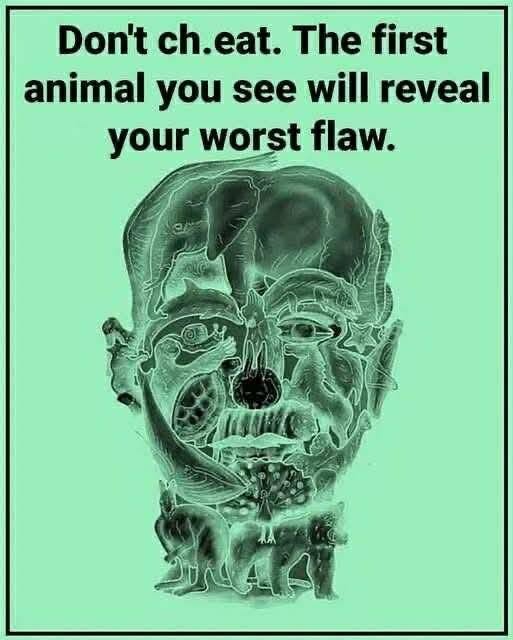
Have you ever stopped scrolling because of a post that claimed, “The first animal you see reveals your biggest personality flaw”?
Maybe you spotted a snake. Perhaps an owl jumped out immediately. Or maybe a lion, wolf, or butterfly caught your attention before anything else.
Within seconds, you’re reading a description that supposedly uncovers a hidden truth about your character.
These visual personality tests have become one of the internet’s favorite forms of entertainment. They appear everywhere on social media, generating millions of views, comments, and shares. People love comparing answers, debating interpretations, and discovering what their chosen animal supposedly says about them.
But do these tests actually reveal anything meaningful?
Let’s explore why these illusions are so captivating, what psychology says about them, and the playful personality traits often associated with the animals people see first.
Why Optical Illusion Personality Tests Are So Popular
Humans naturally search for meaning and patterns.
Our brains are constantly trying to make sense of the world around us, even when presented with incomplete information.
Optical illusion personality tests combine two things people find irresistible:
- Visual puzzles
- Personality insights
The moment we hear that a quick glance can reveal something hidden about ourselves, curiosity takes over.
We want to know:
- What did I see?
- Why did I see it first?
- Does it really describe me?
This combination of mystery and self-discovery is what makes these tests so difficult to ignore.
The Psychology Behind These Tests
Before we dive into the animals, it’s important to understand something.
These tests are designed primarily for entertainment.
There is no scientific evidence that seeing a particular animal first can accurately determine your personality traits or deepest flaws.
However, psychology does offer some interesting explanations for why these tests often feel surprisingly accurate.
The Barnum Effect
One reason these tests seem convincing is a psychological phenomenon known as the Barnum Effect.
This occurs when people accept broad, general statements as highly personal and specific.
For example:
- “You sometimes doubt yourself.”
- “You care deeply about others but occasionally feel misunderstood.”
- “You want people to appreciate your efforts.”
Most people can relate to these statements.
Yet when presented as personalized insights, they often feel uniquely accurate.
Selective Attention
What you notice first may be influenced by:
- Your mood
- Current concerns
- Recent experiences
- Personal interests
- Visual processing preferences
That doesn’t mean the animal reveals your personality, but it may reflect what your brain happens to prioritize in that moment.
Snake: The Master Strategist
The Claimed Flaw
Deceitfulness or manipulation.
According to many versions of this test, spotting a snake first suggests you may be overly strategic or inclined to control situations behind the scenes.
Why This Interpretation Exists
Throughout history, snakes have often symbolized:
- Cunning
- Secrecy
- Transformation
- Intelligence
Many cultures associate snakes with hidden knowledge and calculated behavior.
A More Positive Perspective
If you notice the snake first, you may simply be:
- Observant
- Analytical
- Careful before making decisions
Strategic thinking is not the same thing as manipulation.
Owl: The Deep Thinker
The Claimed Flaw
Overthinking and emotional distance.
The owl is often associated with wisdom and observation.
People who see the owl first are sometimes described as individuals who analyze everything and struggle to switch off their thoughts.
Why This Interpretation Exists
Owls are traditionally symbols of:
- Intelligence
- Knowledge
- Awareness
- Reflection
Because of this, the test assumes owl-spotters spend significant time thinking and evaluating situations.
A More Positive Perspective
You may simply be:
- Thoughtful
- Perceptive
- Curious
- Intellectually engaged
Careful thinking can be a tremendous strength when balanced with action.
Elephant: The Loyal Protector
The Claimed Flaw
Stubbornness and an inability to let go.
Elephants are famous for their remarkable memory.
As a result, personality tests often suggest that elephant-spotters hold onto old experiences, past mistakes, or lingering resentments.
Why This Interpretation Exists
Elephants symbolize:
- Loyalty
- Family bonds
- Memory
- Stability
The test assumes that strong memory may sometimes lead to holding onto the past.
A More Positive Perspective
You may be:
- Dependable
- Loyal
- Grounded
- Committed to your values
Remembering important lessons isn’t necessarily stubbornness.
Butterfly: The Optimistic Dreamer
The Claimed Flaw
Being too trusting or naive.
People who see a butterfly first are often portrayed as idealists who look for the good in everyone.
Why This Interpretation Exists
Butterflies symbolize:
- Transformation
- Hope
- Beauty
- Freedom
Their delicate appearance often leads to assumptions about innocence and trust.
A More Positive Perspective
You may simply possess:
- Optimism
- Compassion
- Emotional openness
- Resilience
Choosing to see the good in others can be a powerful strength.
Wolf: The Independent Spirit
The Claimed Flaw
Aggression or excessive independence.
Wolf-spotters are often described as people who rely heavily on themselves and struggle to ask for help.
Why This Interpretation Exists
Wolves are associated with:
- Leadership
- Survival
- Loyalty
- Protection
Their reputation as fierce hunters contributes to interpretations involving toughness and self-reliance.
A More Positive Perspective
You may simply be:
- Determined
- Strong-willed
- Protective
- Self-sufficient
Independence becomes a problem only when it prevents meaningful connections.
Turtle: The Careful Planner
The Claimed Flaw
Procrastination or fear of change.
Because turtles move slowly, many personality tests interpret them as symbols of caution and hesitation.
Why This Interpretation Exists
Turtles represent:
- Patience
- Endurance
- Wisdom
- Stability
The slower pace is often associated with reluctance to take risks.
A More Positive Perspective
You may simply be:
- Deliberate
- Thoughtful
- Responsible
- Methodical
Sometimes taking your time leads to better decisions.
Lion: The Natural Leader
The Claimed Flaw
Arrogance or dominance.
People who spot lions first are frequently labeled as individuals who enjoy being in control.
Why This Interpretation Exists
Lions symbolize:
- Courage
- Leadership
- Confidence
- Authority
Their position as “king of the jungle” makes them a natural symbol of power.
A More Positive Perspective
You may be:
- Confident
- Charismatic
- Ambitious
- Inspiring
Strong leadership does not automatically mean arrogance.
Why Different People See Different Animals
One of the most fascinating aspects of these images is how differently people interpret them.
Several factors influence perception:
Visual Focus
Some people naturally notice large shapes first.
Others focus on details.
Past Experiences
Recent events can influence what your brain prioritizes.
Emotional State
Stress, excitement, curiosity, and fatigue can all affect attention.
Individual Differences
Every brain processes visual information slightly differently.
This is why two people can look at the exact same image and immediately see completely different animals.
How to Take These Tests for Fun
If you enjoy optical illusion personality tests, here are a few ways to make them more entertaining:
Go With Your First Impression
Don’t stare at the image for several minutes.
The fun comes from your immediate reaction.
Avoid Looking at Other Answers First
Seeing someone else’s result can influence what you notice.
Compare Results With Friends
The differences often lead to interesting conversations.
Don’t Take the Results Too Seriously
Remember that these tests are designed primarily for entertainment and self-reflection.
The Bottom Line
Optical illusion personality tests are fascinating because they combine art, psychology, and human curiosity into a single experience.
While the first animal you see cannot scientifically reveal your deepest flaw, these tests can still be enjoyable. They encourage self-reflection, spark conversations, and remind us that perception is uniquely personal.
Whether you saw a snake, owl, elephant, butterfly, wolf, turtle, or lion, the most important thing to remember is this:
No single image can define who you are.
Human personalities are far too complex, rich, and constantly evolving to be reduced to one animal hidden in a picture.
So enjoy the puzzle, compare notes with friends, and have fun discovering what your eyes notice first—but leave the serious personality analysis to real psychology.
More Blog
- Drinking Water on an Empty Stomach — What Science Actually Supports (No Hype, Just Facts)
- Waking Up Between 3 and 5 AM? It Might Be Your Soul Trying to Talk to You
- What a “Bleach” Patch on Your Underwear Really Means — And Why It’s Actually a Good Sign
- This Drink May Weaken Your Bones From The Inside — But Everyone Drinks It Anyway