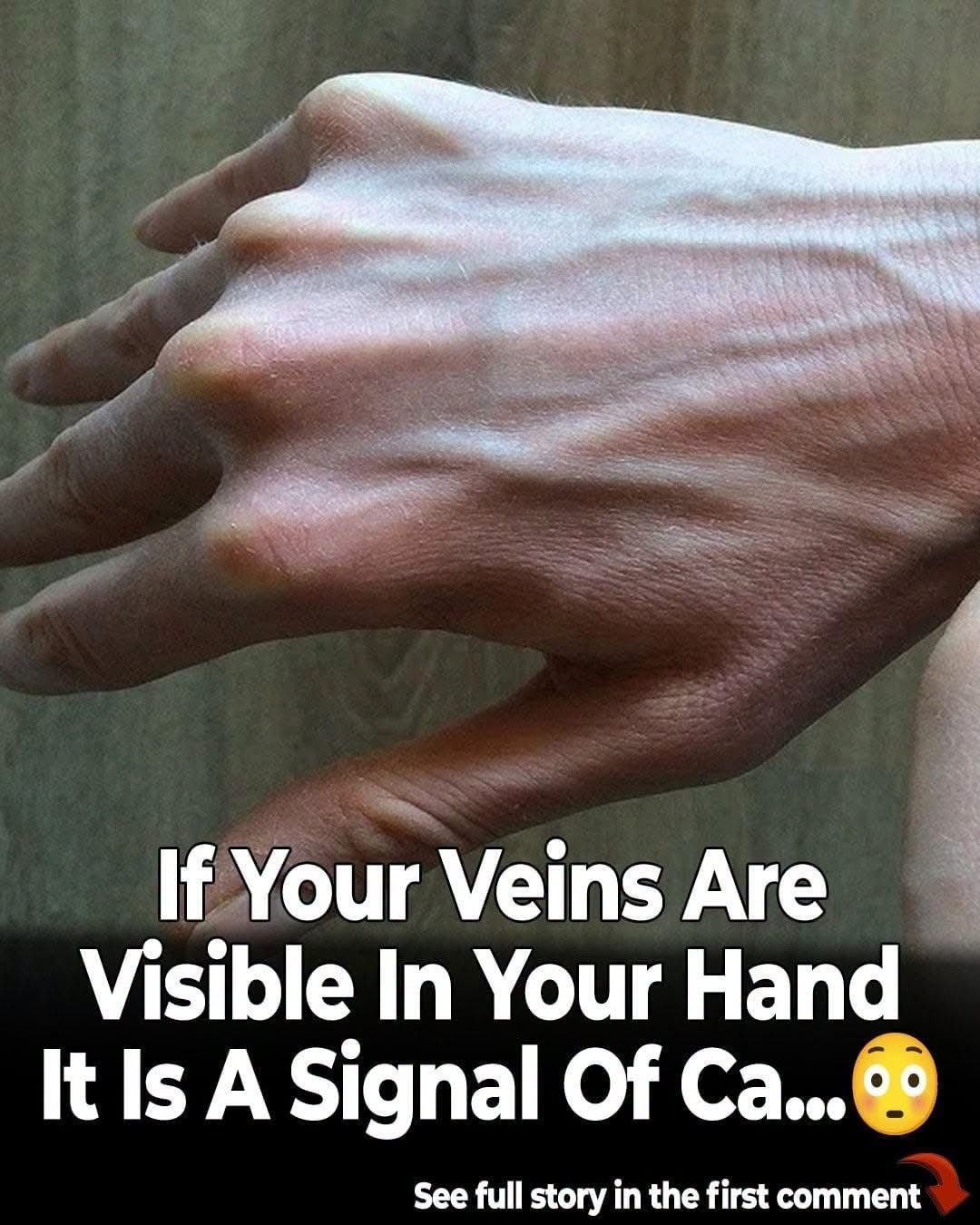
Visible Veins on Your Hands can look surprising, especially when they seem more noticeable than they did a few years ago. In many cases, however, prominent hand veins reflect normal changes in skin thickness, body composition, genetics, temperature, or physical activity rather than a serious disease.
As people age, the skin on the hands gradually loses volume and elasticity. Because the veins sit close to the surface, thinner skin can make them easier to see. Likewise, people with lower body fat may naturally have more noticeable veins because less tissue covers the blood vessels. Exercise can also temporarily make veins stand out as blood flow increases.
Still, appearance alone cannot tell the whole story. Visible Veins on Your Hands deserve more attention when they appear suddenly or occur with pain, swelling, warmth, redness, discoloration, or a firm and tender vein. Those symptoms can point to inflammation or another circulation problem that needs medical assessment.
I first paid attention to visible hand veins after noticing how different the same hands could look from one day to the next. After exercise, the veins appeared much more pronounced, while on cooler, quieter days they looked less obvious. An older relative also had highly visible veins without discomfort, which made the contrast even clearer. Rather than assuming every change meant something dangerous, I learned to look at the complete picture: whether the change was new, whether it caused pain or swelling, and whether any other symptoms appeared. That simple distinction between appearance and symptoms makes conversations about hand veins far more useful and less alarming.
Why Visible Veins on Your Hands Often Become More Noticeable
Aging Changes the Skin and Tissue Over Your Veins
Aging provides one of the most common explanations for Visible Veins on Your Hands.
Over time, skin becomes thinner and loses some of its elasticity and underlying volume. As a result, veins that have always been present may become easier to see through the skin.
Cleveland Clinic explains that aging can make veins look more prominent because the skin becomes thinner and less elastic. The hands also lose fat and volume with age, which can make underlying structures appear more obvious.
This process usually develops gradually.
Therefore, a person may first notice a few blue or green veins across the back of the hands and then see them become more defined over several years.
Sun exposure can also contribute to visible skin changes on the hands. Because the backs of the hands receive frequent ultraviolet exposure, photoaging can lead to thinner skin, reduced elasticity, uneven pigmentation, and other visible changes.
However, Visible Veins on Your Hands do not automatically indicate poor circulation simply because they become more noticeable with age.
Instead, consider whether the veins look different while the hands otherwise feel normal.
If the appearance changes slowly and you have no pain, swelling, warmth, skin changes, or tenderness, the veins may simply reflect normal anatomy and aging.
By contrast, sudden or uncomfortable changes deserve more attention.
Genetics, Body Fat, and Exercise Also Affect Appearance
Age does not provide the only explanation.
Some people have prominent veins from a young age because genetics influence skin thickness, vein position, and body composition.
Likewise, people with lower levels of body fat may see their veins more clearly because less tissue sits between the veins and the skin.
Cleveland Clinic notes that reduced body fat can make veins in the hands and arms more visible. It also explains that intense exercise can temporarily increase vein prominence because exercise increases blood flow and develops muscle.
Therefore, Visible Veins on Your Hands may become especially noticeable during or after weightlifting, running, manual work, or other physical activity.
Heat can also make superficial blood vessels appear more prominent because blood vessels can widen as the body regulates temperature.
Meanwhile, dehydration may change how the skin and soft tissues look, although visible veins alone cannot accurately diagnose hydration status.
The key point involves context.
A healthy, active person who has always had visible veins may have no cause for concern.
Similarly, veins that become more noticeable after exercise and then settle afterward often reflect a temporary physiological response.
However, a vein that suddenly becomes enlarged, painful, hard, or surrounded by swelling does not fit the same pattern.
That difference leads to the most important question: Are the veins simply visible, or have they changed along with new symptoms?
When Visible Veins on Your Hands May Need Medical Attention
Pain, Swelling, Warmth, and Redness Matter
Visible Veins on Your Hands become more concerning when appearance changes come with symptoms.
For example, pain, tenderness, swelling, warmth, or redness around a superficial vein can occur with phlebitis, also called superficial thrombophlebitis.
The NHS describes phlebitis as inflammation of a vein near the surface of the skin. Symptoms can include pain, tenderness, swelling, warm skin, redness or darkening, and veins that feel hard or sore. Although phlebitis commonly affects the legs, it can also affect veins in the arms.
Therefore, do not judge a vein only by how blue or prominent it looks.
Instead, notice how the surrounding area feels.
A painless vein that has looked similar for years tells a very different story from a suddenly swollen vein that feels warm and tender.
Likewise, significant swelling in one hand or arm deserves medical evaluation, particularly when it appears suddenly.
A clinician may examine the area and decide whether testing, such as ultrasound, would help assess blood flow.
If you notice a hard, painful lump along a vein, persistent tenderness, spreading redness, or worsening swelling, seek medical advice rather than waiting for the appearance to resolve on its own.
In addition, seek urgent care when symptoms suggest a more significant clotting problem or when swelling and pain develop suddenly.
Visible Veins on Your Hands themselves usually do not create an emergency.
However, new symptoms around a vein can change the situation.
Visible Hand Veins Are Not a Reliable Cancer Warning Sign
Social-media posts sometimes claim that prominent veins signal cancer.
That claim oversimplifies a complex subject.
Visible Veins on Your Hands by themselves do not provide a reliable way to identify cancer.
Many harmless factors can make superficial veins easier to see, including aging, thin skin, genetics, exercise, and lower body fat.
Cancer can affect the body in many ways, and some cancers or treatments can influence clotting or circulation. However, that does not make ordinary visible hand veins a stand-alone cancer sign.
For example, the NHS lists cancer among factors that can increase the risk of phlebitis, but the presence of a visible vein alone does not establish phlebitis or cancer.
Therefore, avoid interpreting a normal anatomical feature as proof of a serious diagnosis.
Instead, pay attention to changes that carry more medical significance.
Those changes include sudden swelling, unexplained pain, a hard or tender vein, new skin discoloration, warmth, or a rapidly developing difference between one arm and the other.
Likewise, if you have other persistent or unexplained symptoms, discuss them with a healthcare professional rather than trying to connect them to a single visible feature.
This approach helps reduce unnecessary alarm while still taking meaningful changes seriously.
Visible Veins on Your Hands can attract attention because they are easy to see.
However, medical evaluation depends on symptoms, history, physical examination, and sometimes testing rather than appearance alone.
How Doctors May Evaluate Changes in Hand Veins
A Medical History and Physical Exam Often Come First
When Visible Veins on Your Hands suddenly change or become uncomfortable, a healthcare professional will usually start by asking about the timing and symptoms.
For example, they may ask when you first noticed the change.
They may also ask whether the vein hurts, whether the hand or arm has swollen, whether the skin feels warm, or whether the symptoms developed after an injury, injection, IV line, travel, illness, or period of reduced activity.
The clinician can then examine the vein and surrounding tissue.
They may compare both hands or arms and look for swelling, skin-color changes, tenderness, warmth, or a firm cord-like area.
These details can help distinguish a harmless visible vein from a possible inflammatory or vascular problem.
Phlebitis can produce a vein that feels hard or sore, along with warmth, pain, and swelling in the surrounding area.
However, symptoms can overlap between conditions.
Therefore, a physical examination does not always provide the complete answer.
If the clinician suspects a blood-flow problem or clot, they may recommend imaging.
The exact test depends on the symptoms and clinical situation.
Visible Veins on Your Hands do not require testing simply because you can see them.
Instead, doctors usually base further evaluation on symptoms, risk factors, and examination findings.
Sudden One-Sided Changes Deserve Extra Attention
Changes that affect only one hand or arm can deserve closer evaluation, particularly when they happen suddenly.
For example, one arm that becomes noticeably more swollen than the other may indicate a local circulation problem rather than a normal age-related change.
Similarly, a new painful or hardened vein should not be dismissed merely because prominent veins often occur harmlessly.
The NHS advises urgent medical assessment for sudden swelling, warm skin, painful or cramping symptoms, and swollen veins that feel hard or sore.
Therefore, focus on the combination of symptoms rather than vein visibility alone.
A person may have highly visible veins in both hands for decades without any problem.
Meanwhile, a subtler change in one arm accompanied by pain and swelling may carry greater medical significance.
This distinction helps put Visible Veins on Your Hands into perspective.
The dramatic-looking feature does not always create the greatest concern.
Instead, rapid change, discomfort, inflammation, and asymmetry often matter more.
If you remain unsure, a healthcare professional can assess the situation in context.
That approach gives you far more useful information than comparing your hands with online photographs.
Images can vary widely because lighting, skin tone, temperature, hydration, body composition, and exercise all affect how veins appear.
Supporting Healthy Hands and Circulation
Everyday Habits Can Support General Vascular Health
Visible Veins on Your Hands do not usually require treatment when they cause no symptoms and reflect normal anatomy.
However, general health habits can support cardiovascular and vascular health.
Regular physical activity helps support overall circulation and cardiovascular fitness.
Likewise, avoiding smoking protects blood vessels from tobacco-related damage.
Cleveland Clinic identifies smoking as a factor that can harm vein health and notes that body composition, age, and physical activity can influence how visible veins appear.
Hydration also supports normal body function, although drinking extra water will not necessarily make visible veins disappear.
Similarly, maintaining a healthy weight can benefit overall cardiovascular health, but people with low body fat may naturally continue to have prominent veins.
Therefore, do not measure health by how visible the veins look.
Instead, focus on habits that benefit the entire body.
Sun protection also matters because the backs of the hands receive frequent ultraviolet exposure.
Regular sunscreen use and other sun-protection measures can help reduce photoaging, which contributes to thinning and other visible skin changes.
These habits will not guarantee that hand veins remain hidden.
However, they can support skin and vascular health over time.
Cosmetic Concerns Differ From Medical Problems
Some people dislike the appearance of Visible Veins on Your Hands even when the veins are completely harmless.
That concern is cosmetic rather than medical.
If appearance bothers you, discuss options with an appropriate medical professional rather than trying aggressive home treatments.
Do not attempt to puncture, compress, inject, or otherwise alter visible veins yourself.
Likewise, avoid assuming that creams or supplements can safely eliminate prominent veins.
A clinician can first confirm whether the veins appear normal and then explain whether cosmetic treatment makes sense.
This distinction matters because cosmetic treatment addresses appearance, while medical treatment addresses symptoms or disease.
For example, a painless superficial vein may need no treatment at all.
By contrast, a swollen, painful, warm, or hardened vein may require medical evaluation even if appearance does not bother you.
Visible Veins on Your Hands often fall into the harmless category.
Still, the surrounding symptoms determine whether the situation deserves closer attention.
By separating cosmetic concerns from warning signs, you can respond more appropriately.
You can also avoid unnecessary worry when normal veins become more noticeable with age, exercise, or changes in body composition.
Frequently Asked Questions
Are Visible Veins on Your Hands normal as you get older?
Yes, they often become easier to see with age. Skin loses volume and elasticity over time, which can make superficial veins more noticeable. The hands may also lose some underlying fat, so veins sit closer to the visible surface.
Can exercise make hand veins more visible?
Yes. Exercise increases blood flow and can make superficial veins in the hands and arms temporarily stand out. People who exercise intensely or have greater muscle definition may also notice more prominent veins.
Do visible hand veins mean I have cancer?
Visible hand veins alone do not provide a reliable cancer warning sign. Normal aging, genetics, body composition, and exercise commonly explain prominent veins. However, discuss persistent unexplained symptoms or sudden changes with a healthcare professional.
When should I worry about a visible vein?
Seek medical advice if a vein becomes suddenly enlarged, painful, hard, tender, warm, or surrounded by redness or swelling. Sudden swelling in one arm or hand also deserves prompt attention.
Can visible veins be treated?
Harmless visible veins often need no medical treatment. If they cause cosmetic concern, a qualified healthcare professional can discuss appropriate options after confirming that no underlying vascular problem requires attention.
Conclusion
Visible Veins on Your Hands are usually much less alarming than sensational online posts suggest.
For many people, they simply become easier to see because the skin thins with age, underlying fat decreases, exercise increases blood flow, or genetics place superficial veins close to the skin.
Therefore, appearance alone rarely tells you whether something is wrong.
The more useful question involves change and symptoms.
If the veins have looked similar for years and cause no pain, swelling, redness, warmth, or tenderness, they often reflect normal anatomy.
However, a sudden change deserves more attention.
Pain, swelling, warmth, discoloration, tenderness, or a hard vein can occur with inflammation or other circulation problems. In those situations, seek medical advice rather than relying on photographs or viral health claims.
Visible Veins on Your Hands also should not automatically trigger fears about cancer.
A visible superficial vein does not serve as a dependable cancer marker.
Instead, clinicians evaluate concerning symptoms using medical history, examination, and testing when appropriate.
General healthy habits can support your skin and circulation.
Stay physically active, avoid smoking, protect the backs of your hands from excessive sun exposure, and seek professional guidance when a new symptom concerns you.
Most importantly, pay attention to how your hands feel as well as how they look.
That simple distinction can help separate a common physical characteristic from a change that deserves medical attention.
More Home Remedies
- Wrinkled Fingers After Water Exposure: What Your Skin May Be Telling You
- Skin Rash With Breathing Trouble? It Could Be a Life-Threatening Allergic Reaction
- I Thought It Was a Piece of Trash on the Bathroom Floor—Until It Moved
- If You Are Getting White Pimples on Your Lips or Intimate Area, Here’s What They Could Mean