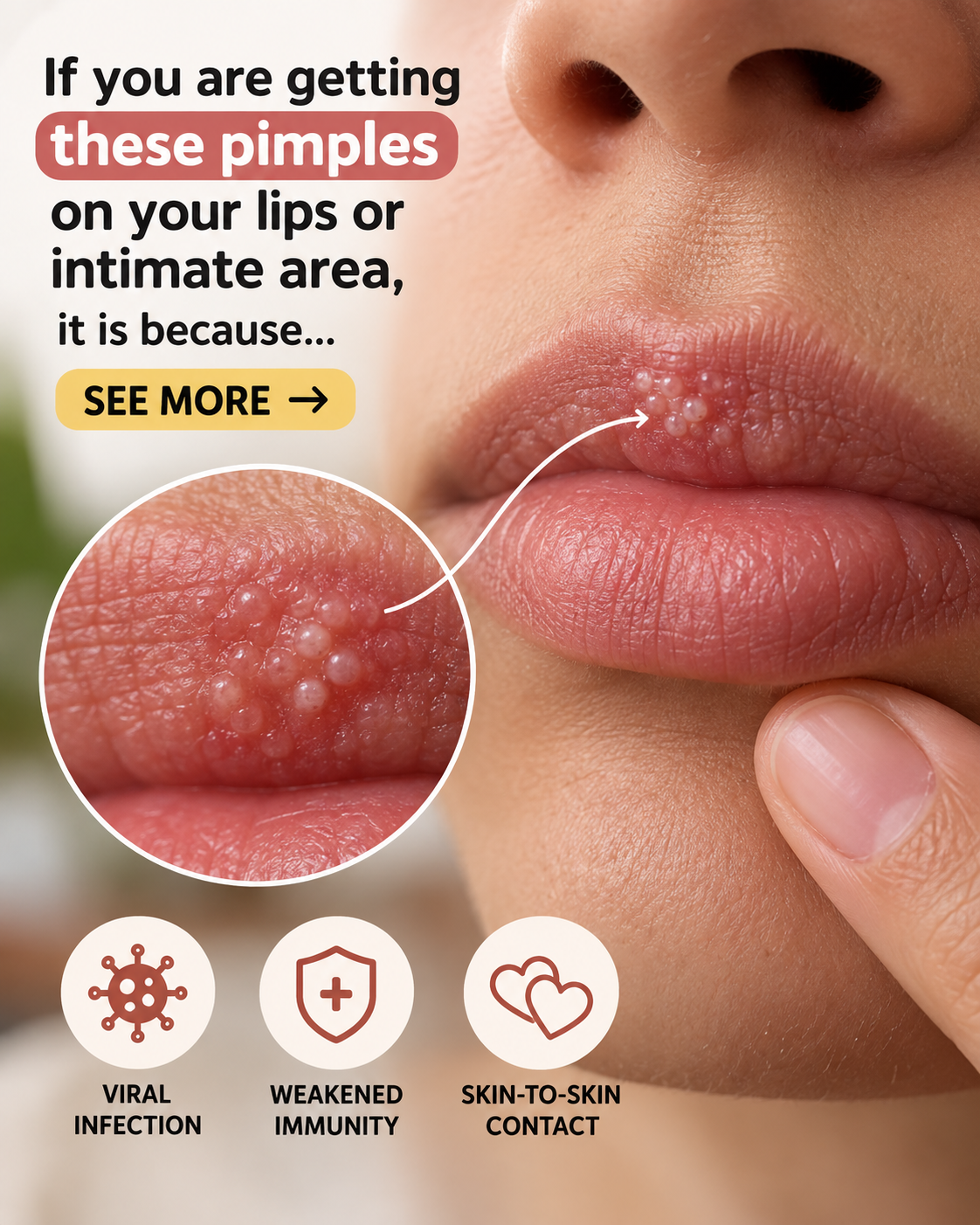
If You Are Getting White Pimples on Your Lips or Intimate Area, the first thing to know is that many small white or pale bumps are not actually pimples. Some represent completely normal oil glands, while others come from irritation, shaving, blocked follicles, dermatitis, or infections that need proper diagnosis.
Fordyce spots provide one of the most common harmless explanations. These enlarged oil glands often appear as tiny white, yellowish, pale red, or skin-colored bumps around the lips, inside the cheeks, or on genital skin. They are benign, common, and not sexually transmitted.
However, appearance alone cannot reliably identify every bump. Genital herpes, molluscum contagiosum, genital warts, folliculitis, and contact dermatitis can create lesions that people may initially describe as pimples. Therefore, new, painful, rapidly changing, ulcerated, or persistent bumps deserve medical evaluation rather than squeezing or treating them blindly.
I once noticed several tiny pale bumps near my lip and immediately assumed acne had somehow appeared in an unusual place. I almost reached for a strong acne treatment, but the bumps did not behave like ordinary pimples. They were painless, evenly spaced, and unchanged from one day to the next. After looking more carefully, I realized how easy it is to label every small bump as acne when several completely different conditions can look similar. Since then, I have learned to pay attention to pain, texture, location, recent shaving, new products, and whether a bump changes before deciding what it might be.
Common Harmless Reasons for White Bumps
Fordyce Spots Often Explain Tiny Pale Bumps
If You Are Getting White Pimples on Your Lips or Intimate Area, Fordyce spots belong near the top of the list of possibilities.
Fordyce spots are enlarged sebaceous glands that become visible in areas where people do not usually expect to see oil glands. They commonly appear around the border of the lips, inside the cheeks, and on genital skin, including the penis, scrotum, and vulva. They usually measure only a few millimeters and may appear individually or in clusters.
Most importantly, Fordyce spots are not an infection.
They are not contagious.
They do not result from poor hygiene.
They are not an STI.
In fact, they are extremely common in adults.
Their appearance can still cause concern because they may resemble other small bumps. However, Fordyce spots usually remain painless and stable. They often become easier to see when the surrounding skin stretches.
Because they are harmless, they generally do not require treatment.
Some people pursue cosmetic treatment because they dislike their appearance, but that decision differs from treating a disease.
Also, squeezing them does not solve the problem. Pressing or picking at Fordyce spots can irritate the skin and create inflammation.
Therefore, If You Are Getting White Pimples on Your Lips or Intimate Area and the bumps are tiny, painless, uniform, and unchanged, harmless Fordyce spots may provide a reasonable explanation.
Still, genital bumps can resemble infections. A clinician can provide reassurance when the appearance is new or uncertain.
Normal Skin Variations and Blocked Follicles Can Look Like Pimples
Not every pale genital bump represents Fordyce spots.
Some people have other harmless anatomical variations.
For example, pearly penile papules can form small, smooth bumps around the head of the penis. They are not pimples and do not represent an STI. A clinician can distinguish them from warts or other conditions during an examination.
Meanwhile, true pimples and inflamed follicles can develop in areas that contain hair follicles.
Folliculitis occurs when a hair follicle becomes inflamed or infected. It can produce acne-like bumps and may develop after shaving, sweating, friction, or other everyday activities.
The genital region commonly experiences these triggers.
Shaving can irritate follicles.
Tight clothing can increase rubbing.
Sweat can remain trapped against the skin.
An ingrown hair can also create a small raised bump that resembles a whitehead.
If You Are Getting White Pimples on Your Lips or Intimate Area after shaving, consider whether the lesions sit directly where hair grows.
However, the lips themselves do not contain the same type of hair-bearing skin throughout, so a true acne-like bump directly on the lip deserves a more careful look.
Avoid squeezing bumps in either area.
Pressure can damage sensitive tissue, worsen inflammation, introduce bacteria, and make diagnosis harder.
Instead, allow uncomplicated follicle irritation to settle while avoiding additional friction and shaving over the area.
If the bumps become increasingly painful, warm, swollen, or filled with drainage, seek medical advice.
Irritation and Skin Conditions That Can Mimic Pimples
Contact Dermatitis Can Affect Both Lips and Groin Skin
If You Are Getting White Pimples on Your Lips or Intimate Area, consider what has touched the skin recently.
Contact dermatitis can develop when the skin reacts to an irritant or allergen. It can appear on the lips or in the groin, and symptoms may include itching, burning, dryness, redness, scaling, cracking, or small bumps.
Around the lips, possible triggers include lip balm, lipstick, gloss, toothpaste, skincare products, fragrances, and other products that repeatedly contact the mouth.
In the intimate area, soaps, scented washes, detergents, lubricants, period products, sprays, shaving products, and tight or irritating clothing may contribute.
Therefore, timing matters.
Did the bumps appear after starting a new lip product?
Did irritation begin after shaving?
Did you switch detergent?
Did you use a fragranced wash or intimate-care product?
If so, stopping the suspected irritant may allow the skin to recover.
However, avoid introducing several new products to “treat” the problem.
A complicated routine can make irritated skin worse and make it harder to identify the trigger.
Also, strong acne medications do not belong on every white bump. Benzoyl peroxide, salicylic acid, retinoids, and other acne treatments can irritate delicate lip or genital tissue, especially if you apply them to mucosal surfaces or inflamed skin without professional guidance.
If You Are Getting White Pimples on Your Lips or Intimate Area with burning, flaking, itching, or redness after product exposure, contact dermatitis becomes more plausible than ordinary acne.
Perioral Dermatitis and Friction Can Create Similar-Looking Bumps
Small bumps around the mouth can also come from perioral dermatitis.
This condition often causes acne-like bumps around the mouth, sometimes with burning, itching, dryness, or flaking. It can also occur around other body openings and may occasionally affect the genital region.
Perioral dermatitis is not the same thing as acne.
Therefore, repeatedly applying acne treatments can sometimes complicate the picture.
Likewise, friction can create genital irritation that looks pimple-like.
Tight underwear, repeated exercise, sweating, shaving, and skin-on-skin rubbing can inflame follicles or irritate the outer genital skin.
Vulvar skin in particular can react to detergents, soaps, sprays, lubricants, semen, and shaving. Folliculitis can develop when hair follicles become inflamed, including after pubic hair removal.
If the problem follows shaving, stop shaving until the skin settles.
Wear loose, breathable clothing.
Use gentle cleansing.
Avoid picking.
Meanwhile, watch the bumps rather than trying to force them to drain.
If You Are Getting White Pimples on Your Lips or Intimate Area and the lesions repeatedly return in exactly the same area, leave scars, form painful deep lumps, or drain pus, a clinician should examine them.
Recurring painful groin lesions can have causes beyond simple razor bumps.
A correct diagnosis prevents months of trial-and-error treatment.
Infections That Can Be Mistaken for White Pimples
Herpes and Genital Warts Usually Have Different Clues
People often worry about sexually transmitted infections when they discover genital bumps.
That concern is understandable, but not every genital bump represents an STI.
Genital herpes, for example, typically causes small blisters that can break open and leave painful sores. Some people also experience tingling, itching, swollen lymph nodes, painful urination, or flu-like symptoms during an outbreak.
Therefore, a stable, painless, tiny white Fordyce spot does not behave the same way as a typical herpes lesion.
However, herpes can vary in appearance, and mild cases may be overlooked.
If You Are Getting White Pimples on Your Lips or Intimate Area after a new sexual exposure, especially when the area feels painful, burns, tingles, blisters, or ulcerates, arrange medical evaluation rather than relying on photographs.
Genital warts differ again.
They can appear as small skin-colored or darker bumps. They may be flat, raised, smooth, rough, or clustered in a cauliflower-like pattern. They often cause no symptoms, although some itch, burn, hurt, or bleed.
Because early genital warts can resemble harmless bumps, clinicians sometimes need to examine the area directly.
The important point is that “white pimple” describes an appearance, not a diagnosis.
Two bumps can look similar at first while having completely different causes.
That is why sudden new genital lesions deserve particular caution.
Molluscum Contagiosum Can Produce Small Pearly Bumps
Molluscum contagiosum provides another infection that can resemble pimples.
This viral skin infection produces small, firm, pearly bumps. Many have a characteristic small depression or dimple in the center. They may look white, pink, or skin-colored and usually remain painless, although they can become inflamed or itchy.
Molluscum spreads through skin contact and contaminated objects.
In adults, genital molluscum can also spread through sexual contact.
Importantly, squeezing the bumps can spread the virus to nearby skin.
Shaving over them can also encourage spread.
Therefore, If You Are Getting White Pimples on Your Lips or Intimate Area and the bumps have a tiny central indentation or keep multiplying, do not pop them.
Genital molluscum deserves professional evaluation because a clinician can confirm the diagnosis and distinguish it from other genital conditions. Current public-health guidance specifically recommends medical evaluation for molluscum lesions around the genitals.
Other infections can also create bumps, sores, or ulcers.
For that reason, avoid diagnosing yourself based only on color.
Look at the entire pattern.
Pain, itching, blisters, ulcers, drainage, rapid spread, new sexual exposure, and swollen lymph nodes all change the level of concern.
What to Do and When to Get Medical Help
Gentle Care Is Safer Than Squeezing or Harsh Treatments
If You Are Getting White Pimples on Your Lips or Intimate Area, resist the urge to squeeze them.
That advice applies whether the bump is a Fordyce spot, follicle irritation, molluscum, or something else.
Squeezing can damage delicate tissue.
It can introduce bacteria.
It can create swelling and scarring.
And if a viral infection causes the bump, manipulation may spread it.
Instead, keep the area clean and dry.
Use gentle, fragrance-free products.
Avoid unnecessary scrubbing.
Pause shaving if it clearly worsens genital bumps.
Wear breathable clothing and avoid repeated friction.
For lip bumps, temporarily simplify your lip-care routine if irritation seems possible.
Do not share lip products while you have an unexplained lesion around your mouth.
Likewise, avoid sexual contact involving an unexplained genital lesion until you understand what it is, particularly when the bump is new, blistered, ulcerated, or associated with a possible STI exposure.
That precaution protects both you and a partner while you arrange appropriate evaluation.
If You Are Getting White Pimples on Your Lips or Intimate Area, avoid randomly applying antibiotic, antifungal, antiviral, steroid, or acne creams.
Each treatment targets a different problem.
A product that helps folliculitis may do nothing for Fordyce spots.
An acne product may irritate contact dermatitis.
A steroid may complicate certain infections.
Therefore, diagnosis should guide treatment.
Persistent, Painful, or Changing Bumps Need Evaluation
Most harmless Fordyce spots remain stable.
However, certain changes deserve medical attention.
Arrange an appointment if bumps persist for several weeks without a clear explanation, rapidly increase in number, repeatedly recur, become painful, develop ulcers, leak fluid, bleed, or cause significant itching or swelling.
Also seek evaluation if you develop fever, swollen lymph nodes, painful urination, unusual genital discharge, or other symptoms alongside the bumps.
New genital bumps following sexual contact deserve particular attention because several STIs can produce lesions that resemble harmless skin changes.
A dermatologist, primary-care clinician, gynecologist, urologist, or sexual-health professional can examine the area and decide whether testing is needed.
Fordyce spots often require only visual examination. Genital warts can also frequently be diagnosed through examination, while other conditions may require laboratory testing.
If You Are Getting White Pimples on Your Lips or Intimate Area and you feel unsure, seeking an examination does not mean something serious is wrong.
It simply provides a safer answer than guessing.
Frequently Asked Questions
Are tiny white bumps on the lips always pimples?
No. Fordyce spots commonly appear around the lips and may look like tiny white or yellowish pimples. They are enlarged oil glands, not acne, and they are harmless and noncontagious.
Can Fordyce spots appear on intimate areas?
Yes. Fordyce spots can occur on genital skin, including the penis, scrotum, and vulva. They are not sexually transmitted and do not result from poor hygiene.
Should I squeeze white bumps in the genital area?
No. Squeezing can cause irritation, infection, inflammation, or scarring. If molluscum contagiosum causes the bumps, squeezing may also spread the infection to nearby skin.
How can I tell Fordyce spots from herpes?
Fordyce spots are usually tiny, painless, pale bumps that remain stable. Genital herpes more typically produces blisters that may break into painful sores and can occur with tingling, itching, painful urination, or swollen lymph nodes. However, only a clinician can reliably evaluate an uncertain lesion.
When should white bumps be checked by a doctor?
Seek medical evaluation when bumps are new and unexplained, painful, rapidly spreading, blistered, ulcerated, bleeding, draining, recurrent, associated with fever or swollen lymph nodes, or located in the genital area after possible sexual exposure.
Conclusion
If You Are Getting White Pimples on Your Lips or Intimate Area, do not assume the worst, but do not assume every bump is ordinary acne either.
Fordyce spots provide one of the most common harmless explanations. These enlarged oil glands naturally occur around the lips and genital area, and they are neither contagious nor sexually transmitted.
However, several other conditions can resemble white pimples.
Shaving and friction can inflame hair follicles.
Contact dermatitis can create bumps, redness, itching, and burning.
Perioral dermatitis can produce acne-like eruptions around the mouth.
Molluscum contagiosum can cause firm pearly bumps with a central indentation.
Genital herpes usually produces blisters or painful sores.
Genital warts can appear as smooth, rough, flat, or raised growths.
Because these conditions require very different approaches, appearance alone cannot always provide the answer.
Therefore, If You Are Getting White Pimples on Your Lips or Intimate Area, start with observation rather than treatment.
Notice whether the bumps hurt.
Check whether they itch.
Look for blisters, ulcers, drainage, or rapid changes.
Think about recent shaving, friction, new products, and sexual exposure.
Then avoid squeezing, scratching, or applying harsh acne medication to sensitive tissue.
For stable, painless Fordyce spots, no treatment may be necessary.
For persistent, changing, painful, or unexplained bumps, a medical examination offers the safest path forward.
The most useful lesson is simple: small white bumps can look alike while having very different causes. Treating the correct condition starts with identifying what the bumps actually are.