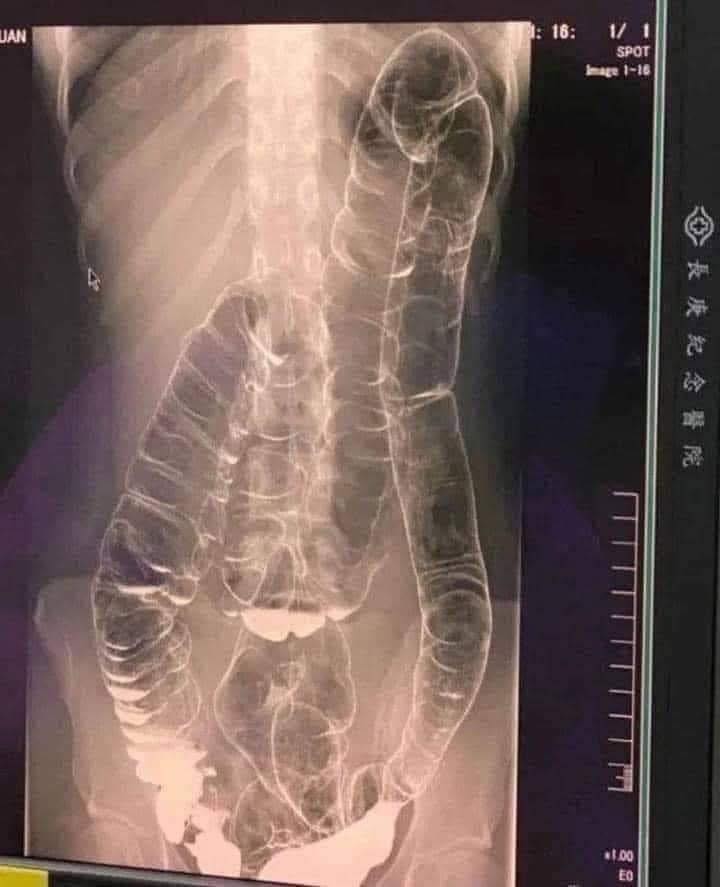
Constipation is something almost everyone experiences occasionally. Usually, it is uncomfortable but harmless and improves with hydration, diet changes, movement, or short-term remedies. However, in rare situations, severe constipation can become part of a dangerous medical emergency called toxic megacolon. This condition causes the colon to become severely swollen, inflamed, and unable to function properly. Without fast medical treatment, toxic megacolon can become life-threatening.
Images showing massively enlarged intestines often circulate online because they are shocking to see. While those images can look frightening, they also serve as important reminders that ongoing digestive problems should never be ignored when serious warning signs appear. Understanding the difference between ordinary constipation and a true emergency can help people seek treatment before complications become severe.
A family friend once ignored worsening stomach pain for several days because she assumed it was simply constipation from stress and poor eating habits. At first, the symptoms seemed manageable, but eventually her abdomen became swollen and painful, and she developed a fever and rapid heartbeat. After finally going to the emergency room, doctors discovered a severe intestinal problem that required immediate hospitalization. That experience became a powerful reminder that digestive symptoms sometimes signal much more than temporary discomfort, especially when the body begins showing signs of infection, inflammation, or severe swelling.
What Is Toxic Megacolon?
Toxic megacolon is a rare but serious condition involving dangerous enlargement of the colon.
The Colon Becomes Inflamed and Dilated
In toxic megacolon:
- The colon swells dramatically
- Normal movement stops
- Gas and stool become trapped
- Pressure builds dangerously
As the colon stretches, blood flow may decrease, increasing the risk of tissue damage or rupture.
It Is a Medical Emergency
Toxic megacolon requires immediate hospital treatment because complications may include:
- Colon perforation
- Sepsis
- Severe dehydration
- Organ failure
Without treatment, the condition can become fatal very quickly.
Fortunately, early medical care greatly improves survival rates.
Toxic Megacolon Is Not Caused by Simply “Holding It”
One of the biggest misconceptions online is that toxic megacolon happens because someone ignored constipation for too long.
Underlying Conditions Usually Cause It
Toxic megacolon almost always develops because of serious inflammation or infection inside the colon.
The most common causes include:
- Ulcerative colitis
- Crohn’s disease
- Severe colon infections
- Certain medications
- Serious bowel inflammation
Ordinary constipation alone rarely causes toxic megacolon.
Severe Inflammation Paralyzes the Colon
During severe inflammation:
- Colon muscles stop functioning properly
- Waste can no longer move normally
- Pressure increases rapidly
That is what creates the dangerous enlargement seen on scans and X-rays.
Common Causes of Toxic Megacolon
Several medical conditions increase the risk significantly.
Inflammatory Bowel Disease (IBD)
Ulcerative colitis is the most common cause.
Crohn’s disease may also trigger severe colon inflammation during flare-ups.
In these conditions:
- The immune system attacks intestinal tissue
- Severe swelling develops
- Colon movement slows dramatically
Severe Infections
Certain infections can inflame the colon severely.
Examples include:
- C. difficile (C. diff)
- Salmonella
- Shigella
- Campylobacter
C. diff becomes especially concerning after antibiotic use.
Certain Medications
Some medications slow bowel movement and may worsen underlying conditions.
High-risk medications include:
- Opioid pain medications
- Anticholinergic drugs
- Excessive anti-diarrheal use
These medications do not directly cause toxic megacolon alone, but they may contribute to worsening symptoms.
Warning Signs That Require Immediate Medical Attention
Severe constipation becomes dangerous when additional symptoms appear.
Abdominal Swelling and Severe Pain
One major warning sign is visible abdominal distension.
The abdomen may become:
- Tight
- Swollen
- Painful
- Extremely tender
Severe bloating combined with pain should never be ignored.
Fever and Rapid Heart Rate
Fever suggests serious inflammation or infection.
A fast heartbeat may indicate:
- Sepsis
- Dehydration
- Shock
- Severe stress on the body
These symptoms require urgent evaluation immediately.
Vomiting and Inability to Pass Stool or Gas
If the bowel stops functioning properly:
- Vomiting may occur
- Gas becomes trapped
- Bowel movements stop completely
This may signal dangerous intestinal blockage or paralysis.
Confusion, Weakness, or Dizziness
Severe illness affects the entire body.
These symptoms may indicate:
- Infection spreading
- Electrolyte imbalance
- Dehydration
- Falling blood pressure
Emergency care becomes critical at this stage.
How Doctors Diagnose Toxic Megacolon
Fast diagnosis helps reduce complications.
Imaging Tests Reveal Colon Enlargement
Doctors usually order:
- Abdominal X-rays
- CT scans
These images show:
- Severe colon dilation
- Trapped gas
- Inflammation
- Signs of perforation
The enlarged colon appearance often looks dramatic on imaging studies.
Blood Tests Help Identify Infection
Bloodwork may show:
- Elevated white blood cells
- Electrolyte imbalance
- Dehydration
- Signs of severe inflammation
Stool testing may also check for dangerous infections like C. difficile.
Treatment Requires Hospital Care
Toxic megacolon cannot be treated at home.
Resting the Bowel
Patients often receive:
- IV fluids
- Nothing by mouth temporarily
- Electrolyte replacement
This helps reduce stress on the colon.
Antibiotics and Medications
Doctors may use:
- IV antibiotics
- Anti-inflammatory medications
- Steroids for IBD flare-ups
Treatment depends on the underlying cause.
Surgery May Become Necessary
If the colon:
- Ruptures
- Stops improving
- Shows signs of severe damage
then emergency surgery may be required.
Sometimes part of the colon must be removed to save the patient’s life.
Preventing Serious Digestive Complications
Most constipation never becomes dangerous, but healthy habits support proper bowel function.
Stay Hydrated
Water helps soften stool and improve movement through the intestines.
Aim for:
- Consistent hydration daily
- Extra fluids during illness or heat
Eat Enough Fiber
Fiber helps maintain regular bowel movements.
Good sources include:
- Fruits
- Vegetables
- Whole grains
- Beans
- Oats
Increase fiber gradually to avoid worsening bloating.
Stay Physically Active
Movement stimulates healthy digestion.
Even simple daily walking helps encourage bowel motility naturally.
Know Your Personal Risk Factors
People with:
- Ulcerative colitis
- Crohn’s disease
- Recent antibiotic use
- Chronic bowel problems
should monitor symptoms closely and follow medical guidance carefully.
Common Myths About Severe Constipation
Many online claims create confusion about digestive emergencies.
Myth: Toxic Megacolon Happens to Anyone Who Gets Constipated
Most constipation remains mild and manageable.
Toxic megacolon is rare and usually linked to severe inflammation or infection.
Myth: Laxatives Always Solve the Problem
Repeated laxative use may temporarily relieve symptoms while hiding worsening disease underneath.
Persistent symptoms deserve medical evaluation.
Myth: Severe Abdominal Swelling Is Normal
Large abdominal distension combined with pain, fever, or vomiting should always be taken seriously.
Frequently Asked Questions
What does toxic megacolon feel like?
Symptoms often include severe abdominal swelling, pain, fever, weakness, and inability to pass stool or gas.
Is toxic megacolon common?
No. It is considered rare but very serious.
Can constipation alone cause toxic megacolon?
Ordinary constipation alone rarely causes it. Most cases involve severe inflammation or infection.
When should someone go to the emergency room?
Seek immediate care for severe constipation with fever, intense pain, swelling, vomiting, or rapid heartbeat.
Is toxic megacolon treatable?
Yes. Early hospital treatment greatly improves outcomes.
Conclusion
Although constipation is common, severe symptoms should never be ignored when they appear alongside abdominal swelling, fever, vomiting, rapid heartbeat, or intense pain. Toxic megacolon is a rare but life-threatening condition that usually develops because of serious inflammation or infection affecting the colon.
The most important step is recognizing when symptoms move beyond ordinary constipation and require urgent medical care. Fast treatment can prevent devastating complications and save lives. Listening carefully to the body, seeking help early, and understanding warning signs make a tremendous difference when dealing with serious digestive emergencies.
More Home Remedies
- Wrinkled Fingers After Water Exposure: What Your Skin May Be Telling You
- Skin Rash With Breathing Trouble? It Could Be a Life-Threatening Allergic Reaction
- I Thought It Was a Piece of Trash on the Bathroom Floor—Until It Moved
- If You Are Getting White Pimples on Your Lips or Intimate Area, Here’s What They Could Mean