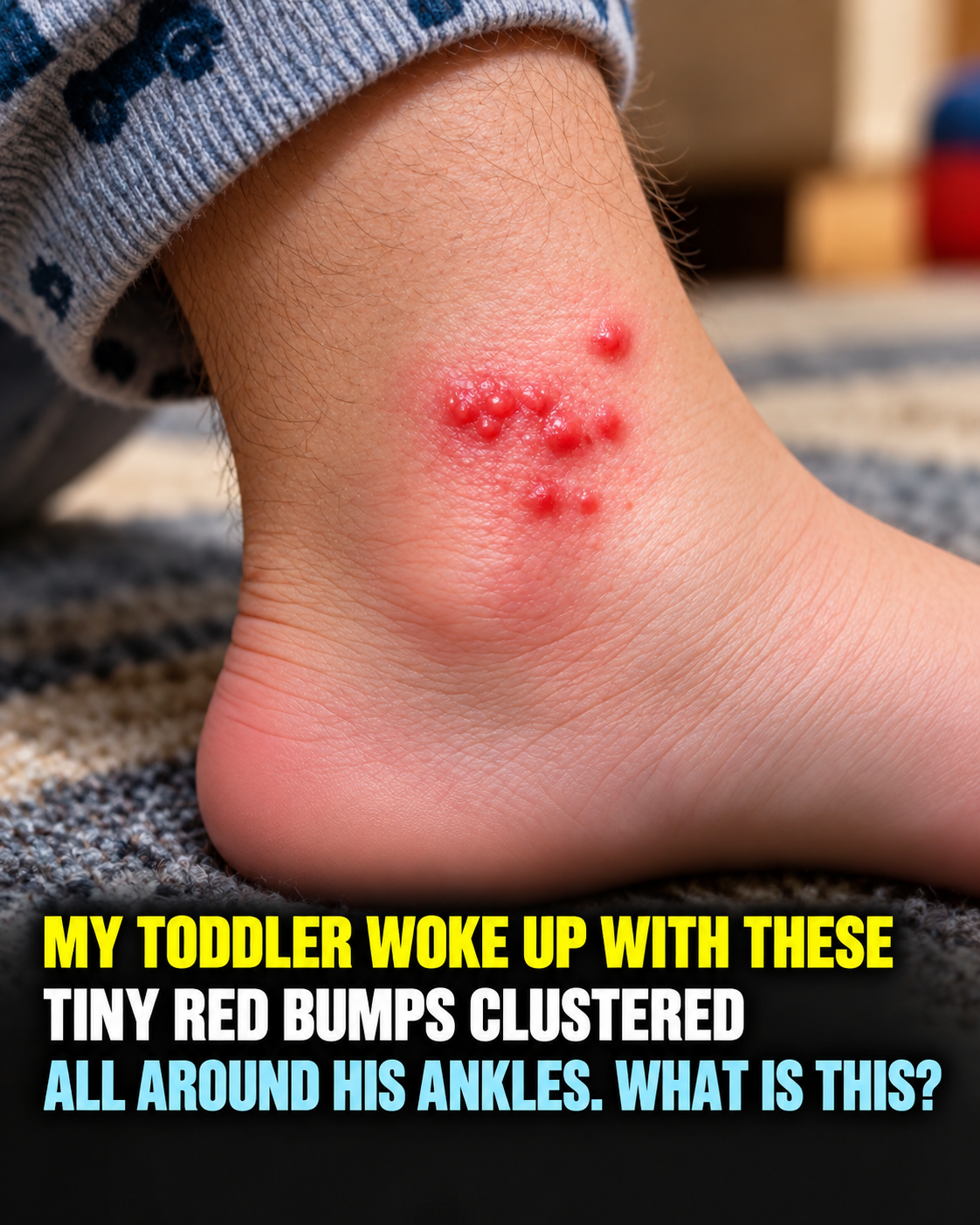
Tiny Red Bumps Around a Child’s Ankles can catch a parent’s attention quickly, especially when the spots appear suddenly or seem intensely itchy. In many cases, insect bites provide a simple explanation. Fleas often bite lower legs and ankles, while mosquitoes, bed bugs, contact dermatitis, eczema, and other skin reactions can create similar-looking bumps.
The appearance alone usually cannot confirm the cause. Instead, the location, pattern, itchiness, recent exposures, presence of pets, and other symptoms provide useful clues. The CDC notes that many insect and arthropod bites appear as small, itchy pink-to-red bumps, while flea and bed bug bites can occur in clusters.
Most uncomplicated insect bites improve with basic care. However, a spreading rash, severe swelling, fever, worsening pain, warmth, drainage, or signs of a serious allergic reaction deserve medical attention.
I remember noticing several tiny bumps near a child’s sock line after an afternoon spent playing on the floor with the family dog. At first, nobody knew whether the marks came from grass, detergent, mosquitoes, or something else. However, the ankle location and several small itchy spots made us look more closely at the pet and the surrounding carpet. That simple observation helped us focus on the environment instead of treating the skin alone. The experience taught me that a rash often makes more sense when you consider where a child has been, what touched the skin, and whether other family members or pets show clues too.
Why Tiny Red Bumps Around a Child’s Ankles Often Point to Insect Bites
Flea Bites Commonly Affect the Lower Legs
Tiny Red Bumps Around a Child’s Ankles often raise suspicion of flea bites because fleas commonly reach the lower legs first.
A child walking or playing near an infested carpet, pet bed, upholstered surface, or outdoor area can expose the ankles and lower legs. Flea bites can appear as small, itchy red bumps, and CDC guidance notes that flea bites, like other arthropod bites, often occur as clusters of discrete red papules on exposed skin.
The bumps may appear close together rather than as one isolated mark.
Additionally, socks can leave a narrow area of exposed skin around the ankle. That location can make clustered bites especially noticeable.
However, location alone does not prove that fleas caused the rash.
Parents should look for environmental clues too.
For example, check whether a dog or cat scratches more than usual.
Look at pet bedding.
Inspect carpeting, upholstery, and places where pets frequently rest.
If several family members develop itchy bumps around the lower legs, environmental exposure becomes more plausible.
Still, avoid diagnosing flea bites from appearance alone.
Many rashes can look similar.
The CDC notes that insect bites generally trigger itchy skin reactions because the immune system responds to substances introduced during feeding.
Therefore, one child may develop obvious raised bumps while another person exposed to the same insects develops a much milder reaction.
Scratching can also change the appearance.
A child who repeatedly scratches may create scabs, raw areas, or crusting that make the original bite pattern harder to recognize.
Consequently, treating the itch and discouraging scratching can help protect the skin while you investigate the cause.
Pattern, Timing, and Exposure Provide Better Clues Than Appearance Alone
Tiny Red Bumps Around a Child’s Ankles become easier to investigate when parents think beyond the color of the rash.
Start with timing.
Did the bumps appear after visiting a home with pets?
Did the child play on a carpeted floor?
Was there recent time outdoors?
Did the family recently bring home a pet or notice fleas?
Next, consider distribution.
Flea bites frequently involve exposed lower legs and can appear in groups. Bed bug bites, meanwhile, can appear randomly or in a line and often develop on exposed skin after sleeping.
Mosquito bites usually appear as individual itchy swellings and can affect any exposed area.
The reaction can vary from person to person.
Therefore, comparing a child’s skin with online photographs rarely provides certainty.
Instead, use photographs only as general references.
The child’s recent activities often provide stronger clues.
Likewise, ask whether the bumps appeared overnight or during the day.
A rash discovered immediately after outdoor play may suggest a different exposure than one that repeatedly appears after sleep.
Also check whether the bumps stay limited to the ankles.
If new spots develop on the arms, trunk, neck, or face, broaden the list of possibilities.
Finally, look at the child’s overall health.
A child who feels completely well and has a few itchy bumps presents a different situation from a child who develops fever, significant swelling, increasing pain, or a rapidly spreading rash.
Those surrounding details help determine what deserves home observation and what deserves medical evaluation.
Other Conditions That Can Resemble Flea Bites
Mosquitoes and Bed Bugs Can Cause Similar Itchy Bumps
Tiny Red Bumps Around a Child’s Ankles do not automatically mean fleas.
Mosquitoes can create red, itchy bumps as well.
Their bites often occur on exposed areas such as the arms, legs, shoulders, and face. Depending on the child’s sensitivity, the swelling may look larger than a typical flea bite.
However, bite size alone cannot reliably identify the insect.
Bed bugs create another possibility.
CDC guidance explains that bed bug bites may cause slightly swollen, red, itchy areas. They can appear randomly or in a straight line, and marks may not become visible until one or several days after the bite occurred.
Because bed bugs feed while people sleep, bites commonly involve exposed skin.
Yet the presence of ankle bumps does not prove that a home has bed bugs.
Parents should look for environmental evidence before reaching that conclusion.
Repeated bites after sleeping, visible bugs, shed skins, dark spotting around mattress seams, or other signs may justify a more careful inspection.
Likewise, flea suspicions should include inspection of pets and pet sleeping areas.
The main lesson remains simple.
Skin reactions overlap.
Fleas, mosquitoes, and bed bugs can all create itchy red bumps.
Therefore, the environment and exposure history often provide the information needed to narrow the possibilities.
If uncertainty continues, a pediatrician or dermatologist can examine the rash in context.
That approach works much better than trying to identify the cause from one close-up photograph.
Contact Dermatitis and Eczema Can Mimic Insect Bites
Not every cluster of itchy bumps comes from an insect.
Contact dermatitis can create an itchy rash when the skin reacts to something that touched it.
Possible triggers include soaps, detergents, fragrances, plants, fabrics, footwear materials, adhesives, and personal-care products. The American Academy of Dermatology notes that contact dermatitis can produce itchy bumps or blisters and can affect areas such as the tops of the feet, depending on the exposure.
Therefore, a rash concentrated around a sock or shoe line may sometimes reflect irritation or allergy rather than bites.
Consider whether the child recently wore new socks or shoes.
Think about a new laundry detergent.
Ask whether sunscreen, lotion, insect repellent, grass, or another substance touched the area.
The shape of the rash may sometimes follow the area of contact.
Eczema provides another possibility.
Children commonly develop eczema, which causes very itchy skin and can produce raised bumps after scratching. The AAD notes that scratching can damage the skin and sometimes lead to oozing or crusting.
However, eczema often follows a recurring pattern rather than appearing as a few isolated bites after a specific exposure.
Because several conditions overlap visually, persistent or confusing rashes deserve professional assessment.
A clinician can consider the pattern, history, itch level, environmental exposure, and other symptoms together.
That broader approach reduces the chance of treating the wrong problem.
How to Care for Mild Bites and Reduce Future Exposure
Calm the Itch and Protect the Skin From Scratching
Most uncomplicated insect bites cause temporary itching, redness, or mild swelling.
The American Academy of Dermatology states that many common bug bites can be managed at home with measures that reduce itching, although treatment should match the child’s age and medical history.
For children, avoid automatically applying medications without checking age-appropriate directions or asking a healthcare professional when uncertain.
A cool compress can provide simple relief.
Place a clean, cool cloth over the itchy area for short periods.
Also keep the child’s fingernails trimmed.
Scratching can break the skin.
Once the skin barrier opens, bacteria can enter and cause a secondary infection. CDC guidance specifically notes that repeated scratching of arthropod bites can damage the skin and increase the risk of bacterial infection.
Therefore, watch for worsening redness, increasing tenderness, warmth, crusting, or drainage.
Keep the skin gently clean.
Avoid harsh scrubbing because friction can make irritation worse.
Likewise, avoid repeatedly applying several creams at once.
Using multiple new products can complicate the picture and may even trigger additional irritation.
If a child has significant itching, a pediatrician or pharmacist can help determine whether an age-appropriate topical treatment or antihistamine makes sense.
Most importantly, treat the child rather than only the appearance of the rash.
If the child feels well and the bumps gradually improve, continued observation may be reasonable.
If symptoms worsen, spread, or become painful, seek professional advice.
Address the Environment if Fleas Seem Likely
When Tiny Red Bumps Around a Child’s Ankles appear consistent with possible flea exposure, skin care alone may not solve the problem.
You also need to investigate the environment.
Start with pets.
Check dogs and cats for flea activity and talk with a veterinarian about appropriate flea prevention or treatment.
Do not use random household pesticides directly on an animal.
Instead, use products specifically approved for that species and follow veterinary guidance.
Next, clean the areas where pets spend time.
Wash pet bedding when appropriate.
Vacuum carpets, rugs, upholstered furniture, baseboards, and cracks where flea eggs or immature stages may remain.
Regular cleaning helps reduce environmental sources of repeated exposure.
Also wash the child’s bedding and frequently used blankets if you suspect insects in the sleeping environment.
However, do not assume every itchy ankle rash means the entire home needs pesticide treatment.
First, look for evidence.
If bites continue despite careful cleaning and pet treatment, consider professional pest identification.
Similarly, if the pattern occurs mainly after sleep and affects multiple exposed body areas, consider whether bed bugs or another nighttime exposure deserves investigation.
The goal involves finding the source instead of repeatedly treating new bumps.
Once the environmental trigger disappears, new bites should stop.
Existing bumps may still take several days to settle because the skin reaction does not vanish immediately after the insects disappear.
Therefore, improvement in new-bite frequency often provides a more useful clue than expecting existing marks to disappear overnight.
When Tiny Red Bumps Need Medical Attention
Fever, Infection, and Rapidly Worsening Skin Changes Matter
Tiny Red Bumps Around a Child’s Ankles usually do not require emergency treatment when the child otherwise feels well.
However, certain changes deserve medical advice.
Contact a healthcare professional if the rash spreads rapidly, becomes increasingly painful, develops significant warmth, produces pus or drainage, or continues worsening instead of improving.
Scratched bites can develop secondary bacterial infections, so increasing redness and pain deserve attention.
Fever also changes the picture.
A child with a new rash and fever should receive more careful assessment, particularly when the child appears ill or the fever meets age-specific thresholds. MedlinePlus advises prompt medical attention for very young infants with fever and for children who develop fever with a new rash or other concerning symptoms.
Do not assume that a fever simply comes from flea bites.
Another infection or illness may be occurring at the same time.
Likewise, pus, increasing warmth, or spreading redness can suggest infection after scratching.
Parents should also seek advice when the rash persists despite removing suspected triggers.
A clinician may identify eczema, contact dermatitis, scabies, another insect exposure, or a different skin condition.
Because children’s rashes can look similar, persistence provides an important reason to reassess the original assumption.
A rash that fails to behave like simple bites deserves a fresh look.
Severe Allergic Symptoms Require Immediate Help
Although most insect bites remain mild, severe allergic reactions can occur.
Seek emergency help when a child develops difficulty breathing, throat tightness, trouble swallowing, swelling of the face or mouth, marked weakness, fainting, or other symptoms of a severe body-wide reaction after a bite or sting.
Do not wait to see whether severe breathing symptoms improve on their own.
Similarly, rapidly developing facial or tongue swelling requires urgent action.
Fortunately, these reactions remain very different from a few isolated itchy ankle bumps.
That distinction can help parents remain appropriately cautious without becoming unnecessarily frightened.
Most children with several small insect bites stay active, eat normally, and feel well apart from itching.
In those cases, basic skin care and environmental investigation often provide a reasonable starting point.
However, a child who appears ill, develops extensive swelling, has trouble breathing, or experiences a rapidly worsening rash needs a different response.
Trust significant changes in behavior too.
If a young child seems unusually sleepy, difficult to wake, confused, or seriously unwell, seek medical care even if the skin findings themselves look minor.
The rash represents only one part of the child’s condition.
Overall health always matters more than the number of bumps.
Frequently Asked Questions
Are tiny red bumps around a child’s ankles usually flea bites?
They can be. Flea bites often occur on exposed lower legs and may appear in clusters. However, mosquitoes, bed bugs, contact dermatitis, eczema, and other skin conditions can look similar.
Why do flea bites often seem to appear near sock lines?
The ankles and lower legs are close to floors, carpets, pet bedding, and other places where flea exposure can occur. Exposed skin around clothing edges may therefore become an easy target.
How can I tell flea bites from bed bug bites?
You usually cannot confirm the difference by skin appearance alone. Bed bug bites may occur randomly or in lines on exposed skin after sleeping, while flea bites frequently involve lower legs. Environmental evidence provides important clues.
Should I take my child to a doctor for insect bites?
Seek medical advice if the rash spreads rapidly, becomes increasingly painful or warm, develops drainage, appears with fever, or continues worsening. Seek emergency care for breathing difficulty, facial or mouth swelling, throat tightness, or other severe allergic symptoms.
What should I do if I suspect fleas in my home?
Check pets, contact a veterinarian about appropriate flea control, wash pet bedding, and vacuum carpets, furniture, baseboards, and pet resting areas thoroughly. Continue monitoring for new bites while addressing the suspected environmental source.
Conclusion
Tiny Red Bumps Around a Child’s Ankles can have several explanations, and the location often provides only the first clue.
Flea bites represent one common possibility, especially when a child has been around pets, carpeting, pet bedding, or another environment where fleas may be present. Flea and other arthropod bites can produce small, itchy red bumps and often occur in clusters.
However, fleas do not explain every ankle rash.
Mosquitoes can cause similar itchy swellings.
Bed bug bites may appear randomly or in lines on exposed skin after sleeping.
Meanwhile, contact dermatitis can develop after skin touches an irritant or allergen, while eczema can also create intensely itchy bumps in children.
Therefore, parents should consider the whole pattern.
Ask when the bumps appeared.
Look at where they occur.
Think about outdoor activity, pets, sleeping environments, new shoes, socks, laundry products, and skin-care products.
Then watch the child’s overall condition.
Most uncomplicated insect bites improve with simple care.
However, repeated scratching can damage the skin and increase infection risk.
Seek medical advice when redness spreads, pain increases, the area becomes warm, drainage appears, fever develops, or the rash continues worsening.
And seek emergency help for severe allergic symptoms such as difficulty breathing, throat tightness, or swelling of the face or mouth.
In many cases, Tiny Red Bumps Around a Child’s Ankles turn out to be manageable.
The most useful approach combines calm observation, gentle skin care, environmental investigation, and attention to warning signs.
That way, parents can address a likely insect problem without overlooking another skin condition that deserves professional care.
More Home Remedies
- Wrinkled Fingers After Water Exposure: What Your Skin May Be Telling You
- Skin Rash With Breathing Trouble? It Could Be a Life-Threatening Allergic Reaction
- I Thought It Was a Piece of Trash on the Bathroom Floor—Until It Moved
- If You Are Getting White Pimples on Your Lips or Intimate Area, Here’s What They Could Mean