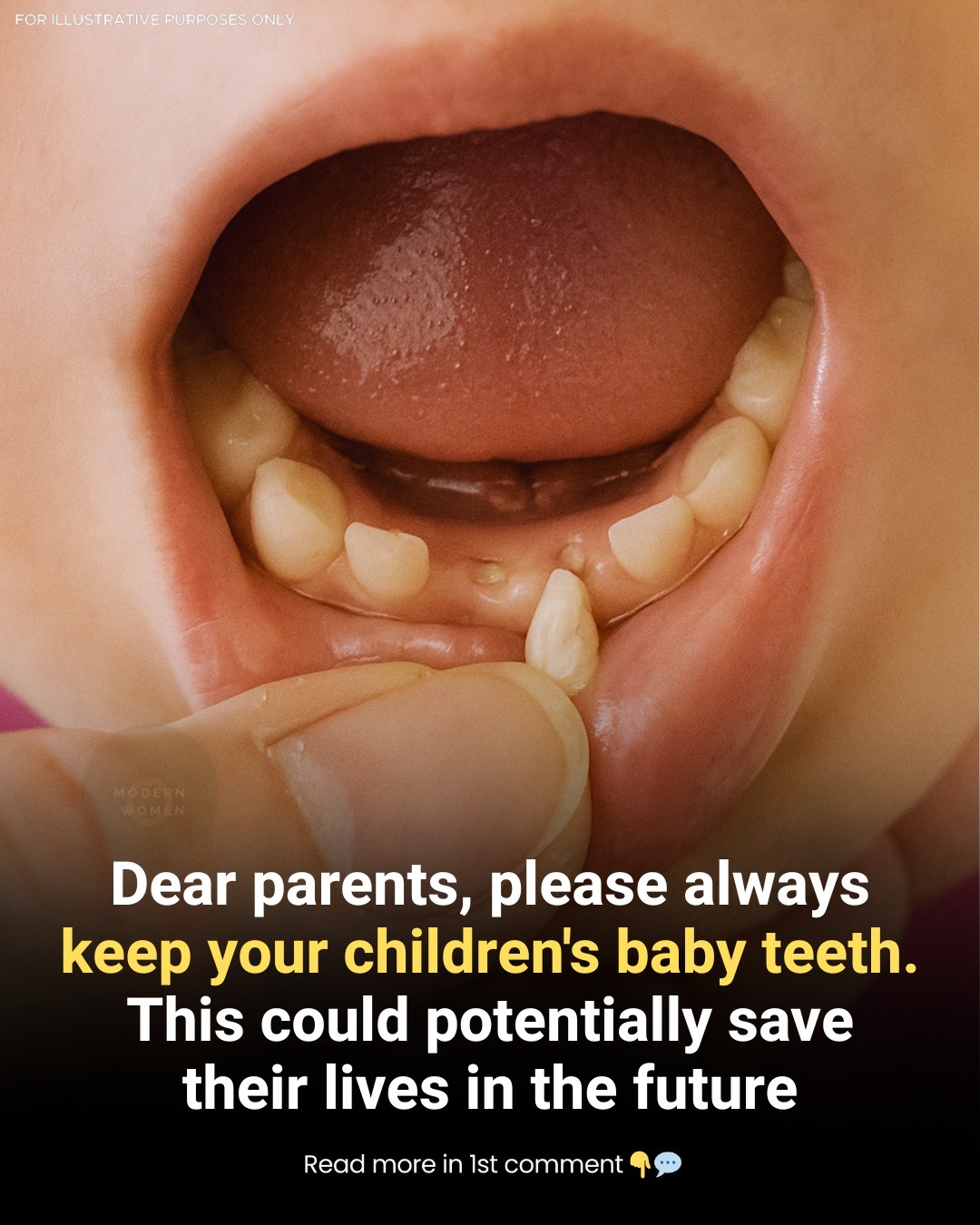
For generations, losing a baby tooth has been a simple childhood milestone celebrated with tiny pillows, tooth fairy visits, and excited smiles. Yet behind those tiny teeth lies something scientists now view with growing fascination: powerful stem cells that may someday help repair damaged tissue, treat disease, and support regenerative medicine.
While the science is still developing, researchers continue exploring how stem cells found inside baby teeth could play a role in future medical treatments. As a result, many parents are beginning to wonder whether those tiny lost teeth might hold far more value than they ever imagined.
A mother once saved every baby tooth her son lost simply because she enjoyed keeping childhood memories tucked away in a small keepsake box. Years later, after reading about dental stem cell research, she realized those tiny teeth contained living tissue scientists were actively studying for future therapies. Although she never expected those childhood keepsakes to connect to modern medicine, the discovery completely changed how she viewed something as ordinary as a lost tooth. Suddenly, baby teeth felt less like discarded milestones and more like small pieces of scientific possibility.
What Makes Baby Teeth Scientifically Important?
The Hidden Stem Cells Inside Dental Pulp
Inside every healthy baby tooth sits a soft tissue called dental pulp. This pulp contains mesenchymal stem cells, often shortened to MSCs.
These stem cells are considered “multipotent,” meaning they can potentially develop into several different types of cells within the body.
Researchers have studied dental stem cells for their ability to potentially form:
- Bone tissue
- Cartilage
- Nerve tissue
- Muscle cells
- Fat cells
Unlike embryonic stem cells, stem cells collected from baby teeth avoid major ethical controversies because the teeth naturally fall out during childhood.
Additionally, collecting dental stem cells is non-invasive. No surgery or painful medical procedure is required if healthy baby teeth are preserved properly.
Because children’s stem cells are biologically younger, scientists believe they may possess stronger regenerative potential compared to older adult cells.
Although research remains ongoing, this has made dental stem cells an increasingly exciting area within regenerative medicine.
Why Researchers Are Interested in Dental Stem Cells
Stem cells attract scientific interest because they may help repair damaged tissue and support healing processes within the body.
Dental stem cells appear especially promising because they are relatively easy to collect and store.
Scientists are currently studying whether these cells could someday contribute to treatments involving:
- Tissue regeneration
- Neurological repair
- Bone healing
- Autoimmune diseases
- Diabetes research
Researchers are also investigating whether dental stem cells could support nerve regeneration in spinal cord injuries or degenerative neurological conditions.
However, it is important to understand that most of these applications remain experimental and are not currently standard medical treatments.
While the possibilities sound exciting, much of the science is still in research and clinical trial phases.
The Potential Future of Stem Cell Therapies
Regenerative Medicine and Tissue Repair
One of the most promising areas of research involves regenerative medicine. This field focuses on helping the body repair or replace damaged tissues naturally.
Scientists are exploring whether stem cells from baby teeth could someday assist with:
- Repairing bone injuries
- Regenerating damaged tissues
- Supporting facial reconstruction
- Healing certain organ damage
Researchers have also studied whether stem cells may help regenerate dental tissue itself, potentially allowing future bioengineered tooth repair.
Heart tissue regeneration after heart attacks is another area receiving attention in early laboratory studies.
Because stem cells can adapt into multiple tissue types, scientists hope they may eventually improve healing in ways traditional medicine currently cannot fully achieve.
Still, experts emphasize that most therapies remain under investigation and require far more research before becoming widely available.
Neurological and Autoimmune Research
Dental stem cells have also attracted attention in neurological research because of their potential role in nerve regeneration.
Early studies are examining whether stem cells may someday support treatments involving:
- Parkinson’s disease
- Alzheimer’s disease
- Spinal cord injuries
- Nerve damage
Scientists are particularly interested in how stem cells communicate with damaged tissue and reduce inflammation.
Autoimmune disorders represent another area of ongoing research. Mesenchymal stem cells possess anti-inflammatory properties that researchers believe may eventually help regulate certain immune responses.
Conditions currently being studied include:
- Multiple sclerosis
- Lupus
- Crohn’s disease
Although these possibilities sound promising, experts caution against viewing stem cell banking as guaranteed medical protection. Many treatments discussed online remain experimental rather than approved therapies.
Should Parents Store Their Child’s Baby Teeth?
Understanding Dental Stem Cell Banking
Private companies now offer dental stem cell banking services designed to preserve healthy baby teeth for possible future use.
The process usually involves:
- Collecting a healthy baby tooth
- Sending it to a specialized laboratory
- Extracting stem cells from the dental pulp
- Cryogenically freezing the cells for long-term storage
Timing matters greatly because stem cells remain viable only if the tooth is preserved quickly after falling out.
Most companies recommend storing:
- Healthy teeth
- Teeth with intact roots
- Non-decayed teeth
- Recently lost teeth
Teeth damaged by infection or severe decay are often unsuitable for stem cell preservation.
Because collection is painless and non-invasive, many parents view dental banking as a form of biological insurance for the future.
The Benefits and Limitations
Stem cell banking offers both potential advantages and important limitations.
Possible benefits include:
- Easy, non-invasive collection
- Younger stem cells with strong regenerative potential
- Future scientific possibilities
- Long-term storage options
However, there are also major considerations:
- High cost
- No guaranteed future treatments
- Ongoing annual storage fees
- Limited scientific certainty
Initial banking fees often range from $1,000 to $2,000, with yearly storage costs added afterward.
Most importantly, many therapies discussed in marketing materials are still experimental and not FDA-approved treatments.
Therefore, parents should approach stem cell banking with realistic expectations rather than viewing it as guaranteed future medical protection.
What Parents Should Know Before Banking Teeth
Timing and Tooth Selection Matter
Not every baby tooth qualifies for stem cell preservation. Healthy teeth with living pulp tissue provide the best chance of successful storage.
Teeth that naturally loosen while still maintaining intact roots usually work best.
Once the tooth falls out, rapid handling becomes critical because living cells begin deteriorating quickly outside the body.
Many preservation companies require the tooth to arrive within 24 to 48 hours after collection.
Proper storage kits and transportation materials are often provided to help maintain cell viability during shipping.
Parents interested in banking should ideally research options before the child begins losing teeth.
Why Medical Guidance Is Important
Because stem cell preservation involves medical and financial decisions, discussing options with healthcare professionals can help families make informed choices.
Pediatric dentists often help determine:
- Whether a tooth qualifies
- Proper handling methods
- Timing considerations
- Preservation instructions
Families should also understand the difference between current scientific evidence and future possibilities still being researched.
Reliable information matters because online discussions sometimes exaggerate what stem cell therapies can currently accomplish.
At present, baby tooth stem cells represent exciting scientific potential rather than established cures.
Frequently Asked Questions
Do baby teeth really contain stem cells?
Yes. Healthy baby teeth contain stem cells within the dental pulp tissue.
Are stem cell treatments from baby teeth currently approved?
Most potential therapies remain experimental and are still being researched.
How are baby tooth stem cells collected?
The stem cells are extracted from the pulp inside healthy baby teeth after collection.
Is dental stem cell banking expensive?
Yes. Initial preservation and ongoing storage costs can be significant.
Can all baby teeth be banked?
No. Teeth that are decayed, damaged, or lacking healthy pulp tissue may not qualify.
Conclusion
Baby teeth may seem small and temporary, yet inside them lies remarkable scientific potential. Researchers continue studying how dental stem cells could someday support regenerative medicine, tissue repair, neurological treatments, and immune-related therapies.
Although many applications remain experimental, the field continues advancing rapidly, giving scientists new insights into how the body may heal itself in the future.
For parents, deciding whether to preserve baby teeth through stem cell banking remains a personal choice involving both hope and practicality. While no guarantees exist, understanding the science behind these tiny teeth transforms them from simple childhood keepsakes into fascinating symbols of future medical possibility.
More Home Remedies
- Wrinkled Fingers After Water Exposure: What Your Skin May Be Telling You
- Skin Rash With Breathing Trouble? It Could Be a Life-Threatening Allergic Reaction
- I Thought It Was a Piece of Trash on the Bathroom Floor—Until It Moved
- If You Are Getting White Pimples on Your Lips or Intimate Area, Here’s What They Could Mean