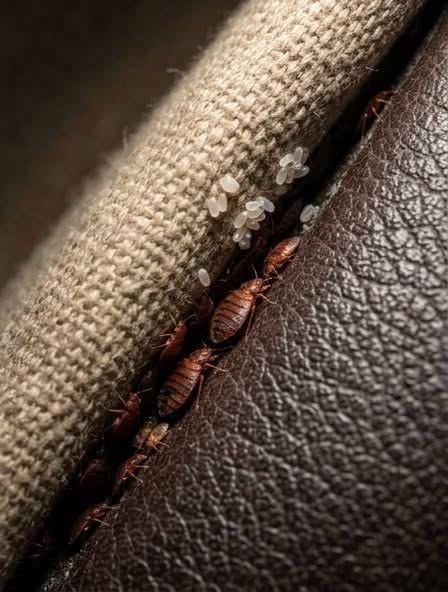
Finding a tiny bug crawling across your sofa can immediately raise one alarming question:
“Is that a bed bug?”
Fortunately, not every small insect found on upholstered furniture is a bed bug. Sofas can attract—or simply provide temporary shelter for—several types of household insects, including carpet beetles, fleas, ants, and other occasional visitors.
The key is to identify the insect before deciding how to treat the problem.
Here are the most useful clues to look for.
1. Bed Bugs
Because bed bugs can hide in upholstered furniture, they’re often the first thing people worry about.
Adult bed bugs are typically:
- Small and visible to the naked eye
- Flat and oval when unfed
- Reddish-brown
- Wingless
They tend to hide in narrow protected spaces rather than remaining exposed.
On a sofa, inspect areas such as:
- Cushion seams
- Zippers
- Piping
- Under cushions
- Fabric folds
- Joints in the frame
- Cracks around legs and hardware
Finding one suspicious insect isn’t enough to confidently identify an infestation.
Signs That Can Accompany Bed Bugs
The insect itself provides the strongest evidence, but other clues can help.
These may include dark spotting around hiding places, pale shed skins, eggs, or live insects concealed in seams and cracks.
Skin marks alone are not a reliable way to diagnose bed bugs.
Many different things can cause itchy or irritated skin, and reactions to insect bites vary considerably between people.
2. Carpet Beetles
Carpet beetles are another common household insect that can appear around sofas.
Adults are small beetles and may have mottled patterns.
Their larvae look quite different. They are generally elongated and may appear hairy or bristly.
The larvae can feed on certain natural materials, including:
- Wool
- Feathers
- Fur
- Hair
- Natural-fiber textiles
They may therefore appear around upholstered furniture, carpets, closets, and stored fabrics.
Carpet beetles don’t feed on human blood.
However, contact with larval hairs can irritate some people’s skin, which is one reason they can occasionally be mistaken for bed bugs.
3. Fleas
If you have cats or dogs—or recently moved into a home where animals lived—fleas are another possibility.
Fleas are very small, dark insects with powerful legs adapted for jumping.
That movement provides an important clue.
If the insect suddenly jumps rather than simply crawling, a flea becomes more plausible.
Fleas can live around pet bedding, rugs, cracks, and upholstered furniture while using animals as hosts.
4. Booklice
Despite their name, booklice aren’t true lice that live on people.
They’re extremely small insects that often thrive in humid environments where microscopic molds and organic material are available.
They may appear around:
- Damp rooms
- Windows
- Books
- Cardboard
- Furniture
- Areas with persistent moisture
If you’re seeing many extremely tiny pale insects, humidity may be part of the problem.
5. Ants
Occasionally the mystery is much simpler.
Food crumbs trapped underneath cushions can attract ants.
Remove the cushions and inspect underneath them, particularly if people regularly eat while sitting on the sofa.
Vacuuming crumbs and eliminating the food source may solve the problem without requiring treatment of the furniture itself.
6. Other Occasional Visitors
Small beetles and other insects sometimes wander indoors accidentally.
Finding one insect on a sofa doesn’t automatically mean that species is living or reproducing inside the furniture.
That’s why identification should come before treatment.
Spraying an unidentified insect with random pesticides may expose people and pets to chemicals without addressing the actual source of the problem.
How to Inspect Your Sofa
If you’re concerned, perform a careful visual inspection.
Step 1: Use a Flashlight
Good lighting matters.
Use a flashlight to examine seams, folds, and darker areas of the furniture.
Step 2: Remove the Cushions
Check both sides of each cushion.
Pay particular attention to seams, zippers, piping, labels, and fabric folds.
Step 3: Inspect the Sofa Frame
Look between cushions and along the internal frame.
For bed bugs in particular, tiny cracks and joints can provide hiding places.
Step 4: Look Underneath
If you can do so safely, inspect the underside without damaging or overturning heavy furniture unsafely.
Check fabric edges, staples, legs, and joints.
Step 5: Capture a Specimen
If you find a suspicious bug, don’t crush it immediately if identification is important.
A clear close-up photograph can help.
If practical, an adult can capture the insect safely in a small sealed container or bag so that a qualified pest professional can identify it.
Don’t Identify Bed Bugs From Bites Alone
This deserves repeating because it’s one of the most common mistakes.
Waking up with itchy marks doesn’t prove that you have bed bugs.
Skin irritation can have many causes.
Likewise, finding an insect near the sofa doesn’t prove that it caused a skin reaction.
Reliable identification of the insect or other strong physical evidence is much more useful.
What to Do If You Suspect Bed Bugs
Avoid immediately spraying random household insecticides around your sofa.
Bed bugs can be difficult to eliminate, and inappropriate pesticide use may expose occupants unnecessarily or complicate treatment.
Instead:
Document what you found.
Take clear photographs or preserve a specimen when practical.
Inspect nearby areas.
If people regularly sleep or nap on the sofa, check surrounding cracks and furniture as well.
Reduce clutter.
This makes inspection easier and removes potential hiding places.
Vacuum carefully.
Vacuuming can physically remove some insects and debris, although it generally isn’t enough by itself to eliminate an established bed bug infestation.
Dispose of vacuum contents appropriately afterward.
Get professional identification.
If evidence points toward bed bugs, a qualified pest-management professional can confirm the problem and recommend an appropriate treatment strategy.
Be Careful With DIY “Bed Bug Remedies”
The internet contains countless home remedies involving essential oils, rubbing alcohol, baking soda, vinegar, and other household products.
Many are unreliable.
Some can also create safety hazards when sprayed extensively around furniture.
Avoid applying flammable substances or unapproved pesticide mixtures to sofas, mattresses, or sleeping areas.
Don’t Throw Your Sofa Away Immediately
Finding a suspicious insect doesn’t automatically mean your furniture has to go.
Even confirmed bed bug infestations don’t necessarily require every piece of furniture to be discarded.
Professional treatment strategies may allow furniture to be treated.
Throwing infested furniture away incorrectly can also spread insects elsewhere.
Get the problem identified first.
If It’s Carpet Beetles Instead
The strategy is different.
Thorough vacuuming is particularly important around:
- Furniture edges
- Under cushions
- Baseboards
- Rugs
- Closets
- Pet-hair accumulation
You may also need to identify natural-fiber materials or other organic sources supporting the larvae.
Again, correctly identifying the insect makes treatment much easier.
If It’s Fleas
If fleas are confirmed and you have pets, treating only the sofa usually won’t solve the problem.
The animal and the home environment may both need appropriate management.
Consult a veterinarian about safe flea prevention and treatment for pets rather than using random household products on an animal.
When to Call a Pest Professional
Professional help is particularly useful when:
- You repeatedly find suspicious insects
- You find multiple bed-bug-like specimens
- The insects appear in several rooms
- You can’t identify what you’re seeing
- DIY cleaning hasn’t reduced the problem
- You’re considering pesticide treatment
Correct identification can prevent you from spending money treating the wrong pest.
The Bottom Line
A tiny bug on your sofa doesn’t automatically mean you have bed bugs.
Bed bugs, carpet beetles, fleas, booklice, ants, and occasional outdoor insects can all appear around furniture.
Instead of guessing based on fear—or on a blurry internet photo—look at the insect’s size, shape, color, movement, and the physical evidence around your furniture.
Inspect seams and hidden areas carefully, take a clear close-up photograph, and have the insect professionally identified if necessary.
When it comes to household bugs, knowing exactly what you’re dealing with is usually the most important first step.
More Blog
- Drinking Water on an Empty Stomach — What Science Actually Supports (No Hype, Just Facts)
- Waking Up Between 3 and 5 AM? It Might Be Your Soul Trying to Talk to You
- What a “Bleach” Patch on Your Underwear Really Means — And Why It’s Actually a Good Sign
- This Drink May Weaken Your Bones From The Inside — But Everyone Drinks It Anyway