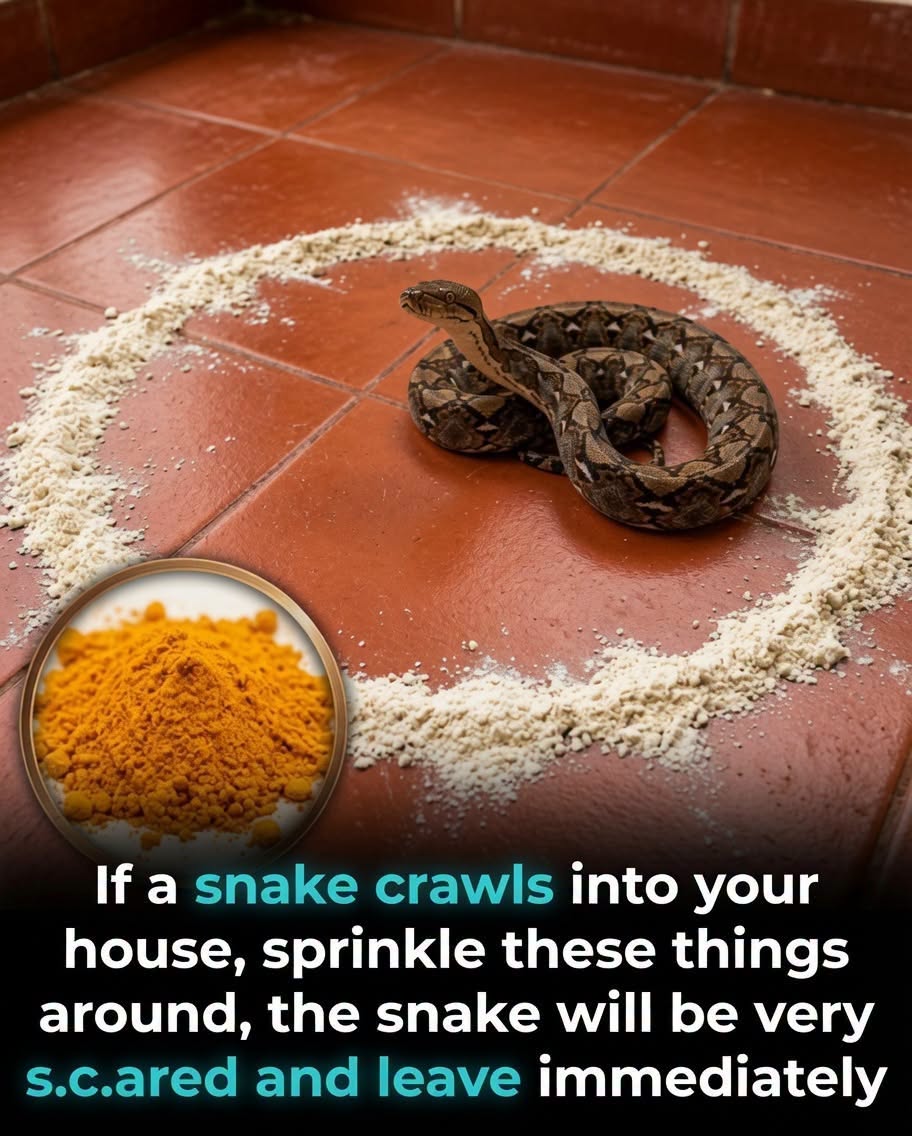
These common substances may help keep snakes away if they enter your house is a claim that appears frequently in viral posts, usually alongside photos of turmeric, sulfur, salt, mothballs, or other powders. However, dependable snake control does not come from drawing a line of kitchen ingredients around a room or scattering strong-smelling substances around a yard.
Instead, the safest approach focuses on distance, professional removal when needed, sealing entry points, and reducing the food and shelter that may attract snakes. Extension guidance also notes that tested home remedies such as sulfur, lime, mothballs, cayenne pepper spray, and several other materials failed to repel snakes reliably.
If a snake appears inside a home, avoid turning the situation into a confrontation. Keep children and pets away, do not try to grab or kill the snake, and contact animal control or an appropriate wildlife professional when removal becomes necessary. Current CDC guidance specifically recommends calling animal control for a snake inside the home rather than attempting to trap or remove it yourself.
I once watched a neighbor react to a snake near a garage by immediately reaching for a container of household powder. The idea seemed logical because the smell was strong, and several social-media posts claimed snakes would avoid it. However, the snake simply moved toward a pile of stored boxes instead. That experience made the bigger problem obvious. The open garage, clutter, and possible rodents offered far more useful clues than the powder did. After the area was cleared and gaps around the building were repaired, the focus shifted from chasing individual snakes to making the property less inviting in the first place.
Understanding Why Snakes Enter Homes
Food, Shelter, and Openings Matter More Than Household Powders
A snake usually does not enter a home because it wants contact with people. Instead, it may follow prey, search for shelter, or take advantage of an opening in the structure.
Rodents can play an especially important role. Snakes feed on many small animals, and a property with mice or rats may provide a dependable food source. The CDC recommends preventing rodent infestations and removing brush or log piles as practical ways to reduce snake encounters around homes.
Therefore, a snake sighting can sometimes point to a broader property-management issue.
Cracks in foundations, damaged screens, openings around utility lines, poorly sealed doors, and gaps around garages can create entry routes. Penn State Extension notes that snakes may enter through torn screens, open basement windows, foundation cracks, and openings around wires or pipes.
Once inside, a snake may move toward dark or protected spaces.
For example, it may hide beneath furniture, appliances, stored materials, cabinets, boxes, or equipment. Because of that, repeatedly disturbing the area can make the animal harder to locate.
A powder on the floor does not fix these entry points.
Likewise, a strong smell does not remove rodents or eliminate clutter.
That is why structural exclusion and habitat management generally offer a more practical long-term strategy.
Why Snake Sightings May Repeat
If you remove one snake but leave the same food, shelter, and access points available, another snake may eventually appear.
That does not mean a home has become permanently infested with snakes. However, repeated sightings can suggest that the property offers useful habitat or easy entry.
Mississippi State University Extension recommends sealing openings larger than about one-quarter inch, repairing holes, sealing foundation cracks, and closing gaps around pipes and wiring.
Outdoor conditions matter too.
Tall vegetation, wood piles, debris, thick ground cover, and clutter can shelter both snakes and their prey. University of Georgia Extension recommends reducing debris, leaf piles, wood piles, tall grass, and other dense cover near homes.
Therefore, prevention works best as a combination of steps.
Reduce rodent activity.
Store food and animal feed securely.
Keep garbage contained.
Move unnecessary clutter away from structures.
Maintain vegetation near frequently used areas.
Finally, inspect the building itself.
When you address those conditions together, you reduce several reasons a snake might approach the home.
That method takes more effort than sprinkling powder, but it targets the conditions that actually influence wildlife behavior.
Equipment
- Flashlight Useful for inspecting exterior gaps without reaching blindly into dark spaces.
- Work gloves For property maintenance after the snake has been removed; never use gloves as protection for handling a snake.
- Caulking or repair tools Choose materials appropriate for the specific building opening.
- Lawn and yard maintenance tools Use them to reduce vegetation and debris only when the area is known to be clear of snakes.
Ingredients
- as needed properly fitted door sweeps
- as needed fine-mesh hardware cloth or appropriate screening
- as needed caulk or suitable sealant for small gaps
- as needed mortar or appropriate repair material for foundation cracks
- as needed secure containers for food, animal feed, and garbage
- as needed yard and storage-area cleanup supplies
Instructions
- If you see a snake indoors, keep your distance and immediately move children and pets away from the area.
- Do not grab, corner, strike, trap, or attempt to kill the snake.
- If removal is necessary, contact animal control or a qualified wildlife-removal professional.
- Do not rely on turmeric, sulfur, mothballs, salt, flour, cayenne pepper, or other household powders as dependable snake repellents.
- After the immediate situation is resolved, inspect the exterior of the building for gaps around doors, foundations, pipes, utility lines, screens, vents, garages, and other possible entry points.
- Seal appropriate openings with properly selected building materials such as door sweeps, screening, caulk, hardware cloth, or mortar.
- Reduce tall vegetation, debris, wood piles, boxes, and other unnecessary hiding places near the home.
- Reduce rodent attractants by storing food and animal feed securely, cleaning spills, containing garbage, and removing clutter.
- If a snake bites someone, move away from the snake and seek emergency medical attention promptly.
- Do not cut a snakebite wound, suck out venom, apply ice, use a tourniquet, or attempt other folk remedies.
Notes
Do Household Snake Repellents Really Work?
Turmeric, Sulfur, Salt, and Similar Remedies Lack Reliable Support
These common substances may help keep snakes away if they enter your house sounds appealing because the suggested materials often already sit in a kitchen or garage.
However, convenience does not prove effectiveness.
Mississippi State University Extension reports that researchers tested several proposed snake repellents, including sulfur, lime, mothballs, cayenne pepper spray, artificial skunk scent, coal tar, creosote, and other materials. None of the tested treatments repelled black rat snakes effectively.
University of Georgia Extension similarly states that effective snake repellents are not available and warns that relying on ineffective deterrents can create a false sense of security.
Turmeric often appears in viral versions of these claims.
People may assume its strong color or aroma creates a barrier that snakes refuse to cross.
However, there is no dependable evidence that a ring of turmeric reliably prevents a snake from crossing an area or forces one out of a house.
The same caution applies to salt, flour, coffee grounds, cinnamon, sulfur, and other improvised powders.
A snake may hesitate around an unfamiliar surface in one situation and cross it in another.
That behavior does not turn the substance into a reliable repellent.
Therefore, avoid using household powders as your main safety strategy.
Why Mothballs and Strong Chemicals Can Create New Problems
Some homeowners reach for mothballs because they produce a powerful odor.
However, a strong smell does not automatically make a substance appropriate for outdoor wildlife control.
Extension guidance warns against using mothballs as snake repellents, and University of Georgia Extension notes that outdoor misuse can create risks for people, pets, wildlife, and the environment.
Likewise, avoid gasoline, pesticides, solvents, or concentrated household chemicals in an attempt to force a snake to move.
These materials can create toxic exposure, contaminate soil or water, and increase risk without providing dependable snake control.
Commercial snake repellents also deserve realistic expectations.
Some products remain available, yet Extension sources describe results as inconsistent or questionable. Penn State Extension notes that testing of at least one registered snake-repellent product did not establish conclusive effectiveness.
Therefore, do not treat any repellent as an invisible fence.
Instead, prioritize exclusion and habitat changes.
Those steps can also help with rodents, insects, and other unwanted wildlife.
More importantly, they do not depend on a snake reacting predictably to a smell or powder.
What to Do When a Snake Is Inside Your House
Create Distance and Avoid Handling the Snake
When you see a snake indoors, resist the urge to grab a broom, shovel, stick, or container.
A frightened snake may defend itself when someone approaches, corners, or attempts to capture it.
Current CDC guidance advises people not to touch or handle snakes. It also recommends contacting animal control when a snake appears inside a home.
First, move children and pets away from the area.
Next, keep as much distance as possible.
If you can safely close an interior door without moving toward the snake, you may be able to limit where it can travel.
However, do not put yourself between the snake and an exit.
Likewise, do not attempt to identify the species by moving closer.
Color, pattern, head shape, lighting, and viewing angle can make quick identification difficult.
If professionals need a description, observe from a safe location.
A photograph taken from a safe distance can sometimes help, but never approach the snake just to get a better picture. The CDC specifically advises against picking up or trapping a snake and recommends keeping your distance.
If the snake disappears behind furniture or an appliance, do not assume it left the building.
Keep the area restricted and seek appropriate help.
What to Do If Someone Gets Bitten
Treat a snakebite seriously.
Current CDC guidance recommends seeking emergency medical attention promptly rather than waiting to see whether symptoms develop.
Move away from the snake first so no additional bites occur.
Then keep the bitten person as calm and still as possible.
Remove rings, watches, or tight items before swelling begins.
If appropriate, gently wash the wound with soap and water and cover it with a clean, dry dressing.
Most importantly, arrange medical evaluation quickly.
Do not try to capture or kill the snake for identification.
Also avoid old first-aid methods.
The CDC advises against cutting the wound, sucking out venom, applying ice, using a tourniquet, or applying electric shock or folk remedies.
Those methods can delay effective care or make an injury worse.
If you can remember the snake’s size, color, or markings without approaching it, that information may help medical professionals.
However, treatment takes priority over identification.
For pets, contact a veterinarian promptly after a suspected snakebite.
Keep the animal away from the snake and minimize unnecessary activity while arranging veterinary care.
How to Make Your Home Less Attractive to Snakes
Seal Entry Points and Remove Hiding Places
Once professionals have handled the immediate snake problem, prevention becomes the next priority.
Inspect the exterior of the home carefully.
Look around foundations, doors, windows, garages, utility connections, vents, and places where pipes or cables enter the building.
Mississippi State University Extension recommends sealing openings larger than roughly one-quarter inch and repairing cracks and holes with appropriate building materials.
Door sweeps can help close gaps beneath exterior doors.
Meanwhile, properly fitted screens can protect windows and vents.
Around utility penetrations, suitable caulk, mortar, hardware cloth, or other construction materials may help depending on the location.
Next, look at the area directly around the building.
Move piles of lumber, boxes, scrap material, and unused equipment away from walls.
Keep grass and dense vegetation controlled near frequently used areas.
Store firewood neatly and away from the house when possible.
Penn State Extension recommends reducing debris, weeds, and rodent habitat while keeping wood piles away from buildings.
These changes reduce protected hiding places.
At the same time, they make it easier to notice wildlife before it reaches an entrance.
Reduce the Prey That Can Draw Snakes Near the House
A property that supports many rodents can also attract animals that hunt rodents.
Therefore, rodent prevention can play an important role in reducing snake activity.
Store pet food, livestock feed, birdseed, and pantry supplies in secure containers.
Clean spilled grain and food promptly.
Keep outdoor garbage containers tightly closed.
Likewise, remove clutter that gives mice and rats safe nesting areas.
Penn State Extension recommends sealing gaps, reducing clutter, storing food securely, and keeping garbage contained as part of rodent prevention.
Do not think of these steps as a guarantee.
Wild snakes move through natural and developed environments, so no reasonable home-maintenance plan can promise that you will never see one.
However, reducing prey, shelter, and easy access can make the immediate area around a house less useful to them.
That approach also offers benefits beyond snake prevention.
A cleaner perimeter, better-sealed structure, and fewer rodents can reduce several other household pest problems.
Ultimately, these common substances may help keep snakes away if they enter your house is less useful as a safety strategy than the practical combination of exclusion, habitat management, and professional assistance.
Frequently Asked Questions
Does turmeric keep snakes away?
No reliable evidence shows that turmeric creates an effective snake barrier. Do not depend on turmeric or another kitchen powder to keep a snake from entering or moving through an area. Extension research on several other commonly promoted household repellents has also found poor or ineffective results.
Does sulfur repel snakes?
Evidence does not support sulfur as a reliable snake repellent. University Extension guidance specifically identifies sulfur among ineffective or questionable snake-deterrent approaches.
Should I try to remove a snake from my house myself?
The CDC recommends calling animal control when a snake is inside a home rather than attempting to remove or trap it yourself. Keep children and pets away and maintain a safe distance.
What should I do if I lose sight of the snake?
Keep people and pets away from the area where you last saw it. Do not reach beneath furniture, appliances, boxes, or other hiding places. If you cannot confirm that the snake left, contact an appropriate wildlife-removal service or animal control.
What should I do after a snakebite?
Seek medical attention promptly. Do not cut the wound, suck out venom, apply ice, or use a tourniquet. Keep the person calm, move away from the snake, remove constricting jewelry, and follow emergency medical guidance.
Conclusion
These common substances may help keep snakes away if they enter your house is an appealing idea because it promises a fast solution with materials many people already own.
However, dependable snake safety requires a different approach.
Turmeric, sulfur, mothballs, cayenne pepper, and other improvised substances do not provide a reliable protective barrier. Extension guidance has repeatedly emphasized that tested home remedies and commercial deterrents show limited, inconsistent, or ineffective results.
If you find a snake inside, prioritize distance.
Move children and pets away.
Do not grab, chase, corner, or kill the animal.
Instead, contact animal control or a qualified wildlife professional when removal becomes necessary.
After the immediate situation ends, focus on prevention.
Seal foundation cracks and utility openings.
Install properly fitting door sweeps and screens.
Reduce clutter around garages, sheds, and the house.
Keep vegetation under control.
Finally, address rodents and other prey that may attract snakes.
These measures will not create a perfect snake-proof bubble around a property.
However, they address the practical reasons snakes may approach or enter buildings.
If a bite occurs, skip folk remedies and seek medical attention promptly. Current CDC advice specifically warns against cutting the wound, sucking out venom, applying ice, and using tourniquets.
When a potentially dangerous wild animal enters a home, proven safety measures offer far more protection than viral household tricks.
More Home Remedies
- Wrinkled Fingers After Water Exposure: What Your Skin May Be Telling You
- Skin Rash With Breathing Trouble? It Could Be a Life-Threatening Allergic Reaction
- I Thought It Was a Piece of Trash on the Bathroom Floor—Until It Moved
- If You Are Getting White Pimples on Your Lips or Intimate Area, Here’s What They Could Mean