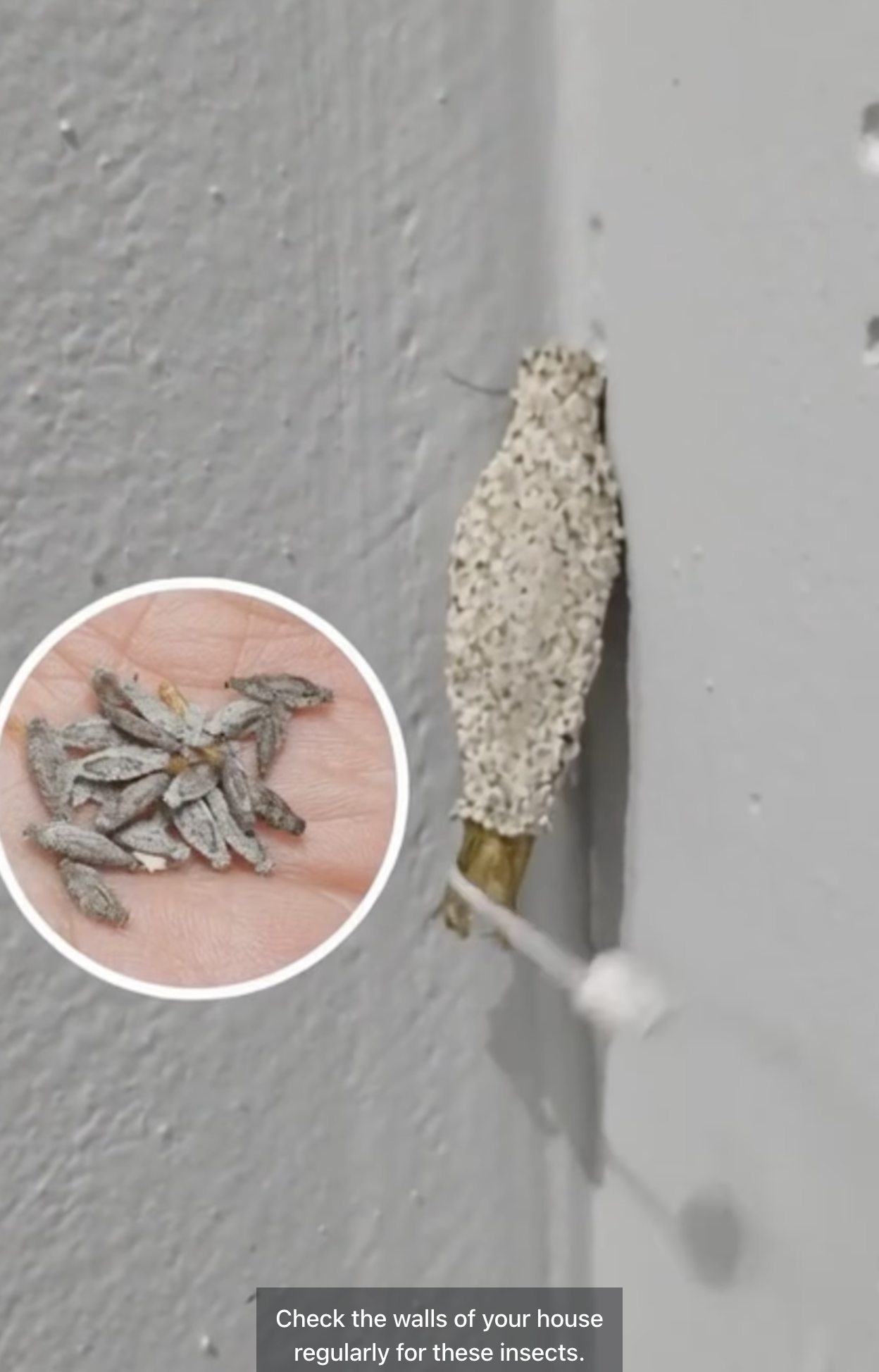
Across forests, cities, and even inside homes, certain moth species demonstrate one of nature’s most fascinating survival strategies: perfect camouflage. These insects blend so seamlessly into their surroundings that they can remain unnoticed even when sitting directly in front of us. Their wings imitate textures and colors found in the natural world—tree bark, lichen, cracked paint, dusty walls, and stone surfaces.
Because of this remarkable adaptation, many moths appear less like living creatures and more like small fragments of their environment. To a casual observer, what looks like a tiny stain on the wall or a chip of plaster may actually be a living insect resting in plain sight.
This ability to disappear visually is not accidental. It is the result of millions of years of evolutionary refinement, allowing moths to survive in environments full of predators.
Masters of Natural Camouflage
Camouflage is one of the most effective defensive tools in the insect world, and moths are among its most skilled practitioners. Their wings often feature intricate patterns that mimic natural surfaces with astonishing accuracy.
Common surfaces moths imitate include:
- Tree bark
- Lichen-covered wood
- Stone textures
- Cracked plaster or painted walls
- Dusty or weathered surfaces
These patterns are not random. Each tiny speck, line, and shade variation works together to create the illusion of a natural background. When a moth lands on a surface that matches its wing pattern, it becomes extremely difficult for predators to detect.
One of the most famous examples is the Peppered Moth (Biston betularia). Its wings resemble the speckled appearance of lichen-covered tree bark. In natural settings, this pattern helps the moth blend into trees so effectively that birds often fail to notice it even when perched nearby.
Many other species, especially those in the geometrid moth family, display similar adaptations. Some resemble dry leaves or bark, while others mimic rough walls or dusty corners found in buildings.
Why Camouflaged Moths Appear Inside Homes
Although many camouflaged moths primarily live outdoors, they sometimes appear inside houses. When they do, it is usually because indoor spaces offer favorable environmental conditions rather than because the insects are trying to infest the home.
Several factors explain their presence.
Stable Temperatures
Walls, ceilings, and enclosed rooms create relatively stable microclimates. Compared to the outdoor environment, indoor spaces experience fewer rapid temperature fluctuations.
These stable conditions can help insects conserve energy while resting. A sheltered wall or ceiling provides protection from wind, rain, and extreme temperature changes.
Light and Insect Activity
Artificial lighting attracts many tiny flying insects, including:
- Gnats
- Booklice
- Midges
- Small flies
These insects gather near windows and light sources at night. Some moths remain nearby because these areas provide a potential food source or a convenient resting place close to insect activity.
Quiet Resting Surfaces
Many moth species spend the daytime hours resting rather than flying. During this time they seek surfaces that provide:
- Shade
- Minimal disturbance
- Good camouflage backgrounds
Flat indoor walls, ceilings, and corners can mimic the natural surfaces moths rest on outdoors. Because their wing patterns resemble cracked paint, dust, or stone textures, they blend easily into these environments.
The Life Cycle of Camouflaged Moths
Although different moth species vary in detail, their life cycle typically follows four stages: egg, larva, pupa, and adult.
Eggs
Moth eggs are extremely small and often difficult to see. They are usually:
- Flat or slightly rounded
- Laid in clusters
- Pale or neutral in color
Because of their size and appearance, eggs may resemble tiny grains of sand, specks of dust, or dried paint droplets. Female moths typically deposit them in protected areas such as cracks in wood, shelves, or hidden corners.
Larvae
After hatching, the larvae begin feeding. Many species at this stage look completely different from the adult moth.
Some larvae mimic:
- Small twigs
- Lint or debris
- Thin sticks
This twig-like appearance helps them avoid predators while feeding.
Their diet varies depending on the species but may include:
- Microscopic organic debris
- Dust particles
- Fungi
- Tiny insects
- Decaying plant material
Larvae often remain hidden in quiet locations such as attics, behind books, or inside crevices.
Pupae
When the larva has grown sufficiently, it forms a protective casing called a pupa. Inside this structure, the insect undergoes its transformation into an adult moth.
Pupae are often attached to hidden surfaces or concealed among debris, where they remain until the adult moth emerges.
Adults
Adult moths are primarily focused on reproduction and dispersal. Many species feed very little, and some do not feed at all once they reach adulthood.
Instead, they rely on energy stored during their larval stage.
Adult moths often spend much of their time resting motionless. This behavior, combined with their camouflage patterns, allows them to remain undetected by predators.
Depending on the species and environmental conditions, adult moths may live from several weeks to a few months.
Are These Moths Harmful in Homes?
Most camouflaged moths found resting on walls are harmless visitors rather than household pests.
They typically do not:
- Damage clothing
- Infest stored food
- Chew paper or books
Unlike well-known household pests such as clothes moths or pantry moths, these camouflaged species rarely form infestations.
In fact, their presence may even offer a small benefit. Some moths help control populations of tiny insects by feeding on them during their earlier life stages.
For this reason, there is usually no need to remove them unless they become a nuisance.
Why Camouflaged Moths Seem Invisible
The reason these insects appear to vanish into walls and surfaces lies in a biological strategy known as crypsis.
Crypsis involves several key elements:
- Matching the color of the surrounding environment
- Matching patterns such as cracks or spots
- Matching textures like bark or dust
- Remaining perfectly still
Predators such as birds rely heavily on movement to detect prey. When a moth remains motionless and its colors match the background, the predator’s brain may interpret it as part of the environment rather than a living creature.
Some moths can remain motionless for hours or even days, further enhancing their ability to remain unnoticed.
Appreciating a Quiet Marvel of Nature
When someone notices a small patch on a wall and suddenly realizes it is actually a moth, they are witnessing one of nature’s most refined survival strategies.
Rather than relying on speed, venom, or strength, these insects survive through:
- Stillness
- Patience
- Perfect disguise
Their wings function like tiny works of natural art, designed through evolution to imitate the textures and colors of the world around them.
Each pattern tells a story of adaptation—of countless generations that survived by becoming almost invisible.
So the next time you see what appears to be a speck of dust or an unusual mark on the wall, take a closer look. You might be observing one of nature’s quiet masterpieces: a moth whose greatest defense is simply becoming the space it inhabits.
More Home Remedies
- Wrinkled Fingers After Water Exposure: What Your Skin May Be Telling You
- Skin Rash With Breathing Trouble? It Could Be a Life-Threatening Allergic Reaction
- I Thought It Was a Piece of Trash on the Bathroom Floor—Until It Moved
- If You Are Getting White Pimples on Your Lips or Intimate Area, Here’s What They Could Mean