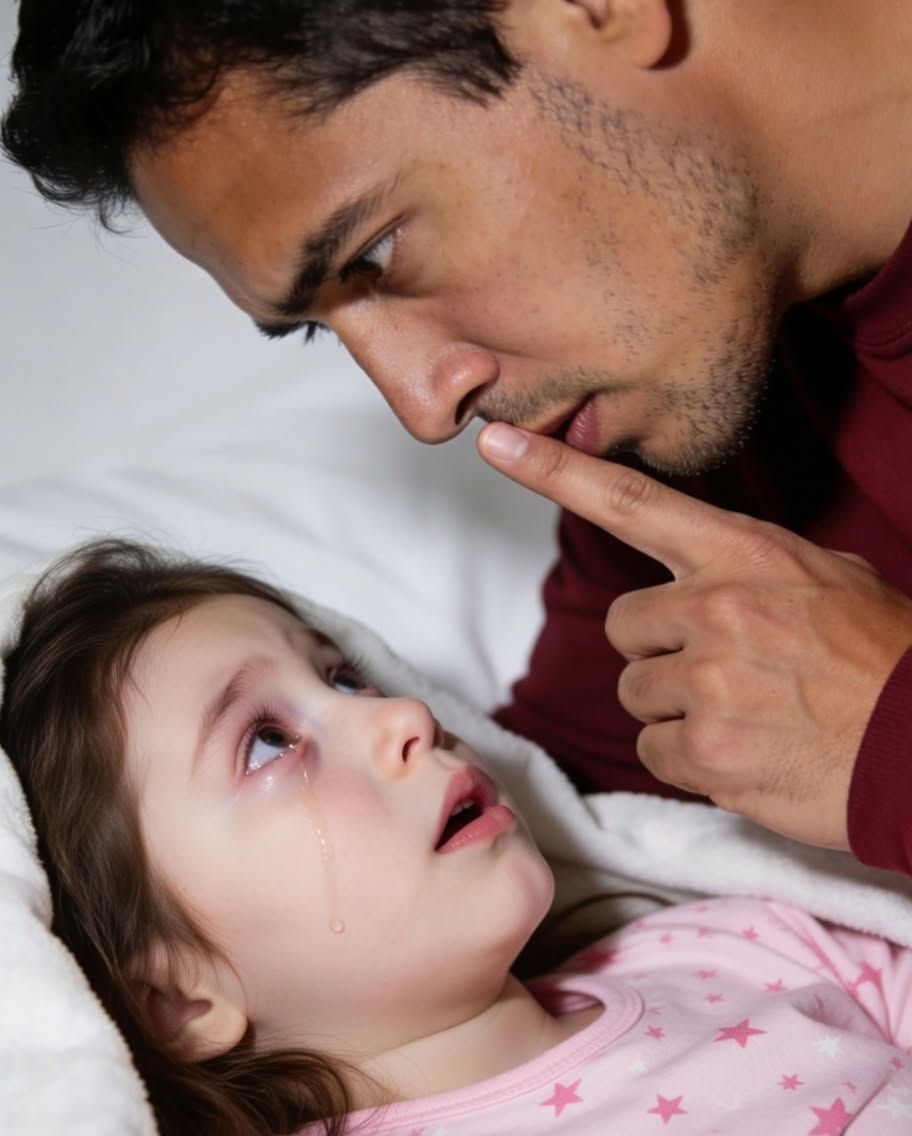
How one quiet confession reminded a father that when a child says something is wrong, listening is the first step.
“Mom said not to tell you.”
My eight-year-old daughter said it so quietly I almost missed it.
She stood at the end of the hallway with her eyes lowered, one hand pressed against her lower back. Something about her posture immediately caught my attention. She wasn’t crying. She wasn’t asking for help.
She simply looked worried.
I walked over, knelt beside her, and asked what had happened.
For several seconds, she said nothing.
Then she whispered, “It hurts.”
I Knew I Needed to Listen
My first instinct was to ask a dozen questions at once.
Instead, I kept my voice calm.
“Okay. Thank you for telling me. Can you show me where it hurts?”
She hesitated before turning around.
That hesitation concerned me almost as much as the pain.
Children sometimes struggle to explain injuries, embarrassment, fear, or situations they don’t fully understand. If they believe they’ll be dismissed or get someone in trouble, they may say very little.
So I didn’t try to fill in the blanks myself.
I listened.
What She Told Me
She explained that she’d started feeling pain the previous day.
“Did you tell Mom?” I asked.
She nodded.
“And what happened?”
“She said it was probably nothing.”
There was no reason for me to immediately assume the worst. Children get bruises, strains, rashes, insect bites, and minor injuries all the time.
But there was also no reason to dismiss something I hadn’t examined or understood.
I asked whether she’d fallen.
She wasn’t sure.
Had somebody hurt her?
“No.”
Was the pain getting worse?
Another small nod.
That was enough for me to know that guessing wasn’t the answer.
The Moment That Changed My Perspective
What stayed with me wasn’t simply that my daughter was hurting.
It was that she had apparently spent a day wondering whether she was allowed to say so.
Children learn incredibly quickly from the way adults respond to them.
If every complaint is treated as drama, they may eventually stop complaining.
If every fear is dismissed as silly, they may stop sharing their fears.
And if they’re repeatedly told that something is “nothing” before anyone has really listened, they can begin questioning their own perceptions.
That doesn’t mean every childhood complaint represents something serious.
It means every child deserves to be heard before we decide what it means.
Listening Doesn’t Mean Panicking
There’s an important difference between taking a child seriously and assuming the worst.
A calm response can be remarkably simple:
Ask what happened.
Let them explain in their own words.
Avoid suggesting answers.
Don’t interrogate them.
Don’t promise secrecy if their safety could be involved.
And if there is an unexplained injury, persistent pain, concerning symptoms, or any suggestion that someone harmed them, seek appropriate professional help.
Children need adults who can remain steady enough to listen.
What I Wish Every Parent Remembered
That evening reminded me that parenting isn’t always about having the right answer.
Sometimes it’s about creating the kind of relationship where your child believes they can tell you something difficult.
I wanted my daughter to know that she would never be in trouble for telling me she was hurt, frightened, confused, or uncomfortable.
Most importantly, I wanted her to understand something she could carry into adulthood:
You are allowed to speak when something feels wrong.
The Quiet Lesson
The sentence that began the conversation was only five words:
“Mom said not to tell you.”
But the words I wanted my daughter to remember were different:
“You can always tell me.”
Because children won’t always come running toward us with dramatic warnings.
Sometimes the most important thing they’ll ever tell us arrives as a whisper.
More Blog
- Drinking Water on an Empty Stomach — What Science Actually Supports (No Hype, Just Facts)
- Waking Up Between 3 and 5 AM? It Might Be Your Soul Trying to Talk to You
- What a “Bleach” Patch on Your Underwear Really Means — And Why It’s Actually a Good Sign
- This Drink May Weaken Your Bones From The Inside — But Everyone Drinks It Anyway