The “Monster” Under the Bed: A Gentle, Science-Backed Reflection on Fear, Laughter, and the Human Brain explores something almost everyone experiences at some point: seeing something ordinary and briefly imagining something far more dramatic.
A shadow becomes a face. A pile of clothes resembles a person. A strange object under the bed suddenly looks alive. Then, once you switch on the light or move closer, the frightening image disappears.
Nothing physically changed. Instead, your interpretation changed.
That moment reveals how quickly the brain combines sensory information with memory, expectations, context, and emotion. Human perception does not work like a camera that records everything exactly as it appears. Rather, the brain continuously interprets incomplete information and makes predictions about what it might be seeing.
Sometimes those predictions help us react quickly. However, they can also create harmless mistakes, especially when lighting remains poor or when someone plants a suggestion in our minds.
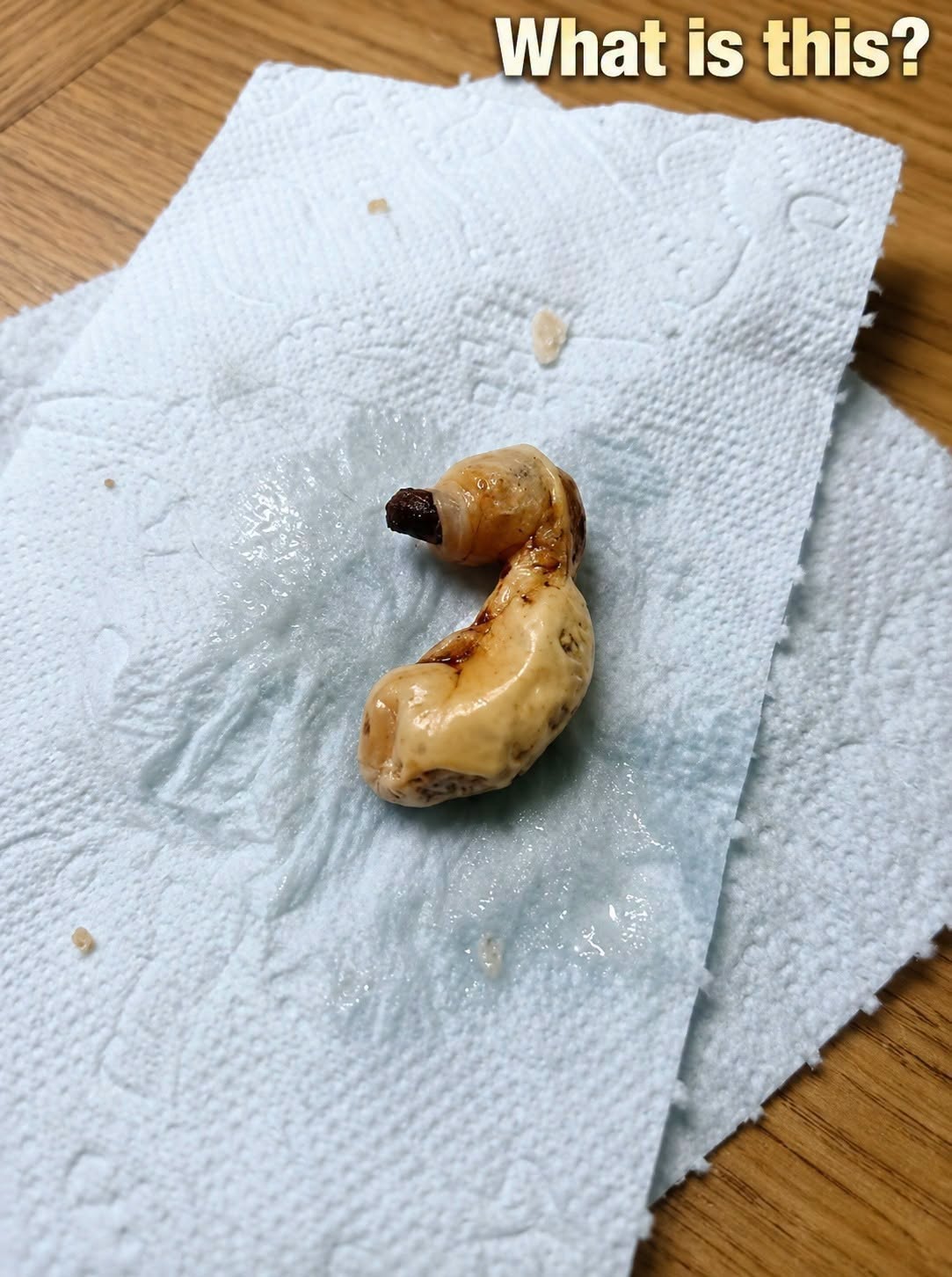
I once spotted something curved and dark beneath a bed while cleaning and immediately stopped moving. From a distance, the shape looked strangely organic, almost like a small creature curled against the wall. Someone nearby jokingly called it a “monster,” and suddenly every shadow seemed to confirm that possibility. Instead of reaching under the bed, we grabbed a flashlight and looked more carefully. The mysterious object turned out to be an old pistachio shell surrounded by dust. We started laughing almost immediately. The object had never changed, yet our experience of it shifted completely once uncertainty disappeared. That small incident became a perfect lesson in how perception, expectation, fear, and humor can interact.
Why the Brain Sometimes Sees Things That Are Not There
The “Monster” Under the Bed: A Gentle, Science-Backed Reflection on Fear, Laughter, and the Human Brain begins with perception because sight involves much more than simply receiving information through the eyes.
Top-Down Processing Shapes What We See
Your eyes gather light, color, contrast, edges, and movement. However, the brain must decide what those signals mean.
To do that efficiently, it compares incoming information with stored knowledge.
This process helps explain why context changes perception so quickly.
Suppose you see a dark curved object in a poorly lit room. Your visual system receives limited information. Therefore, your brain starts generating likely possibilities based on previous experience.
If someone says, “That looks like a snake,” you may suddenly notice features that seem snake-like.
However, if someone says, “I think that is an old shoelace,” your attention may shift toward completely different details.
This influence of prior knowledge and expectation is often described as top-down processing.
The brain does not simply wait for perfect sensory evidence. Instead, it uses prediction to interpret incomplete signals quickly.
Most of the time, that strategy works extremely well.
For example, you can recognize a familiar person even when part of their face remains hidden. You can read imperfect handwriting. Likewise, you can understand an object even when poor lighting removes some details.
However, prediction occasionally creates errors.
A harmless object can therefore resemble something threatening until closer inspection provides better information.
Pareidolia Turns Random Shapes Into Familiar Patterns
Pareidolia describes the tendency to perceive meaningful patterns in ambiguous visual information.
Faces provide the most famous example.
People see faces in clouds, electrical outlets, tree bark, toast, car headlights, and rock formations.
Animals also appear frequently in shadows and random objects.
This tendency does not mean anything has gone wrong with perception. Instead, it reflects the brain’s strong preference for recognizing familiar and socially important patterns.
Faces matter enormously to humans.
We use facial information to recognize people, detect emotional expressions, and guide social interaction. Consequently, the visual system becomes exceptionally responsive to face-like arrangements.
The same principle extends to animals and potential threats.
A curled cord can resemble a snake.
A coat hanging on a chair can resemble a person.
Two reflective spots outside a window can look like eyes.
Therefore, The “Monster” Under the Bed: A Gentle, Science-Backed Reflection on Fear, Laughter, and the Human Brain becomes less mysterious when you consider how aggressively the brain searches for recognizable patterns.
The important point is not that the brain constantly deceives us.
Rather, it makes fast interpretations using limited evidence.
When additional information arrives, perception usually updates quickly.
Why Uncertainty Can Turn Into Fear So Fast
Seeing something ambiguous does not automatically create fear. However, uncertainty combined with a possible threat can activate attention very quickly.
The Brain Gives Possible Threats Extra Attention
Humans benefit from noticing danger quickly.
From an evolutionary perspective, mistaking a harmless shadow for a possible predator created less risk than ignoring an actual predator.
Therefore, the nervous system tends to prioritize certain threat-like cues.
A sudden movement, unfamiliar sound, unexpected silhouette, or unexplained object can capture attention almost immediately.
Once that happens, the body may prepare for action.
Heart rate can increase. Muscles may tense. Breathing can become faster. Attention narrows toward the suspected threat.
These reactions can happen before you fully understand what you are looking at.
However, everyday fear responses vary dramatically from person to person and situation to situation.
Seeing a strange object under a bed may create a mild startle for one person and considerable unease for another.
Previous experiences, current stress, darkness, fatigue, and suggestion can all influence the response.
Therefore, avoid assuming that every brief scare produces a dramatic hormonal surge or causes physical harm.
Short-lived alarm responses represent a normal part of nervous-system function.
The “Monster” Under the Bed: A Gentle, Science-Backed Reflection on Fear, Laughter, and the Human Brain works best when fear remains in proportion.
A momentary fright from an ambiguous shape is usually simply that: a momentary fright.
Why Darkness Makes Ordinary Objects Look Stranger
Low light removes information.
Colors become harder to distinguish. Fine details disappear. Edges look less precise.
Consequently, the brain has fewer reliable clues available for identifying an object.
That uncertainty gives expectation more influence.
If you already feel nervous, you may interpret ambiguous shapes in a threatening direction.
Children experience this phenomenon especially vividly.
A toy, coat, curtain, or chair can look completely different after the lights go out.
Adults do the same thing, although they may describe the experience differently.
Consider walking into a dark room and seeing what looks like a person near the window.
Your body may react immediately.
Then you switch on the light and discover a jacket hanging over a chair.
The correction happens almost instantly because the brighter environment supplies much better visual information.
Therefore, one of the easiest ways to investigate an ambiguous object involves improving the sensory evidence.
Turn on a light.
Use a flashlight.
Move to another angle.
Look from a safe distance.
Those simple steps help the brain replace prediction with better information.
Why We Laugh After the “Monster” Disappears
Perhaps the most interesting part of a harmless scare happens afterward.
The same person who felt nervous seconds earlier may suddenly start laughing.
That transition reveals another important feature of human cognition.
Surprise and Reinterpretation Can Create Humor
Many forms of humor depend on expectation.
A joke creates one interpretation and then suddenly replaces it with another.
The ending works because the brain realizes that the original assumption was wrong.
A harmless visual scare can follow the same pattern.
First, the mind interprets a mysterious shape as something threatening.
Then new information arrives.
It is not a creature.
It is a sock.
Or a food shell.
Or a belt.
Or a toy.
The mismatch between expectation and reality can feel funny because the new explanation makes the previous interpretation seem exaggerated.
This resembles what humor researchers sometimes describe through incongruity: something becomes amusing when an unexpected interpretation suddenly replaces the expected one.
Context matters, of course.
A genuine dangerous event may not become funny simply because it ends.
However, harmless misunderstandings often produce laughter because the contrast becomes so obvious.
The “Monster” Under the Bed: A Gentle, Science-Backed Reflection on Fear, Laughter, and the Human Brain therefore connects humor and perception through reinterpretation.
The punchline is not always a sentence.
Sometimes it is simply turning on the light.
Laughter Also Signals That the Situation Changed
Laughter has many social and emotional functions.
People laugh when something feels funny, but they may also laugh after tension, embarrassment, surprise, or relief.
In a harmless scare, laughter can communicate that everyone now understands the situation differently.
A mysterious object seemed threatening.
Then someone identified it.
Now the group shares the new interpretation.
Laughter can reinforce that shift.
It can also transform an uncomfortable moment into a memorable story.
For example, people may repeatedly retell the night when a jacket became a “person” in the corner or a household object became an imaginary animal.
Each retelling emphasizes the contrast between what everyone expected and what the object actually was.
That is why such moments remain memorable.
The brain does not just record the object.
It remembers the emotional transition.
Fear became recognition.
Recognition became relief.
Relief became laughter.
That sequence gives an otherwise ordinary object a surprisingly vivid place in memory.
How to Practice Calm Curiosity When Something Looks Strange
The “Monster” Under the Bed: A Gentle, Science-Backed Reflection on Fear, Laughter, and the Human Brain offers a useful everyday habit: replace rapid assumptions with structured curiosity.
Gather Better Information Before Deciding What You See
When an unfamiliar object catches your attention, avoid rushing toward either extreme.
Do not immediately assume danger.
However, do not ignore a genuinely suspicious situation either.
Instead, gather information safely.
Improve the lighting first.
Then look from more than one angle.
Notice size, texture, color, movement, and surrounding objects.
Ask whether the shape changes when you move.
If it remains safe to do so, use a flashlight rather than reaching blindly into a dark space.
For unfamiliar household objects, tools such as kitchen tongs can provide distance if you simply need to move something without touching it directly.
However, never handle an object if you suspect electrical danger, hazardous chemicals, a wild animal, sharp materials, or anything else that presents an actual safety risk.
In those situations, distance matters more than curiosity.
For harmless visual mysteries, though, additional sensory information usually resolves the confusion quickly.
The goal is simple.
Give your brain enough evidence to revise its first guess.
That practice helps with more than mysterious objects.
It also applies to photographs, online images, misleading headlines, optical illusions, and social situations where first impressions may prove incomplete.
Use Alternative Explanations to Reduce Assumption
Another useful approach involves deliberately generating more than one explanation.
Suppose something dark lies beneath a bed.
Your first thought might be “bug.”
Before accepting that idea, consider alternatives.
Could it be food debris?
A piece of fabric?
Part of a toy?
A leaf?
A cable?
Generating alternatives keeps one interpretation from becoming dominant too quickly.
This technique does not require suppressing instinct.
Rather, it separates an initial impression from a final conclusion.
That distinction matters because perception feels immediate.
When we see something, we often feel as though we know exactly what it is.
However, ambiguous situations deserve a little uncertainty.
The “Monster” Under the Bed: A Gentle, Science-Backed Reflection on Fear, Laughter, and the Human Brain ultimately demonstrates how useful that uncertainty can become.
You can acknowledge the first interpretation while still saying, “That is what it looks like from here, but I need more information.”
That simple mindset encourages better decisions.
Frequently Asked Questions
What is pareidolia?
Pareidolia describes the tendency to perceive familiar patterns in ambiguous or random information. Common examples include seeing faces in clouds, animals in rock formations, or human expressions in everyday objects.
Why do objects look scarier in the dark?
Low light removes visual detail. Consequently, the brain has less information available and relies more heavily on expectations and previous experience. If you already feel nervous, ambiguous shapes may therefore seem more threatening.
What is top-down processing?
Top-down processing occurs when existing knowledge, expectations, context, and memory influence how you interpret incoming sensory information. For example, being told that a blurry object resembles an animal can make animal-like features seem easier to notice.
Why do people sometimes laugh after being frightened?
A harmless scare can create a rapid shift from one interpretation to another. Once the suspected threat turns out to be ordinary, the contrast between expectation and reality can create humor and relief. Laughter can also communicate socially that everyone now understands the situation as safe.
Is seeing faces or creatures in random objects a problem?
Ordinary pareidolia is extremely common and does not by itself indicate a problem. However, repeatedly seeing or hearing things that others cannot perceive, particularly when experiences feel vivid, distressing, or disruptive, differs from simply recognizing patterns in ambiguous objects and may warrant discussion with a healthcare professional.
Conclusion
The “Monster” Under the Bed: A Gentle, Science-Backed Reflection on Fear, Laughter, and the Human Brain shows how easily perception can shift when information remains incomplete.
A strange shadow may look alive.
A random object may resemble a face.
A harmless shell beneath the bed may briefly become an imaginary creature.
These moments occur because perception depends on more than raw sensory information.
The brain combines what the eyes receive with expectations, memories, context, and learned patterns.
When conditions remain uncertain, that predictive system can produce amusing mistakes.
Fear can also sharpen attention when something appears potentially threatening.
Then, once better information reveals a harmless explanation, the entire interpretation can change almost instantly.
That shift often creates laughter.
Fortunately, everyday mysteries usually respond well to a simple approach.
Improve the lighting.
Look carefully.
Consider several explanations.
Gather more evidence.
Then decide what you are actually seeing.
Sometimes the monster under the bed is nothing more than a pistachio shell waiting for someone to turn on the light.
More Blog
- Drinking Water on an Empty Stomach — What Science Actually Supports (No Hype, Just Facts)
- Waking Up Between 3 and 5 AM? It Might Be Your Soul Trying to Talk to You
- What a “Bleach” Patch on Your Underwear Really Means — And Why It’s Actually a Good Sign
- This Drink May Weaken Your Bones From The Inside — But Everyone Drinks It Anyway