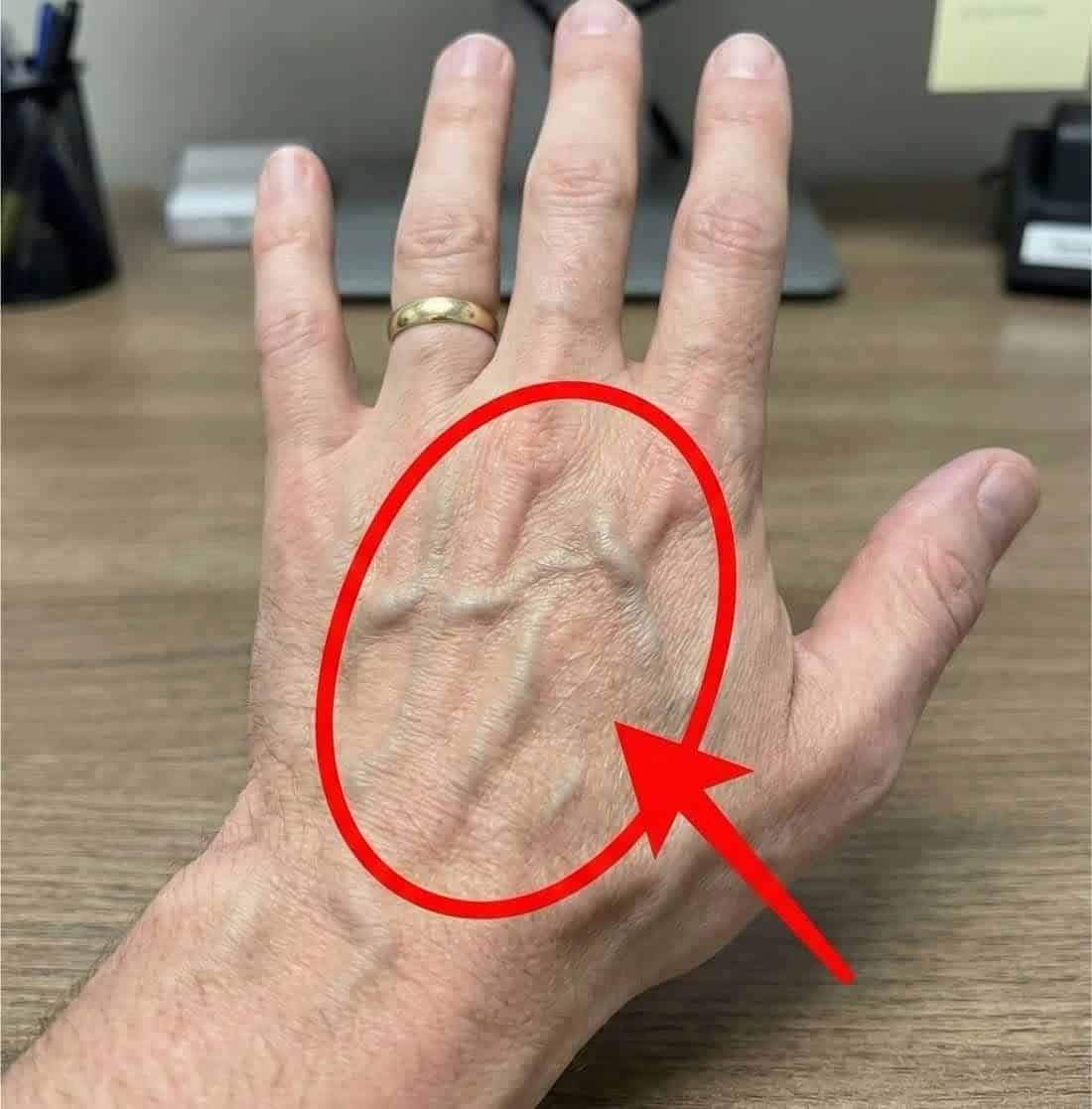
The Map Beneath Our Skin can become surprisingly noticeable from one day to the next. You may glance at your hands after washing dishes, look down at your arms while driving, or notice blue-green lines crossing your legs after a warm afternoon. Suddenly, veins that seemed almost invisible before appear much easier to see.
In many cases, visible veins reflect completely ordinary changes. Thin or fair skin, reduced body fat, exercise, warm temperatures, genetics, and aging can all make veins stand out more clearly. However, visible veins sometimes accompany varicose veins or chronic venous insufficiency, especially when swelling, aching, skin changes, or bulging vessels appear as well.
Therefore, The Map Beneath Our Skin should not become a reason to diagnose yourself from appearance alone. Instead, think of visible veins as one physical detail that gains meaning from everything happening around it.
One afternoon, I noticed the veins across my hands looked much more pronounced than I remembered. Nothing hurt, but the change caught my attention. I had spent much of the day outdoors in warm weather, and after cooling down inside, the veins gradually looked less dramatic. That small experience reminded me how quickly our bodies respond to temperature, activity, hydration, and ordinary aging. Since then, I have tried to look at changes in context rather than immediately assuming the worst. A visible vein by itself tells only part of the story; swelling, pain, warmth, color changes, and persistence provide far more useful clues.
Why Veins Suddenly Become Easier to See
Aging, Skin Changes, and Body Composition
One of the most common explanations behind The Map Beneath Our Skin involves what happens between the veins and the surface of the skin.
Veins do not suddenly appear from nowhere.
They have been present all along.
However, the tissues covering them change over time. Skin naturally becomes thinner with age, while the layer of fat beneath the skin may also become less substantial in some areas. Consequently, veins that once looked faint can become much easier to see.
Body composition has a similar effect.
People with relatively little subcutaneous fat often have more visible veins because less tissue separates the blood vessels from the skin surface.
Intentional weight loss can produce the same change.
Suppose someone gradually loses weight through exercise and dietary changes. As the layer of fat under the skin becomes thinner, veins on the hands, arms, feet, or legs may become more noticeable even though nothing has gone wrong with the veins themselves.
Genetics also matters.
Some people naturally have thin skin, prominent veins, or vascular patterns that remain easy to see throughout adulthood.
Skin tone influences appearance as well. Veins may appear blue, green, or purple because light interacts with skin and underlying blood vessels in complex ways. Their visible color does not mean the blood itself has turned blue.
Importantly, The Map Beneath Our Skin can change gradually without creating pain or other symptoms.
That pattern often differs from vein problems that produce swelling, heaviness, aching, itching, skin changes, or clearly enlarged twisted vessels. Varicose veins, for example, become swollen and enlarged because valves in the veins do not move blood efficiently back toward the heart.
Therefore, appearance provides the starting point, not the final answer.
Heat and Exercise Can Make Veins Stand Out Temporarily
Have you ever noticed The Map Beneath Our Skin becoming much more obvious after exercise?
That response makes physiological sense.
Working muscles need additional blood flow. As circulation increases and muscles expand during activity, superficial veins can become more prominent.
Weightlifting makes this effect particularly noticeable.
After lifting, veins across the arms and hands may appear raised because blood flow increases and surrounding muscles temporarily become fuller.
Even brisk walking can make leg veins easier to notice.
Heat creates another temporary change.
When your body needs to release excess heat, blood vessels near the skin widen. This process helps move heat toward the body’s surface.
Consequently, veins may look larger during hot weather, after a warm shower, or following physical activity.
Once your body cools and blood flow returns closer to baseline, the veins may look less prominent again.
This temporary pattern usually tells a different story from a painful bulging vein that remains enlarged every day.
Still, pay attention to symmetry and symptoms.
If both hands look more vascular after exercise and return to normal later, ordinary blood-flow changes provide a reasonable explanation.
However, if one leg suddenly becomes swollen, warm, tender, or unusually red or purple, do not dismiss the change as exercise-related.
Those symptoms can occur with deep vein thrombosis, a blood clot in a deep vein. DVT commonly affects one side and may cause swelling, warmth, pain, tenderness, or skin redness.
That distinction shows why The Map Beneath Our Skin becomes more useful when you consider appearance together with physical sensations.
When Visible Veins Reflect a Vein Condition
Varicose Veins and Chronic Venous Insufficiency
Not every visible vein represents a varicose vein.
Normal superficial veins can appear clearly beneath the skin while remaining relatively flat and comfortable.
Varicose veins look different.
They often become enlarged, swollen, twisted, or rope-like. Although they most commonly occur in the legs, they can appear elsewhere.
MedlinePlus explains that valves inside leg veins normally help blood move upward toward the heart. When those valves stop working properly, blood can collect in the vein and cause it to enlarge.
That mechanism makes The Map Beneath Our Skin more than a cosmetic issue for some people.
Varicose veins may accompany aching, heaviness, cramping, itching, ankle swelling, or discomfort after long periods of sitting or standing.
Chronic venous insufficiency involves a broader problem with blood returning efficiently through the leg veins.
Symptoms can include aching, heaviness, cramping, swelling, itching, skin discoloration, and changes around the lower legs or ankles. In more advanced cases, poorly healing wounds can develop.
Risk factors include age, family history, pregnancy, obesity, previous blood clots, and long periods spent sitting or standing.
However, having one risk factor does not mean you have venous disease.
Likewise, being able to see veins does not prove the valves inside them have stopped functioning.
A healthcare professional can examine the veins and, when needed, use duplex ultrasound to evaluate blood flow and look for problems such as clots.
Therefore, The Map Beneath Our Skin becomes particularly worth discussing during a routine appointment when visible veins come with persistent aching, swelling, skin changes, or worsening discomfort.
Spider Veins Are Different From Larger Varicose Veins
Small webs of red, purple, or blue vessels often raise another question.
These may be spider veins.
Spider veins sit closer to the skin’s surface than larger varicose veins. Mayo Clinic describes them as smaller vessels that can form web-like patterns, often on the legs or face.
For many people, spider veins create primarily a cosmetic concern.
They do not automatically indicate dangerous circulation problems.
However, spider veins and varicose veins can occur in the same person, so symptoms still matter.
If your legs also feel heavy, swollen, itchy, or painful after prolonged standing, mention those symptoms to a healthcare professional rather than discussing appearance alone.
Likewise, notice whether skin around the ankle begins changing color or texture.
Chronic venous problems can lead to irritated skin, thickening, discoloration, and ulcers in more advanced cases.
The good news is that treatment options exist when symptoms become troublesome.
Healthcare professionals may recommend lifestyle measures, compression therapy in appropriate patients, or procedures that close or remove problematic veins.
However, compression stockings should not become an automatic self-prescription for every visible vein.
They come in different pressure levels and may not suit everyone, particularly people with certain arterial circulation problems.
Therefore, obtaining individualized guidance makes sense when symptoms extend beyond appearance.
The Map Beneath Our Skin can look dramatic while remaining harmless, or it can provide one clue among several that point toward venous disease.
The surrounding symptoms determine which possibility deserves more attention.
Warning Signs That Deserve Prompt Medical Attention
Sudden One-Sided Swelling, Warmth, or Pain
The most important distinction in The Map Beneath Our Skin involves a gradual cosmetic change versus a sudden symptomatic change.
A vein that has looked prominent for years usually creates a different concern from one leg that suddenly swells and becomes painful.
Deep vein thrombosis develops when a blood clot forms in a deep vein, most commonly in the lower leg or thigh.
Symptoms may include swelling, warmth, redness or another skin-color change, and pain or tenderness. DVT often affects one side of the body.
Someone with these symptoms needs medical evaluation.
Do not vigorously massage a suddenly swollen or painful leg in an attempt to “improve circulation.”
Likewise, do not rely on ginger, aspirin, herbal products, exercise, or home remedies to dissolve a suspected blood clot.
Diagnosis may require imaging, and treatment often involves prescription medication.
Risk also increases in certain circumstances.
Long periods of immobility, surgery, pregnancy, previous blood clots, some cancers, obesity, estrogen-containing medications, and certain clotting disorders can raise DVT risk.
Long-distance travel matters because sitting still for many hours can slow circulation in the legs.
That does not mean every visible vein after a flight represents a clot.
However, The Map Beneath Our Skin deserves greater attention when a new visible change occurs together with one-sided swelling, warmth, or pain after prolonged immobility.
During long trips, regular movement can help.
MedlinePlus recommends moving the legs frequently and walking periodically during long periods of travel.
Chest Pain or Shortness of Breath Changes the Situation
A blood clot in a deep vein can become dangerous if part of it travels to the lungs.
This complication is called pulmonary embolism.
Seek emergency medical care for symptoms such as sudden difficulty breathing, chest pain, coughing up blood, fainting, or severe lightheadedness, particularly when leg symptoms suggest a possible blood clot.
These symptoms go far beyond ordinary The Map Beneath Our Skin changes.
Emergency symptoms require emergency evaluation.
Other vein-related changes deserve medical attention without necessarily requiring an emergency response.
Contact a healthcare professional when varicose veins become painful, worsen despite self-care, bleed, develop a hard lump, or accompany skin sores. A sudden increase in leg pain or swelling also warrants evaluation.
Likewise, persistent skin discoloration around the ankles can suggest chronic venous circulation problems rather than ordinary visible superficial veins.
The important principle involves change.
Ask yourself:
Has this always looked like this?
Did it appear suddenly?
Does it hurt?
Is one limb swollen while the other looks normal?
Does the skin feel warm?
Has the color changed?
Are there sores or persistent swelling?
Those questions provide more useful information than simply asking whether the veins look blue or green.
Most visible veins will never produce a medical emergency.
Still, learning the important warning signs lets you enjoy reassurance without ignoring symptoms that deserve professional attention.
Supporting Healthy Circulation Without Chasing Miracle Remedies
Movement Helps the Veins in Your Legs
Your leg muscles play an important role in venous circulation.
Each time the calf muscles contract during walking, they help move blood upward through the veins.
Therefore, regular movement supports normal circulation.
MedlinePlus recommends exercise and avoiding prolonged periods of sitting or standing for people managing varicose veins or venous insufficiency.
You do not need an elaborate workout.
Walking counts.
Gentle leg movements count.
During long periods of sitting, flexing your ankles and moving your legs can help prevent long stretches of complete immobility.
If your work keeps you standing for hours, changing position and taking movement breaks can help as well.
However, movement does not magically erase every visible vein.
Remember, The Map Beneath Our Skin often reflects genetics, skin thickness, body composition, or aging.
Exercise may actually make normal veins more visible temporarily because it increases blood flow.
Therefore, do not judge circulation health solely by how prominent your veins look immediately after activity.
Maintaining a weight that supports your overall health may also reduce pressure on the leg veins in people who carry excess weight.
If you already have symptomatic venous disease, raising the legs periodically may help with swelling and discomfort.
A healthcare professional may also recommend compression stockings for certain vein conditions.
Still, avoid magical circulation claims.
No tea, spice, supplement, juice, or vegetable can guarantee protection against varicose veins or blood clots.
Food contributes to overall cardiovascular health, but it does not replace medical evaluation when symptoms suggest a vascular problem.
Learn Your Normal Pattern and Watch for Meaningful Changes
Perhaps the simplest way to understand The Map Beneath Our Skin involves becoming familiar with what is normal for your own body.
Look at your hands after resting indoors.
Notice your veins after exercise.
Observe what happens in hot weather.
Pay attention after sitting for a long time.
You may discover predictable patterns.
For example, veins may become prominent every summer and fade in cooler weather.
Your hands may look more vascular after carrying groceries.
Your forearms may show more veins after exercise.
Aging may gradually make the same vessels easier to see year after year.
Familiar patterns provide perspective.
Then, if something changes dramatically, you will notice more quickly.
Photography can help when you want to monitor a visible change over several weeks.
Take pictures under similar lighting and from the same angle.
However, avoid checking repeatedly throughout the day.
Normal circulation, temperature, body position, and lighting can alter appearance enough to create unnecessary confusion.
If a vein worries you, describe the associated symptoms rather than relying only on photographs.
A healthcare professional will want to know when the change started, whether it hurts, whether swelling occurs, whether one side differs from the other, and whether you have relevant medical history.
That information makes The Map Beneath Our Skin far more meaningful than color alone.
Frequently Asked Questions
Why are my veins suddenly more visible?
Visible veins can become more noticeable because of heat, exercise, thinner skin, lower body fat, genetics, or aging. However, newly enlarged veins with swelling, pain, heaviness, or skin changes may warrant medical evaluation.
Are visible veins a sign of poor circulation?
Not necessarily. The Map Beneath Our Skin often becomes more visible for harmless reasons. Poor venous circulation more commonly causes additional symptoms such as swelling, aching, heaviness, skin changes, or enlarged twisted varicose veins.
Why do my veins look bigger after exercise?
Exercise increases blood flow to working muscles. Muscles can also temporarily become fuller, which makes superficial veins more prominent. If the appearance settles after rest and no pain or swelling occurs, this commonly reflects a normal response to activity.
When should visible leg veins worry me?
Seek medical evaluation when new visible veins accompany one-sided swelling, warmth, tenderness, redness or purple discoloration, sudden pain, bleeding, persistent skin changes, or sores. Seek emergency help for chest pain, difficulty breathing, coughing up blood, or fainting.
Can I make visible veins disappear naturally?
You cannot always change normal visible veins caused by genetics, thin skin, aging, or low body fat. Movement, avoiding prolonged immobility, weight management when appropriate, and professionally recommended compression can help manage some symptomatic venous problems. Cosmetic procedures also exist for people bothered by appearance.
Conclusion
The Map Beneath Our Skin can look different throughout life, and most of those changes do not signal something dangerous.
Our skin changes.
Body composition changes.
Temperature changes.
Activity changes.
Blood vessels respond to all of them.
As a result, veins on the hands, arms, feet, and legs may become much easier to see with age, during warm weather, after exercise, or after losing body fat.
That appearance alone does not prove poor circulation.
However, symptoms surrounding the veins matter.
Bulging or twisted leg veins accompanied by aching, heaviness, itching, swelling, or skin changes may point toward varicose veins or chronic venous insufficiency.
Sudden one-sided swelling, warmth, tenderness, or unusual redness deserves more urgent attention because those symptoms can occur with deep vein thrombosis.
Meanwhile, chest pain, difficulty breathing, coughing up blood, or fainting requires emergency evaluation.
The goal should not involve becoming suspicious of every blue or green line.
Instead, learn your body’s normal patterns.
Stay active.
Avoid sitting still for unnecessarily long stretches.
Pay attention to persistent swelling, pain, skin changes, and sudden differences between one limb and the other.
And when something genuinely changes, allow a healthcare professional to evaluate the full picture rather than trying to diagnose circulation problems from appearance alone.
Ultimately, The Map Beneath Our Skin offers a visible reminder that circulation constantly adapts to what we do, how we age, and the environment around us.
Sometimes those veins simply become easier to see.
Sometimes they deserve a closer look.
Knowing the difference lets you respond with awareness instead of fear.
More Blog
- Drinking Water on an Empty Stomach — What Science Actually Supports (No Hype, Just Facts)
- Waking Up Between 3 and 5 AM? It Might Be Your Soul Trying to Talk to You
- What a “Bleach” Patch on Your Underwear Really Means — And Why It’s Actually a Good Sign
- This Drink May Weaken Your Bones From The Inside — But Everyone Drinks It Anyway