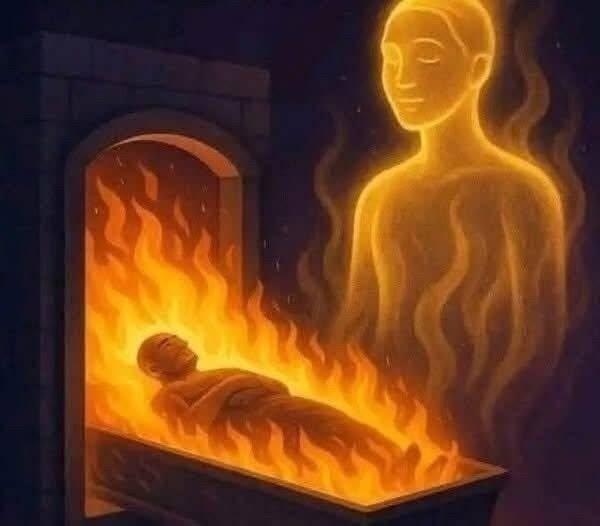
Is Cremation a Sin According to the Bible? For many Christians, this question becomes deeply personal when a loved one dies or when a family begins making funeral plans. Burial appears throughout Scripture, so some believers naturally wonder whether choosing cremation conflicts with biblical teaching about the dignity of the body, death, and resurrection.
The clearest answer is that the Bible does not contain a command that directly forbids cremation. Scripture frequently records burial, and Christian tradition has historically favored it. However, biblical descriptions of burial do not automatically create a universal command about how every Christian body must be handled after death.
The larger biblical message centers on honoring the dead, trusting God’s power, and believing in the resurrection. Christians also approach the subject differently according to church tradition, family custom, conscience, and the reasons behind the decision.
When my family first discussed cremation after the death of an older relative, I remember how quickly practical planning became a spiritual question. One person believed burial showed greater respect, while another worried that cremation might somehow interfere with resurrection. Instead of arguing, we opened the Bible and looked for an explicit prohibition. We found many burials, but no command declaring cremation sinful. That changed the conversation. We began focusing less on fear and more on reverence, conscience, and hope. The experience taught me that funeral decisions can carry enormous emotion, and thoughtful biblical discussion often brings more peace than assumptions passed down without examination.
What the Bible Actually Says About Cremation
Scripture Records Burial as the Normal Practice
Burial clearly appears as the dominant funeral practice throughout much of the Bible.
Genesis 23 describes Abraham purchasing a burial place for Sarah. Abraham himself was later buried there, and other members of the patriarchal family received burial as well. Joseph’s bones eventually returned to the land promised to Israel. Later biblical accounts repeatedly describe kings, prophets, and ordinary people being buried.
The New Testament continues this pattern.
After Jesus died, Joseph of Arimathea received permission to take His body. According to Matthew 27:59–60, Joseph wrapped Jesus’ body and placed it in a tomb.
Therefore, Christians have strong biblical and historical reasons for viewing burial as meaningful.
Burial also became closely associated with Christian language about resurrection. Paul uses the imagery of sowing a seed when discussing the resurrection of the body in 1 Corinthians 15. Consequently, generations of Christians have seen burial as a beautiful symbol of placing the body in the earth while waiting in hope for resurrection.
However, a recurring biblical practice does not necessarily become a universal command.
Scripture also reflects the customs and practical realities of ancient societies. The fact that biblical people commonly buried their dead tells us something important about their respect for human remains, but it does not by itself establish that every other method constitutes sin.
That distinction matters when considering Is Cremation a Sin According to the Bible.
To call an action sinful in the strongest biblical sense, Christians normally look for a clear command, prohibition, or principle that the action violates.
No verse directly states that burning a deceased person’s body is sinful.
Therefore, Christians should take biblical burial seriously without claiming that Scripture explicitly says more than it actually does.
The Bible Mentions Bodies Being Burned
Although burial appears far more often, Scripture does contain accounts involving burned bodies.
One frequently discussed example appears in 1 Samuel 31.
After King Saul and his sons died in battle, the Philistines dishonored their bodies and displayed them publicly. Men from Jabesh-gilead later recovered the remains. According to the account, they burned the bodies and then buried the bones.
The passage does not condemn those men for burning the bodies.
Instead, the broader story presents their actions as an effort to recover and honor Saul and his sons after the Philistines had desecrated them.
This example does not prove that Scripture recommends cremation. However, it does show why Christians should hesitate before declaring that burning a body automatically constitutes sin.
Other biblical passages connect burning with judgment, warfare, or disgrace. Because of those passages, some Christians feel uncomfortable with cremation.
However, context matters.
Fire can symbolize judgment in Scripture, but that does not mean every practical use of fire carries the same spiritual meaning. Likewise, burial can sometimes appear in negative circumstances without making burial itself negative.
A funeral practice should not receive its meaning simply from the physical process involved.
The intentions, beliefs, and treatment of the deceased also matter.
For example, a family may choose cremation because of cost, geography, family arrangements, or personal wishes while still affirming Christian belief in resurrection.
Therefore, asking Is Cremation a Sin According to the Bible requires more than collecting every passage that mentions fire.
Christians need to distinguish between descriptive events, symbolic language, moral commands, and funeral customs.
When we make those distinctions carefully, the Bible does not provide a direct prohibition against cremation.
Cremation, the Human Body, and Christian Resurrection
Does “The Body Is a Temple” Forbid Cremation?
One common objection to cremation comes from 1 Corinthians 6:19–20, where Paul describes the believer’s body as a temple of the Holy Spirit.
Christians rightly take this teaching seriously.
The body matters. Christianity does not teach that the physical body has no value. Biblical faith affirms that God created human beings as embodied creatures and that believers should honor God with their bodies.
However, the context of 1 Corinthians 6 addresses how Christians live in their bodies.
Paul specifically discusses sexual conduct and urges believers not to use their bodies in ways that contradict their belonging to Christ.
The passage does not give funeral instructions.
Therefore, applying the “temple of the Holy Spirit” passage as a direct prohibition against cremation goes beyond its immediate context.
Christians should certainly treat a deceased person’s remains respectfully. Yet respect can take different forms.
A family may choose traditional burial with great reverence. Another family may choose cremation and place the ashes respectfully in a cemetery or memorial location.
The method alone does not tell us whether the family honored the deceased.
Furthermore, every physical body eventually undergoes change after death.
Buried bodies naturally decompose. Some bodies disappear through disasters, fires, wars, accidents, or centuries of decay. Others were lost at sea.
Christian hope has never depended on preserving every physical molecule in an unchanged state.
This point becomes especially important when asking Is Cremation a Sin According to the Bible.
If resurrection depended on an intact corpse, then countless believers throughout history would face an impossible problem.
Instead, Scripture grounds resurrection in God’s power.
The Christian claim is not that humans preserve themselves perfectly until resurrection. The claim is that God raises the dead.
Can God Resurrect Someone Who Was Cremated?
Christian theology answers yes.
The resurrection described in the New Testament depends on God’s power rather than the condition of a person’s remains.
First Corinthians 15 presents resurrection as a divine transformation. Paul contrasts the body that dies with the body God raises. Therefore, Christian resurrection is not merely the reassembly of a preserved corpse through natural processes.
Revelation also portrays the dead being given up from places where human remains could not possibly remain intact.
For that reason, cremation does not create a unique obstacle for divine resurrection.
The same logic applies to bodies that have decomposed completely.
Even burial eventually returns the body to its basic earthly elements.
Consequently, the difference between gradual decomposition and rapid reduction through cremation cannot limit an omnipotent God.
This conclusion appears in established Christian traditions as well. For example, Catholic teaching explicitly states that cremation does not prevent God from raising the deceased, although Catholic practice still expresses a preference for burial and places specific requirements on the respectful disposition of ashes.
Other Christian traditions may use different funeral customs. Some strongly prefer burial because of its symbolism, while others leave the decision largely to individuals and families.
Those differences deserve respect.
However, Christians should distinguish preference from salvation.
The New Testament does not teach that a person’s eternal destiny depends on whether the body enters a grave, tomb, crypt, or crematorium.
Christian salvation rests in God’s grace, not in a funeral method.
Therefore, fear that cremation makes resurrection impossible does not fit the biblical picture of God’s power.
Why Many Christians Still Prefer Burial
Burial Carries Powerful Christian Symbolism
Although cremation is not explicitly condemned in Scripture, burial holds profound meaning within Christian tradition.
Jesus was buried.
Therefore, Christian burial naturally echoes the death and burial of Christ.
Burial also fits the New Testament’s agricultural imagery of resurrection. In 1 Corinthians 15, Paul compares death and resurrection to a seed that goes into the ground and later emerges transformed.
For many Christians, burial makes that symbolism visible.
The body rests in the earth while the community confesses hope in resurrection.
Additionally, cemeteries provide a stable place where families and Christian communities can remember the dead.
People can visit, pray, grieve, and maintain a tangible connection to family history.
These reasons explain why many churches continue to prefer burial even when they permit cremation.
Preference does not have to mean condemnation.
A Christian can believe that burial expresses biblical symbolism more clearly while also acknowledging that Scripture never directly labels cremation sinful.
That distinction creates room for sincere believers to reach different conclusions.
The Catholic Church offers one example of this balance. Its official teaching continues to recommend burial as the preferred expression of Christian hope in bodily resurrection. Nevertheless, it does not prohibit cremation unless someone chooses it for reasons contrary to Christian faith. It also teaches that cremated remains should receive reverent treatment and ordinarily rest in a sacred place rather than being treated casually.
Other churches may approach details differently.
Therefore, Christians making funeral plans should consider both Scripture and the guidance of their own faith community.
Motive and Reverence Matter
A useful biblical question goes beyond “Which physical method should we choose?”
Christians can also ask, “Why are we making this choice, and does it reflect respect for the deceased and faithfulness to our convictions?”
Imagine two very different motives.
One person might request cremation because burial costs create serious financial strain for the family. That decision does not automatically reject resurrection or disrespect the body.
Another person might choose a funeral practice specifically to mock Christian belief in resurrection.
The physical procedure could look identical while the expressed meaning differs greatly.
That distinction helps explain why some Christian traditions focus on motive as well as method.
Reverence matters too.
Cremated remains should not become ordinary household debris simply because cremation has reduced the body’s physical form.
Families can treat ashes with dignity, establish a meaningful memorial, follow church guidance, and remember the deceased with respect.
Likewise, burial should not become merely an expensive social display.
A costly coffin does not automatically demonstrate more love or faith than a modest funeral.
Biblical concern for the dead centers more deeply on dignity, truth, love, and hope.
Therefore, when considering Is Cremation a Sin According to the Bible, Christians can avoid two extremes.
They do not need to condemn every cremation.
However, they also do not need to treat the body and human remains as meaningless.
Christianity gives the body dignity while also trusting that death cannot defeat God’s purposes.
That combination allows both seriousness and freedom.
Making a Christian Funeral Decision With Peace
Consider Scripture, Conscience, Family, and Church Teaching
Funeral decisions often happen while people are grieving, which can make theological disagreements feel especially painful.
Therefore, families benefit from discussing these questions before a crisis whenever possible.
Start with Scripture.
Recognize that burial appears repeatedly and carries meaningful Christian symbolism. At the same time, acknowledge that the Bible contains no direct command stating that Christians must never cremate a body.
Next, consider conscience.
Romans 14 addresses disagreements among believers about matters where sincere Christians reach different conclusions. Although the chapter does not discuss funerals, its broader emphasis on acting faithfully before God offers a useful principle for disputed practices.
A person who strongly believes burial best reflects Christian faith may reasonably choose burial.
Another Christian may choose cremation without believing that the decision denies resurrection.
Church teaching also matters.
If you belong to a specific denomination, congregation, or tradition, learn its funeral practices before making plans.
Some churches readily conduct services before or after cremation.
Others maintain stronger preferences about burial or how ashes should be handled.
Catholic teaching, for example, allows cremation under appropriate circumstances while retaining a preference for burial and providing rules for the respectful placement of cremated remains.
Finally, consider the deceased person’s wishes when those wishes do not conflict with deeply held religious commitments.
Thoughtful planning can prevent relatives from turning a period of grief into a painful dispute.
Focus on Christian Hope Rather Than Fear
The question Is Cremation a Sin According to the Bible often comes from fear.
Someone may worry that choosing the wrong funeral method could harm a loved one’s soul or interfere with resurrection.
However, Scripture consistently places Christian hope in God rather than in human ability to preserve the body.
Death itself does not defeat God’s promise.
Neither centuries of decomposition nor accidental destruction place someone beyond divine power.
Therefore, a Christian funeral should ultimately point beyond the method of handling remains.
It should remember the person honestly.
It should allow the living to grieve.
It should treat the body or ashes respectfully.
Most importantly, it should express hope in God.
That perspective can remove unnecessary guilt from families who choose cremation for practical reasons.
At the same time, it can help families who choose burial understand why the practice carries such rich biblical symbolism.
Christians do not need to turn funeral customs into tests of spiritual superiority.
One family may select a cemetery plot because burial expresses resurrection hope in a deeply meaningful way.
Another may choose cremation because of finances, transportation, environmental concerns, family tradition, or the expressed wishes of the deceased.
Neither decision automatically tells you the depth of that family’s faith.
The biblical focus remains larger than the funeral process.
Christian faith declares that human dignity comes from God, death is not the final word, and resurrection rests in divine power.
That is the hope a funeral can communicate regardless of whether the physical remains are buried or cremated.
Frequently Asked Questions
Is cremation directly forbidden anywhere in the Bible?
No. The Bible contains no verse that directly states that cremation is forbidden for Christians. Burial appears much more frequently and became the dominant biblical and Christian practice, but Scripture does not explicitly declare cremation sinful.
Was anyone cremated in the Bible?
First Samuel 31 records that the men of Jabesh-gilead recovered the bodies of Saul and his sons after the Philistines had mistreated them. They burned the bodies and later buried the bones. The passage does not present their action as a universal funeral rule, but neither does it condemn them for it.
Can a cremated person still be resurrected?
Yes. Christian belief in resurrection depends on God’s power rather than the physical preservation of a corpse. Bodies naturally decompose after burial as well. Scripture presents resurrection as God’s act of raising and transforming the dead.
Why do many Christians prefer burial?
Burial follows the dominant biblical pattern, mirrors the burial of Jesus, and provides a powerful symbol of Christian hope in bodily resurrection. Therefore, many Christians and churches continue to prefer burial even when they do not consider cremation sinful.
Does choosing cremation mean someone lacks faith?
No. A person may choose cremation for financial, practical, family, cultural, or personal reasons while fully believing in Christian resurrection. Motive, conscience, and respectful treatment of the deceased matter more than assuming that one funeral method automatically reveals someone’s faith.
Conclusion
Is Cremation a Sin According to the Bible? Scripture does not directly say that it is.
The Bible clearly presents burial as the normal practice among many of its central figures, including Abraham, Sarah, and Jesus. Therefore, burial carries deep historical and theological meaning for Christians.
However, no biblical command declares that every deceased Christian must be buried or that cremation prevents resurrection.
The Christian hope of resurrection depends on God’s power rather than the condition of human remains.
Buried bodies eventually decompose. Other bodies disappear through disasters, accidents, warfare, or the passage of centuries. Yet Christianity has never taught that these circumstances place someone beyond God’s ability to raise the dead.
Christians can therefore approach cremation thoughtfully rather than fearfully.
Some believers will continue choosing burial because its symbolism expresses their faith beautifully. Others will choose cremation while treating the remains with dignity and maintaining complete confidence in bodily resurrection.
Church traditions may also provide additional guidance, so believers should consider the teaching of their own faith community.
Ultimately, Scripture directs attention away from fear about physical remains and toward hope in God.
Death changes the condition of the body, but Christian faith declares that death does not have the final word.
WP Recipe Maker JSON Import
{
  "title": "Is Cremation a Sin According to the Bible? What Scripture Really Says",
  "summary": "A balanced biblical guide examining whether cremation is considered sinful, why burial became the traditional Christian practice, and how resurrection relates to physical remains.",
  "notes": "This is a Christian faith and Bible study article rather than a food recipe. Individual churches and denominations may provide additional guidance about cremation, burial, funeral rites, and the disposition of ashes.",
  "ingredients_flat": [
    { "amount": "1", "unit": "", "name": "careful reading of Scripture" },
    { "amount": "1", "unit": "", "name": "respect for the deceased" },
    { "amount": "1", "unit": "", "name": "consideration of Christian resurrection teaching" },
    { "amount": "1", "unit": "", "name": "thoughtful attention to conscience and church tradition" }
  ],
  "instructions_flat": [
    {
      "name": "Step 1",
      "text": "Review biblical passages describing burial and recognize that burial was the dominant practice throughout Scripture.",
      "summary": "",
      "image_url": ""
    },
    {
      "name": "Step 2",
      "text": "Notice that Scripture contains no direct command declaring cremation sinful or forbidding Christians from choosing it.",
      "summary": "",
      "image_url": ""
    },
    {
      "name": "Step 3",
      "text": "Consider 1 Samuel 31, where the bodies of Saul and his sons were burned before their bones were buried.",
      "summary": "",
      "image_url": ""
    },
    {
      "name": "Step 4",
      "text": "Distinguish biblical teachings about honoring the body during life from assumptions about a required funeral method after death.",
      "summary": "",
      "image_url": ""
    },
    {
      "name": "Step 5",
      "text": "Remember that Christian belief in resurrection depends on God's power and does not require physical remains to stay intact.",
      "summary": "",
      "image_url": ""
    },
    {
      "name": "Step 6",
      "text": "Consider personal conscience, family wishes, and the funeral guidance of your church or denomination.",
      "summary": "",
      "image_url": ""
    },
    {
      "name": "Step 7",
      "text": "Choose a funeral practice that treats the deceased respectfully while reflecting sincere Christian conviction and hope.",
      "summary": "",
      "image_url": ""
    }
  ],
  "equipment": [
    { "name": "Bible", "notes": "" },
    { "name": "Prayerful reflection", "notes": "" },
    { "name": "Family discussion", "notes": "" },
    { "name": "Church or pastoral guidance", "notes": "" }
  ],
  "nutrition": {
    "calories": "0",
    "carbohydrates": "0 g",
    "protein": "0 g",
    "fat": "0 g",
    "saturated_fat": "0 g",
    "polyunsaturated_fat": "0 g",
    "monounsaturated_fat": "0 g",
    "trans_fat": "0 g",
    "cholesterol": "0 mg",
    "sodium": "0 mg",
    "potassium": "0 mg",
    "fiber": "0 g",
    "sugar": "0 g",
    "vitamin_a": "0 IU",
    "vitamin_c": "0 mg",
    "calcium": "0 mg",
    "iron": "0 mg"
  },
  "tags": {
    "course": ["Bible Study"],
    "cuisine": ["Christian Faith"],
    "keyword": ["Is Cremation a Sin According to the Bible", "cremation and the Bible", "Christian cremation", "Bible burial", "Christian resurrection"]
  }
}
SEO Output
Focus Keyword: Is Cremation a Sin According to the Bible
SEO Title: Is Cremation a Sin According to the Bible? What Scripture Says
Meta Description: Is Cremation a Sin According to the Bible? Discover what Scripture says about burial, cremation, resurrection, and Christian funeral choices.
Expert SEO Title: Is Cremation a Sin According to the Bible? 7 Powerful Truths
Midjourney Prompt: peaceful respectful Christian memorial scene representing the question of cremation and biblical faith, open Bible on a simple wooden table beside soft white flowers and a modest memorial urn, warm sunlight streaming through a window, subtle cross-shaped light in the background, atmosphere of hope, reverence and resurrection rather than grief, no people, elegant realistic photography, soft natural lighting, neutral cream and wood tones, clean uncluttered composition, vertical composition, generous negative space near the upper portion for Pinterest text overlay –v 6 –ar 2:3
More Blog
- Drinking Water on an Empty Stomach — What Science Actually Supports (No Hype, Just Facts)
- Waking Up Between 3 and 5 AM? It Might Be Your Soul Trying to Talk to You
- What a “Bleach” Patch on Your Underwear Really Means — And Why It’s Actually a Good Sign
- This Drink May Weaken Your Bones From The Inside — But Everyone Drinks It Anyway