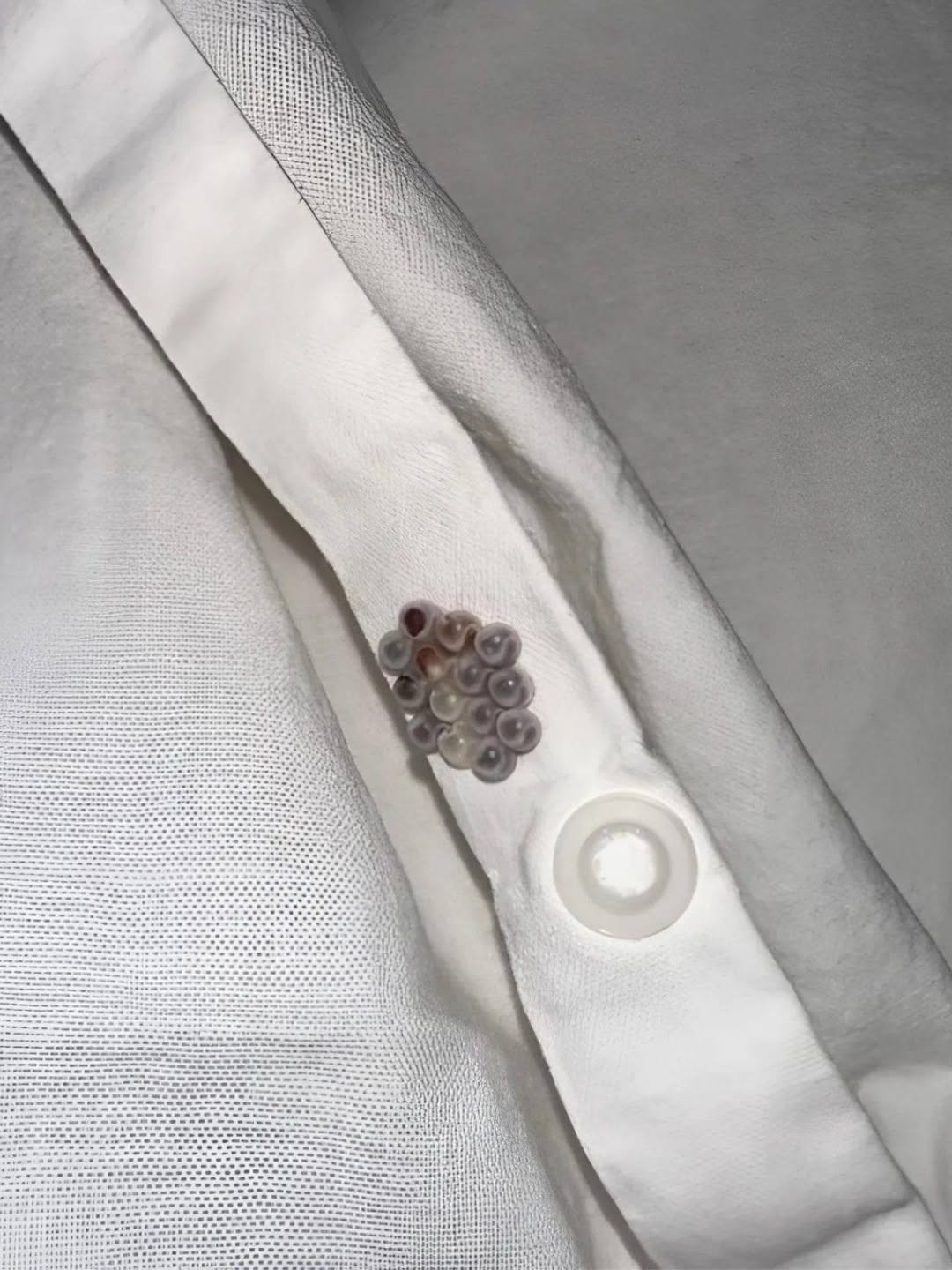
Imagine waking up, running your hand across the sheets, and suddenly feeling several tiny, hard balls scattered around the bed.
Your first thought might be unpleasant: Are these insect eggs? Bed bugs? Something living inside the mattress?
Before throwing away your bedding or calling pest control, take a closer look. Tiny balls in a bed can come from several surprisingly ordinary sources—and their size, color, texture, and location can usually help solve the mystery.
🔍 First: They Probably Aren’t Bed Bug Eggs
Bed bug eggs don’t normally resemble hard little marbles.
They are extremely small—roughly around 1 millimeter long—and typically whitish, elongated, and somewhat pearl-like rather than large, perfectly round balls.
Bed bugs also leave other clues, such as live insects, shed skins, dark fecal spots, or small blood stains.
So if you’re finding relatively large, hard spheres rolling freely across your sheets, another explanation is more likely.
🛏️ Could They Be Coming From Your Mattress?
Possibly—but don’t assume that every mattress contains loose beads.
Traditional memory foam mattresses are generally made from blocks or layers of polyurethane foam, not thousands of loose foam balls. However, some specialty bedding products can contain beads, pellets, microbeads, or other small filling materials.
Potential sources include certain pillows, cushions, bean-filled products, weighted bedding, cooling products, mattress accessories, and damaged decorative items.
If an internal seam or fabric liner tears, the filling can gradually escape onto the bed.
🧸 Check Your Pillows and Cushions
Pillows are an especially useful place to investigate.
Remove the pillowcases and inspect every seam carefully. Pay particular attention to tiny openings around zippers and corners.
Squeeze the pillow gently while watching the seams. If little beads appear, you’ve probably found the source.
Do the same with decorative cushions and specialty support pillows.
🧺 Inspect Weighted and Specialty Blankets
Some weighted blankets contain glass beads or plastic pellets distributed through stitched compartments.
If one of those compartments develops a tear, small pieces can escape.
Glass microbeads can feel surprisingly hard and smooth, so finding them unexpectedly in bed can easily create the impression that you’ve discovered tiny marbles.
Stop using a damaged weighted blanket until you’ve determined whether its filling is leaking.
🧸 Don’t Forget Stuffed Toys
If children or pets regularly bring toys onto the bed, inspect those too.
Some stuffed animals, sensory toys, neck pillows, and plush products contain small pellets to provide weight or texture.
A hole that’s barely noticeable can release dozens of them.
🧴 Another Possibility: Silica Gel or Desiccant Beads
Those familiar packets labeled “Do Not Eat” may contain small desiccant beads.
If a packet from packaging, luggage, a shoebox, medication container, or another product tears open, its contents can scatter surprisingly far.
They should be collected and kept away from children and pets.
🐛 Could They Actually Be Insect Eggs?
It’s possible to encounter insect material around a bed, but don’t identify an infestation based solely on a vague description or viral photograph.
Different insects produce eggs with very different appearances.
If you suspect pests, examine mattress seams, the bed frame, headboard, cracks, and nearby furniture rather than relying only on the mysterious balls themselves.
Finding actual insects or characteristic signs is much stronger evidence.
🧹 What to Do Immediately
Collect a few of the objects in a clear container or sealed bag rather than crushing or discarding all of them. Their appearance may be useful for identification.
Then strip the bed and inspect:
- Mattress seams and covers
- Pillows and pillowcases
- Weighted or specialty blankets
- Mattress toppers
- Stuffed toys and cushions
- Heating or cooling bedding accessories
- Nearby packaging or damaged household products
Vacuum the bed frame and surrounding floor after you’ve identified or collected the material.
⚠️ Keep Loose Beads Away From Children and Pets
Whatever their source, small objects can present a choking or ingestion hazard.
Don’t allow young children or pets to play with unidentified beads. This is especially important if you don’t yet know whether they’re glass, plastic, desiccant material, or something else.
🕵️ How to Solve the Mystery Faster
Instead of asking only, “What are these balls?”, look for the source.
Are they transparent or opaque? Soft or hard? Perfectly spherical or irregular? Do they crush? Are they concentrated near one pillow or blanket? Is there a damaged seam nearby?
Those details can quickly narrow the possibilities.
The Bottom Line
Tiny “marbles” appearing in your bed don’t automatically mean you have bed bugs or another infestation.
They may have escaped from a damaged pillow, weighted blanket, specialty bedding product, toy, cushion, or another household item containing small beads or pellets.
And contrary to some viral claims, ordinary memory-foam mattresses don’t typically contain loose “cooling beads” that simply spill out.
Inspect first, identify the material, find its source, and only consider pest treatment when there’s actual evidence of pests.
More Blog
- Drinking Water on an Empty Stomach — What Science Actually Supports (No Hype, Just Facts)
- Waking Up Between 3 and 5 AM? It Might Be Your Soul Trying to Talk to You
- What a “Bleach” Patch on Your Underwear Really Means — And Why It’s Actually a Good Sign
- This Drink May Weaken Your Bones From The Inside — But Everyone Drinks It Anyway