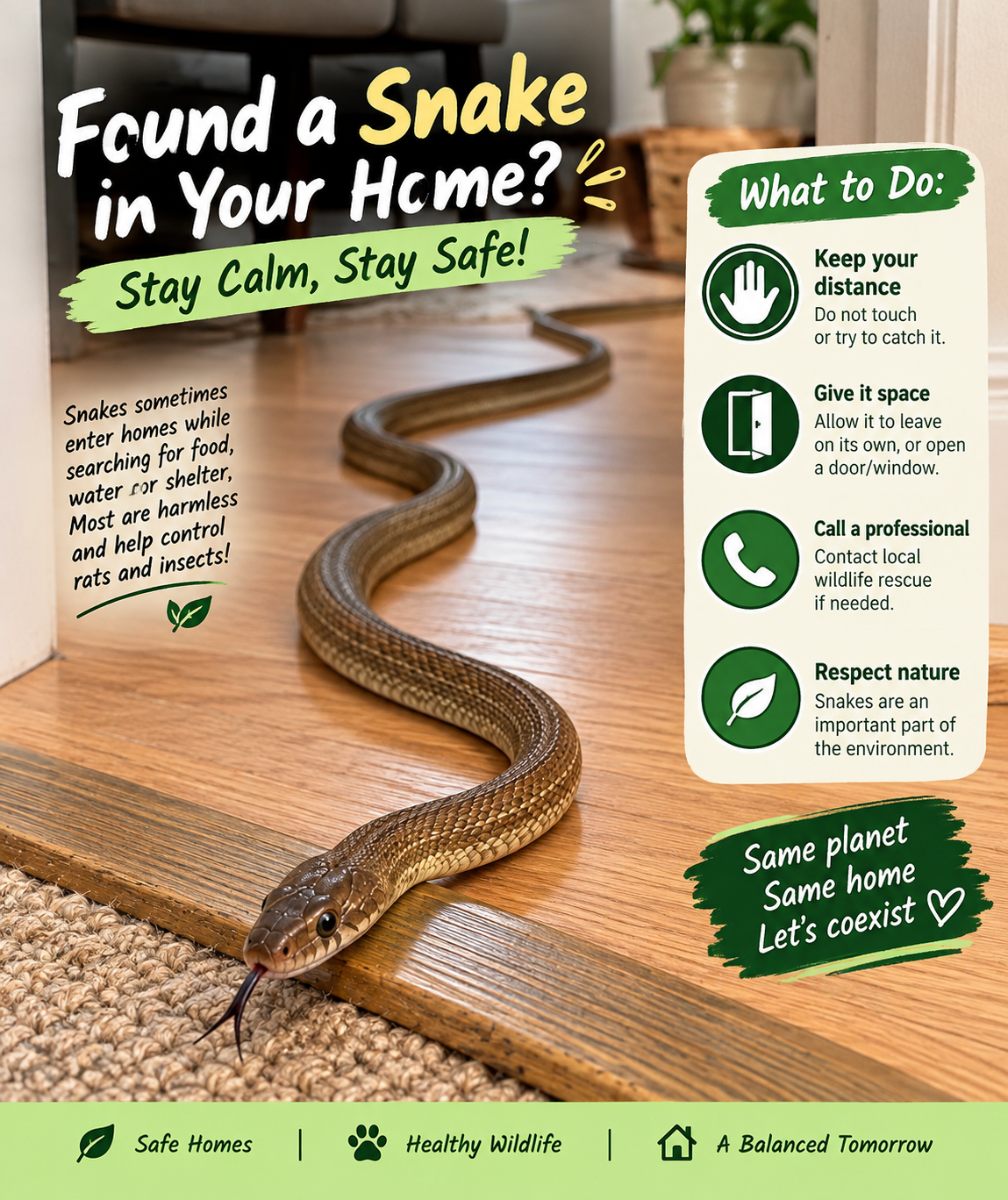
Found a snake in your house? The sight can trigger instant fear, especially when the animal appears unexpectedly in a bedroom, bathroom, kitchen, garage, or hallway. However, rushing toward it, trying to catch it, or swinging a broom can turn a manageable situation into a dangerous one.
The safest response usually starts with distance. Keep children and pets away, avoid touching or cornering the snake, and contact an appropriate wildlife professional when you cannot safely handle the situation. If the species is unknown, treat it cautiously rather than assuming it is harmless.
Most snakes do not enter houses because they want to attack people. They may be searching for shelter, prey, water, or a more comfortable temperature.
I once saw how quickly a calm household could become chaotic when someone spotted a snake near a storage area. Within seconds, one person grabbed a broom, another started moving boxes, and a dog tried to investigate. The snake had done almost nothing, yet the situation became riskier because everyone reacted at once. The better response was surprisingly simple: move away, secure the pet, keep the area clear, and let someone experienced handle the animal. That experience made one lesson obvious. With snakes, creating space usually helps far more than trying to act brave.
Found a Snake in Your House? Start by Creating Distance
Stay Calm and Avoid Sudden Attempts to Catch It
The first few moments after spotting a snake matter.
Your instincts may tell you to chase it, hit it, block it, or grab something to move it.
Resist that urge.
Many snake bites happen when people deliberately approach, handle, or attempt to kill snakes.
Instead, step back slowly.
Give the animal enough room that it does not feel surrounded.
Snakes generally prefer avoiding people when they have a safe way to retreat.
However, a frightened or cornered snake may defend itself.
Do not assume a small snake is harmless.
Likewise, do not rely on head shape, color, markings, or behavior alone unless you have expert knowledge of local species.
Some harmless and venomous snakes can look similar.
Therefore, distance remains the safest rule when identification is uncertain.
If the snake stays in one room, leave the area if you can do so without moving toward it.
Close the door only if you can do that safely.
You can also place a towel along the bottom of the door from the outside if appropriate, but do not put your hands near the snake just to contain it.
Most importantly, avoid creating chaos around the animal.
Shouting, crowding, poking, or repeatedly approaching it can increase stress.
Calm behavior helps protect both you and the snake.
Move Children and Pets Away Immediately
Children and pets can make a snake encounter much more dangerous.
Young children may become curious and move closer.
Dogs may bark, lunge, or attempt to bite.
Cats may stalk or pounce.
Therefore, securing everyone else should become one of your first priorities.
Move children into another room.
Keep them away from windows or doorways where they might try to watch from close range.
A simple rule works well: if you see a snake, move away and tell an adult.
Pets require even faster attention because instinct can override caution.
Call dogs away if you can do so without approaching the snake.
Place pets behind a closed door or in another secure area.
Do not let them continue investigating.
If you suspect a pet has been bitten, seek veterinary care promptly.
Do not wait for severe symptoms before taking the possibility seriously.
You should also avoid picking up a pet while standing close to the snake.
Create distance first.
Then secure the animal.
Keeping people and pets away reduces movement around the snake and gives professionals a safer environment if removal becomes necessary.
The key idea remains simple.
You do not need to control the snake immediately.
You need to control the space around it.
What to Do If the Snake Stays, Hides, or Disappears
Do Not Grab, Corner, or Chase the Snake
Trying to physically remove a snake without training creates unnecessary risk.
Do not pick it up with your hands.
Do not try to pin it with a broom.
Do not trap it with your feet.
Do not strike it with tools.
Even a snake that appears still can move quickly when threatened.
Cornering the animal can also increase defensive behavior.
If the snake is near an open exterior door and you can safely provide an escape route without approaching it, allowing it to leave on its own may help.
However, do not herd it toward the door.
Do not chase it with a broom or object.
If opening the exit requires getting close to the snake, leave the situation alone and seek help.
In many cases, wildlife professionals can safely remove snakes from homes.
Depending on where you live, that may involve animal control, a wildlife authority, a licensed wildlife-removal service, or another trained responder.
If you can safely observe the snake from a distance, note its approximate size, color, markings, and location.
A distant photograph may help with identification.
However, never move closer just to get a better picture.
A poor photograph from a safe distance is far better than a clear photograph taken within striking range.
If the Snake Disappears, Do Not Start Searching With Your Hands
A snake that vanishes behind furniture, boxes, cabinets, or appliances can create even more anxiety.
However, searching blindly can make the situation worse.
Do not reach under a bed.
Do not put your hands behind a refrigerator.
Do not move piles of boxes while standing close to hidden spaces.
Do not stick your fingers into gaps, vents, or holes.
Snakes can fit into narrow spaces and remain still for long periods.
If you know which room the snake entered, isolate that area when possible.
Keep people and pets away.
Then contact someone trained to handle wildlife.
If you must enter the area before the snake is removed, use extreme caution and avoid putting any part of your body where you cannot see.
Garages, sheds, crawl spaces, and cluttered storage rooms deserve particular attention because they provide many hiding locations.
The same rule applies even after you think the snake has left.
Do not assume an unseen snake is gone.
Wait until you have reasonable confirmation.
If repeated sightings occur, the issue may involve an entry point or an attractive food source such as rodents.
In that case, solving the environmental problem matters more than repeatedly searching for individual snakes.
Why Snakes Enter Homes and How to Reduce the Chances
Food, Shelter, and Temperature Can Draw Snakes Indoors
Snakes do not usually enter houses looking for humans.
They respond to environmental conditions.
A home may offer shade during extreme heat.
It may provide warmth during cooler periods.
It can also offer water, shelter, or prey.
Rodents often play an important role.
If mice or rats live around a property, snakes may follow the available food source.
That does not mean every snake sighting proves you have rodents.
However, repeated snake activity makes it worth checking.
Garages can attract snakes because they offer quiet hiding places.
Boxes, stored equipment, wood, and gaps beneath doors create shelter.
Crawl spaces and basements can provide similar conditions.
Bathrooms and utility areas may also contain moisture and openings around pipes.
After the snake has been safely removed, look for the conditions that may have attracted it.
Reduce clutter.
Store pet food securely.
Clean up spilled birdseed or animal feed.
Keep garbage containers closed.
Address rodent activity responsibly.
These changes can make your property less inviting to both prey animals and predators.
Seal Entry Points and Reduce Outdoor Hiding Places
Prevention begins around the outside of the house.
Inspect doors, windows, foundations, utility openings, vents, and garage-door edges.
Small gaps may allow small animals to enter.
Weather stripping can help around doors.
Appropriate screens or covers can protect vents and openings.
Gaps around pipes and cables may also need sealing.
However, do not seal an opening if an animal may already be trapped inside the structure.
When uncertain, have the area inspected first.
Outdoor maintenance can help too.
Keep grass reasonably trimmed.
Remove unnecessary piles of leaves, lumber, debris, or unused equipment near the house.
Store firewood away from the immediate foundation when practical.
Dense piles give snakes and rodents protected places to hide.
Standing water can attract wildlife as well.
You do not need to turn your yard into an empty space.
The goal is simply to reduce easy hiding places near entrances.
No home can become completely snake-proof, especially in regions where snakes naturally live.
Still, thoughtful maintenance can reduce the odds of an indoor encounter.
Prevention works best when you address shelter, food, and access together.
What to Do After a Snake Bite or Suspected Bite
Seek Medical Care Instead of Trying Home Remedies
A snake bite deserves prompt medical attention, especially when the species is unknown or venomous snakes occur in your region.
Move away from the snake first.
Do not attempt to capture or kill it for identification.
If you can safely remember its appearance or take a distant photograph, that information may help professionals.
However, personal safety comes first.
Contact emergency medical services or seek urgent medical care.
Keep the bitten person as calm and still as reasonably possible while waiting for help.
Avoid unnecessary movement.
Do not cut the bite.
Do not try to suck out venom.
Do not apply ice directly to the wound.
Do not use alcohol or folk remedies.
Do not apply a tight tourniquet unless specifically directed by qualified medical professionals.
Many traditional snakebite treatments can cause additional harm.
Modern treatment depends on the species, symptoms, and clinical findings.
That is why medical evaluation matters.
Even if initial symptoms seem mild, some effects can develop over time.
A person should not drive themselves if serious symptoms are present.
Arrange emergency transportation when needed.
Watch for Concerning Symptoms After a Possible Encounter
Sometimes a bite happens so quickly that the person is unsure what occurred.
Do not dismiss the situation if symptoms develop after a suspected snake encounter.
Possible warning signs can include increasing pain, swelling, bruising, weakness, dizziness, nausea, numbness, unusual bleeding, vision changes, or difficulty breathing.
Symptoms can vary widely depending on the species.
Some venom affects tissue.
Other venom affects blood clotting, nerves, muscles, or multiple systems.
Because appearances can be misleading, medical professionals should evaluate concerning symptoms rather than relying on guesses about the snake.
Children, older adults, and people with underlying medical conditions may also need especially careful evaluation.
The same principle applies to pets.
If a dog or cat has a possible snake bite, contact a veterinarian promptly.
Do not try to manage a suspected venomous bite entirely at home.
Fast professional care gives the best chance of managing complications appropriately.
Frequently Asked Questions
Why would a snake come inside my house?
A snake may enter while searching for shelter, food, water, warmth, or cooler temperatures. Rodents, clutter, and gaps around doors or foundations can also make a property more attractive.
Should I try to catch a snake myself?
Usually, no. Handling or chasing an unfamiliar snake creates unnecessary bite risk. Keep your distance and contact a trained wildlife professional if removal is needed.
What should I do if the snake disappears?
Do not search dark spaces with your hands. Keep people and pets away, isolate the room if possible, and seek professional assistance if you cannot confirm where the snake went.
Can snakes climb inside a house?
Some species can climb well. Therefore, do not assume a snake will remain on the floor or that an elevated surface automatically keeps you safe.
Should I kill a snake found indoors?
In most situations, you do not need to kill it. Attempting to strike or corner a snake can increase bite risk. Professional removal offers a safer option where available.
Conclusion
Found a snake in your house? The most important thing you can do is resist the urge to panic.
Step away.
Keep children and pets out of the area.
Do not touch, chase, corner, or attempt to kill the snake.
If you can safely isolate the room, do so.
If you cannot identify or remove the snake safely, contact an appropriate wildlife professional.
If the snake disappears, avoid reaching into dark spaces or moving clutter blindly.
After the immediate situation is resolved, look for possible causes.
Seal appropriate entry points.
Reduce clutter.
Address rodent activity.
Keep outdoor hiding places away from the house when practical.
If a bite occurs or you suspect one, seek prompt medical attention and avoid outdated home remedies.
Most snake encounters become more dangerous when people move toward the animal rather than away from it.
The safest response usually requires patience, distance, and respect.
You do not need to become the bravest person in the room.
You need to become the person who makes the safest decision.
More Blog
- Drinking Water on an Empty Stomach — What Science Actually Supports (No Hype, Just Facts)
- Waking Up Between 3 and 5 AM? It Might Be Your Soul Trying to Talk to You
- What a “Bleach” Patch on Your Underwear Really Means — And Why It’s Actually a Good Sign
- This Drink May Weaken Your Bones From The Inside — But Everyone Drinks It Anyway