An aneurysm can develop quietly, sometimes without producing any symptoms at all. That is one reason the condition can be frightening: a person may feel completely normal until an aneurysm becomes large, leaks, or ruptures.
However, certain symptoms can occur—particularly when a brain aneurysm enlarges and begins pressing on nearby nerves or tissues. Knowing these warning signs can help people recognize when medical evaluation is necessary.
It is equally important not to panic: most headaches, vision problems, or episodes of dizziness are not caused by aneurysms. Symptoms alone cannot diagnose one.
What Is an Aneurysm?
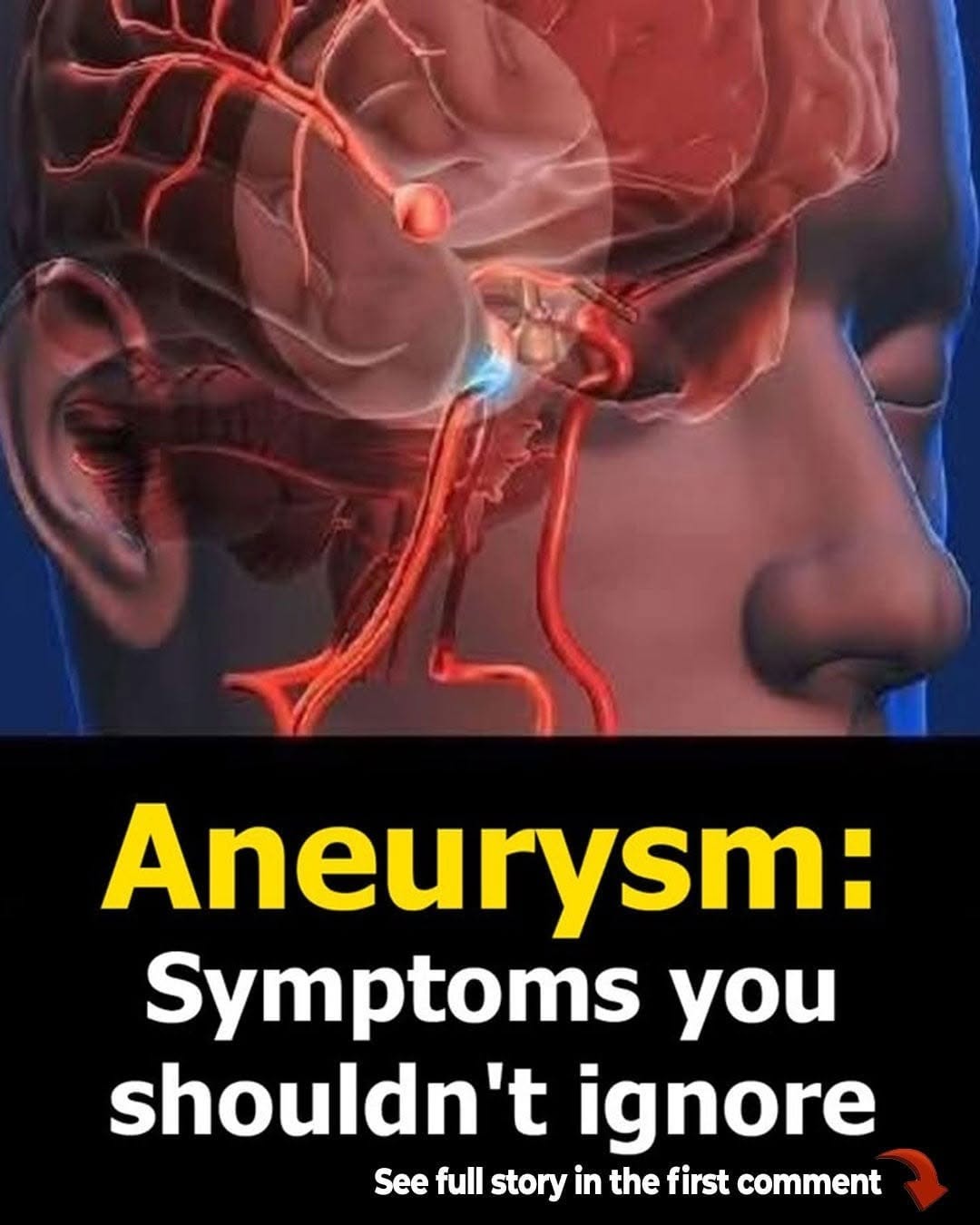
An aneurysm is an abnormal bulging or weakening of the wall of a blood vessel. Aneurysms can occur in several parts of the body, including the brain and aorta.
A brain aneurysm, also called an intracranial or cerebral aneurysm, develops in an artery supplying the brain.
Many small brain aneurysms never rupture or cause symptoms. Problems can arise when an aneurysm grows large enough to affect surrounding structures or when it begins leaking or ruptures.
A ruptured brain aneurysm can cause bleeding around the brain and is a medical emergency.
12 Possible Warning Signs
1. A Sudden, Extremely Severe Headache
The classic warning sign of a ruptured brain aneurysm is a headache that begins abruptly and reaches extreme intensity very quickly.
People sometimes describe it as the worst headache they have ever experienced.
A sudden thunderclap headache requires immediate medical attention, even if the pain later improves.
2. Pain Above or Behind One Eye
An enlarging aneurysm may place pressure on nerves and tissues around the eye.
This can sometimes produce persistent or unusual pain behind or above one eye.
3. Blurred Vision
Pressure on nerves involved in vision may cause blurred or otherwise altered vision.
New and unexplained visual changes should be medically evaluated, particularly when accompanied by neurological symptoms.
4. Double Vision
Seeing two images instead of one can occur when an aneurysm interferes with nerves controlling eye movement.
Sudden double vision deserves prompt medical attention.
5. A Dilated Pupil
One pupil becoming noticeably larger than the other can indicate pressure on certain cranial nerves.
There are many possible causes, but a new, unexplained difference in pupil size, particularly with headache or other neurological symptoms, warrants urgent assessment.
6. Drooping Eyelid
A suddenly drooping eyelid can sometimes accompany nerve compression caused by an aneurysm.
It may occur together with double vision or changes in pupil size.
7. Numbness or Weakness on One Side of the Face
An aneurysm affecting nearby neurological structures may occasionally cause facial weakness or numbness.
Sudden facial weakness can also be a sign of stroke and should never simply be watched at home.
8. Neck Pain or Stiffness
When an aneurysm ruptures and blood enters the space surrounding the brain, irritation of the meninges can cause significant neck stiffness or pain.
A severe headache accompanied by a suddenly stiff neck is particularly concerning.
9. Nausea and Vomiting
A ruptured aneurysm may cause intense nausea or vomiting, particularly alongside a sudden severe headache.
By themselves, these symptoms have countless common causes. The combination and sudden onset are what matter.
10. Sensitivity to Light
Bleeding surrounding the brain can irritate sensitive tissues and make bright light extremely uncomfortable.
Sudden photophobia accompanying a thunderclap headache requires urgent evaluation.
11. Confusion, Difficulty Speaking, or Altered Awareness
Bleeding in or around the brain can rapidly affect normal brain function.
Someone may suddenly become confused, have difficulty communicating, appear unusually drowsy, or behave differently.
These are emergency neurological symptoms.
12. Seizure or Loss of Consciousness
A severe brain hemorrhage can trigger a seizure or cause someone to collapse or lose consciousness.
Either symptom—particularly when sudden and unexplained—requires emergency medical assistance.
An Important Point About “Early Warning Signs”
The phrase “12 early warning signs” can be misleading.
Many unruptured brain aneurysms cause no warning signs whatsoever. Symptoms are more likely when an aneurysm becomes large enough to compress nearby structures.
And symptoms such as a thunderclap headache, vomiting, stiff neck, seizure, or loss of consciousness may indicate that an aneurysm has already leaked or ruptured, rather than serving as an early warning.
That distinction matters because people shouldn’t rely on symptoms as a screening method.
Who Has a Higher Risk?
Several factors are associated with a greater likelihood of developing or rupturing certain aneurysms. These include increasing age, smoking, high blood pressure, certain inherited disorders, and having close relatives with brain aneurysms.
Having a risk factor does not mean someone will develop an aneurysm.
Routine screening is also not recommended for everyone. Doctors may consider imaging for people with particular family histories or medical conditions.
When It Becomes an Emergency
Seek emergency medical care immediately for a sudden, explosive headache unlike anything experienced before, especially when accompanied by vomiting, stiff neck, vision changes, weakness, confusion, seizure, or loss of consciousness.
Do not drive yourself if severe neurological symptoms are occurring.
The Bottom Line
Brain aneurysms are serious, but internet symptom lists need context. Most aneurysms don’t produce a neat sequence of 12 warning signs, and many remain completely silent.
The most important symptom to recognize is a sudden thunderclap headache, particularly when accompanied by neurological changes.
Knowing that distinction turns a frightening headline into something much more useful: knowing which symptoms can wait for a medical appointment and which ones require immediate emergency care.
More Blog
- Drinking Water on an Empty Stomach — What Science Actually Supports (No Hype, Just Facts)
- Waking Up Between 3 and 5 AM? It Might Be Your Soul Trying to Talk to You
- What a “Bleach” Patch on Your Underwear Really Means — And Why It’s Actually a Good Sign
- This Drink May Weaken Your Bones From The Inside — But Everyone Drinks It Anyway