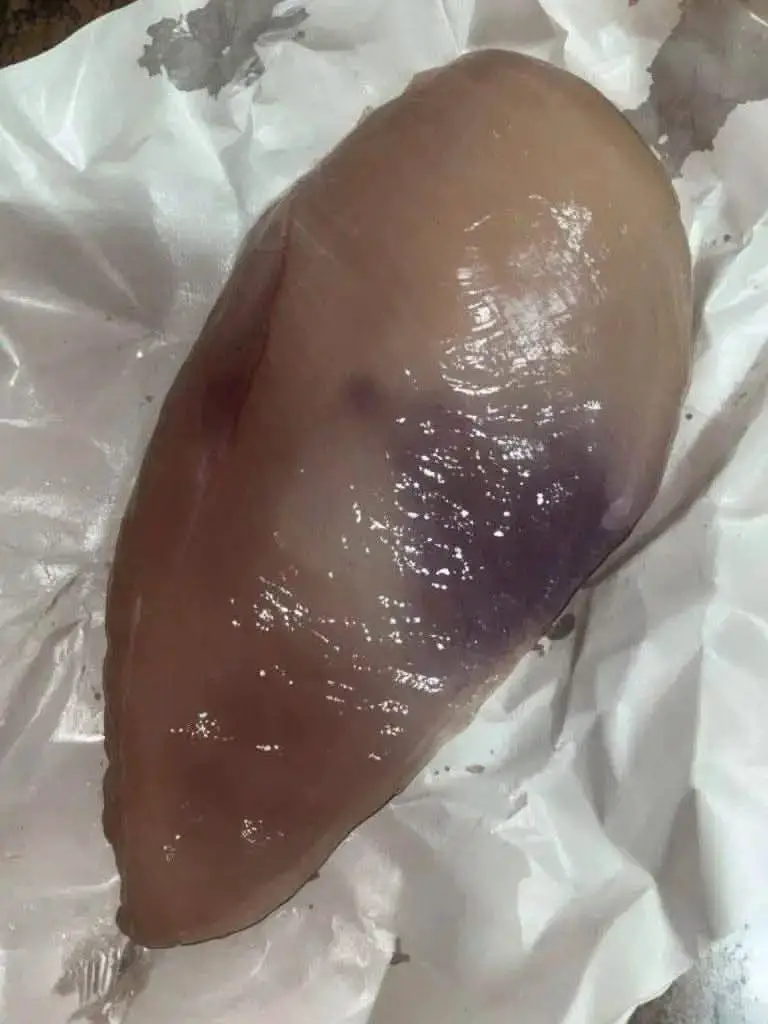
Finding an unusual purple or dark-colored spot on a raw chicken breast can be surprising, especially if the rest of the meat looks perfectly normal. Many people immediately worry that the chicken has spoiled or that it’s unsafe to eat. Fortunately, a purple spot doesn’t always mean the meat has gone bad.
In most cases, these discolorations are harmless and are caused by bruising, small blood vessels, or natural changes that occurred before or during processing. However, there are situations where discoloration can signal that the chicken should be discarded.
Here’s what you need to know before deciding whether to cook or throw it away.
What Causes Purple Spots on Chicken?
A purple, blue, or dark red area on a chicken breast is usually the result of blood collecting beneath the muscle tissue. Similar to a bruise on human skin, this can happen when tiny blood vessels break.
Common causes include:
- Minor bruising while the bird was alive
- Small blood vessels that ruptured during processing
- Blood that wasn’t completely removed during slaughter
- Pressure applied during transportation or packaging
These spots are fairly common and don’t necessarily indicate poor quality.
Is It Safe to Eat?
A purple spot alone does not automatically mean the chicken is unsafe.
If the chicken:
- Smells fresh
- Feels firm
- Has been continuously refrigerated
- Is within its use-by or freeze-by date
- Shows no signs of slime or spoilage
then the discoloration is often harmless.
Cooking the chicken thoroughly to an internal temperature of 165°F (74°C) destroys harmful bacteria that may naturally be present on raw poultry.
When Should You Throw It Away?
Discoloration should be evaluated along with other signs of spoilage.
Discard the chicken if you notice:
- A sour or unpleasant odor
- Sticky or slimy texture
- Green, gray, or black discoloration
- Mold
- Swollen or leaking packaging
- It has been left unrefrigerated for more than two hours (or one hour in hot weather)
If several of these signs appear together, the chicken is no longer safe to eat.
Could It Be a Blood Spot?
Sometimes what appears to be a bruise is actually a small pocket of clotted blood.
Blood spots occur naturally and are usually harmless.
Many people simply trim away the affected portion before cooking, although this isn’t required if the meat is otherwise fresh.
Can Freezing Cause Dark Spots?
Yes.
Freezing and thawing sometimes change the appearance of poultry.
Ice crystals can affect the muscle fibers, making certain areas appear darker after thawing.
As long as the chicken was frozen properly and has no signs of spoilage, these color changes are generally cosmetic.
What About “Woody Breast” or Muscle Disorders?
Modern poultry can occasionally develop muscle conditions known as woody breast or white striping.
These conditions may cause:
- Hard texture
- Thickened meat
- White streaks
- Uneven coloring
While these quality issues may affect tenderness, current evidence suggests they are generally food quality concerns rather than food safety concerns when the meat is handled and cooked properly.
How to Tell If Chicken Is Fresh
Before preparing raw chicken, perform a quick inspection.
Fresh chicken should have:
- A mild or almost odorless smell
- Firm texture
- Moist but not slimy surface
- Pink to light peach coloring
- Proper refrigeration
Any strong foul smell is one of the clearest signs that the meat should not be eaten.
Safe Handling Tips
Because raw chicken can naturally carry bacteria such as Salmonella or Campylobacter, proper food handling is essential.
Always remember to:
- Keep chicken refrigerated below 40°F (4°C).
- Wash your hands after handling raw poultry.
- Prevent cross-contamination by using separate cutting boards.
- Clean utensils and countertops thoroughly.
- Cook chicken to an internal temperature of 165°F (74°C) using a food thermometer.
Never rely on color alone to determine whether chicken is fully cooked.
Frequently Asked Questions
Does a purple spot mean the chicken is spoiled?
No. A purple spot is often caused by bruising or a small blood vessel and is not, by itself, a sign of spoilage.
Can I cut the spot off?
Yes. Some people trim the discolored area for appearance, although it isn’t usually necessary if the chicken is otherwise fresh.
Should raw chicken always be pink?
Fresh chicken naturally varies in color from pale pink to slightly darker shades. Small areas of discoloration can occur without affecting safety.
Is bruised chicken dangerous?
Not usually. Bruising alone doesn’t make chicken unsafe. Focus on odor, texture, storage conditions, and expiration dates when deciding whether to use it.
What is the safest way to cook chicken?
Cook all poultry until the thickest part reaches 165°F (74°C).
Final Thoughts
A purple spot on a chicken breast may look alarming, but it’s often nothing more than a bruise or a small collection of blood beneath the surface. If the chicken has been stored properly, smells fresh, feels firm, and shows no other signs of spoilage, the discoloration alone usually isn’t a reason to throw it away.
However, food safety should always come first. If the meat has an off odor, slimy texture, unusual green or gray coloring, or has been improperly stored, it’s safest to discard it. When in doubt, trust your senses and err on the side of caution. Proper storage, careful handling, and thorough cooking remain the best ways to enjoy chicken safely.
Why Is There a Purple Spot on My Chicken Breast? Understanding the Causes, Food Safety, and When to Throw It Away
Opening a package of raw chicken only to discover a purple, blue, or dark red spot can be unsettling. Many people immediately assume the meat has spoiled or is unsafe to eat. After all, most of us expect fresh chicken to have a uniform light pink color. When something looks different, it’s natural to wonder if it belongs in the trash.
Fortunately, a purple spot on a chicken breast is often much less alarming than it appears. In many cases, the discoloration is simply the result of a bruise, a small blood vessel that burst before processing, or a tiny amount of blood trapped beneath the muscle. These cosmetic imperfections are relatively common in poultry and don’t necessarily affect food safety.
That said, not every unusual color should be ignored. Some forms of discoloration, especially when combined with foul odors, sliminess, or improper storage, may indicate spoilage. Knowing the difference between harmless discoloration and signs that chicken has gone bad can help you make safe decisions in the kitchen while avoiding unnecessary food waste.
This guide explains why purple spots appear, how to tell if your chicken is still safe to cook, and the best practices for storing and preparing poultry.
Why Doesn’t Every Chicken Breast Look the Same?
Many shoppers assume all chicken breasts should have an identical appearance, but poultry naturally varies.
Just like people, every chicken is different. Factors that influence the appearance of chicken include:
- Age of the bird
- Breed
- Diet
- Muscle development
- Processing methods
- Packaging
- Transportation
As a result, fresh chicken may range in color from very pale pink to a slightly darker pink or peach shade.
Small differences in color are usually normal.
The Most Common Cause: Bruising
The most common explanation for a purple or blue spot is bruising.
Bruises occur when tiny blood vessels beneath the muscle break, allowing a small amount of blood to collect within the tissue.
This may happen:
- While the bird was alive
- During handling on the farm
- During transportation
- During processing
- During packaging
Because poultry skin is removed before sale, these bruises become visible directly on the meat.
The appearance may range from:
- Purple
- Dark red
- Blue
- Brownish-red
As the bruise ages, the color may gradually change.
Fortunately, bruising itself does not make the chicken unsafe to eat.
Small Blood Vessels Can Leave Dark Spots
Sometimes what appears to be a bruise is actually a tiny blood vessel that remained visible after processing.
During slaughter, most blood is removed from the bird.
However, no processing method removes every drop.
Small pockets of blood occasionally remain trapped inside muscles.
These appear as:
- Tiny purple dots
- Dark streaks
- Small red patches
They are generally harmless.
Many cooks simply trim away the area for cosmetic reasons, although this usually isn’t necessary.
Can Freezing Change the Color?
Yes.
Frozen chicken sometimes develops darker patches after thawing.
This happens because freezing creates tiny ice crystals inside the muscle fibers.
As the chicken thaws, moisture redistributes throughout the meat.
Certain areas may appear:
- Darker
- Slightly gray
- Purple
- Red
If the chicken remained continuously frozen and was thawed safely in the refrigerator, these color changes are usually cosmetic.
What Is a Blood Spot?
A blood spot is exactly what it sounds like—a small collection of blood trapped beneath the muscle surface.
Blood spots differ from bruises because they usually result from tiny blood vessels rather than injury.
They may appear:
- Dark red
- Purple
- Nearly black
These spots are commonly found in poultry and are generally considered harmless.
Many consumers simply remove them before cooking if they find them unappealing.
When Color Changes Become a Warning Sign
While purple bruises are usually harmless, other colors deserve closer attention.
Discard chicken immediately if you notice:
- Green patches
- Gray discoloration
- Black mold
- Yellow slime
- Rainbow-colored surface combined with foul odor
These changes often occur alongside bacterial spoilage.
Never rely on color alone.
Always evaluate:
- Smell
- Texture
- Expiration date
- Storage conditions
How to Tell If Chicken Has Gone Bad
One of the easiest ways to judge raw chicken is by using your senses.
Smell
Fresh chicken has very little odor.
Spoiled chicken often develops:
- Sour smell
- Rotten odor
- Ammonia-like smell
- Sulfur-like odor
If the smell makes you hesitate, it’s safest not to eat it.
Texture
Fresh chicken should feel:
- Moist
- Firm
- Slightly glossy
Spoiled chicken often becomes:
- Sticky
- Slimy
- Extremely tacky
A slippery film that doesn’t rinse away is a common sign of bacterial growth.
Appearance
Fresh chicken usually appears:
- Light pink
- Pale peach
- Slightly glossy
Warning signs include:
- Green patches
- Mold
- Excessive gray coloring
- Dried-out edges combined with foul smell
Understanding Modern Poultry Muscle Conditions
Modern poultry farming has led to a few muscle conditions that many consumers notice when preparing chicken.
Woody Breast
Woody breast causes chicken meat to become unusually firm.
Characteristics include:
- Tough texture
- Thick breast meat
- Difficulty cutting
- Uneven appearance
Although unpleasant to eat, current evidence suggests woody breast is primarily a quality issue rather than a food safety concern.
White Striping
White striping appears as white lines running through the meat.
These streaks represent changes in muscle tissue.
The condition may affect tenderness but does not automatically make chicken unsafe.
Proper Chicken Storage
Correct storage is one of the most important food safety practices.
Store fresh chicken:
- Below 40°F (4°C)
- In its original packaging
- On the lowest refrigerator shelf
- Away from ready-to-eat foods
If you don’t plan to cook it within one or two days, freezing is recommended.
Safe Thawing Methods
Never thaw chicken on the kitchen counter.
Instead, use one of these safe methods:
Refrigerator
The safest method.
Allow approximately 24 hours for every 4–5 pounds.
Cold Water
Seal the chicken in a leak-proof bag.
Change the water every 30 minutes.
Cook immediately afterward.
Microwave
Use only if cooking immediately after thawing.
Preventing Cross-Contamination
Raw poultry naturally carries bacteria that can spread throughout the kitchen.
Protect yourself by:
- Washing hands for at least 20 seconds.
- Using separate cutting boards.
- Cleaning countertops with hot soapy water.
- Sanitizing knives after cutting raw poultry.
- Never placing cooked chicken back on the same plate used for raw meat.
Cross-contamination is one of the leading causes of foodborne illness in home kitchens.
Cooking Chicken Safely
Color alone cannot determine whether chicken is fully cooked.
Instead, use a food thermometer.
The thickest part of the chicken should reach:
165°F (74°C)
This temperature destroys harmful bacteria like:
- Salmonella
- Campylobacter
Allow the meat to rest for several minutes before serving.
Frequently Asked Questions
Is a purple spot always a bruise?
Usually, yes. Most purple spots are bruises or small collections of blood beneath the muscle.
Can I simply cut away the purple area?
Yes.
Many people trim the spot for appearance, although it usually isn’t necessary if the chicken is otherwise fresh.
Why does frozen chicken sometimes look darker?
Freezing changes moisture distribution inside the muscle, causing temporary color changes after thawing.
Should chicken smell at all?
Fresh chicken has little or no odor.
Any sour, rotten, or ammonia-like smell indicates spoilage.
Is discoloration more common in organic chicken?
No.
Both conventional and organic chicken can develop bruises or blood spots because these occur naturally during handling and processing.
Does cooking remove bruising?
Cooking changes the color of bruised tissue, making it less noticeable.
However, the bruise itself does not disappear—it simply becomes part of the cooked meat.
Final Thoughts
A purple spot on a chicken breast may look concerning at first glance, but in most cases, it’s simply a harmless bruise or a small collection of blood trapped beneath the muscle. These natural imperfections can occur during the bird’s life, transportation, or processing and usually have no impact on food safety when the chicken has been properly stored.
The most important indicators of freshness are not color alone but a combination of smell, texture, packaging condition, storage history, and expiration date. Fresh chicken should have a mild odor, a firm texture, and no signs of slime or mold. If any of these warning signs are present, it’s best to discard the meat.
Practicing proper food handling, preventing cross-contamination, refrigerating poultry promptly, and cooking chicken to an internal temperature of 165°F (74°C) remain the best ways to protect yourself and your family. When in doubt, remember this simple rule: if the chicken smells bad, feels slimy, or shows multiple signs of spoilage, don’t take the risk. Safety should always come first.