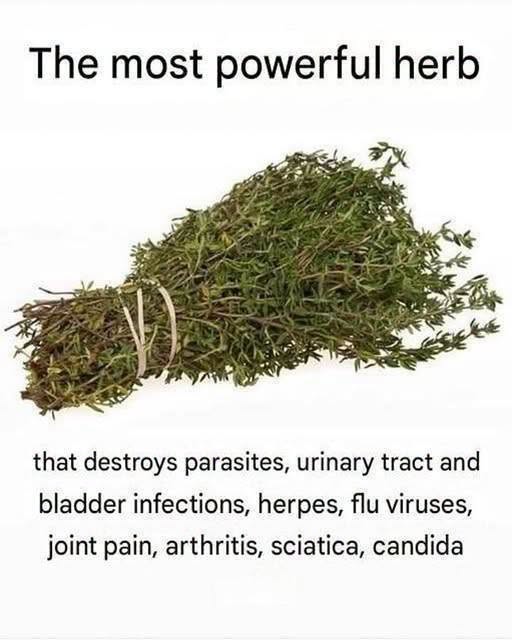
Thyme has earned a reputation as much more than a kitchen seasoning. For generations, people have added this aromatic herb to foods, teas, and traditional preparations, especially when they wanted something soothing during coughs or minor respiratory discomfort. Today, however, dramatic online claims sometimes describe thyme as an herb that destroys parasites, eliminates urinary tract infections, fights viruses, clears Candida, and even treats arthritis or sciatica.
Those claims need careful context.
Thyme contains biologically active plant compounds, including thymol and carvacrol, and researchers have documented antimicrobial activity from thyme-derived substances in laboratory settings. However, laboratory activity does not prove that eating thyme or drinking thyme tea can cure an infection inside the human body. The source material makes this distinction clearly, noting that researchers must consider dosage, absorption, metabolism, safety, and whether a compound reaches affected tissue in an effective concentration.
At the same time, thyme has a genuine history of traditional use. The European Medicines Agency recognizes certain thyme preparations for traditional use with productive coughs associated with colds, although it also notes that the clinical evidence remains limited.
Therefore, thyme deserves neither dismissal nor miracle status. Instead, it makes more sense to understand what science supports, what remains uncertain, and how to enjoy the herb safely.
I started paying closer attention to thyme after noticing how often dramatic health posts described ordinary herbs as powerful cures. Thyme stood out because I already used it regularly in soups, roasted vegetables, chicken, and potatoes. Instead of assuming the biggest claims must be true, I began looking at what researchers and health authorities actually said. The reality felt more useful than the hype. Thyme contains interesting aromatic compounds and has a long tradition of use, especially around coughs, yet that does not turn a cup of herbal tea into an antibiotic. Since then, I have appreciated thyme more as a flavorful plant with promising properties rather than a cure-all.
What Thyme Actually Contains and Why Scientists Study It
Thymol and Carvacrol Give Thyme Much of Its Scientific Interest
Thyme gets much of its distinctive scent from aromatic compounds found in its leaves and flowers. Among the most discussed are thymol and carvacrol.
Researchers study these substances because they show antimicrobial and antioxidant activity under experimental conditions. The source material specifically identifies thymol and carvacrol as biologically active components and explains that thymol has inhibited certain microorganisms in laboratory research.
That finding sounds impressive, but context matters.
When scientists expose microorganisms directly to a concentrated plant compound in a laboratory dish, they create conditions that differ dramatically from eating an herb. Your digestive system breaks substances down. Your liver processes them. Your bloodstream distributes them. Furthermore, only part of a substance may ever reach a particular tissue.
Therefore, researchers cannot assume that a compound that affects bacteria or fungi in a laboratory will behave identically inside a person.
Still, these findings make thyme interesting.
Researchers have investigated thyme-derived compounds in food science, preservation, oral-care products, and natural-product research. The European Medicines Agency also notes laboratory findings concerning thyme oil’s antimicrobial activity. However, its conclusions about medicinal thyme preparations focus mainly on traditional use for coughs rather than broad treatment of bacterial, fungal, or parasitic disease.
Thyme also provides aromatic phytochemicals with antioxidant properties. Antioxidant activity describes the ability of compounds to interact with oxidative processes. However, that does not mean thyme can “detox” the body or prevent every condition associated with oxidative stress.
Your liver, kidneys, lungs, gastrointestinal tract, and other systems already manage waste and metabolic byproducts.
Therefore, the most realistic way to think about thyme involves appreciating its plant compounds without assigning them abilities that clinical research has not established.
Thyme Has a Long Tradition of Use for Coughs
Among thyme’s traditional uses, cough support has some of the strongest formal recognition.
The European Medicines Agency’s Committee on Herbal Medicinal Products concluded that certain preparations of thyme can serve as traditional herbal medicines for productive, or chesty, coughs associated with colds. Importantly, that conclusion relies primarily on long-standing use rather than strong modern clinical evidence.
The agency reviewed clinical research, including a small study that compared a thyme preparation with bromhexine for productive cough. However, weaknesses in the research prevented firm conclusions. Consequently, regulators based their acceptance mainly on thyme’s long history of traditional use.
That distinction matters.
A warm thyme beverage may feel soothing when you have a minor cold. Its aroma, warmth, and hydration can also contribute to comfort. However, comfort does not equal a cure.
Likewise, thyme does not replace evaluation for serious respiratory symptoms.
Seek medical attention when breathing becomes difficult, chest pain develops, a high fever persists, symptoms worsen substantially, or other concerning signs appear. The source material also stresses that people with significant respiratory symptoms should seek appropriate medical care rather than relying on herbs.
The EMA similarly recommends medical advice if symptoms persist beyond about a week or worsen while someone uses an approved thyme preparation.
So, thyme can hold a reasonable place in traditional self-care for minor cough discomfort.
However, it should sit alongside sensible monitoring and appropriate medical care rather than replace them.
Can Thyme Destroy Parasites, UTIs, Candida, or Viruses?
Thyme Is Not a Proven Treatment for Parasites or Urinary Tract Infections
Some online posts describe thyme as an herb that can destroy parasites.
Experimental research gives that claim a small kernel of scientific interest because some thyme-related compounds have demonstrated antiparasitic activity under laboratory or experimental conditions.
However, this evidence does not establish thyme as a treatment for human parasitic infection.
The source material makes that distinction directly: experimental antiparasitic activity does not prove that consuming thyme can eliminate parasites in people. It also notes that parasitic infections differ greatly and may require specific tests and prescription treatments.
Therefore, suspected parasite infections deserve proper diagnosis.
The same caution applies to urinary tract infections.
A UTI commonly develops when bacteria enter the urinary tract. Symptoms can include burning with urination, frequent urges to urinate, lower abdominal discomfort, and cloudy or bloody urine.
Health professionals commonly treat bacterial bladder infections with antibiotics when appropriate. Furthermore, an untreated bladder infection can spread to one or both kidneys.
Thyme tea does not provide an established substitute.
The uploaded source also warns that thyme should not replace antibiotics or antiviral medication and specifically states that consuming thyme does not represent an established treatment for a bacterial UTI.
Anyone with fever, chills, nausea, vomiting, or pain in the back or side alongside urinary symptoms should seek prompt medical care because these signs can suggest kidney involvement.
So, while thyme compounds may interest antimicrobial researchers, people should separate that experimental research from actual treatment recommendations.
Using thyme on dinner remains very different from treating a diagnosed infection.
Laboratory Antifungal or Antiviral Activity Does Not Equal a Cure
Thyme also appears frequently in claims about Candida, herpes, and influenza.
Again, laboratory science provides some reasons for researchers to investigate thyme.
Thymol and other thyme-derived compounds have demonstrated antifungal activity against some Candida species in laboratory studies, according to the source material.
However, Candida infections can affect different parts of the body.
They may involve the mouth, skin, genital area, bloodstream, or other tissues, and each situation can require a different approach.
Therefore, researchers cannot translate laboratory antifungal activity directly into a recommendation to drink thyme tea or consume thyme oil.
The same principle applies to viruses.
Scientists can expose viruses or infected cells to plant compounds under controlled laboratory conditions. Those experiments can help identify promising molecules for future research.
However, they do not establish an herb as a treatment for influenza or herpes.
The source specifically states that current evidence does not justify replacing appropriate treatment for herpes or influenza with thyme.
This distinction between supportive comfort and medical treatment matters.
A warm thyme beverage may feel pleasant during a mild respiratory illness. It may encourage hydration. Its aroma may also make the experience more soothing.
Nevertheless, those effects differ from antiviral treatment.
Consequently, people should view thyme as a culinary herb and, in some contexts, a traditional herbal preparation rather than as a universal antimicrobial medicine.
This careful framing does not make thyme less interesting.
Instead, it protects a genuinely useful herb from claims that current evidence cannot support.
Thyme for Pain, Inflammation, and Essential Oil Safety
Arthritis and Sciatica Need More Than Herbal Claims
Online claims sometimes extend thyme’s supposed benefits to arthritis, nerve pain, and sciatica.
At first glance, this idea can sound believable because researchers often study plant compounds for antioxidant or anti-inflammatory effects.
However, broad laboratory findings do not automatically demonstrate pain relief in people.
Arthritis itself includes multiple conditions.
Osteoarthritis involves joint changes that differ from inflammatory autoimmune diseases such as rheumatoid arthritis.
Meanwhile, injuries, infections, gout, and several other conditions can also produce joint pain.
Sciatica involves irritation or compression affecting the sciatic nerve pathway.
Because these conditions arise from different causes, no single herb can reasonably address all of them in the same way.
The source states that high-quality clinical evidence does not currently support eating thyme or drinking thyme tea as a treatment for arthritis or sciatica. It also emphasizes that persistent, severe, or unexplained pain deserves medical evaluation.
That does not mean people cannot include thyme in a health-conscious diet.
In fact, thyme can make vegetables, beans, fish, poultry, potatoes, eggs, and whole grains taste more satisfying without requiring large amounts of salt or heavy sauces.
The source identifies this culinary advantage as one of thyme’s most practical benefits.
Therefore, someone who wants to eat a varied, flavorful diet can make excellent use of thyme.
However, using thyme as part of dinner and treating chronic joint or nerve pain remain two different goals.
When pain persists, worsens, causes weakness or numbness, or interferes substantially with daily activities, medical assessment provides a better path than relying on an herb alone.
Culinary Thyme and Thyme Essential Oil Are Very Different
One of the most important safety points involves the difference between ordinary thyme and concentrated thyme essential oil.
Sprinkling dried thyme into soup does not resemble swallowing concentrated essential oil.
Essential oils contain concentrated volatile compounds.
Because of that concentration, they can cause irritation, allergic reactions, or toxicity when people use them incorrectly.
The source clearly warns against assuming that an essential oil must be safe to swallow simply because the plant itself works safely as a seasoning.
The European Medicines Agency also notes reported allergic reactions and skin irritation with medicinal thyme oil preparations.
Therefore, avoid treating a bottle of essential oil like a stronger version of herbal tea.
Product concentration, preparation, intended route of use, and individual health circumstances all matter.
Children, pregnant people, individuals who take medications, and people with significant medical conditions should use particular caution around concentrated herbal products.
For everyday use, culinary thyme provides the simplest option.
Add fresh leaves to roasted vegetables.
Season chicken, fish, soups, beans, lentils, potatoes, or whole grains with dried thyme.
You can also prepare a mild herbal infusion from dried culinary thyme if you enjoy its flavor.
However, treat that drink as a beverage, not a cure for infection or chronic disease.
This distinction keeps thyme useful without turning it into something it cannot reliably be.
Practical Ways to Enjoy Thyme Without Falling for Miracle Claims
Use Thyme to Build Flavor in Everyday Meals
Thyme may offer its most dependable benefit right in the kitchen.
Its earthy, slightly minty aroma works beautifully with vegetables, poultry, fish, beans, lentils, sauces, soups, potatoes, eggs, and grains.
Because it contributes considerable flavor, thyme can help make simple foods taste more satisfying.
That becomes especially useful when someone wants to rely less on heavily salted sauces.
The source notes that herbs such as thyme can help people create flavorful meals without depending on large quantities of salt, sugar, or rich sauces.
Fresh thyme offers a softer, greener flavor.
Strip the leaves from woody stems and add them to roasted vegetables, sauces, or marinades.
Dried thyme tastes more concentrated, so begin with a smaller amount.
You can add it early when making soups, stews, beans, or braised dishes because the cooking liquid gives the dried leaves time to release their aroma.
Thyme also pairs particularly well with garlic, lemon, olive oil, parsley, rosemary, onions, tomatoes, and mushrooms.
For an easy vegetable side, toss carrots, potatoes, zucchini, or cauliflower with olive oil and thyme before roasting.
For chicken, combine thyme with garlic, black pepper, lemon zest, and a small amount of salt.
These uses provide flavor without asking thyme to do anything medically extraordinary.
That approach also fits the broader nutritional principle in the source: a varied diet containing fruits, vegetables, legumes, whole grains, nuts, seeds, and herbs provides a stronger foundation than depending on one “superfood” or medicinal plant.
Thyme can contribute to that varied pattern.
It simply does not need miracle claims to earn a place in it.
Know When an Herb Is Not Enough
The most important skill with herbal remedies may involve knowing when to stop self-care and seek help.
For minor cold discomfort, a warm beverage and thyme-based traditional preparation may feel soothing.
However, worsening symptoms deserve attention.
Likewise, suspected urinary infections should not wait for an herbal remedy to work.
The CDC advises people with UTI symptoms to seek appropriate care, and bacterial UTIs commonly require antibiotics selected by a healthcare professional.
Untreated bladder infections can spread to the kidneys.
Kidney infection symptoms can include fever, chills, pain in the back or side, nausea, vomiting, and painful urination. Kidney infections can become serious, so prompt care matters.
Similarly, suspected parasitic infections require proper identification because different parasites require different treatments.
Persistent nerve pain or arthritis symptoms also deserve a diagnosis rather than a generic anti-inflammatory claim.
The source’s central message captures this balance well: thyme contains interesting plant compounds, but promising experimental findings should not become claims of proven medical treatment.
That perspective allows people to enjoy thyme confidently.
Use it for flavor.
Enjoy its aroma.
Appreciate its traditional history.
Follow evidence-based guidance when using regulated herbal preparations.
Most importantly, do not allow an exaggerated social-media claim to delay appropriate diagnosis or treatment.
Thyme can play a useful role in everyday life without needing to become a cure-all.
Frequently Asked Questions
Can thyme really destroy parasites?
Researchers have observed antiparasitic activity from some thyme compounds in laboratory or experimental studies. However, this does not prove that eating thyme or drinking thyme tea can eliminate a parasitic infection in people. Different parasites require different diagnostic methods and treatments.
Can thyme cure a urinary tract infection?
No established evidence supports using thyme as a cure for a bacterial UTI. Bladder infections commonly result from bacteria and often require antibiotics. Untreated infections can sometimes spread to the kidneys.
Does thyme help with coughs?
Certain thyme preparations have a recognized history of traditional use for productive coughs associated with colds. However, the European Medicines Agency notes that strong clinical evidence remains limited, so people should not interpret this traditional use as proof that thyme cures respiratory infections.
Is thyme essential oil safe to swallow?
Do not assume that thyme essential oil is safe to ingest simply because culinary thyme is safe in food. Essential oils contain highly concentrated compounds and can cause adverse effects when used incorrectly. The source specifically distinguishes culinary thyme from concentrated thyme oil.
What is the safest everyday way to use thyme?
For most people, ordinary culinary use provides the simplest approach. Add fresh or dried thyme to soups, vegetables, poultry, fish, potatoes, beans, grains, and sauces. You can also enjoy a mild thyme infusion as a beverage while avoiding claims that it treats infections or chronic diseases.
Conclusion
Thyme deserves attention, but it does not need exaggerated claims to make it valuable.
This small aromatic herb contains compounds such as thymol and carvacrol that researchers continue to study for antimicrobial and antioxidant properties. Laboratory findings have produced interesting results, and traditional herbal practice has long used thyme for cough and respiratory discomfort.
The European Medicines Agency recognizes certain thyme preparations for traditional use with productive coughs associated with colds. However, that recognition relies largely on long-standing use rather than strong evidence that thyme treats infections.
The evidence becomes much weaker when claims move toward parasites, urinary tract infections, Candida, herpes, influenza, arthritis, or sciatica.
Thyme compounds may affect microorganisms under laboratory conditions, but consuming thyme does not automatically reproduce those effects inside the human body.
Therefore, thyme should not replace antibiotics, antiviral medications, antifungal treatment, antiparasitic drugs, or appropriate evaluation for persistent pain.
The distinction between culinary thyme and thyme essential oil also matters.
A sprinkle of dried thyme in soup contains dramatically less concentrated material than essential oil. Consequently, people should not treat essential oil as an ordinary food ingredient.
The most practical way to appreciate thyme involves using it regularly in cooking.
It adds depth to soups, roasted vegetables, chicken, fish, beans, potatoes, eggs, grains, and sauces. Furthermore, its strong aroma can make lower-salt meals taste more satisfying.
You can also enjoy thyme tea as a traditional beverage when you like its flavor or soothing warmth.
Just remember the larger principle: an herb can contain fascinating compounds without becoming a cure for every condition attached to it online.
Thyme offers flavor, tradition, and scientifically interesting plant chemistry. That already makes it worth keeping in the kitchen.
More Home Remedies
- Wrinkled Fingers After Water Exposure: What Your Skin May Be Telling You
- Skin Rash With Breathing Trouble? It Could Be a Life-Threatening Allergic Reaction
- I Thought It Was a Piece of Trash on the Bathroom Floor—Until It Moved
- If You Are Getting White Pimples on Your Lips or Intimate Area, Here’s What They Could Mean