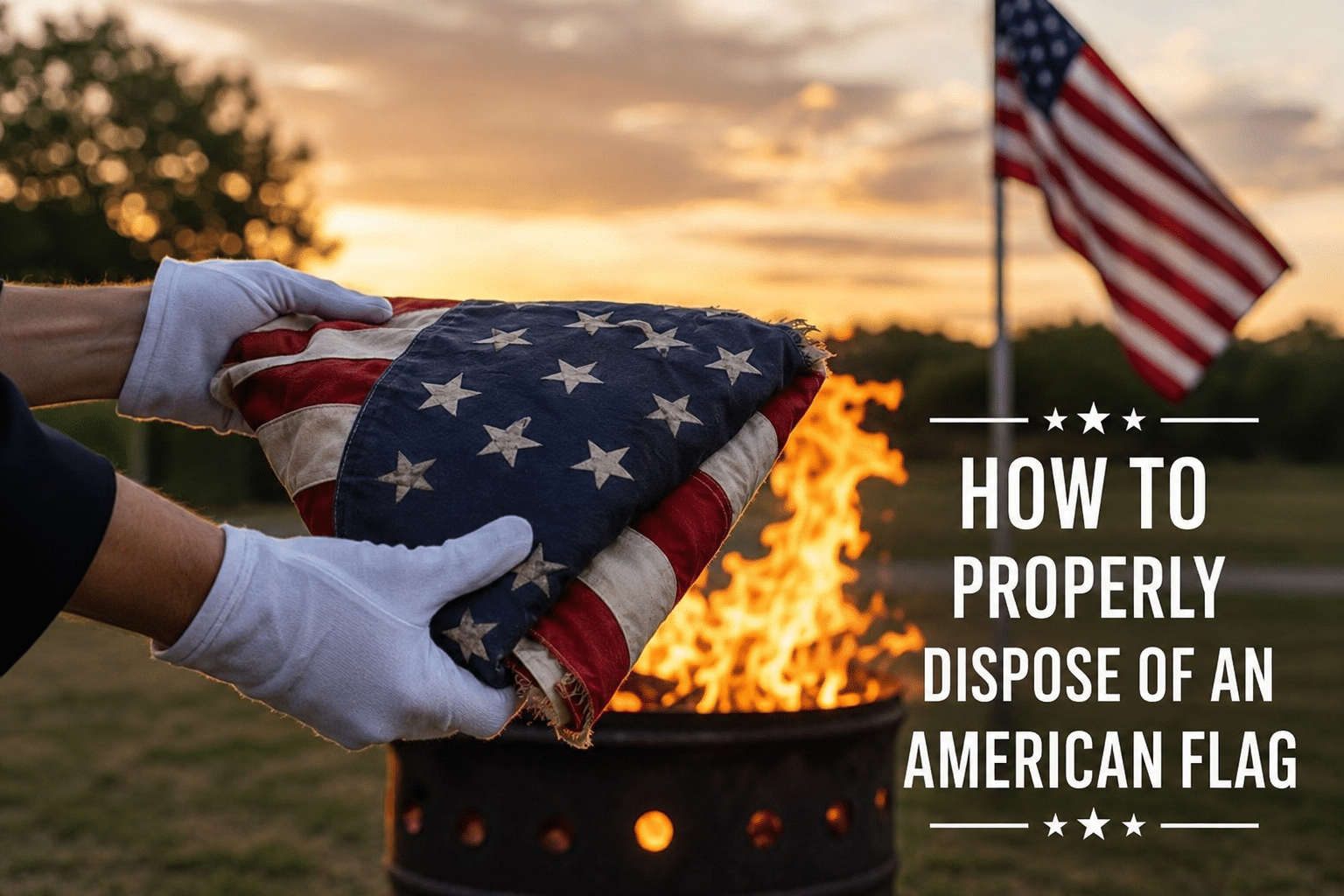
The American flag is more than fabric, thread, and color. It represents freedom, sacrifice, national memory, shared responsibility, and the long story of a country still shaped by the ideals it carries. People fly it outside homes, schools, public buildings, veterans’ halls, and places of worship. They raise it during celebrations, lower it during times of mourning, and fold it carefully during solemn ceremonies.
But even the strongest flag eventually wears down.
Sunlight fades the red and blue. Wind frays the edges. Rain weakens the stitching. Over time, a flag that once looked bright and dignified may become torn, stained, thin, or badly faded. When that happens, many people wonder what they should do next.
The answer is simple in spirit: an American flag that is no longer fit for display should be retired respectfully. The U.S. Flag Code says a worn flag should be destroyed in a dignified way, preferably by burning.
When Should an American Flag Be Retired?
A flag does not need to look brand new to remain meaningful. However, it should still appear respectful when displayed.
You should consider retiring a flag when it is badly torn, heavily frayed, faded beyond recognition, stained, stretched, or damaged in a way that makes it unsuitable for display. A small tear may be repaired, and a slightly faded flag may still serve for a while. However, once the flag no longer looks like a fitting emblem, retirement becomes the respectful choice.
This decision often requires judgment. If you would feel uncomfortable flying the flag in front of guests, neighbors, veterans, or community members, it may be time to replace it.
Why You Should Not Throw It in the Trash
Many people instinctively feel that tossing an American flag into a garbage bin is wrong. That feeling comes from what the flag represents.
A flag may be made of cloth, but its meaning goes far beyond the material. Throwing it away with ordinary trash can seem careless because it treats the symbol as disposable waste.
Proper retirement is not about fear or strict ceremony for ceremony’s sake. Rather, it is about gratitude. A flag that has flown through seasons of weather deserves a final act of care.
Respectful Ways to Retire an American Flag
Use a Local Flag Disposal Box
One of the easiest options is to place the worn flag in a designated flag retirement box.
Many communities have drop boxes at veterans’ organizations, American Legion posts, VFW posts, fire stations, municipal buildings, libraries, and some post offices. These groups collect worn flags and retire them through respectful ceremonies.
This option works especially well if you do not feel comfortable conducting a ceremony yourself. It also ensures that experienced volunteers handle the flag properly.
Contact a Veterans’ Organization
Veterans’ groups often perform formal flag retirement ceremonies. The American Legion promotes a dignified ceremony for unserviceable flags and describes it as a proper tribute to the flag and its symbolism.
VFW posts and other veterans’ organizations also commonly accept worn flags for proper retirement. Some posts maintain drop-off boxes so residents can leave flags at any convenient time.
Hold a Formal Burning Ceremony
Ceremonial burning remains the traditional and widely recognized method of flag retirement. The key word is ceremonial.
This is not casual burning. It should be calm, controlled, safe, and respectful. Many groups hold these ceremonies on Flag Day, June 14, although a flag may be retired respectfully at any time.
A dignified ceremony may include folding the flag, saying a few respectful words, placing it carefully into the fire, allowing it to burn completely, and burying the cooled ashes afterward.
Safety matters. Use a legal outdoor fire area, follow local burn rules, keep water nearby, and never burn synthetic materials in a way that creates unsafe fumes.
Donate the Flag for Respectful Repurposing
Some organizations collect old flags and turn portions of the fabric into memorial pieces, quilts, keepsakes, or educational displays.
This can be a meaningful option when the fabric remains usable. However, choose an organization that treats the flag respectfully and understands proper flag etiquette.
How to Prepare a Flag for Retirement
Before dropping off or retiring a flag, gently fold it if possible. A traditional triangle fold is appropriate, but it is not always necessary if the flag is too damaged or too large.
Keep the flag clean and separate from regular trash. Place it in a bag or box if needed, especially if it is wet or fragile. Then bring it to a retirement collection point or prepare it for a dignified ceremony.
What About Nylon or Synthetic Flags?
Many modern flags are made from nylon or polyester. These materials can release unpleasant or unsafe fumes when burned.
Because of that, some communities prefer collecting synthetic flags through veterans’ groups or recycling-style retirement programs rather than burning them privately. When in doubt, use a local flag disposal box or contact an American Legion or VFW post.
Can You Retire a Flag Yourself?
Yes, you may retire a flag yourself as long as you do so respectfully, safely, and legally.
A simple private ceremony can be meaningful. Choose a quiet location, fold the flag, say a few words of thanks, and dispose of it in a dignified way. If burning is not safe or allowed where you live, use a community drop box instead.
The goal is not perfection. The goal is respect.
Final Thoughts
Learning how to properly dispose of an American flag is a small but meaningful act of citizenship. It reminds us that symbols matter, not because of the cloth itself, but because of the ideals people attach to it.
When a flag becomes worn, faded, or torn, do not treat it as ordinary trash. Drop it off with a veterans’ organization, place it in a flag retirement box, donate it to a respectful program, or retire it through a dignified ceremony.
A flag that has flown with honor deserves to be retired with honor.
More The Crafty Nest
- The Mystery of Lobster’s Green Goodies: What That Green Stuff Really Is
- Which Sitting Position Matches Your Personality? What Your Posture May Reveal
- What Your Sleep Position Says About Your Personality: 6 Fascinating Sleep Styles
- What Does a Handshake Symbol on a Parking Space Mean? Here’s What You Should Know