Early Menopause: 10 Signs Every Woman Should Be Aware Of is an important topic because menopause does not always begin in the early 50s. Early menopause generally refers to menopause that happens before age 45, while menopause before age 40 is often described as premature menopause. However, when ovarian function becomes irregular before age 40, clinicians may use the term primary ovarian insufficiency, or POI, because ovarian activity can sometimes continue intermittently.
The first sign is often a change in menstrual periods. Still, menopause symptoms can involve sleep, mood, concentration, sexual health, and temperature regulation as hormone levels fluctuate. The NHS lists irregular or absent periods, hot flashes, night sweats, vaginal dryness, sleep difficulty, low mood or anxiety, reduced sex drive, and memory or concentration problems among common symptoms of early or premature menopause.
I used to think the pattern would always be obvious: periods stop, hot flashes begin, and menopause becomes easy to recognize. In reality, the transition can be much less predictable. Someone in their late 30s or early 40s may first notice lighter periods, restless sleep, reduced concentration, or vaginal dryness and assume stress explains everything. Those symptoms can come from many causes, so they do not prove early menopause. However, when several begin together or menstrual patterns change noticeably, medical evaluation becomes much more useful than guessing.
Recognizing the possibility matters because early loss of ovarian hormone production can affect more than monthly cycles. Earlier menopause can influence fertility and long-term bone and cardiovascular health, so diagnosis provides an opportunity to discuss symptom relief, contraception or fertility goals, and protection of overall health.
Menstrual and Temperature Changes Often Appear First
1. Irregular Periods and 2. Periods That Stop
A change in menstrual pattern is one of the most important signs in Early Menopause: 10 Signs Every Woman Should Be Aware Of. Periods may come closer together, arrive farther apart, become lighter or heavier, or occasionally disappear for months. Eventually, menopause itself is defined by 12 months without a menstrual period when no other explanation applies.
Before age 40, however, prolonged irregularity may suggest primary ovarian insufficiency rather than completed menopause. NICHD explains that people with POI may still have occasional periods and can sometimes still ovulate, which is why POI is not identical to irreversible menopause.
Do not assume every missed period means menopause. Pregnancy, polycystic ovary syndrome, thyroid disorders, intense exercise, significant weight changes, stress, and some medications can all affect menstrual cycles. PCOS, for example, can cause skipped periods, absent periods, or very heavy bleeding.
That is why age and pattern matter. The NHS advises people under 45 who develop menopause symptoms to speak with a clinician, and blood tests may sometimes be used to help evaluate the cause.
3. Hot Flashes and 4. Night Sweats
Hot flashes can appear suddenly and may involve intense warmth across the face, neck, and chest. Some people flush or sweat heavily, while others experience a brief chill afterward. They can occur during the day without much warning.
Night sweats are essentially similar temperature-regulation episodes during sleep. They can wake you repeatedly, soak clothing or bedding, and leave you feeling exhausted the next morning.
These symptoms are linked to hormonal changes that affect the body’s temperature-regulation system. They are common during perimenopause and menopause, but they can also occur with other medical conditions or medications. Therefore, repeated hot flashes in someone younger than expected should be considered in context rather than used as a diagnosis by themselves.
The NHS lists hot flushes and night sweats among the characteristic symptoms of early or premature menopause.
If these episodes begin alongside changing periods, vaginal symptoms, or fertility problems before age 45, that combination provides a stronger reason to discuss early menopause with a healthcare professional.
Sleep, Mood, and Mental Focus Can Change Too
5. Sleep Problems and 6. Mood Changes
Sleep disturbance can develop for several reasons during the menopause transition. Night sweats may wake you directly, while hormonal changes can make falling asleep or staying asleep more difficult even without obvious sweating.
Poor sleep then creates a second layer of symptoms. Tiredness can increase irritability, make concentration harder, and reduce resilience to everyday stress. That means sleep and mood changes often reinforce each other.
The NHS lists difficulty sleeping, low mood, and anxiety among common menopause and perimenopause symptoms.
However, insomnia or anxiety does not automatically point to menopause. Depression, chronic stress, thyroid problems, sleep apnea, medications, and many other factors can create similar symptoms. If sleep problems persist, especially when they appear with menstrual changes, discussing the full pattern with a clinician can help identify the cause.
Mood symptoms deserve attention even when they seem mild. Hormonal transition can affect emotional well-being, but significant depression, panic, or persistent anxiety should be treated as real health concerns rather than dismissed as “just hormones.”
7. Memory or Concentration Problems and 8. Reduced Sex Drive
Many people describe “brain fog” during perimenopause and menopause. This can involve difficulty finding words, losing track of tasks, forgetting small details, or feeling less mentally sharp than usual.
The NHS recognizes memory and concentration problems as possible menopause symptoms.
Sleep disruption can make these problems worse. Someone who wakes repeatedly because of night sweats may struggle with attention the next day even if hormonal changes are only part of the picture.
Reduced sex drive can also occur. Hormonal changes, vaginal discomfort, mood symptoms, fatigue, relationship factors, medications, and stress can all influence libido. That means lower desire is not specific to early menopause, but it may fit the broader pattern.
Because sexual health is often under-discussed, some people tolerate symptoms for years without asking for help. Bringing them up with a clinician can open the door to practical treatment options for vaginal discomfort, sleep, mood, and other factors that may be contributing.
Vaginal Symptoms and Fertility Changes Can Be Important Clues
9. Vaginal Dryness or Pain With Sex
Falling estrogen levels can affect vaginal and vulvar tissues. The tissue may become drier, thinner, or less flexible, which can lead to burning, irritation, discomfort during sex, or increased sensitivity.
The NHS includes vaginal dryness among common symptoms of early or premature menopause.
These symptoms are treatable, yet many people assume they simply have to tolerate them. Moisturizers, lubricants, and prescription therapies may help depending on the cause and medical history.
Vaginal dryness can also have causes unrelated to menopause. Breastfeeding, certain medications, some cancer treatments, and dermatologic conditions can produce similar discomfort.
Therefore, persistent vaginal symptoms before age 45 should be evaluated alongside menstrual history and other hormone-related changes rather than considered proof of menopause by themselves.
10. Difficulty Conceiving
Fertility can decline as ovarian function becomes less predictable. In primary ovarian insufficiency, irregular ovulation can make conception more difficult, although occasional ovulation may still occur. NICHD specifically notes that POI can cause irregular periods and fertility problems before age 40.
This distinction is important. A person with POI is not necessarily permanently unable to become pregnant. Because ovarian activity may occur intermittently, contraception may still be needed when pregnancy is not desired.
Difficulty conceiving does not automatically mean early menopause, either. Fertility can be affected by age, sperm factors, fallopian tube problems, endometriosis, PCOS, thyroid disease, and many other issues.
However, infertility combined with irregular periods and menopause-like symptoms in someone under 40 raises the possibility of POI. NICHD describes irregular or absent periods, unusually short or long cycles, infertility, hot flashes, night sweats, and vaginal dryness among symptoms seen in ovarian insufficiency.
If future pregnancy matters to you, earlier evaluation can be particularly valuable because it gives you more time to discuss fertility options and understand what ovarian function remains.
Why Early Diagnosis and Treatment Matter
Early Menopause Can Affect Bone and Heart Health
Early menopause involves more than uncomfortable symptoms. Estrogen helps support bone health, and prolonged low estrogen before the usual age of menopause can increase the risk of osteoporosis and fractures.
NICHD notes that people with primary ovarian insufficiency have a greater risk of osteoporosis. The NHS also states that menopause before age 45 can increase the likelihood of future bone and heart problems.
This is one reason hormone replacement is often discussed differently in someone experiencing menopause early compared with someone reaching menopause at the usual age. The goal may include replacing hormones that the body would otherwise have continued producing for years.
The NHS lists hormone replacement therapy or the combined contraceptive pill among common treatments for early or premature menopause, depending on the individual’s medical history.
Hormone therapy is not appropriate for everyone. Certain cancers and other medical conditions can change the balance of risks and benefits, so treatment should be individualized.
Lifestyle still matters as well. Weight-bearing exercise, adequate calcium and vitamin D, not smoking, maintaining a healthy blood pressure, and addressing cholesterol and diabetes risk can all support long-term health.
Other Conditions Need to Be Ruled Out
One of the most useful reasons to seek medical evaluation is that several conditions can mimic early menopause. Irregular periods may arise from pregnancy, thyroid disease, PCOS, major weight changes, stress, medications, or other hormonal disorders.
A clinician may review menstrual history, symptoms, medications, family history, pregnancy possibility, and prior treatments such as chemotherapy or ovarian surgery. The NHS notes that chemotherapy, radiotherapy, certain hormone treatments, and surgery to remove the ovaries can cause early or premature menopause.
Family history also matters. Someone with relatives who experienced early menopause may have a higher likelihood of experiencing it as well.
Before age 40, genetic or autoimmune causes may sometimes be considered when POI is diagnosed. NICHD notes that ovarian insufficiency can occur for several reasons and that the exact cause remains unknown in many cases.
The key is not to diagnose yourself from one symptom. Instead, pay attention to the overall pattern and how long it persists.
If you are under 45 and experiencing several menopause-like symptoms, particularly irregular or absent periods, medical evaluation can clarify whether you are entering early menopause, experiencing POI, or dealing with another condition that needs different treatment.
Frequently Asked Questions
What age is considered early menopause?
Menopause before age 45 is generally considered early menopause. Menopause before age 40 is considered premature menopause, although clinicians often use the term primary ovarian insufficiency when ovarian function becomes abnormal before 40.
What is usually the first sign of early menopause?
A change in menstrual periods is often one of the earliest signs. Periods may become irregular, lighter, heavier, farther apart, or stop altogether.
Can you still get pregnant with primary ovarian insufficiency?
Yes, pregnancy can still occur in some people with POI because ovarian function may happen intermittently. POI differs from completed menopause, in which ovulation has permanently stopped.
Does early menopause need treatment?
Treatment depends on symptoms, age, medical history, and underlying cause. The NHS notes that hormone replacement therapy or combined hormonal contraception may be recommended in many cases to replace low hormones and help reduce bone and heart risks, although these treatments are not suitable for everyone.
When should I see a doctor about possible early menopause?
If you are under 45 and develop menopause-like symptoms, particularly irregular or absent periods, it is reasonable to seek medical evaluation. A clinician may use your history, symptoms, examination, and sometimes blood tests to determine what is happening.
Conclusion
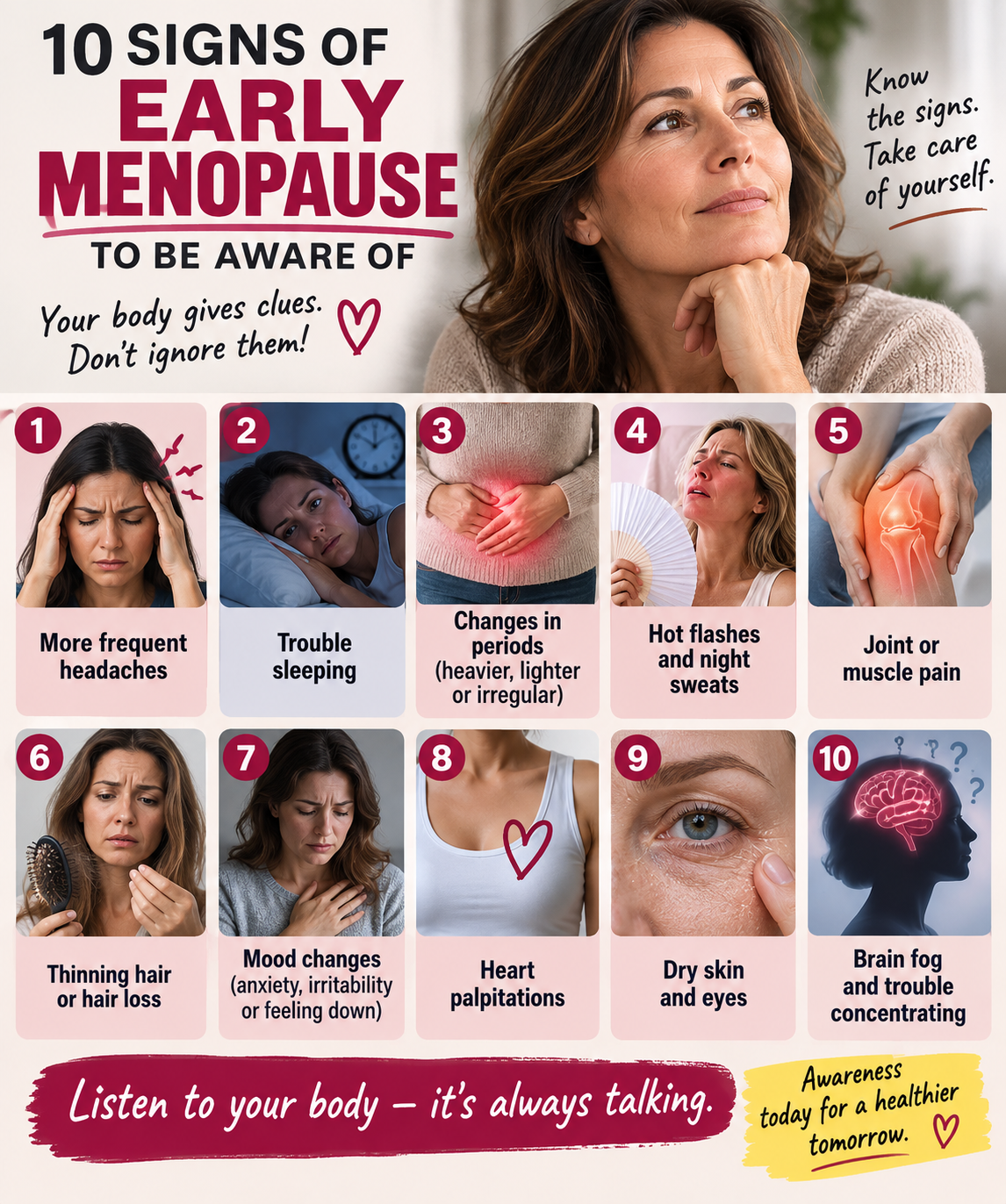
Early Menopause: 10 Signs Every Woman Should Be Aware Of includes irregular periods, periods that stop, hot flashes, night sweats, sleep problems, mood changes, difficulty concentrating, reduced sex drive, vaginal dryness, and fertility problems.
However, none of these symptoms proves early menopause on its own. Thyroid disorders, pregnancy, PCOS, medications, stress, major weight changes, and other medical conditions can produce overlapping symptoms.
Age provides an important clue. Menopause before 45 is considered early, while ovarian dysfunction before 40 may be diagnosed as primary ovarian insufficiency. POI differs from completed menopause because ovarian activity can sometimes continue intermittently.
Getting an accurate diagnosis matters because earlier estrogen loss can affect fertility, bones, and cardiovascular health. Treatment can also make symptoms more manageable and may help protect long-term health when hormone replacement is appropriate.
If your periods change substantially before age 45 and other menopause-like symptoms appear, do not assume you simply have to live with them. A medical evaluation can help determine what is actually happening and give you clearer options for symptom relief, fertility planning, and long-term health.
More Blog
- Drinking Water on an Empty Stomach — What Science Actually Supports (No Hype, Just Facts)
- Waking Up Between 3 and 5 AM? It Might Be Your Soul Trying to Talk to You
- What a “Bleach” Patch on Your Underwear Really Means — And Why It’s Actually a Good Sign
- This Drink May Weaken Your Bones From The Inside — But Everyone Drinks It Anyway