For millions of people, bedtime is supposed to be the most relaxing part of the day. The lights go out, the house becomes quiet, and the body finally gets a chance to recover from the demands of work, family, and daily responsibilities.
Yet for those who struggle with acid reflux, nighttime can become an entirely different experience.
Instead of restful sleep, many people find themselves waking up with a burning sensation in their chest, a sour taste in their mouth, persistent coughing, throat irritation, or a feeling that stomach contents are creeping upward when they lie down.
While medications, dietary changes, and lifestyle adjustments often receive the most attention when discussing acid reflux, one surprisingly powerful factor is frequently overlooked: sleeping position.
Medical experts have spent years studying the relationship between body position and digestive health, and the findings are remarkably clear. The way you sleep can significantly influence how often acid reflux occurs, how severe symptoms become, and whether you wake up feeling rested or miserable.
The encouraging news is that changing your sleeping position costs nothing, requires no prescription, and may provide noticeable relief for many people.
Let’s explore why sleeping position matters so much, which positions help the most, and what simple adjustments can improve your chances of enjoying a comfortable, reflux-free night.
Understanding Acid Reflux
Before discussing sleeping positions, it helps to understand exactly what acid reflux is.
Your digestive system contains a muscular valve known as the lower esophageal sphincter (LES). This valve sits between the esophagus and the stomach.
Think of it as a one-way door.
When you swallow food or drink, the valve opens to allow contents into the stomach. Once the food passes through, the valve should close tightly.
Its job is simple but important: keep stomach contents where they belong.
However, when the LES weakens or relaxes inappropriately, stomach acid can flow backward into the esophagus.
This backward movement is known as acid reflux.
Because the esophagus lacks the protective lining found in the stomach, exposure to acid can cause irritation and discomfort.
Common symptoms include:
- Heartburn
- Chest burning
- Sour taste in the mouth
- Regurgitation
- Chronic cough
- Hoarseness
- Throat irritation
- Difficulty swallowing
For some people, symptoms occur occasionally. For others, reflux becomes a chronic condition known as gastroesophageal reflux disease (GERD).
Why Acid Reflux Often Gets Worse at Night
Many people notice that reflux symptoms become more severe after they lie down.
This happens for several reasons.
Gravity Stops Helping
During the day, gravity assists digestion.
When you’re sitting or standing, gravity naturally helps keep stomach contents where they belong.
Once you lie flat, that advantage disappears.
Acid can move more easily toward the esophagus.
Swallowing Decreases During Sleep
When awake, you swallow frequently.
Swallowing helps clear acid from the esophagus.
During sleep, swallowing slows dramatically.
As a result, acid remains in contact with sensitive tissues for longer periods.
Saliva Production Drops
Saliva helps neutralize stomach acid.
At night, saliva production decreases significantly.
Less saliva means less natural protection.
Stomach Emptying Slows
Digestion naturally slows during sleep.
A fuller stomach creates additional pressure against the lower esophageal sphincter.
This increases the likelihood of reflux episodes.
The Best Sleeping Position for Acid Reflux
Among all sleeping positions studied, one consistently stands out as the most beneficial.
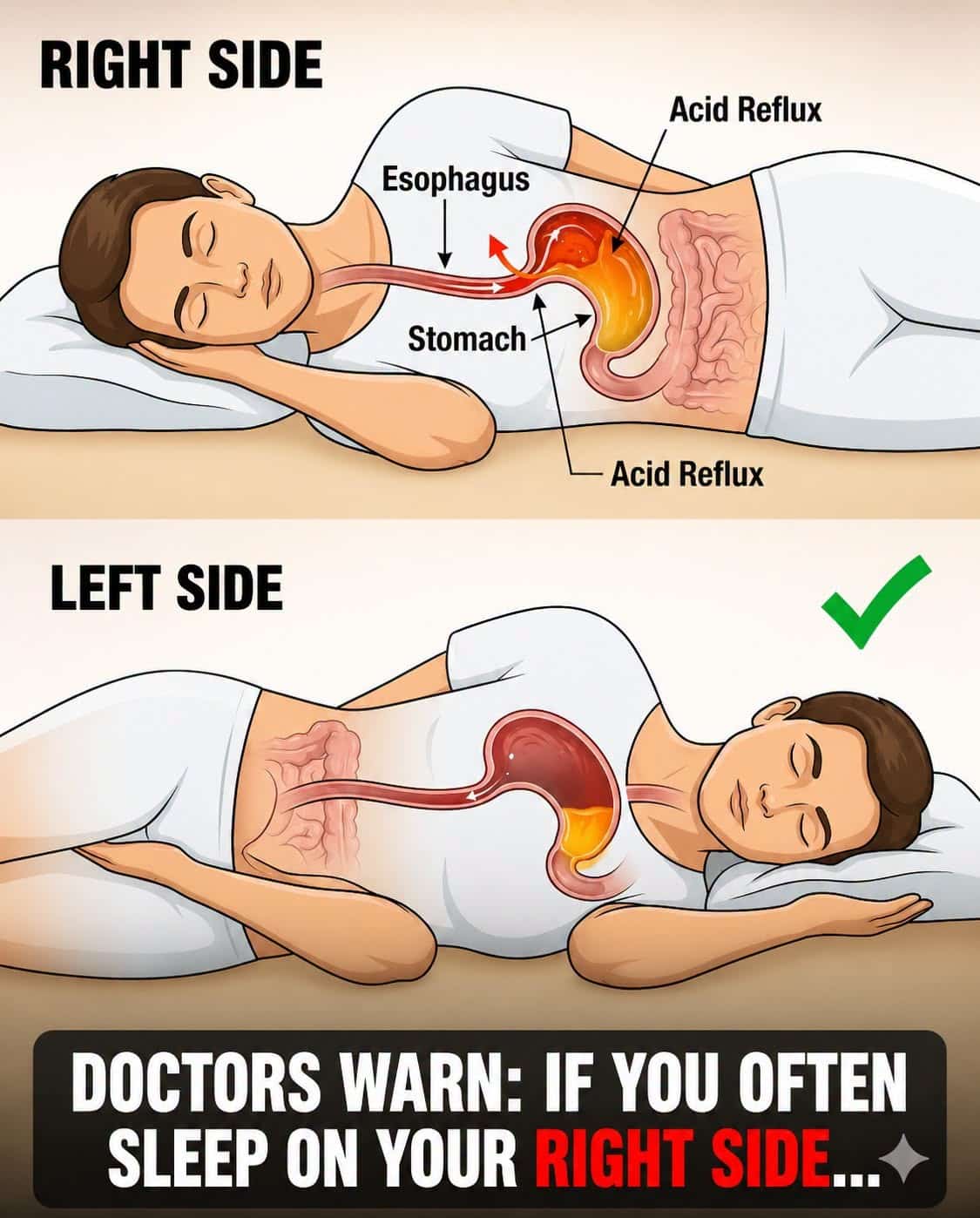
Sleeping on Your Left Side
Research repeatedly shows that sleeping on the left side reduces acid reflux symptoms for many individuals.
Doctors often recommend this position as a first-line lifestyle adjustment.
Why the Left Side Works
The explanation involves simple anatomy.
Your stomach is not centered perfectly in your body.
Instead, it sits primarily on the left side.
When you lie on your left side, the stomach rests below the esophagus.
This arrangement helps keep stomach acid pooled away from the LES.
Even if the valve relaxes slightly during sleep, gravity works in your favor.
Acid has a more difficult path to travel.
As a result:
- Reflux episodes decrease
- Acid exposure drops
- Symptoms may improve
- Sleep quality often increases
Additional Benefits
Many people report that left-side sleeping also helps with:
- Digestion
- Snoring reduction
- Improved circulation
- Reduced nighttime discomfort
While individual experiences vary, left-side sleeping remains one of the simplest and most effective non-medication approaches available.
Why Sleeping on Your Right Side May Make Reflux Worse
If the left side is the best position, the right side is often the least favorable.
The Anatomical Problem
When you roll onto your right side, the relationship between the stomach and esophagus changes.
The stomach now sits above portions of the esophagus.
This arrangement makes it easier for acid to move upward.
In essence, gravity begins working against you.
Several studies have shown that right-side sleeping may increase:
- Reflux frequency
- Acid exposure time
- Symptom severity
- Nighttime awakenings
Many people who experience persistent nighttime heartburn notice significant improvement simply by avoiding prolonged right-side sleeping.
Sleeping on Your Back: Good or Bad?
Back sleeping falls somewhere in the middle.
It isn’t necessarily the worst position, but it often requires additional adjustments.
Potential Benefits
Sleeping on the back may help:
- Maintain spinal alignment
- Reduce pressure on joints
- Minimize facial wrinkles
- Support neck comfort
The Reflux Challenge
The problem is that gravity provides little assistance when lying flat on your back.
If acid escapes the stomach, it can move directly into the esophagus.
This may lead to:
- Heartburn
- Regurgitation
- Coughing
- Interrupted sleep
For people who prefer sleeping on their backs, elevation becomes especially important.
Why Stomach Sleeping Is Usually the Worst Choice
Many people find stomach sleeping comfortable, but it often creates challenges for reflux sufferers.
Increased Pressure
When lying face-down, body weight places pressure directly on the stomach.
This pressure can force stomach contents upward.
Imagine squeezing a partially filled balloon.
Contents naturally move toward areas of least resistance.
The same principle applies to the digestive system.
Additional Problems
Stomach sleeping may also contribute to:
- Neck pain
- Shoulder strain
- Lower back discomfort
- Reduced sleep quality
For reflux sufferers, stomach sleeping generally offers few advantages.
The Elevation Strategy Doctors Recommend
If changing positions isn’t enough, elevation can make a substantial difference.
Why Elevation Works
Raising the upper body uses gravity to keep acid in the stomach.
Even a modest incline may reduce nighttime reflux.
The Wrong Way: Extra Pillows
Many people attempt elevation by stacking multiple pillows.
Unfortunately, this often creates more problems than solutions.
Extra pillows may:
- Bend the neck awkwardly
- Compress the abdomen
- Increase stomach pressure
- Cause discomfort
Instead of elevating the entire upper body, they primarily elevate the head.
The Better Solution: Wedge Pillows
Wedge pillows elevate the entire torso.
This creates a gentle incline from the waist upward.
Benefits include:
- Better acid control
- Improved comfort
- Reduced neck strain
- More natural positioning
Bed Risers
Another effective option involves raising the head of the bed.
Bed risers placed beneath the headboard legs create a gradual incline across the entire mattress.
Many sleep specialists recommend elevating the head of the bed by approximately six to eight inches.
The Three-Hour Rule
Sleeping position matters, but timing matters too.
One of the most effective reflux-prevention strategies is avoiding meals close to bedtime.
Why Timing Is Important
After eating, the stomach requires time to process food.
Lying down too soon increases the likelihood of reflux.
A full stomach creates pressure against the LES.
This pressure encourages acid to move upward.
Expert Recommendation
Most doctors suggest waiting at least three hours after eating before lying down.
For example:
- Dinner at 6:00 PM
- Bedtime at 9:00 PM or later
This allows significant stomach emptying before sleep begins.
Foods That Can Trigger Nighttime Reflux
Certain foods are more likely to worsen symptoms.
Common triggers include:
Fatty Foods
- Fried foods
- Fast food
- Heavy sauces
- High-fat meats
Spicy Foods
Hot peppers and spicy dishes may irritate the digestive tract.
Chocolate
Chocolate may relax the LES in some individuals.
Caffeine
Coffee, tea, and energy drinks can contribute to symptoms.
Alcohol
Alcohol may weaken LES function.
Citrus Fruits
Oranges, lemons, and grapefruits can increase irritation.
Tomato Products
Tomato sauces and similar foods are acidic and may worsen symptoms.
Not everyone reacts to the same triggers, so keeping a food journal can be helpful.
Lifestyle Habits That Support Better Sleep
Sleeping position works best when combined with healthy habits.
Maintain a Healthy Weight
Excess abdominal pressure increases reflux risk.
Even modest weight loss may reduce symptoms.
Wear Loose Clothing
Tight waistbands can place pressure on the stomach.
Comfortable sleepwear often helps.
Avoid Smoking
Smoking weakens the lower esophageal sphincter.
Stay Active
Regular physical activity supports digestion and overall health.
Take a Gentle Evening Walk
A short walk after dinner may encourage digestion and reduce reflux episodes.
When to See a Doctor
Occasional heartburn is common.
However, persistent symptoms deserve medical attention.
Consult a healthcare provider if you experience:
- Heartburn several times per week
- Difficulty swallowing
- Unexplained weight loss
- Chronic cough
- Persistent hoarseness
- Chest pain
- Symptoms that interfere with sleep
Untreated GERD can lead to complications over time, making proper evaluation important.
Frequently Asked Questions
How quickly can changing sleeping position help?
Some people notice improvement within a single night, while others require several weeks of consistent adjustments.
Is left-side sleeping safe for everyone?
For most people, yes. However, individuals with certain medical conditions should follow guidance from their healthcare provider.
Can a wedge pillow replace medication?
Not necessarily. Lifestyle changes often complement medical treatment rather than replace it.
What if I keep rolling onto my right side?
Some people place a pillow behind their back or use body pillows to maintain left-side positioning.
Can acid reflux cause sleep problems?
Absolutely. Reflux can trigger frequent awakenings, discomfort, coughing, and poor sleep quality.
Final Thoughts
Acid reflux can transform a peaceful night into a frustrating cycle of discomfort and interrupted sleep. Yet one of the most effective strategies for reducing symptoms may be as simple as changing the way you lie down.
Research consistently shows that sleeping on the left side helps keep stomach acid where it belongs. Combined with proper elevation, smart meal timing, and healthy lifestyle habits, this simple adjustment can make a meaningful difference.
If you struggle with nighttime heartburn, don’t underestimate the power of anatomy and gravity. Sometimes the path to better sleep isn’t found in a medicine cabinet—it’s found by rolling onto your left side and giving your digestive system a little help.
A comfortable night, fewer symptoms, and more restorative sleep may be closer than you think.
More Home Remedies
- Wrinkled Fingers After Water Exposure: What Your Skin May Be Telling You
- Skin Rash With Breathing Trouble? It Could Be a Life-Threatening Allergic Reaction
- I Thought It Was a Piece of Trash on the Bathroom Floor—Until It Moved
- If You Are Getting White Pimples on Your Lips or Intimate Area, Here’s What They Could Mean