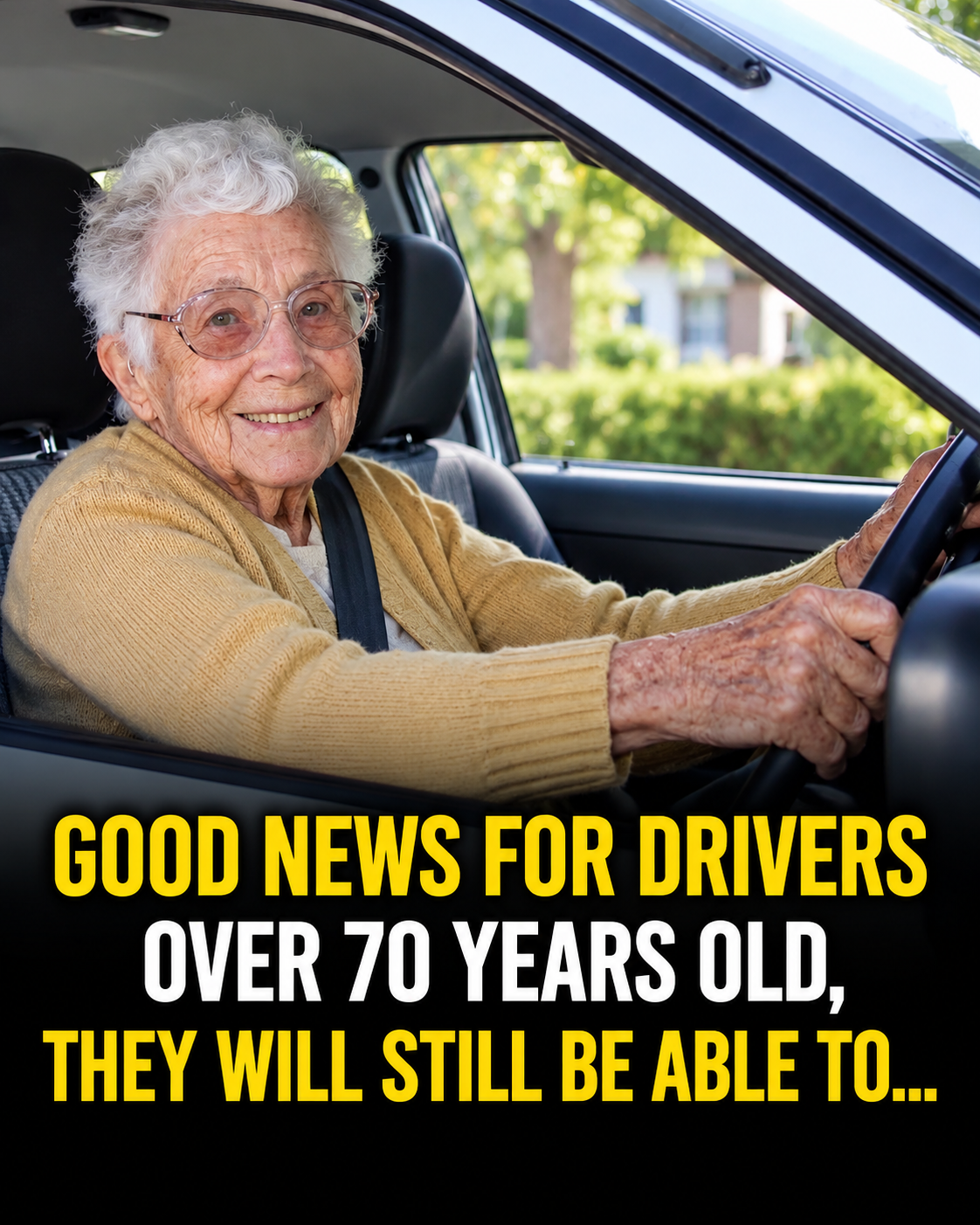
Can People Over 70 Still Drive? What the Rules Really Say and the Signs You Should Never Ignore addresses a question that affects millions of older adults and their families. Turning 70 does not automatically make someone incapable of driving. In fact, many people continue driving safely well into their 70s, 80s, and beyond.
In the United States, no single nationwide rule forces everyone to surrender a driver’s license at 70. Instead, licensing requirements vary by state. Some states impose additional renewal or vision requirements at certain ages. More importantly, federal road-safety guidance emphasizes actual driving ability rather than age alone.
However, aging can affect vision, physical flexibility, reaction time, attention, memory, and the way medications affect the body. Therefore, older drivers and their families should watch for meaningful changes instead of relying on a birthday as the deciding factor.
I remember a family conversation about an older relative who had driven safely for decades. Nobody wanted to suggest that reaching a certain birthday suddenly made him incapable, because his driving remained careful and responsible. Instead, we started paying attention to practical details. Could he read signs comfortably? Did night driving bother him? Did he feel confident in heavy traffic? That approach made the conversation much easier. It stopped being about taking independence away and became a discussion about protecting it. Eventually, I understood that driving decisions work best when families focus on observable ability, health, and safety rather than treating age itself as a diagnosis.
Can People Over 70 Still Drive Under Current Licensing Rules?
Age 70 Does Not Automatically End Your Driving Privileges
The simple answer is yes: people over 70 can still drive when they remain medically and functionally capable and meet the licensing requirements where they live.
Age alone does not determine whether someone can operate a vehicle safely. The National Highway Traffic Safety Administration specifically advises that decisions about driving ability should not rest on age alone. Instead, changes in vision, physical fitness, reflexes, attention, and other abilities deserve consideration.
That distinction matters.
Two 75-year-olds may have completely different driving abilities.
One person may have excellent vision, good mobility, no significant cognitive difficulties, and decades of safe driving experience.
Another person of exactly the same age may have a medical condition or medication side effect that makes driving difficult.
Therefore, a birthday provides limited information.
Actual function tells you much more.
Older drivers may also adapt naturally as their needs change. For example, someone who dislikes nighttime glare may choose to drive only during daylight.
Another person may avoid rush hour.
Someone else may select familiar roads instead of complicated highways.
The CDC notes that older adults are more likely than some other age groups to engage in safer driving behaviors, while also emphasizing that age-related changes and increased vulnerability can affect crash risk.
Therefore, Can People Over 70 Still Drive? What the Rules Really Say and the Signs You Should Never Ignore should not produce an automatic yes or no based solely on age.
The better question is whether the individual can still perform the tasks driving requires safely and consistently.
License Renewal Requirements Depend on Where You Live
Licensing rules can become more complicated because the United States does not use one universal age-based renewal system.
Each state establishes its own procedures.
Some states require older drivers to renew more frequently.
Others require vision testing at certain ages or restrict online or mail renewal.
For example, current state-law summaries show substantial differences in renewal procedures and age thresholds across the country.
Therefore, never assume that a rule you heard from someone in another state applies to you.
Check the current requirements with your state licensing authority.
This matters especially when approaching a renewal date.
Likewise, passing a license renewal does not guarantee that someone’s driving ability will remain unchanged for the entire renewal period.
Health can change.
Vision can change.
New medications can cause side effects.
Consequently, safe driving requires ongoing self-awareness between renewals.
The rules also represent minimum legal requirements rather than a complete personal safety assessment.
Someone can hold a valid license yet recognize that night driving has become uncomfortable.
In that situation, voluntarily restricting nighttime driving may provide a sensible solution.
Similarly, another driver may decide to avoid high-speed highways while remaining comfortable on familiar local roads.
Can People Over 70 Still Drive? What the Rules Really Say and the Signs You Should Never Ignore ultimately involves both legal eligibility and real-world ability.
A valid license matters.
However, honest assessment matters too.
Health Changes That Can Affect Driving After 70
Vision, Movement, Attention, and Reaction Time Matter
Driving demands several abilities at once.
You need to see signs, pedestrians, lane markings, traffic lights, and vehicles.
You need enough mobility to steer, brake, turn your head, and check surrounding traffic.
You also need to process changing situations and respond quickly.
Aging can affect these abilities differently from person to person.
NHTSA identifies changes in vision, physical fitness, attention, and reaction time as areas older drivers should monitor. Its guidance lists difficulty reading signs, increased problems with nighttime glare, trouble turning to check traffic, difficulty moving between pedals, confusion, and slower responses to surrounding vehicles among potential concerns.
Therefore, regular eye care becomes especially valuable.
NHTSA advises drivers age 60 and older to receive annual eye examinations, while CDC guidance also encourages older adults to have their eyes checked regularly.
Physical health matters too.
Neck stiffness can make checking a blind spot difficult.
Arthritis may affect steering or pedal control.
Reduced strength or flexibility can make quick movements harder.
However, these changes do not automatically require someone to stop driving.
Instead, they should trigger appropriate evaluation and adaptation.
A healthcare professional may recommend treatment, physical activity, vehicle modifications, or a driving assessment depending on the individual situation.
The key is noticing changes early rather than waiting for a serious crash.
Medical Conditions and Medications Deserve Regular Review
Can People Over 70 Still Drive? What the Rules Really Say and the Signs You Should Never Ignore also requires attention to medications.
Prescription drugs are not the only concern.
Over-the-counter medicines, supplements, and some herbal products can produce side effects that interfere with driving.
The CDC warns that some medications can increase motor-vehicle crash risk through effects such as sleepiness, dizziness, or slower reaction time.
Therefore, older adults should periodically review all medications with a doctor or pharmacist.
Do not stop a prescribed medication simply because you worry about driving.
Instead, ask whether it can cause drowsiness, dizziness, confusion, blurred vision, or delayed reactions.
Also ask whether combinations of medicines can create additional problems.
Medical conditions themselves may affect driving ability.
NHTSA provides specific older-driver guidance involving conditions such as Alzheimer’s disease, arthritis, cataracts, diabetes, Parkinson’s disease, stroke, sleep apnea, and vision disorders.
Again, a diagnosis does not always create an automatic answer.
Severity matters.
Symptoms matter.
Treatment matters.
Driving performance matters.
A healthcare professional can help determine whether a condition creates a significant risk and whether restrictions, adaptations, evaluation, or stopping driving makes sense.
Regular medical care therefore supports independence rather than threatening it.
Identifying a correctable vision problem or problematic medication may help someone remain a safer driver longer.
Warning Signs Families and Older Drivers Should Never Ignore
Getting Lost and Repeated Close Calls Deserve Attention
One isolated mistake does not necessarily prove that someone should stop driving.
Everyone occasionally misses a turn or makes an imperfect decision.
Patterns matter more.
NHTSA identifies several warning signs that deserve attention, including repeatedly getting lost on familiar routes, multiple moving violations, near misses or crashes, and concerns expressed by family members or healthcare professionals.
Other concerning driving behaviors can include inappropriate stopping, unsafe speed choices, repeated confusion, and difficulty responding correctly to traffic situations.
Therefore, families should focus conversations on specific observations.
Saying, “You’re too old to drive,” will often sound unfair because age alone does not demonstrate unsafe driving.
Instead, discuss what actually happened.
Perhaps the driver became lost twice while traveling to a familiar store.
Maybe several new dents appeared on the vehicle.
Perhaps the driver repeatedly failed to notice vehicles approaching from one side.
Specific examples make the conversation more constructive.
They also help healthcare professionals or driving specialists understand the concern.
Can People Over 70 Still Drive? What the Rules Really Say and the Signs You Should Never Ignore becomes especially important when several warning signs appear together.
NHTSA notes that no single non-driving sign automatically proves someone is unsafe, but multiple recurring concerns can justify action.
The goal should not involve winning an argument.
The goal should involve preventing a serious injury while preserving mobility whenever possible.
Family Concerns Should Lead to Assessment, Not Immediate Conflict
Driving represents more than transportation.
For many older adults, it represents independence.
A car allows someone to shop, attend appointments, visit friends, participate in community activities, and manage daily life without asking for help.
Therefore, conversations about driving can feel deeply personal.
Approach them respectfully.
Begin early when possible.
Do not wait until immediately after a frightening incident when everyone feels upset.
Instead, discuss changing abilities as a normal part of planning for healthy aging.
Ask how the driver feels behind the wheel.
Does nighttime glare make driving harder?
Has heavy traffic become overwhelming?
Does turning the head hurt?
Has a new medication caused sleepiness?
These questions invite cooperation.
A professional assessment may also provide more objective information.
NHTSA notes that occupational therapists and certified driving rehabilitation specialists can help evaluate needs and recommend adaptive equipment in appropriate cases.
Sometimes the answer will involve continuing to drive normally.
Sometimes it may involve restrictions.
For example, the driver might avoid nighttime driving, severe weather, unfamiliar roads, or rush-hour traffic.
In other situations, medical evidence may indicate that stopping provides the safest choice.
Whatever the outcome, focus on actual ability.
That approach protects dignity while keeping safety central.
How Older Adults Can Stay Safer and Independent Longer
Adapt Driving Habits Before Problems Become Serious
Aging does not require waiting for a crisis before making changes.
Small adaptations can make driving more manageable.
For example, drive during daylight when vision feels strongest.
Avoid severe weather when possible.
Plan routes before leaving.
Choose familiar roads and intersections that feel easier to navigate.
Leave extra following distance.
Reduce distractions inside the vehicle.
CDC guidance recommends several of these strategies for older drivers, including daylight driving, safer route planning, adequate following distance, regular physical activity, eye care, and medication reviews.
NHTSA also suggests avoiding rush hour when appropriate and choosing routes that reduce difficult traffic situations.
Modern vehicle features may provide additional assistance.
Backup cameras can improve visibility while reversing.
Blind-spot warnings can alert drivers to nearby vehicles.
Automatic emergency braking may help in certain situations.
However, technology should support attentive driving rather than replace it.
Drivers need to understand how each system works and where its limitations lie.
Physical fitness also deserves attention.
Strength and flexibility can help with steering, entering and exiting a vehicle, checking surrounding traffic, and operating pedals.
Therefore, staying physically active within medical guidance may support driving function as well as overall health.
The central idea remains simple.
Do not wait for age to dictate your choices.
Adjust your habits according to how you actually function.
Planning Alternatives Can Protect Independence
Eventually, some people will need to reduce or stop driving.
Planning for that possibility before a crisis can make the transition much easier.
Transportation alternatives vary by community.
Options may include public transportation, rides from family and friends, ride-sharing services, senior transportation programs, community shuttles, volunteer-driver programs, or combinations of several choices.
NHTSA and the CDC both encourage older adults to explore transportation alternatives before they urgently need them.
This planning changes the conversation.
Stopping driving no longer means, “You cannot go anywhere.”
Instead, the question becomes, “How will you get where you want to go?”
Write down regular destinations.
Include grocery stores, medical offices, religious services, friends’ homes, social activities, pharmacies, and other important places.
Then identify transportation options for each destination.
A family might divide certain trips.
A local service might handle medical appointments.
Public transportation may work for shopping.
Ride-sharing may fill occasional gaps.
Planning provides choices.
And choices protect independence.
Therefore, Can People Over 70 Still Drive? What the Rules Really Say and the Signs You Should Never Ignore ultimately involves mobility, not simply possession of a driver’s license.
The goal is helping people remain connected to their lives while protecting themselves and everyone else on the road.
Frequently Asked Questions
Can you legally drive after age 70?
Yes, many people legally drive after 70. In the United States, licensing rules vary by state, and some states impose different renewal or vision requirements for older drivers.
Is age alone a reason to stop driving?
No. NHTSA states that decisions about driving ability should not rely on age alone. Vision, physical function, reflexes, attention, health conditions, medications, and actual driving behavior provide more useful information.
What are the biggest warning signs of unsafe driving?
Repeatedly getting lost on familiar roads, multiple near misses or crashes, repeated traffic violations, confusion, slow responses, and concerns from family members or healthcare professionals deserve attention.
Can medication make an older adult unsafe to drive?
Yes. Some prescription and over-the-counter medicines can cause sleepiness, dizziness, or slower reaction time. Older adults should review their medicines with a doctor or pharmacist rather than stopping prescribed treatments on their own.
What happens if an older adult eventually needs to stop driving?
Families can plan alternatives such as public transportation, rides from friends or relatives, ride-sharing, and community transportation services. Planning early can help preserve mobility and independence.
Conclusion
Can People Over 70 Still Drive? What the Rules Really Say and the Signs You Should Never Ignore has a reassuring but important answer.
Yes, many people over 70 can continue driving.
A birthday alone does not determine driving ability, and NHTSA explicitly advises against making driving decisions based solely on age.
However, safe driving requires honest attention to change.
Vision can decline.
Reaction time can slow.
Physical stiffness can make turning and checking traffic harder.
Medical conditions can affect attention and movement.
Likewise, prescription and over-the-counter medications can sometimes cause side effects that interfere with driving.
Therefore, regular health care, eye examinations, medication reviews, and honest self-assessment become increasingly valuable.
Families should also pay attention to patterns.
Repeatedly getting lost, accumulating crashes or near misses, receiving traffic violations, becoming confused, or struggling with familiar driving situations should prompt a serious conversation and possibly professional evaluation.
At the same time, families should respect the importance of independence.
Driving often represents access to friends, medical care, shopping, social activities, and community life.
When driving remains safe, sensible adaptations may help an older adult continue longer.
When driving no longer remains safe, transportation planning can preserve mobility without requiring the person to remain behind the wheel.
The best approach does not ask whether someone has become “too old.”
Instead, ask whether that person can see, think, move, react, and make driving decisions safely today.
That question keeps the focus exactly where it belongs: on ability, responsibility, independence, and safety.
More Home Remedies
- Wrinkled Fingers After Water Exposure: What Your Skin May Be Telling You
- Skin Rash With Breathing Trouble? It Could Be a Life-Threatening Allergic Reaction
- I Thought It Was a Piece of Trash on the Bathroom Floor—Until It Moved
- If You Are Getting White Pimples on Your Lips or Intimate Area, Here’s What They Could Mean