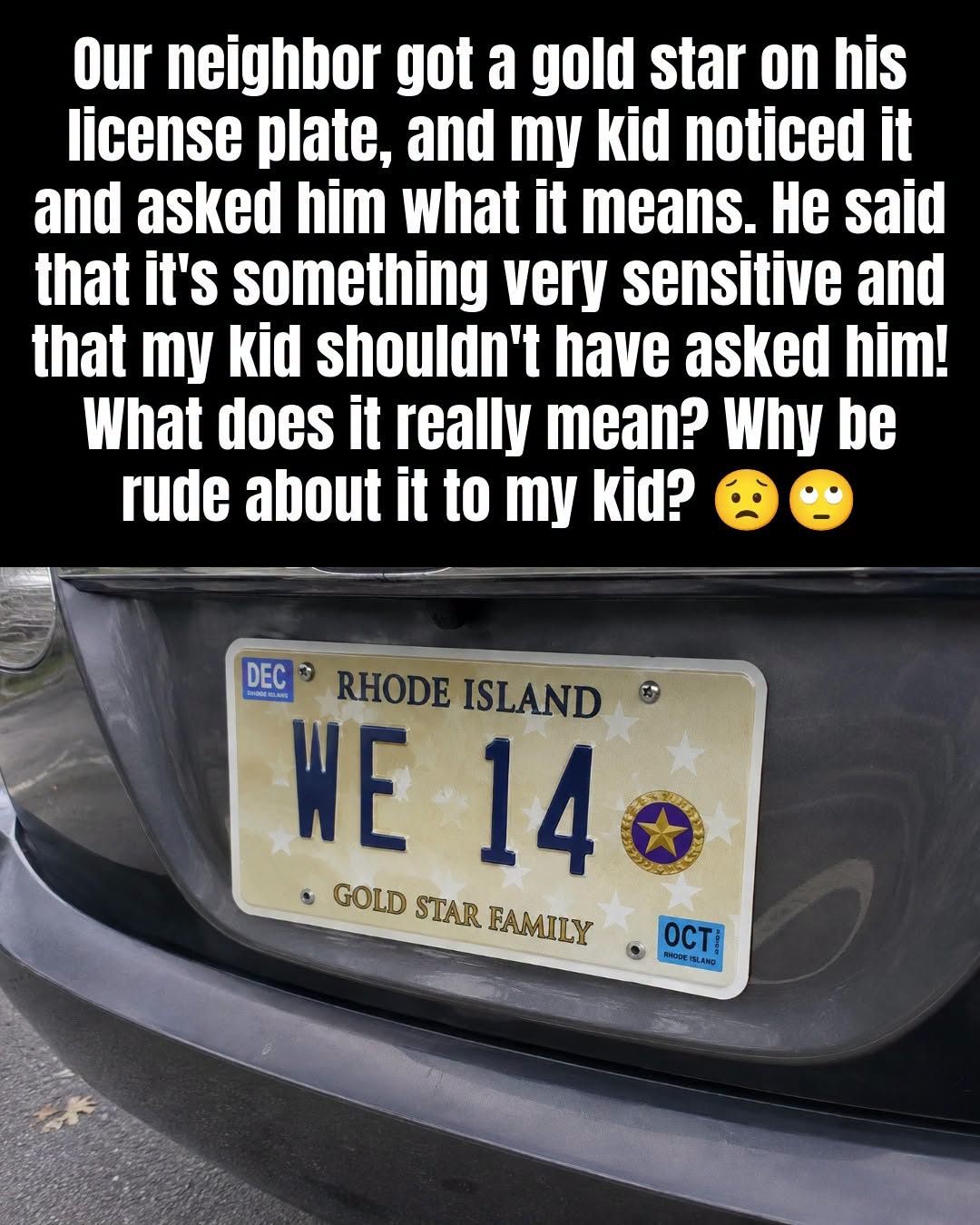
A Gentle, Compassionate Guide to the Gold Star begins with a simple symbol that carries an extraordinary amount of meaning. You may notice a gold star on a service banner, memorial display, lapel pin, license plate, or other military-family recognition. Although the design can look understated, it represents a family connection to a U.S. service member who died while serving.
The tradition reaches back to World War I. Families displayed service banners with blue stars to represent loved ones serving in the Armed Forces. When a service member died, families began replacing or covering the blue star with a gold one. The U.S. Army still describes the modern term “Gold Star family” as coming from that service-flag tradition.
Over time, the Gold Star became part of formal national remembrance. Congress designated the last Sunday in September as Gold Star Mother’s Day in 1936, and military communities now commonly use the broader observance to honor Gold Star mothers and families.
Understanding the symbol allows us to respond with something more meaningful than curiosity. It invites respect for the individual who served and sensitivity toward the family carrying that loss.
I first understood the weight of the Gold Star after noticing one on a vehicle ahead of me at a stoplight. I had seen military symbols before, yet this one felt different because of its simplicity. Later, I learned that the star represented a family whose loved one had died while serving. That knowledge changed how I saw the symbol forever. What had looked like a small emblem suddenly represented birthdays missed, family photographs that stopped changing, and a person whose absence remained present. Since then, whenever I notice a Gold Star, I try not to speculate about the family’s story. Instead, I recognize it quietly for what it represents.
A Gentle, Compassionate Guide to the Gold Star Begins With the Blue Star
The Gold Star tradition makes the most sense when you first understand the Blue Star Service Banner. The two symbols developed together during World War I, when families searched for a visible way to show that someone they loved was serving.
How the Blue Star Service Banner Began
Army Captain Robert L. Queisser of the Ohio National Guard designed and patented a service flag in 1917 while two of his sons served in the military. The design used a blue star to represent a family member in service. According to U.S. Army historical material, the banner quickly became a widely recognized symbol, and the War Department later authorized it officially.
Families placed service banners in windows so neighbors could see that someone from the household was serving.
The basic design included a white field, a red border, and one or more blue stars. Each blue star represented a service member.
Consequently, a family with two children serving could display two stars.
Churches, businesses, schools, and community organizations also used service banners to recognize members who had entered military service.
A Gentle, Compassionate Guide to the Gold Star therefore begins with a symbol of active service rather than death.
The blue star carried pride, concern, hope, and uncertainty all at once.
Families did not know whether their loved ones would return safely. Yet the banner publicly connected the household to the larger national war effort.
The tradition became especially powerful because it communicated something personal without requiring a long explanation.
Anyone familiar with the symbol could look at a window and understand that somebody from that home served.
That visual language eventually made the transition from blue to gold even more meaningful.
How a Blue Star Became a Gold Star
As World War I continued, families began using a gold star when a service member died.
The Army describes the practice as placing a gold star over the blue star, creating a visible sign that the household had suffered a death connected with military service.
In 1918, President Woodrow Wilson approved a related practice that allowed mothers who had lost children in the war to wear a gold star on a traditional black mourning armband.
The gold did not erase the blue underneath symbolically.
Instead, it represented the service member who had served and then died.
That history gives A Gentle, Compassionate Guide to the Gold Star much of its emotional depth.
The symbol does not merely indicate military affiliation.
It indicates loss within a military family.
Communities could immediately recognize that a household had paid a profound personal price.
Over time, the term “Gold Star family” grew from this tradition.
Today, military organizations use it broadly when discussing surviving family members of fallen service members, although specific legal benefits and official pins can involve narrower eligibility definitions.
Therefore, it helps to avoid assuming that every Gold Star family has exactly the same experience.
Some families lost a loved one during combat. Others experienced a death connected to military service under different circumstances.
The central idea remains remembrance.
A Gentle, Compassionate Guide to the Gold Star Explains the Tradition of Remembrance
The Gold Star did not disappear after World War I. Instead, the symbol became more firmly established through later wars, federal recognition, military programs, and family organizations.
Gold Star Mother’s Day Became a National Observance
In 1936, Congress approved a joint resolution designating the last Sunday in September as Gold Star Mother’s Day.
That observance continues under federal law. Congressional records continue to identify the last Sunday in September as the nationally recognized day and note the original June 23, 1936 resolution.
The observance specifically began with mothers who had lost sons or daughters in military service.
However, modern military recognition often includes the wider family.
Army observances now commonly refer to Gold Star Mother’s and Family’s Day, honoring parents, spouses, children, siblings, and others carrying the loss of a service member.
A Gentle, Compassionate Guide to the Gold Star therefore involves both history and an evolving understanding of family.
Grief does not belong to one relationship alone.
A service member may leave behind a spouse, children, parents, siblings, grandparents, and close friends.
Each person experiences the absence differently.
Official ceremonies often recognize that wider circle.
At the same time, the original Gold Star Mother tradition remains historically important.
Its existence reflects the enormous role mothers played in organizing remembrance after World War I.
The Gold Star became more than an emblem in a window.
It became a way for families to gather, support one another, preserve memories, and advocate for recognition.
American Gold Star Mothers Helped Build a Community of Remembrance
Gold Star families eventually formed organizations centered on remembrance, service, and mutual support.
American Gold Star Mothers became one of the best-known examples, bringing together mothers whose sons or daughters died in military service.
Meanwhile, organizations for surviving spouses and other family members also developed.
The U.S. Army notes that Gold Star Wives organized before the end of World War II, while survivor programs today help families navigate grief, benefits, records, and long-term connections to the military community.
That support matters because military loss does not end after a funeral.
Families may face complicated administrative tasks while grieving.
They may need help understanding benefits, records, casualty assistance, memorial programs, or military terminology.
Furthermore, many Gold Star survivors value continued connection with the military community their loved one served.
A Gentle, Compassionate Guide to the Gold Star recognizes that remembrance should continue long after public attention fades.
Army Survivor Outreach Services, for example, provides continuing support and points of contact for surviving family members.
The broader lesson remains simple.
Honoring Gold Star families involves more than praising sacrifice during a ceremony.
It also means remembering names, respecting grief, and maintaining meaningful support over time.
A Gentle, Compassionate Guide to the Gold Star Helps Explain What You May See Today
Today, Gold Star recognition can appear in several forms. You may see service banners, lapel pins, flags, memorial displays, special license plates, or signs recognizing Gold Star families.
However, these symbols do not all follow identical rules.
Service Flags and Lapel Pins Carry Specific Meanings
The service-banner tradition remains active.
A Blue Star Service Banner represents an immediate family member serving in the Armed Forces during a qualifying period, while a Gold Star on the banner signifies that a family member died while serving under the circumstances covered by the tradition. The Army traces both modern terms directly to these service flags.
Federal law eventually standardized service banners.
Additionally, Congress established Gold Star lapel recognition for eligible surviving family members after World War II.
Military sources distinguish between different survivor pins.
For example, the Gold Star Lapel Button and the Next of Kin Lapel Button can carry different eligibility criteria based on the circumstances of the service member’s death.
Therefore, A Gentle, Compassionate Guide to the Gold Star should avoid treating every gold-colored military emblem as interchangeable.
Some symbols represent broad remembrance.
Others carry a formal legal or military definition.
If you see someone wearing a Gold Star pin, you do not need to ask for the details of how their loved one died.
The pin already communicates something deeply personal.
Likewise, if a license plate carries a Gold Star designation, state rules determine who qualifies and how the plate appears.
Those designs can vary considerably from one state to another.
The respectful response remains the same: recognize that the symbol represents a family loss tied to military service.
Why Gold Star License Plates Carry Special Meaning
Many states offer special Gold Star family license plates to qualifying relatives of fallen service members.
Because motor vehicle programs operate at the state level, eligibility requirements and plate designs vary.
One plate may use a large gold star, while another includes words identifying the family relationship.
Some states limit eligibility to specific immediate relatives.
Others define qualifying circumstances differently.
Therefore, never assume that one state’s rules apply everywhere.
However, the underlying symbol remains connected to the broader Gold Star tradition.
A Gentle, Compassionate Guide to the Gold Star can help explain why a seemingly small emblem on a vehicle may carry enormous emotional significance.
For the driver, the plate may represent remembrance rather than decoration.
It may honor a child, spouse, parent, sibling, or another qualifying loved one.
The vehicle becomes one more place where that person’s service remains publicly remembered.
When encountering such a plate, there is no need to stare, photograph it, or approach the driver with intrusive questions.
Quiet recognition often shows more respect.
If a natural conversation develops and the person chooses to discuss their loved one, listening can matter.
Use the service member’s name if the family shares it.
Many survivors appreciate knowing that others remember the person, not only the circumstances of their death.
A Gentle, Compassionate Guide to the Gold Star Shows How to Respond Respectfully
Gold Star families do not all want the same type of attention.
Therefore, respect begins with allowing the family member to lead the conversation.
What to Say to a Gold Star Family Member
People sometimes avoid speaking to bereaved military families because they fear saying the wrong thing.
However, complete silence can also feel isolating.
Simple language usually works best.
You can acknowledge their loved one without turning the interaction into a speech.
If they mention the service member by name, use that name naturally.
You can express gratitude for sharing the story.
You can also say that you remember or honor their loved one.
Avoid assuming that phrases about heroism, destiny, or sacrifice will comfort everyone.
A Gentle, Compassionate Guide to the Gold Star recognizes that grief remains personal.
One Gold Star parent may proudly discuss military service.
Another may find certain language painful.
One spouse may welcome questions.
Another may prefer privacy.
Therefore, listen for cues.
Do not ask how the service member died unless the family member introduces that subject.
Likewise, avoid comparing losses.
Statements such as “I know exactly how you feel” can unintentionally minimize a very specific form of grief.
Instead, allow the person’s experience to remain their own.
If you knew the fallen service member personally, sharing a positive memory can become especially meaningful.
A brief story about their humor, kindness, leadership, or friendship can remind survivors that other people still remember the whole person.
Respect Means Remembering the Person, Not Only the Symbol
The Gold Star represents loss, but the person behind the star had a complete life.
They had favorite foods, habits, friendships, ambitions, inside jokes, hobbies, flaws, and family traditions.
Therefore, meaningful remembrance goes beyond repeating military language.
A Gentle, Compassionate Guide to the Gold Star encourages people to think about the individual behind the emblem.
Military ceremonies often help families preserve that connection.
The Department of Defense has emphasized that Gold Stars symbolize actual loved ones—children, parents, siblings, spouses, friends, mentors, and community members—not abstract sacrifice.
That perspective matters.
A Gold Star family did not lose a symbol.
They lost a person.
Consequently, remembering the service member’s name can mean more than treating the family only as representatives of military sacrifice.
Communities can support remembrance through memorial ceremonies, scholarships, service projects, family-support organizations, and respectful participation in Gold Star observances.
However, everyday kindness matters too.
Listening matters.
Remembering anniversaries can matter.
Allowing grief to remain complicated matters.
Most importantly, families should never feel pressured to perform pride, strength, or patriotism in a particular way.
They can honor military service while also experiencing anger, sadness, exhaustion, or ambivalence.
Respect leaves room for all of those feelings.
Frequently Asked Questions
What does a Gold Star represent in a military family?
A Gold Star traditionally represents a family member who died while serving in the U.S. Armed Forces. The symbolism developed from World War I service banners, where blue stars represented family members serving and gold stars came to represent those who died.
What is the difference between a Blue Star and a Gold Star?
A Blue Star Service Banner represents a family member serving in the Armed Forces under qualifying conditions. Historically, when that family member died in service, a gold star replaced or covered the blue one. Captain Robert L. Queisser designed the Blue Star Service Flag in 1917, and the Gold Star practice followed during World War I.
When is Gold Star Mother’s and Family’s Day?
The last Sunday in September has been federally designated as Gold Star Mother’s Day since 1936. Modern military observances commonly refer to the day more broadly as Gold Star Mother’s and Family’s Day to recognize surviving family members as well.
Does every Gold Star family receive the same pin or recognition?
No. Several forms of recognition exist, and eligibility can depend on the circumstances of the service member’s death and the survivor’s relationship to that person. For example, military sources distinguish the Gold Star Lapel Button from the Next of Kin Lapel Button. State Gold Star license plate requirements also vary.
What is the most respectful way to respond when I meet a Gold Star family member?
Follow their lead. Acknowledge their loved one without demanding details about the death. If they share the service member’s name, use it. Listen when they want to talk, and respect their privacy when they do not. Remember that the Gold Star represents a real person and a family’s continuing relationship with that memory.
Conclusion
A Gentle, Compassionate Guide to the Gold Star reveals how one simple emblem developed into one of the most meaningful symbols connected with American military families.
The tradition began during World War I.
Families displayed Blue Star Service Banners to show that loved ones served in the military. When a service member died, families began replacing or covering the blue star with a gold one. President Woodrow Wilson also approved the use of gold stars on mourning armbands in 1918.
Congress later designated the last Sunday in September as Gold Star Mother’s Day in 1936. Today, military communities also use the occasion to recognize the wider circle of Gold Star families.
You may now encounter the Gold Star on banners, lapel pins, memorial displays, license plates, or military installations.
Wherever it appears, the central meaning remains deeply personal.
Behind every Gold Star stands a person who served and a family that continues living with their absence.
Therefore, understanding the symbol should lead naturally to respect.
Avoid intrusive questions.
Do not assume every family experiences grief in the same way.
Instead, remember the individual behind the symbol, listen when family members choose to share their stories, and recognize that military loss continues long after public ceremonies end.
A Gentle, Compassionate Guide to the Gold Star ultimately teaches something larger than military history.
Symbols matter because people give them meaning.
The Gold Star has endured for more than a century because it allows a family’s loss to remain visible while also preserving a loved one’s connection to service.
When you see one, you are not simply looking at a star.
You are seeing a quiet sign that someone remains remembered.
More Blog
- Drinking Water on an Empty Stomach — What Science Actually Supports (No Hype, Just Facts)
- Waking Up Between 3 and 5 AM? It Might Be Your Soul Trying to Talk to You
- What a “Bleach” Patch on Your Underwear Really Means — And Why It’s Actually a Good Sign
- This Drink May Weaken Your Bones From The Inside — But Everyone Drinks It Anyway