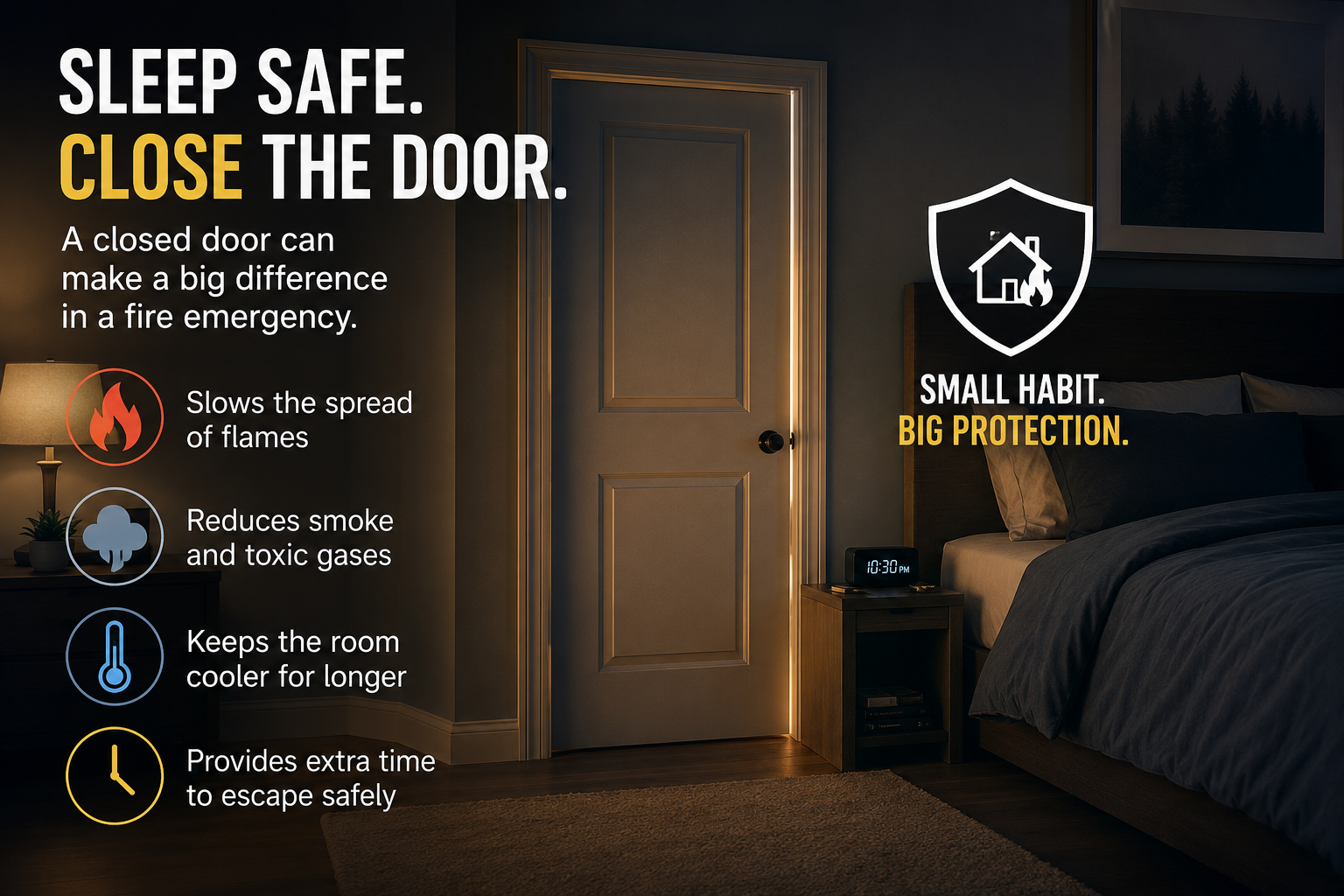
Most people have a bedtime routine that includes locking exterior doors, turning off lights, and settling in for a good night’s sleep. However, one simple habit is often overlooked: closing the bedroom door before going to bed. While it may seem like a minor detail, fire safety experts have long recommended sleeping with bedroom doors closed because doing so can help improve safety during a house fire.
Although a closed door cannot prevent a fire, it can act as an important barrier that slows the spread of flames, smoke, and dangerous heat. Those extra moments may provide valuable time to recognize the emergency, contact emergency services, and escape safely according to your family’s fire evacuation plan.
How a Closed Bedroom Door Can Improve Fire Safety
Modern homes contain many materials that can burn quickly, allowing fires to spread faster than they did decades ago. Because of this, every second matters during an emergency.
Slowing the Spread of Fire and Smoke
A closed bedroom door can help reduce the movement of fire and smoke into the room.
During a fire, a closed door may:
- Slow the spread of flames.
- Reduce the amount of smoke entering the room.
- Limit exposure to toxic gases produced by the fire.
- Help keep temperatures lower than in nearby areas.
Fire departments have demonstrated that rooms with closed doors often remain significantly cooler than rooms left open, creating a potentially safer environment while occupants prepare to escape or wait for rescue if evacuation is not immediately possible.
While no door guarantees complete protection, this simple barrier can make an important difference during the critical early stages of a house fire.
Buying Valuable Time
One of the greatest benefits of closing the bedroom door is the additional time it may provide.
Those extra minutes can allow occupants to:
- Wake up after smoke alarms sound.
- Assess the safest escape route.
- Call 911 or the appropriate emergency services.
- Assist children or other family members.
- Follow an established fire escape plan.
Having even a short amount of additional time can improve the chances of making safe decisions during a stressful emergency.
Additional Fire Safety Habits Everyone Should Know
Closing your bedroom door is just one part of a complete home fire safety plan. Combining this simple habit with other proven safety measures can greatly improve your family’s preparedness.
Essential Fire Safety Practices
Fire safety experts recommend making the following habits part of your regular routine:
- Test smoke alarms every month to ensure they are working properly.
- Replace smoke alarm batteries according to the manufacturer’s recommendations.
- Install smoke alarms on every level of your home and outside each sleeping area.
- Keep a fire extinguisher in an accessible location and learn how to operate it safely.
- Create a family fire escape plan with at least two exits from every room whenever possible.
- Keep a phone nearby at night so you can quickly call emergency services if needed.
Practicing these habits helps ensure everyone in the household knows what to do if an emergency occurs.
Know What to Do During a Fire
If a fire starts, acting quickly and calmly is critical.
Remember these important safety steps:
- If your smoke alarm sounds, leave the home immediately if it is safe to do so.
- Before opening a closed bedroom door, touch it with the back of your hand. If it feels hot, do not open it. Use another exit if one is available.
- Stay low to the ground if smoke is present, as cleaner air is usually closer to the floor.
- Once outside, go to your family’s designated meeting place.
- Never re-enter a burning building for belongings or pets. Inform firefighters if someone or an animal remains inside.
Having a practiced emergency plan can reduce confusion and help family members respond more effectively under pressure.
Fire Prevention Starts With Everyday Habits
While preparing for emergencies is essential, preventing fires from starting is even more important.
Simple Ways to Reduce Fire Risk
Many residential fires can be prevented by following basic safety practices around the home.
These include:
- Never leaving cooking unattended.
- Extinguishing candles before leaving a room or going to bed.
- Avoiding overloaded electrical outlets and extension cords.
- Replacing damaged electrical cords promptly.
- Keeping flammable materials away from heat sources.
- Never smoking indoors, especially in bed.
Regularly inspecting your home for potential hazards can also help identify problems before they become dangerous.
Small Actions Can Make a Big Difference
Fire safety doesn’t always require expensive equipment or complicated preparations. Often, the most effective habits are also the simplest.
Closing your bedroom door each night takes only a few seconds, yet it can become an important layer of protection when combined with working smoke alarms, an escape plan, and regular fire prevention practices.
Preparing for emergencies isn’t about expecting the worst—it’s about giving yourself and your family the best possible chance to respond safely if the unexpected happens. Small, consistent safety habits today can provide greater peace of mind every night.
Frequently Asked Questions
Does sleeping with the bedroom door closed really improve fire safety?
Yes. Fire safety organizations recommend sleeping with bedroom doors closed because a closed door can slow the spread of flames, reduce smoke infiltration, and help keep temperatures lower inside the room during a fire. While it cannot stop a fire, it may provide valuable extra time to escape safely.
Should every bedroom have a smoke alarm?
Ideally, yes. Fire safety experts recommend installing smoke alarms inside every bedroom, outside each sleeping area, and on every level of the home. Test them monthly and replace batteries or the entire unit according to the manufacturer’s recommendations.
What should I do if my bedroom door feels hot during a fire?
Before opening the door, touch it with the back of your hand. If it feels hot, do not open it, as fire may be on the other side. If possible, use another escape route. If you cannot leave safely, stay in the room, close the door, call emergency services, and signal for help through a window if necessary.
Why are modern house fires more dangerous than in the past?
Many modern homes contain synthetic furniture, plastics, and other manufactured materials that can burn more rapidly than natural materials used decades ago. These materials may produce intense heat and toxic smoke, making early detection, working smoke alarms, and a practiced escape plan even more important.
What are the best ways to prevent house fires?
Simple preventive measures include:
- Never leaving cooking unattended.
- Blowing out candles before leaving a room or going to sleep.
- Avoiding overloaded electrical outlets.
- Replacing damaged electrical cords.
- Keeping heating equipment away from flammable materials.
- Testing smoke alarms regularly and maintaining them properly.
Conclusion
Closing your bedroom door before going to sleep is a simple habit that can become an important part of your home’s overall fire safety plan. Although it takes only a few seconds, a closed door may help slow the spread of fire, smoke, and dangerous heat, providing valuable extra time to react during an emergency.
However, this practice is most effective when combined with other proven fire safety measures. Working smoke alarms, a well-practiced family escape plan, properly maintained electrical systems, and everyday fire prevention habits all work together to reduce risk and improve preparedness.
No one expects a house fire to happen, but taking small precautions today can make a meaningful difference if the unexpected occurs. By making fire safety part of your nightly routine, you help create a safer environment for yourself and your family while gaining greater peace of mind every time you go to bed.
More Home Remedies
- Wrinkled Fingers After Water Exposure: What Your Skin May Be Telling You
- Skin Rash With Breathing Trouble? It Could Be a Life-Threatening Allergic Reaction
- I Thought It Was a Piece of Trash on the Bathroom Floor—Until It Moved
- If You Are Getting White Pimples on Your Lips or Intimate Area, Here’s What They Could Mean