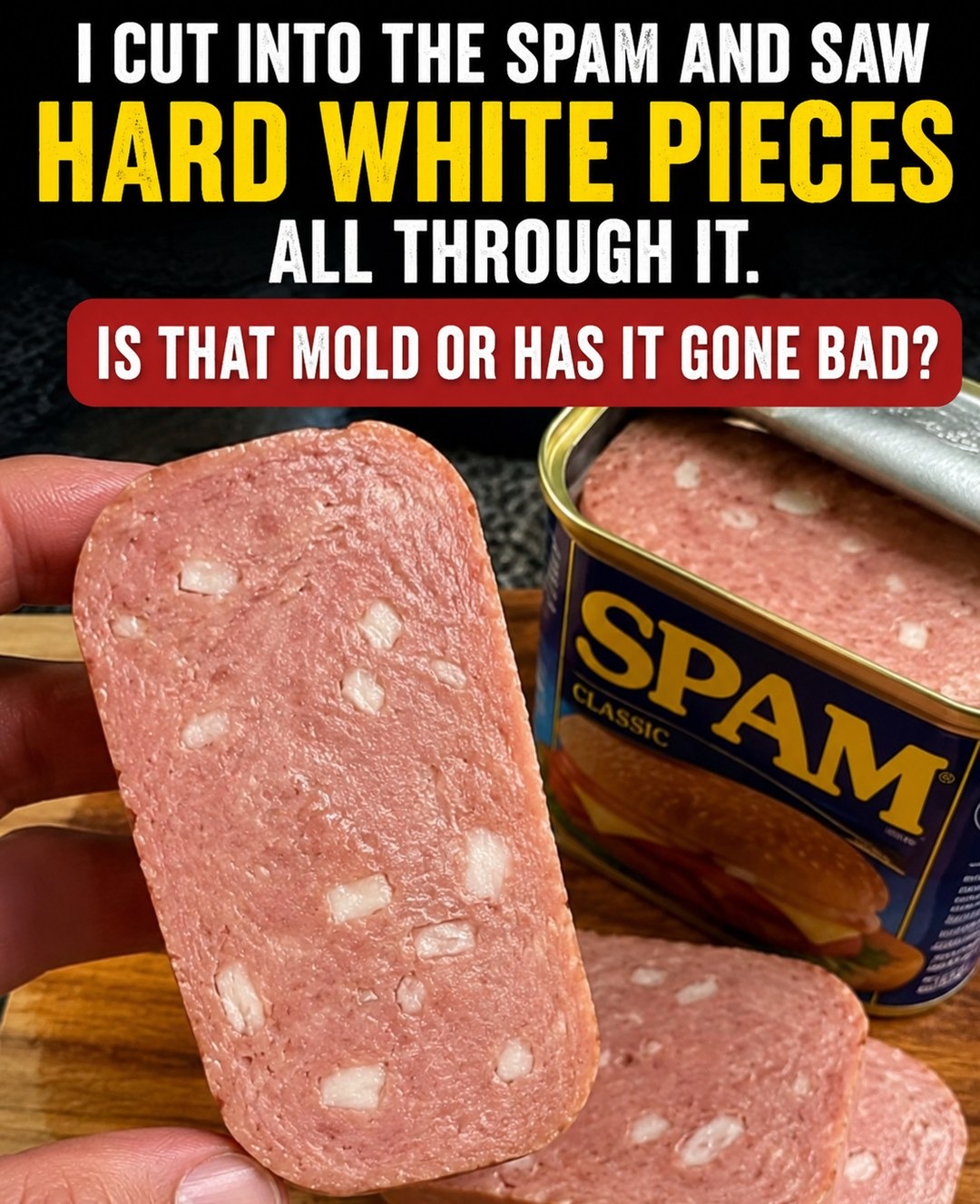
What Those White Bits in Spam Actually Are is a question many people ask the moment they slice into a can and notice small white chunks scattered through the meat. At first glance, those spots can look suspicious. Mold? Spoilage? Something artificial? Fortunately, the answer is much simpler—and far less alarming.
Those white pieces are usually solidified pork fat and tiny bits of connective tissue naturally found in the meat mixture. They are completely normal and safe to eat when the product has been properly stored and the can remains intact.
I remember opening a can for a quick fried Spam sandwich one afternoon and freezing the second I noticed those pale chunks. I almost threw the whole thing away. After looking into it more carefully, I realized the white bits appeared evenly throughout the meat, smelled perfectly normal, and melted once cooked. That moment turned into a reminder that unfamiliar does not automatically mean unsafe. Sometimes understanding food removes fear faster than anything else.
What Spam Is Actually Made Of
Understanding the ingredients makes the white bits much less mysterious.
The Main Ingredients in Spam
Classic Spam contains:
- Pork and ham
- Salt
- Water
- Potato starch
- Sugar
- Sodium nitrite
That is a surprisingly short ingredient list for a shelf-stable canned meat product.
The meat mixture naturally contains fat, which plays a major role in flavor and texture.
Why Fat Matters in Processed Meat
Fat is not filler. It helps:
- Keep the meat moist
- Improve flavor
- Create a softer texture
- Prevent dryness during cooking
Without fat, Spam would feel dry, crumbly, and less enjoyable to eat.
The white chunks are simply areas where the pork fat collected and solidified.
Why the White Bits Look So Noticeable
The appearance changes depending on temperature and storage conditions.
Cold Temperatures Make Fat Stand Out
When Spam is refrigerated, the pork fat hardens and turns more visible. That makes the white pieces look brighter against the pink meat.
At room temperature, the fat softens slightly.
When heated, it melts almost completely into the surrounding meat.
Even Distribution Is a Good Sign
One reassuring detail is that the white pieces usually appear evenly distributed throughout the can.
That pattern points toward fat.
Mold behaves differently. Mold typically:
- Forms on the surface
- Appears in isolated patches
- Looks fuzzy or powdery
- Changes color over time
Evenly mixed white chunks inside sealed Spam are generally harmless fat.
How to Tell the Difference Between Fat and Spoilage
It helps to know exactly what warning signs matter.
Normal White Fat Looks Like This
Safe white fat pieces are:
- Smooth
- Firm
- Creamy white
- Integrated into the meat
- Odorless except for the normal salty meat smell
Once heated, they soften and melt.
Actual Spoilage Looks Very Different
Throw the Spam away if you notice:
- Sour or rancid smells
- Slimy texture
- Green, blue, gray, or black discoloration
- Fuzzy growth
- Bulging or leaking cans
- Severe rust or deep dents near seams
The condition of the can matters just as much as the meat itself.
Why Canned Spam Usually Stays Safe
Spam is processed specifically to prevent bacterial growth.
The Heat-Sealed Canning Process
Spam is cooked inside a sealed can using high heat. That process destroys dangerous bacteria and creates a shelf-stable product.
As long as the seal remains intact, the inside stays protected from contamination.
When You Should Avoid Eating It
Discard the product immediately if:
- The can bulges
- Liquid leaks before opening
- The seal looks damaged
- The smell seems unpleasant
- The meat appears slimy or oddly colored
If the can looks normal and the smell is typical, white fat pieces alone are not a problem.
What Happens When You Cook Spam
Cooking makes the white bits much less noticeable.
The Fat Melts Into the Meat
As Spam heats, the fat renders into liquid and spreads through the slices.
That melted fat creates:
- Crisp edges
- Juicy texture
- Rich flavor
- Golden browning
The white chunks usually disappear almost completely during frying.
Why Fried Spam Tastes Better
Many people prefer fried Spam because the rendering fat helps caramelize the outside while keeping the inside moist.
That transformation is exactly what the fat is supposed to do.
Common Questions About White Bits in Spam
People often confuse normal fat with spoilage because canned meat can look unusual.
Is It Mold?
In most cases, no.
Mold rarely grows evenly throughout a sealed canned product. Mold also tends to appear fuzzy or discolored.
Can I Still Eat It?
If:
- The can is intact
- The smell is normal
- The texture feels typical
- The white spots are smooth and evenly mixed
Then it is usually safe to eat.
Why Does Refrigerated Spam Look Different?
Cold temperatures harden the fat and make it more visible.
Once heated, the fat softens and melts naturally.
Frequently Asked Questions
Are the white bits in Spam dangerous?
No. They are usually solidified pork fat and connective tissue.
Can mold grow inside unopened Spam?
It is extremely rare unless the can seal has been damaged.
Why does Spam have fat chunks?
Fat improves flavor, moisture, and texture in processed meat products.
What should spoiled Spam smell like?
Spoiled Spam may smell sour, rancid, or unusually unpleasant.
Should I refrigerate unopened Spam?
Unopened cans are shelf-stable, but refrigeration after opening is recommended.
Conclusion
What Those White Bits in Spam Actually Are becomes much less mysterious once you understand how Spam is made. Those pale chunks are typically harmless pork fat that naturally appears in the meat mixture and becomes more visible when cold.
The important things to check are the condition of the can, the smell of the product, and whether the texture seems normal. If the can is sealed properly and the Spam smells fine, the white spots are usually nothing to worry about.
In fact, once cooked, those little pieces help create the juicy texture and crispy edges many people enjoy most.
Sometimes food looks unfamiliar simply because we are seeing its ingredients more clearly than expected. Understanding that difference can turn concern into confidence—and save your lunch in the process.
More Home Remedies
- Wrinkled Fingers After Water Exposure: What Your Skin May Be Telling You
- Skin Rash With Breathing Trouble? It Could Be a Life-Threatening Allergic Reaction
- I Thought It Was a Piece of Trash on the Bathroom Floor—Until It Moved
- If You Are Getting White Pimples on Your Lips or Intimate Area, Here’s What They Could Mean