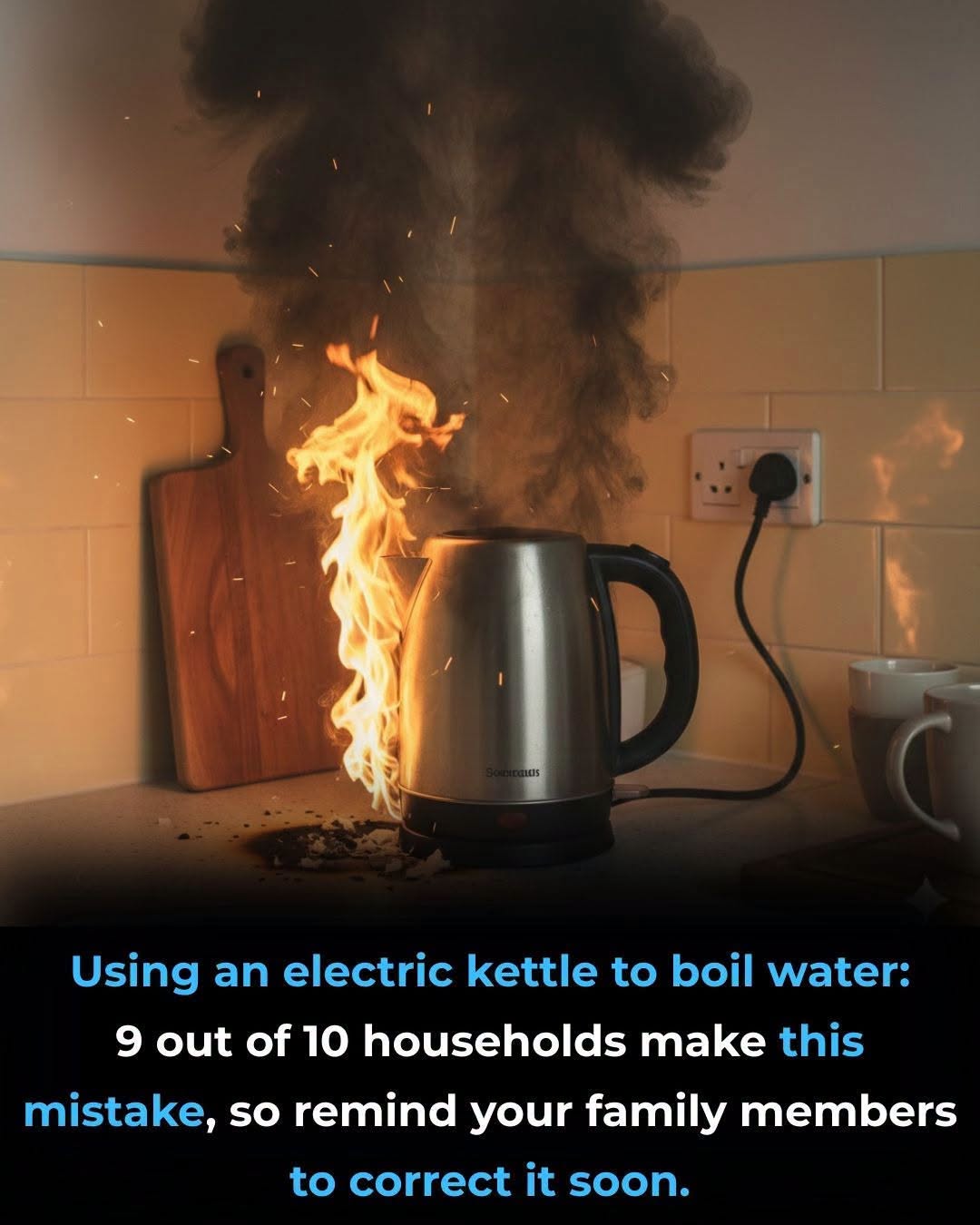
Using an Electric Kettle to Boil Water seems almost effortless. You fill the kettle, press the switch, and wait a few minutes. However, this simple appliance still needs proper use and regular care. Small everyday habits can affect the taste of your water, create mineral buildup, shorten the kettle’s working life, or introduce avoidable safety problems.
The original discussion highlights 5 common electric kettle mistakes that many households make every day. Although dramatic claims such as “9 out of 10 households” should not be treated as a measured statistic without supporting evidence, the underlying message makes sense: an electric kettle works best when you fill, operate, clean, and maintain it correctly.
I once noticed an electric kettle in a relative’s kitchen with a thick chalky layer covering the bottom. It still boiled water, so nobody thought anything was wrong. Then one afternoon, we cleaned it thoroughly and rinsed it several times. The difference surprised everyone. The kettle looked better, the water tasted fresher, and boiling sounded much smoother. Since then, I have paid more attention to small kettle habits. Nothing about kettle care feels complicated, yet a few minutes of maintenance can make an everyday appliance much more pleasant to use. That simple experience turned routine cleaning into a habit rather than an occasional chore.
Mistake 1: Filling Your Electric Kettle Incorrectly
Never Ignore the Minimum and Maximum Fill Lines
One of the easiest mistakes when using an electric kettle to boil water involves filling it without checking the markings inside or outside the kettle.
Manufacturers commonly provide minimum and maximum water levels for a reason. Therefore, you should treat those markings as operating limits rather than rough suggestions.
If you fill the kettle beyond its maximum line, boiling water may bubble or splash where it should not. Moreover, an overfilled kettle can discharge hot water or excessive steam through the lid or spout. That creates an unnecessary burn risk.
Instead, pour in only the amount you need while keeping the water between the manufacturer’s indicated limits.
Underfilling can also cause problems. Some kettles require enough water to cover the heating area properly. Consequently, operating a kettle with too little water may trigger its protection system or place unnecessary stress on the appliance.
Modern kettles often include boil-dry protection, but you should never deliberately depend on that feature.
Before switching on the kettle, glance at the water level. This simple habit takes seconds.
Additionally, place the kettle securely on its base before operating it. Make sure the exterior and electrical connections remain dry.
Avoid Boiling an Empty Kettle
Switching on an empty electric kettle is another habit worth avoiding.
An electric kettle produces heat rapidly. Without enough water inside, that heat has nowhere useful to go. Many newer models include automatic boil-dry protection that shuts down the appliance when it becomes too hot. However, safety features serve as backups, not invitations to operate the appliance incorrectly.
Therefore, always check for water before pressing the switch.
This precaution becomes especially useful in busy households. Someone may empty the kettle and return it to the base, while the next person may assume that it still contains water.
Fortunately, you can prevent the problem with one quick look.
If your kettle accidentally runs without water, switch it off and unplug it. Then allow it to cool completely. Follow the manufacturer’s instructions before using it again.
Likewise, stop using a kettle that behaves strangely after overheating. Persistent odors, visible damage, leaking, electrical problems, or a malfunctioning automatic shutoff deserve attention.
Most importantly, never attempt to defeat or modify the kettle’s built-in safety mechanisms.
Mistake 2: Repeatedly Boiling More Water Than You Need
Measure Water Before You Switch It On
Many people automatically fill an electric kettle almost to the top, even when they only need one or two cups.
However, heating unnecessary water wastes electricity because the appliance must raise the temperature of a larger volume.
Instead, estimate how much hot water you actually need.
For example, if you want one mug of tea, fill the mug with cool water first and use it as an approximate measuring guide, provided the resulting amount remains above your kettle’s minimum fill requirement.
This habit becomes particularly useful when you use the kettle several times each day. Each individual boil may seem insignificant, but regularly heating excess water adds unnecessary work.
Additionally, boiling only what you need usually saves time. A smaller quantity of water generally reaches boiling temperature sooner than a full kettle.
Still, never go below the minimum level specified for your appliance.
Efficient kettle use does not require complicated calculations. Simply match the amount of water to the task whenever possible.
For several drinks, naturally, add enough water for everyone. However, there is little reason to boil a full kettle when you need only a small amount.
Is Reboiling Water Dangerous?
You may have encountered alarming claims that reheating previously boiled water automatically makes it poisonous. That claim oversimplifies the issue.
For ordinary potable tap water, reheating water is not inherently the dramatic household danger that some viral warnings suggest.
Nevertheless, repeatedly reheating a large amount of old water provides little practical benefit. Fresh water usually gives you a straightforward starting point, particularly when preparing tea or coffee.
Furthermore, water quality varies by location. If local authorities tell residents not to consume tap water, an electric kettle should not be treated as a universal solution unless the advisory specifically says boiling makes that water safe.
Therefore, use drinking-quality water and follow local public-health instructions whenever a water advisory applies.
For ordinary everyday use, a simpler rule works well: add approximately the amount of fresh water you need, boil it, and use it.
That approach reduces unnecessary reheating while keeping your routine simple.
Mistake 3: Allowing Limescale to Build Up
Why the White Deposits Appear Inside a Kettle
Look inside a frequently used electric kettle, especially in a hard-water area, and you may notice white, gray, or chalky deposits.
That buildup usually comes from minerals naturally present in water.
As water heats and evaporates, mineral deposits can remain behind. Over time, they create a layer commonly called limescale.
Limescale does not necessarily mean that someone keeps a dirty kitchen. In fact, even a frequently rinsed kettle can develop deposits when the local water contains higher concentrations of certain minerals.
However, you should still remove the buildup regularly.
A heavy layer can affect the kettle’s heating surfaces and leave flakes floating in the water. Moreover, regular descaling helps keep the appliance working as intended.
How frequently should you descale?
That depends on your water hardness and how often you use the kettle. Therefore, inspect the interior instead of relying exclusively on a calendar.
If deposits appear quickly, clean the kettle more frequently.
Most importantly, check your kettle’s instruction manual before choosing a descaling method. Manufacturers may recommend particular procedures or products based on the kettle’s materials and construction.
How to Keep Your Kettle Cleaner
Regular maintenance works better than waiting until the inside develops a thick crust.
First, unplug the kettle and let it cool before cleaning. Next, follow the manufacturer’s descaling instructions.
Some manufacturers permit diluted vinegar or citric-acid solutions, while others recommend a commercial kettle descaler. Because appliance materials differ, follow the instructions supplied with your specific model.
After descaling, rinse the interior thoroughly. Then follow any manufacturer-recommended rinse or boiling procedure before preparing drinks again.
Never immerse the kettle, electrical base, cord, or plug in water unless the manufacturer explicitly designed the component for that purpose.
Likewise, avoid aggressive scraping with sharp metal objects. You could damage the interior surface or heating element.
The outside needs attention too. Once the kettle has cooled and you have unplugged it, wipe its exterior according to the manufacturer’s cleaning directions.
Regular care takes less effort than removing months of buildup. Therefore, make a quick interior inspection part of your normal kitchen routine.
Mistake 4: Using the Kettle Carelessly Around Electricity and Steam
Keep the Base, Cord, and Plug Dry
Water and electricity require careful separation.
When using an electric kettle to boil water, remove the kettle from its powered base before filling it unless the manufacturer directs otherwise. This approach makes it easier to keep water away from electrical components.
After filling, check the kettle’s exterior. If you spilled water around the base or electrical connection, dry the area completely before reconnecting or operating the appliance.
Additionally, keep the cord away from hot burners, sharp edges, and places where someone can pull or trip over it.
Never use a kettle with a damaged plug or cord.
You should also avoid improvised electrical repairs. If an electrical component becomes damaged, follow the manufacturer’s service recommendations or replace the appliance when appropriate.
The kettle should sit on a stable, level, heat-resistant surface during operation. Therefore, avoid balancing it near the edge of a counter where a child, pet, or passing person could knock it over.
These precautions may sound basic. However, routine appliances often receive less attention precisely because people use them so frequently.
Respect Hot Water and Steam
An electric kettle can bring water to a very high temperature quickly. Consequently, burns remain one of the most obvious hazards.
Never position your hand or face directly over the spout while the kettle operates. Steam can cause painful burns even without direct contact with boiling water.
Likewise, open the lid carefully after boiling if you need to open it at all. Many kettles allow normal pouring without opening the lid.
When pouring, hold the handle securely and pour at a controlled pace.
Avoid filling the kettle beyond its maximum line because excessive water increases the possibility of boiling water escaping.
Additionally, keep a hot kettle away from young children. Position cords so children cannot grab them and pull the kettle down.
After boiling, remember that parts of the kettle may remain hot even after the automatic switch turns off.
Therefore, use the handle rather than touching the body of the kettle unless its design specifically provides cool-touch surfaces.
Mistake 5: Treating Every Electric Kettle the Same
Follow the Instructions for Your Specific Model
Electric kettles may look similar, but they do not all operate in exactly the same way.
Some contain exposed heating elements, while others use concealed elements. Some offer adjustable temperatures, keep-warm settings, filters, or specialized cleaning requirements.
Consequently, one universal maintenance method cannot replace the manufacturer’s manual.
This matters particularly when descaling.
A cleaning solution that works well for one kettle may not match another manufacturer’s recommendations. Likewise, minimum water levels, maximum capacities, filter maintenance, and safety procedures can differ.
Therefore, keep the manual or save a digital copy when you purchase a new kettle.
You should also use the kettle only for its intended purpose. Unless your model explicitly supports other uses, do not treat it like a saucepan for heating milk, soup, oil, or other foods.
Residue can become difficult to remove, while foaming liquids may behave very differently from water.
For a standard electric kettle, water remains the safest default.
Know When It Is Time to Stop Using the Kettle
Regular cleaning can extend useful service, but maintenance cannot repair every problem.
Inspect your kettle occasionally.
Look for cracks, leaks, damaged electrical connections, a loose handle, a faulty lid, or a deteriorating cord. Also, pay attention if the automatic shutoff stops working correctly.
An unusual electrical or burning smell deserves immediate attention as well.
If you notice a serious problem, unplug the kettle and stop using it until you can follow the manufacturer’s troubleshooting or service guidance.
Do not continue operating a leaking kettle simply because it still heats water.
Similarly, never bypass an automatic shutoff, thermostat, or other safety feature.
A basic electric kettle should make everyday tasks easier. Therefore, you should not have to tolerate obvious electrical or mechanical defects to keep an old appliance running.
Frequently Asked Questions
Should I leave water sitting in my electric kettle overnight?
A little leftover water does not automatically create an emergency. However, emptying unused water and adding fresh drinking water when needed can keep your routine simple. Regularly allowing the kettle to dry when appropriate may also make mineral buildup easier to monitor. Follow the manufacturer’s care instructions for your particular model.
How often should I descale an electric kettle?
The ideal schedule depends on water hardness and frequency of use. Hard water can produce visible deposits much faster. Therefore, inspect the kettle regularly and descale it according to the manufacturer’s directions whenever noticeable buildup develops.
Can I clean an electric kettle with vinegar?
Some kettle manufacturers recommend diluted vinegar for descaling, but instructions vary. Therefore, check your appliance manual first. If vinegar is permitted, use the recommended concentration and rinse the kettle thoroughly afterward.
Is it safe to boil water twice?
Reboiling ordinary potable water does not automatically make it dangerous. However, repeatedly boiling more water than you need wastes energy. Using an appropriate amount of fresh drinking water provides a simple everyday routine.
Why does my electric kettle have white flakes inside?
White or chalky flakes commonly come from mineral deposits associated with hard water. Regular descaling can remove this buildup. However, if you notice unusual material, corrosion, damaged interior coatings, or anything you cannot identify, stop using the kettle and check the manufacturer’s guidance.
Conclusion
Using an Electric Kettle to Boil Water should remain one of the easiest jobs in the kitchen. However, a few good habits can make everyday use safer, cleaner, and more efficient.
Avoid overfilling or underfilling the kettle. Never intentionally operate it empty. Moreover, boil only the water you need, remove limescale regularly, keep electrical components dry, and protect yourself from hot steam.
Most importantly, follow the instructions supplied with your particular kettle. Different designs have different limits and cleaning requirements, so the manufacturer’s guidance should take priority over viral household tricks.
You do not need an elaborate maintenance routine. Instead, check the water level before every boil, inspect the kettle periodically, and descale it when deposits appear.
Those small habits require very little effort. However, they can help keep an appliance you use every day clean, dependable, and pleasant to use.
More Home Remedies
- Wrinkled Fingers After Water Exposure: What Your Skin May Be Telling You
- Skin Rash With Breathing Trouble? It Could Be a Life-Threatening Allergic Reaction
- I Thought It Was a Piece of Trash on the Bathroom Floor—Until It Moved
- If You Are Getting White Pimples on Your Lips or Intimate Area, Here’s What They Could Mean