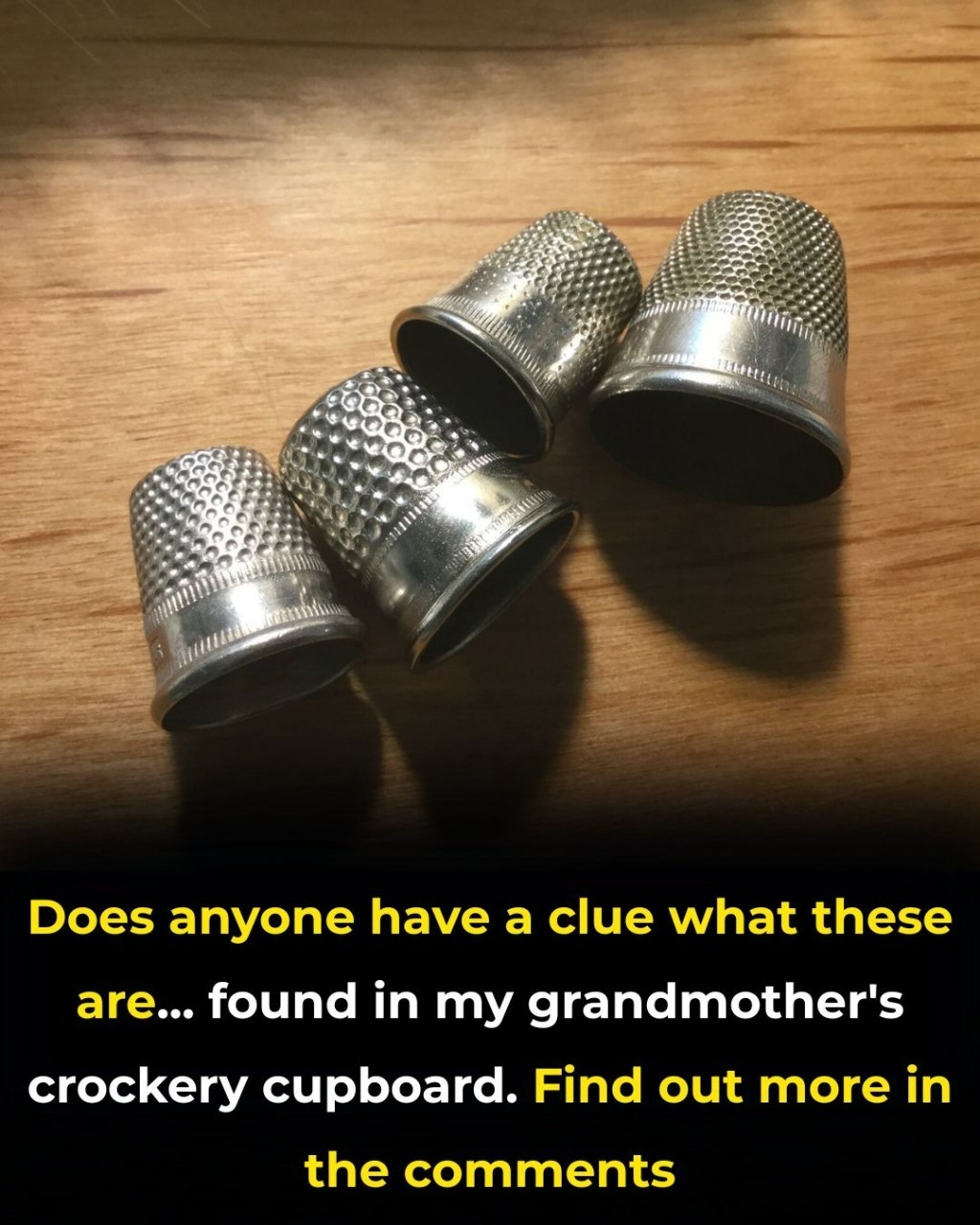
At first glance, those tiny metal objects might look mysterious or decorative, especially when found tucked away inside an old sewing basket or kitchen cupboard. Yet those small dimpled caps are actually thimbles — one of the oldest and most recognizable sewing tools in history.
For generations, thimbles protected fingers while people hand-sewed clothing, repaired fabric, embroidered linens, and stitched together daily necessities long before modern sewing machines became common. Although small in size, thimbles carry centuries of craftsmanship, family tradition, and personal history.
One woman remembered discovering a tarnished brass thimble inside her grandmother’s sewing tin as a child. She used to place it on her thumb like a tiny hat and never understood why it had hundreds of little dents covering its surface. Years later, she learned the thimble had belonged to her great-grandmother, who carried it while sewing clothes for her children during difficult economic times. Suddenly, that tiny object became more than just metal. It became a family memory passed quietly through generations.
What Exactly Is a Thimble?
A Simple Tool With an Important Purpose
A thimble is a small protective cap worn on the finger while sewing by hand. Its main purpose is to protect the finger from being poked repeatedly by sewing needles while also helping push needles through thick fabric more easily.
Most traditional thimbles have a rounded, bell-like shape and are usually made from:
- Brass
- Bronze
- Silver
- Steel
- Porcelain
- Leather
- Bone
- Ivory
The tiny indentations covering the outside surface are not simply decorative. Those dimples create friction that helps keep the needle from slipping while sewing.
Without the textured surface, sewing thick fabric by hand would be far more difficult and painful.
Although modern sewing machines handle much of today’s sewing work, thimbles remain useful for quilting, embroidery, tailoring, and visible mending projects.
Why Thimbles Were Essential for Daily Life
Before mass-produced clothing became affordable, families often made and repaired clothing themselves. Sewing was not a hobby for many people — it was an everyday survival skill.
Women, tailors, and seamstresses spent countless hours:
- Repairing torn clothing
- Sewing children’s garments
- Mending linens
- Creating blankets
- Embroidering household textiles
Because sewing needles constantly pressed against the fingertips, thimbles became essential protective tools.
A good thimble allowed people to sew longer, faster, and more comfortably.
Over time, certain thimbles became deeply personal possessions. Many were gifted during courtships, passed between mothers and daughters, or engraved with initials and meaningful dates.
The Ancient History of Thimbles
Thimbles Date Back Thousands of Years
The history of thimbles stretches surprisingly far into the past. Archaeologists have discovered ancient thimble-like tools at Roman excavation sites dating back centuries.
Early thimbles were often made from:
- Bone
- Leather
- Bronze
- Ivory
These early versions looked rougher and simpler than modern thimbles, yet they served the same practical purpose.
Roman thimbles typically featured larger dimples and less refined metalwork. However, they reveal how important sewing already was in ancient civilizations.
As societies developed more advanced metalworking techniques, thimbles became more durable and decorative.
Medieval Europe and Specialized Craftsmanship
By the Middle Ages, thimble making had become a specialized craft in parts of Europe. Metalworkers in Germany, the Netherlands, and England began producing increasingly sophisticated designs.
Brass and bronze became especially popular because they were durable and affordable.
Craftsmen improved the texture and precision of the dimple patterns, creating better grip for sewing needles.
At the same time, decorative details started appearing on thimbles, including:
- Engraved patterns
- Decorative bands
- Family initials
- Religious symbols
Eventually, thimbles became both practical tools and artistic objects.
The Golden Age of Thimbles
Beautiful Materials and Famous Makers
During the 17th through 19th centuries, thimble production expanded dramatically across Europe. English and Dutch manufacturers became especially famous for their craftsmanship.
Silver thimbles grew especially popular among wealthier families. Many featured elegant engravings and were exchanged as sentimental gifts.
One of the most famous thimbles ever created was the Dorcas thimble, produced by Charles Horner in England.
The Dorcas design combined:
- A steel rim for durability
- A silver or brass body
- Fine hand-crafted dimples
These thimbles became treasured family heirlooms and are now highly collectible antiques.
Porcelain thimbles also gained popularity later, especially as travel souvenirs featuring painted landmarks or cities.
Thimbles Became Symbols of Care and Family
Thimbles were often exchanged between women as practical yet meaningful gifts.
Mothers gave thimbles to daughters learning to sew. Friends exchanged decorative thimbles as tokens of affection. Young men sometimes presented engraved thimbles during courtship.
Because sewing represented care, patience, and household responsibility, thimbles quietly symbolized love, protection, and family devotion.
During difficult periods like the Great Depression and World Wars, thimbles became even more important because families repaired clothing rather than replacing it.
For many families, a single thimble survived generations of daily use.
Why People Still Collect Thimbles Today
Antique Thimbles Became Valuable Collectibles
Today, many people collect antique thimbles because they combine history, craftsmanship, and personal storytelling.
Collectors often search for:
- Silver thimbles
- Dorcas thimbles
- Advertising thimbles
- Porcelain souvenir thimbles
- Royal commemorative thimbles
- Rare maker’s marks
Some antique thimbles sell for surprisingly high prices depending on rarity, condition, age, and historical significance.
Collectors especially value original patina because excessive polishing can reduce historical authenticity.
Small museums dedicated entirely to thimbles even exist in parts of Europe.
The Meaning Behind Family Heirloom Thimbles
For many people, the true value of a thimble is emotional rather than financial.
A worn brass thimble may remind someone of:
- A grandmother sewing by hand
- Childhood memories
- Family resilience
- Handmade clothing
- Generational traditions
Unlike large antiques, thimbles fit quietly into drawers, sewing tins, or display shelves while carrying enormous sentimental history.
In many families, these tiny tools became symbols of hard work, creativity, and care passed down across decades.
Even today, some people still use inherited thimbles while sewing quilts, repairing clothes, or practicing traditional embroidery techniques.
Frequently Asked Questions
What are the tiny dents on a thimble for?
The dimples help grip sewing needles and prevent slipping during hand sewing.
Are antique thimbles valuable?
Some rare antique thimbles can be worth hundreds or even thousands of dollars depending on age and rarity.
Why were thimbles important historically?
Before modern sewing machines and mass-produced clothing, hand sewing was essential for daily life.
Can antique thimbles still be used?
Yes, although many collectors prefer preserving them rather than using them regularly.
Why do people collect thimbles?
People collect thimbles for historical interest, nostalgia, craftsmanship, family history, and sentimental value.
Conclusion
Those small metal objects found in old sewing baskets or cupboards are much more than decorative curiosities. Thimbles represent centuries of craftsmanship, survival, creativity, and family tradition.
For generations, they protected hardworking hands while people stitched clothing, repaired fabric, and cared for loved ones through sewing. Over time, they also became treasured keepsakes filled with personal stories and emotional meaning.
Today, even in a world dominated by machines and fast fashion, thimbles continue to remind people of patience, artistry, and the quiet importance of handmade work. Sometimes the smallest objects carry the largest stories.
More Home Remedies
- Wrinkled Fingers After Water Exposure: What Your Skin May Be Telling You
- Skin Rash With Breathing Trouble? It Could Be a Life-Threatening Allergic Reaction
- I Thought It Was a Piece of Trash on the Bathroom Floor—Until It Moved
- If You Are Getting White Pimples on Your Lips or Intimate Area, Here’s What They Could Mean