Sleep position can shape how comfortable you feel through the night. It may influence heartburn, snoring, joint pressure, breathing, and how often you wake to change position. However, no single posture works best for every person.
Sleeping on the left side has attracted particular attention because of the way the stomach and other organs sit inside the body. Research supports a genuine benefit for some people with nighttime acid reflux. Side sleeping may also help certain people breathe more comfortably than sleeping flat on the back.
Other popular claims require more caution. Current evidence does not establish that lying on the left side “detoxifies” the body, significantly improves circulation in every healthy adult, or prevents disease. Pregnant people often receive advice to sleep on their side later in pregnancy, but that does not mean they must remain exclusively on the left throughout the night.
The best sleep position combines comfort with individual health needs. A gentle adjustment may help, but it should never create pain, breathing difficulty, numbness, or anxiety.
Why Sleep Position Can Affect the Body
Gravity changes what happens while you lie down
The human body is not perfectly symmetrical. The stomach curves mainly toward the left side, while the liver occupies much of the upper right abdomen. The heart also sits slightly left of center, and major blood vessels follow specific paths through the chest and abdomen.
When you stand or sit upright, gravity helps keep stomach contents below the esophagus. Once you lie down, that advantage decreases. Body position can then influence how easily stomach acid reaches the esophagus and how quickly it clears.
Position also changes pressure on the shoulders, hips, chest, nerves, and joints. A posture that eases one problem may worsen another.
For example, left-side sleeping may calm reflux but irritate an already painful left shoulder. Back sleeping may feel comfortable for the joints but worsen snoring in someone whose airway narrows during sleep.
Therefore, the goal is not to force the body into a supposedly perfect pose. Instead, notice which position supports breathing, reduces symptoms, and allows you to remain comfortable.
People naturally move during sleep
Most people change position several times each night. Even someone who falls asleep on the left side may wake on the back, stomach, or opposite side.
That movement is normal. It redistributes pressure and helps prevent one area from carrying the body’s weight for too long.
You do not need to remain rigidly on one side to gain a possible benefit. Falling asleep on the left may help reduce reflux during the early part of the night, while natural movement can protect the shoulders and hips from prolonged pressure.
Trying too hard to control every movement may increase anxiety and make sleep more difficult. Comfort and consistency matter more than perfection.
The Strongest Benefit: Less Nighttime Acid Reflux
Left-side sleeping can keep acid away from the esophagus
Gastroesophageal reflux occurs when stomach contents move upward into the esophagus. It may cause burning behind the breastbone, a sour taste, coughing, throat irritation, hoarseness, or disrupted sleep.
Research comparing sleep positions has found that lying on the left side can reduce nighttime exposure of the esophagus to stomach acid. A systematic review concluded that left-side sleeping may shorten acid exposure and improve nighttime reflux symptoms.
Another study that monitored sleep position and esophageal acidity found faster acid clearance and less exposure while participants rested on their left sides compared with the right side or back.
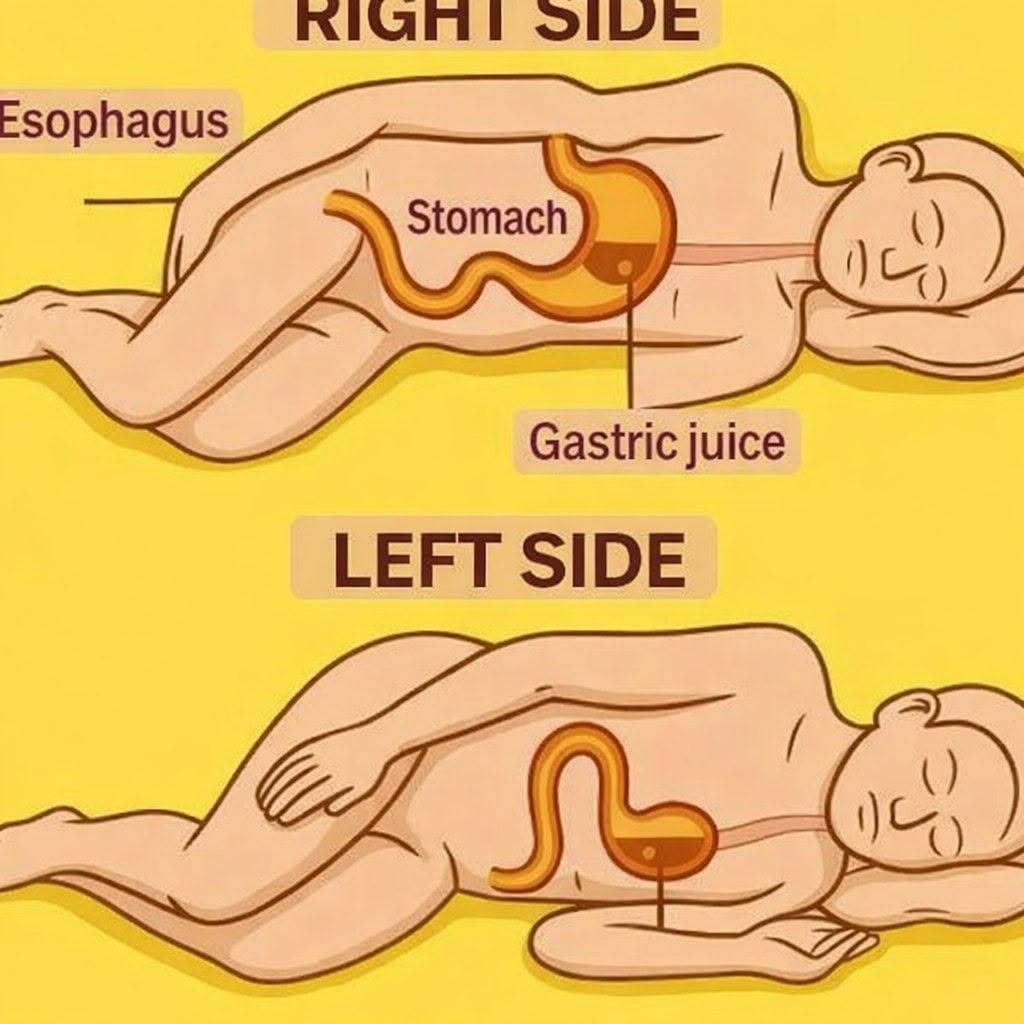
The likely explanation involves anatomy. On the left side, the stomach tends to remain below the junction where it meets the esophagus. On the right side, stomach contents may sit closer to that junction, making reflux more likely in susceptible people.
This benefit does not mean left-side sleeping cures gastroesophageal reflux disease. Persistent GERD may require dietary adjustments, medication, weight management, evaluation for a hiatal hernia, or other treatment.
Other nighttime reflux strategies also matter
Sleep position works best as one part of a broader approach.
People with nighttime reflux may benefit from:
- Finishing meals at least two or three hours before bed
- Avoiding unusually large late-night meals
- Identifying foods or drinks that repeatedly trigger symptoms
- Raising the head of the bed rather than stacking several soft pillows
- Limiting tobacco and excess alcohol
- Following prescribed reflux treatment consistently
- Seeking care when symptoms continue
Sleeping with the upper body elevated can help some people with nighttime reflux, allergies, or congestion.
Frequent heartburn should not simply be managed forever through sleep position. Difficulty swallowing, vomiting blood, black stools, unexplained weight loss, persistent chest discomfort, or anemia requires medical evaluation.
Chest pain can also come from the heart rather than the digestive system. Sudden pressure, sweating, nausea, breathlessness, or pain spreading to the arm, jaw, shoulder, or back warrants emergency care.
Pregnancy and Side Sleeping
Side sleeping may feel better later in pregnancy
As pregnancy advances, lying flat on the back can become uncomfortable. The growing uterus may press on major blood vessels and contribute to dizziness, nausea, shortness of breath, or a feeling of weakness in some people.
The American College of Obstetricians and Gynecologists states that side sleeping during the second and third trimesters may be best. It suggests bending one or both knees and using pillows between the knees, beneath the abdomen, or along the body for support.
The left side is often recommended because it may reduce pressure on a large vein located toward the right side of the spine. However, many pregnant people can also sleep comfortably on the right.
The broader recommendation centers on side sleeping, not on staying exclusively on the left every minute of the night.
Waking on the back is not a reason to panic
Pregnant people commonly wake in a different position from the one in which they fell asleep.
Discovering that you rolled onto your back does not mean you harmed the pregnancy. Simply move back to a comfortable side and return to sleep.
A pillow behind the back may reduce rolling. A body pillow can support the abdomen and upper leg, while a smaller pillow between the knees can reduce tension in the hips and lower back.
Anyone with a high-risk pregnancy, severe swelling, breathing problems, dizziness, or specific obstetric concerns should follow individualized guidance from their maternity-care professional.
Can Left-Side Sleeping Improve Circulation?
The claim is more limited than many articles suggest
Popular wellness posts often state that everyone improves circulation by sleeping on the left because the position removes pressure from the inferior vena cava.
That explanation oversimplifies normal physiology.
Healthy adults continuously regulate circulation in many positions. The body does not usually need left-side sleeping to move blood efficiently back to the heart.
Pressure on major blood vessels becomes more relevant during later pregnancy because the uterus has grown substantially. It does not follow that every nonpregnant adult gains a meaningful cardiovascular benefit from the same posture.
A person should not treat left-side sleeping as a substitute for exercise, blood-pressure treatment, smoking cessation, diabetes management, or medical care.
Heart conditions may change which side feels best
People with heart failure sometimes find left-side sleeping uncomfortable or notice more breathlessness in that position. Many naturally prefer the right side.
Heart failure can also make lying flat difficult because fluid may accumulate in the lungs. Some people need several pillows or an elevated upper body to breathe comfortably.
Anyone with a diagnosed heart condition should choose the position that supports comfortable breathing and follow advice from their healthcare team.
New breathlessness at night, sudden weight gain, worsening leg swelling, chest pressure, or a need to sleep upright deserves prompt medical attention.
What About Lymphatic Drainage and “Detoxification”?
Sleep supports brain waste clearance
The body’s lymphatic system helps maintain fluid balance and immune function. Meanwhile, the brain has a related waste-clearance process often called the glymphatic system.
Evidence suggests that deep sleep supports glymphatic activity. During slow-wave sleep, fluid movement through brain tissue appears to help clear metabolic waste.
That finding supports the importance of adequate, high-quality sleep.
However, it does not prove that sleeping on the left side meaningfully “detoxifies” the entire body.
The left-side detox claim remains unproven
Some articles argue that because a major lymphatic duct drains toward veins on the left side of the upper chest, gravity makes left-side sleeping superior for lymph drainage.
Anatomy alone does not establish a clinical benefit. The lymphatic system moves fluid through vessel contractions, muscle activity, breathing, pressure changes, and valves. It does not depend solely on which side a person sleeps on.
Current clinical guidance for lymphedema focuses on measures such as compression, appropriate exercise, skin care, and specialized drainage therapy when indicated. It does not generally present left-side sleeping as a treatment.
Therefore, claims that left-side sleeping removes toxins, prevents inflammation, or treats swelling should remain clearly labeled as unproven.
Persistent swelling needs a medical assessment. It can result from vein problems, heart or kidney disease, medication effects, blood clots, infection, or lymphatic obstruction.
Side Sleeping, Snoring, and Sleep Apnea
Either side may be better than the back
For many people, snoring worsens while sleeping on the back. Gravity can allow the tongue and soft tissues to move toward the throat, narrowing the airway.
Moving onto either side may help keep the airway more open. The left side does not appear universally superior for snoring, although it may offer the additional advantage of reducing reflux in people who experience both conditions.
A body pillow, wedge, or positioning device can help habitual back sleepers remain on a side.
Alcohol and sedating medications may worsen snoring because they relax the airway muscles. People should never stop prescribed medication without medical advice, but they can discuss nighttime breathing concerns with a clinician.
Loud snoring may indicate more than a nuisance
Obstructive sleep apnea causes repeated breathing interruptions during sleep.
Possible signs include:
- Loud, persistent snoring
- Gasping or choking
- Witnessed pauses in breathing
- Morning headaches
- Dry mouth on waking
- Difficulty concentrating
- Excessive daytime sleepiness
- Irritability
- High blood pressure
Changing position may reduce mild positional snoring, but it cannot reliably treat moderate or severe sleep apnea.
Anyone with suspected apnea should seek an evaluation. Untreated sleep apnea can affect cardiovascular health, mood, alertness, and driving safety.
Who May Not Feel Comfortable on the Left Side?
Shoulder and hip conditions can worsen
Side sleeping concentrates pressure on one shoulder and hip.
People with arthritis, bursitis, rotator-cuff injuries, frozen shoulder, recent surgery, or hip pain may find the left side uncomfortable.
A pressure-relieving mattress and appropriately sized pillow may help. However, persistent pain should not be ignored simply to maintain a preferred sleep position.
Alternate sides when needed. Back sleeping with support beneath the knees may provide another option for some musculoskeletal conditions.
Nerve compression can cause numbness
A poorly supported side-sleeping position may compress nerves in the shoulder, arm, wrist, hip, or leg.
Waking with occasional temporary tingling after lying on an arm can happen. Repeated numbness, weakness, severe pain, or symptoms that continue after changing position require medical evaluation.
Avoid sleeping with the lower arm trapped beneath the body or head. Instead, place it slightly forward and support the upper arm with a pillow.
Certain heart symptoms deserve caution
Some people with heart failure prefer not to sleep on the left because they notice stronger heartbeats or more discomfort there.
Pericarditis can also cause chest pain that varies with posture, although it often feels worse when lying flat and better when sitting forward. Any new chest pain requires urgent assessment because symptoms can resemble a heart attack.
Do not use sleep-position experiments to investigate unexplained chest pain at home.
How to Sleep Comfortably on Your Left Side
Choose a pillow that fills the shoulder gap
A side sleeper’s head rests farther from the mattress than a back sleeper’s head because the shoulder creates a gap.
The pillow should fill that space without pushing the neck upward. When the height works well, the nose remains roughly aligned with the center of the chest and the neck stays neutral.
A pillow that is too thin allows the head to drop toward the mattress. A pillow that is too thick bends the neck in the opposite direction.
Broad-shouldered people often need more loft, while people with narrower shoulders may need less.
Place support between the knees
A pillow between the knees can prevent the top leg from pulling the pelvis forward.
Keep the knees slightly bent rather than drawing them tightly toward the chest. The pillow should support both the knees and, when possible, part of the lower legs.
Pregnant people may add another pillow beneath the abdomen. A long body pillow can support the chest, top arm, abdomen, and knees at the same time.
Protect the lower shoulder
Do not place the lower arm directly beneath the head.
Move the arm slightly forward, keeping the shoulder relaxed. Hugging a pillow can support the upper arm and reduce forward rotation of the chest.
When shoulder pressure remains uncomfortable, place a pillow behind the back and lean slightly backward while remaining mostly on the left side. This semi-side position can preserve some reflux benefit without placing the full body weight directly over the shoulder.
Adjust gradually
A lifelong back or stomach sleeper may not adapt immediately.
Begin by settling on the left side for the first part of the night. Use pillows to make the position feel stable rather than forcing yourself to stay there.
If you wake uncomfortable, change position. Sleep quality matters more than maintaining one posture all night.
No reliable evidence shows that everyone forms a new sleeping-position habit in exactly two or three weeks. Adaptation varies widely.
Improving Sleep Beyond Position
Position cannot compensate for poor sleep habits
Left-side sleeping may reduce a specific symptom, but it cannot fix every cause of poor rest.
Supportive habits include:
- Keeping a fairly consistent sleep and wake time
- Creating a dark, quiet, comfortable bedroom
- Limiting large meals near bedtime
- Reducing late caffeine
- Avoiding excess alcohol
- Exercising regularly
- Treating persistent pain or congestion
- Getting morning daylight
- Limiting stimulating activity when preparing for bed
Supplements, weighted blankets, and sleep devices are not necessary for everyone. Some can interact with medications or create risks for certain medical conditions.
Persistent insomnia deserves evaluation rather than endless experimentation with products or sleep positions.
Track symptoms rather than chasing promises
A simple sleep diary can help determine whether left-side sleeping makes a real difference.
Record:
- Bedtime and waking time
- Approximate sleep position
- Reflux or coughing
- Snoring reported by a partner
- Shoulder or hip pain
- Nighttime awakenings
- Morning energy
Review the pattern after one or two weeks.
A clear improvement in reflux or comfort supports continuing the change. New pain, numbness, or poorer sleep suggests that another position may suit you better.
Frequently Asked Questions
Is sleeping on the left side healthier for everyone?
No. It may help people with nighttime acid reflux and may feel comfortable during pregnancy. However, individual pain, heart conditions, breathing, and personal comfort can make another position better.
Does left-side sleeping improve digestion?
It can reduce nighttime acid reflux because of the stomach’s position. Evidence does not show that it speeds all digestion or prevents every digestive complaint.
Must pregnant people sleep only on the left?
No. Side sleeping may be preferable later in pregnancy, but both sides may be used unless a maternity-care professional gives individualized advice.
Does sleeping on the left detoxify the body?
There is no strong clinical evidence that left-side sleeping detoxifies the body. Deep, adequate sleep supports normal brain waste-clearance processes, but that differs from proving a special left-side detox effect.
Can side sleeping stop snoring?
It may reduce positional snoring compared with back sleeping. Persistent loud snoring, gasping, or witnessed breathing pauses needs evaluation for sleep apnea.
What should I do when my shoulder hurts?
Switch sides, adjust pillow height, hug a support pillow, or lean slightly backward with a pillow behind you. Seek medical advice when pain persists, limits movement, or comes with weakness or numbness.
Conclusion
Sleeping on the left side is not a miracle treatment, but it can serve as a practical and free adjustment for certain people.
Its clearest proven advantage involves nighttime acid reflux. Studies show that the left-side position can reduce acid exposure and help the esophagus clear reflux more quickly than the right-side or back positions.
Side sleeping may also feel more comfortable later in pregnancy and may reduce some forms of positional snoring. However, broad promises about detoxification, universal circulation benefits, and guaranteed deeper sleep go beyond current evidence.
Try the position gently. Use a supportive head pillow, place another between the knees, and listen to the body’s response. Continue when symptoms improve and comfort remains good. Change position when pain, numbness, breathlessness, or poor sleep develops.
The most useful sleep position is not the one promoted by the most dramatic headline. It is the one that allows you to breathe comfortably, manage relevant symptoms, protect your joints, and wake feeling reasonably restored.
More Health
- Cockroach Milk: Could It Become the Superfood of the Future?
- Foamy Urine: Here’s Why You Have Bubbles in Your Urine and When to Pay Attention
- More Than a Moment: Understanding the Layers of Intimacy and What Creates Lasting Connection
- Sleeping With the Wrong Person: The Emotional, Social, and Personal Consequences People Often Overlook